Adhyaya 113
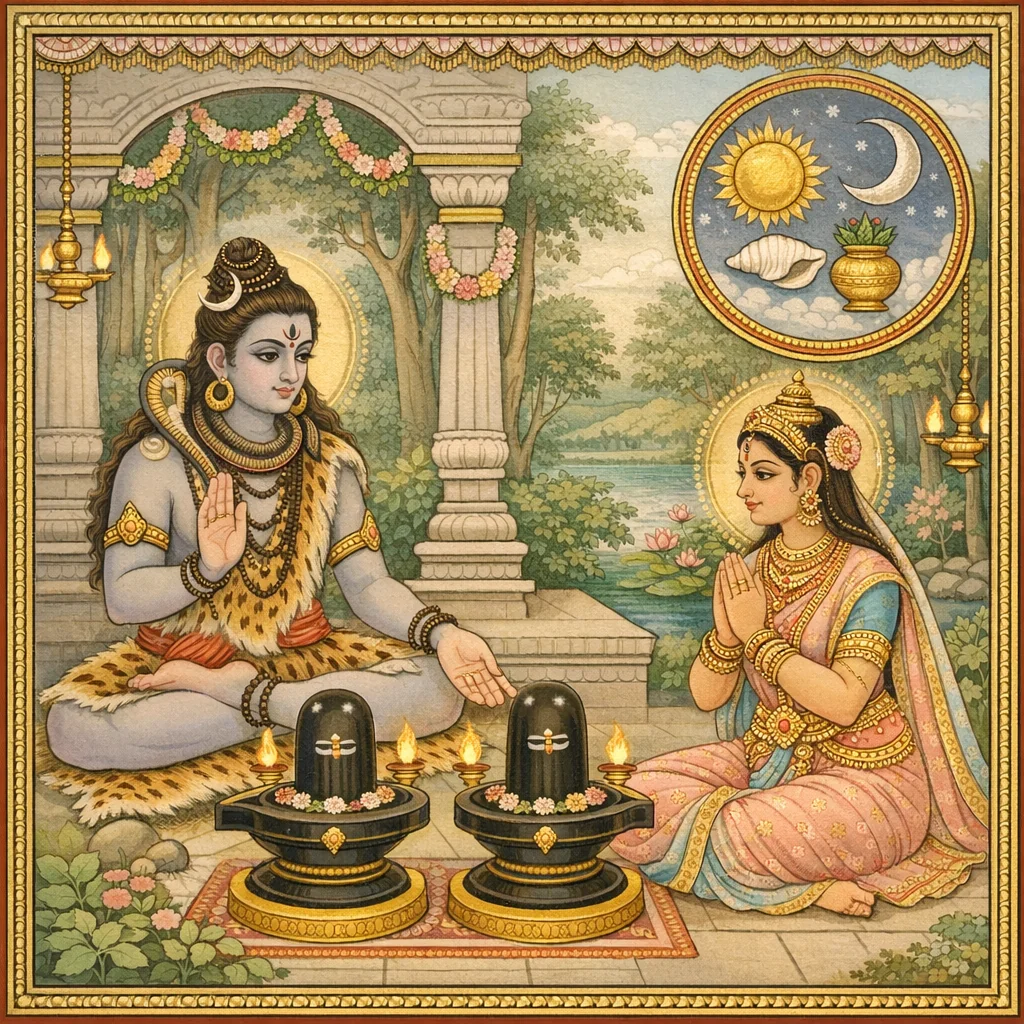
In this chapter, Īśvara speaks to Devī and points to an eminent liṅga named Jānakīśvara, situated in the south‑western (naiṛta) quarter near Rāmeśa/Rāmeśāna. The site is praised as pāpa-hara, a destroyer of sins for all beings, and as the liṅga once specially worshipped by Jānakī (Sītā). The text explains its sacred names through time: it was formerly called Vasiṣṭheśa, became renowned as Jānakīśa in the Tretā-yuga, and later gained the epithet Siddheśvara when sixty thousand Vālakhilya sages attained siddhi there. In the Kali-yuga it is described as a powerful “yuga-liṅga” (dual liṅga), whose mere sight frees devotees from suffering born of misfortune. Devotional pūjā is prescribed for women and men alike, including bathing/ablution of the liṅga; a higher observance enjoins worship after bathing at Puṣkara-tīrtha with regulated conduct and diet for an unbroken month, promising daily merit surpassing the Aśvamedha. A specific time is also given: a woman’s worship on the third lunar day in Māgha removes grief and ill-luck even from her lineage. The concluding phalaśruti declares that hearing this māhātmya destroys sins and bestows auspiciousness.
Shlokas
Verse 1
ईश्वर उवाच । ततो गच्छेन्महादेवि जानकीश्वरमुत्तमम् । रामेशान्नैऋते भागे धनुस्त्रिंशकसंस्थितम्
Īśvara said: Then, O Great Goddess, one should go to the most excellent Jānakīśvara, situated thirty dhanus to the south-west of Rāmeśvara.
Verse 2
पापघ्नं सर्वजंतूनां जानक्याऽराधितं पुरा । प्रतिष्ठितं विशेषेण सम्यगाराध्यशंकरम्
It destroys the sins of all beings. Formerly it was worshipped by Jānakī (Sītā); and, having duly propitiated Śaṅkara, it was established with special solemnity.
Verse 3
पूर्वं तस्यैव लिंगस्य वसिष्ठेशेति नाम वै । तत्पश्चाज्जानकीशेति त्रेतायां प्रथितं क्षितौ
Formerly, that very liṅga was indeed known as Vasiṣṭheśa; later, in the Tretā age, it became renowned on earth as Jānakīśa.
Verse 4
ततः षष्टिसहस्राणि वालखिल्या महर्षयः । तत्र सिद्धिमनुप्राप्तास्तेन सिद्धेश्वरेति च
Thereafter, sixty thousand Vālakhilya great seers attained spiritual accomplishment there; therefore it is also called Siddheśvara.
Verse 5
ख्यातं कलौ महादेवि युगलिंगं महाप्रभम् । तद्दृष्ट्वा मुच्यते पापैर्दुःखदौर्भाग्यसंभवैः
O Great Goddess, in the Kali age it is famed as the splendid ‘Yuga-liṅga’. Merely by beholding it, one is freed from sins that give rise to sorrow and misfortune.
Verse 6
यस्तं पूजयते भक्त्या नारी वा पुरुषोऽपि वा । संस्नाप्य विधिवद्भक्त्या स मुक्तः पातकैर्भवेत्
Whoever worships that liṅga with devotion—whether woman or man—and, with devotion, performs its ritual bathing according to rule, becomes freed from sins.
Verse 7
स्नात्वा च पुष्करे तीर्थे यस्तल्लिगं प्रपूजयेत् । नियतो नियताहारो मासमेकं निरन्तरम्
Having bathed at the Puṣkara tīrtha, whoever worships that liṅga—disciplined and with regulated diet—continuously for one month—
Verse 8
दिनेदिने भवेत्तस्य वाजिमेधाधिकं फलम् । माघे मासि तृतीयायां या नारी तं प्रपूजयेत् । तदन्वयेऽपि दौर्भाग्यं दुःखं शोकश्च नो भवेत्
Day by day, for such a worshipper the fruit becomes greater than that of the Aśvamedha sacrifice. And in the month of Māgha, on the third lunar day (tithi), the woman who worships him—within her lineage too, misfortune, sorrow, and grief will not arise.
Verse 9
इति ते कथितं देवि माहात्म्यं पापनाशनम् । श्रुतं हरति पापानि सौभाग्यं संप्रयच्छति
Thus, O Goddess, I have told you this sin-destroying māhātmya. When heard, it removes sins and bestows good fortune.
Verse 113
इति श्रीस्कांदे महापुराण एकाशीतिसाहस्र्यां संहितायां सप्तमे प्रभासखण्डे प्रथमे प्रभासक्षेत्रमाहात्म्ये जानकीश्वरमाहात्म्यवर्णनंनाम त्रयोदशोत्तरशततमोऽध्यायः
Thus ends the one-hundred-and-thirteenth chapter, called “The Description of the Glory of Jānakīśvara,” in the first part, “Prabhāsa-kṣetra Māhātmya,” of the seventh Khaṇḍa, Prabhāsa Khaṇḍa, in the Śrī Skanda Mahāpurāṇa (the Saṃhitā of eighty-one thousand verses).