Adhyaya 112
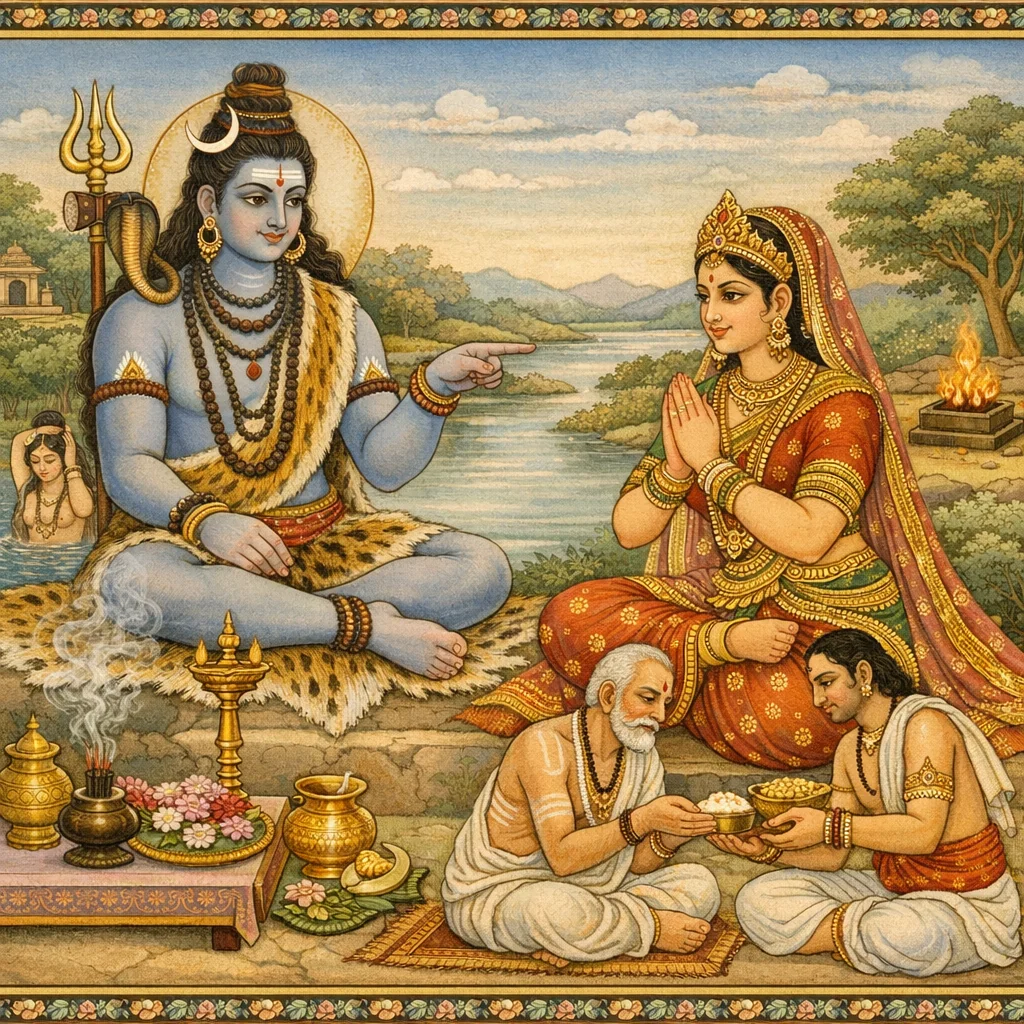
Chapter 112 has Īśvara instruct Devī in an itinerary-like manner, directing her to the eminent shrine of Lakṣmaṇeśvara, situated east of Rāmeśa at a specified distance of thirty dhanus. The liṅga there is said to have been installed by Lakṣmaṇa during his pilgrimage journey; it is praised as a remover of great sins and as worshipped by the gods. The chapter lays down modes of devotion: worship with dance, song, and instrumental music, along with homa and japa, while the devotee remains established in meditative absorption, culminating in the promise of “paramā gati,” the supreme goal. It also codifies dāna procedure: after honoring the deity with sequential offerings such as fragrance and flowers, one should give food, water, and gold to a qualified dvija. A calendrical emphasis follows—worship on kṛṣṇa-caturdaśī (the fourteenth day of the dark fortnight) in Māgha is singled out, with bathing, gifting, and japa declared akṣaya, imperishable in result. The closing colophon places the chapter within the Prabhāsa Khaṇḍa and the Prabhāsakṣetramāhātmya framework.
Shlokas
Verse 1
ईश्वर उवाच । ततो गच्छेन्महादेवि लक्ष्मणेश्वरमुत्तमम् । रामेशात्पूर्वदिग्भागे धनुस्त्रिंशकसंस्थितम्
Īśvara said: Then, O great goddess, one should go to the excellent Lakṣmaṇeśvara, located thirty dhanus to the east of Rāmeśvara.
Verse 2
स्थापितं लक्ष्मणेनैव तत्र यात्रागतेन वै । महापापहरं देवि तल्लिंगं सुरपूजितम्
That liṅga was indeed established there by Lakṣmaṇa himself when he arrived on pilgrimage. O Goddess, it removes great sins and is worshipped by the gods.
Verse 3
यस्तं पूजयते भक्त्या नृत्यगीतादिवादनैः । होमजाप्यैः समाधिस्थः स याति परमां गतिम्
Whoever worships Him with devotion—through dance, song, and instrumental music—and with homa and repeated mantra-recitation, abiding in samādhi, attains the supreme destination.
Verse 4
अन्नोदकं हिरण्यं च तत्र देयं द्विजातये । संपूज्य देवदेवेशं गंधपुष्पादिभिः क्रमात्
There, food and water, and also gold, should be given to a twice-born (brāhmaṇa). Having duly worshipped the Lord of gods with fragrances, flowers, and the like in proper order—
Verse 5
माघे कृष्णचतुर्दश्यां विशेषस्तत्र पूजने । स्नानं दानं जपस्तत्र भवेदक्षयकारकम्
On the dark fourteenth day (kṛṣṇa-caturdaśī) of Māgha, worship there is especially efficacious. Bathing, charity, and mantra-recitation performed there become imperishable in their merit.
Verse 112
इति श्रीस्कांदे महापुराण एकाशीति साहस्र्यां संहितायां सप्तमे प्रभासखण्डे प्रथमे प्रभासक्षेत्रमाहात्म्ये रामेश्वरक्षेत्रमाहात्म्ये लक्ष्मणेश्वरमाहात्म्यवर्णनंनाम द्वादशोत्तरशततमो ऽध्यायः
Thus ends, in the Śrī Skanda Mahāpurāṇa—within the compendium of eighty-one thousand verses—in the seventh, the Prabhāsa-khaṇḍa, within the first Prabhāsa-kṣetra-māhātmya, in the Rāmeśvara-kṣetra-māhātmya, the one-hundred-and-twelfth chapter entitled “The Description of the Greatness of Lakṣmaṇeśvara.”