Adhyaya 109
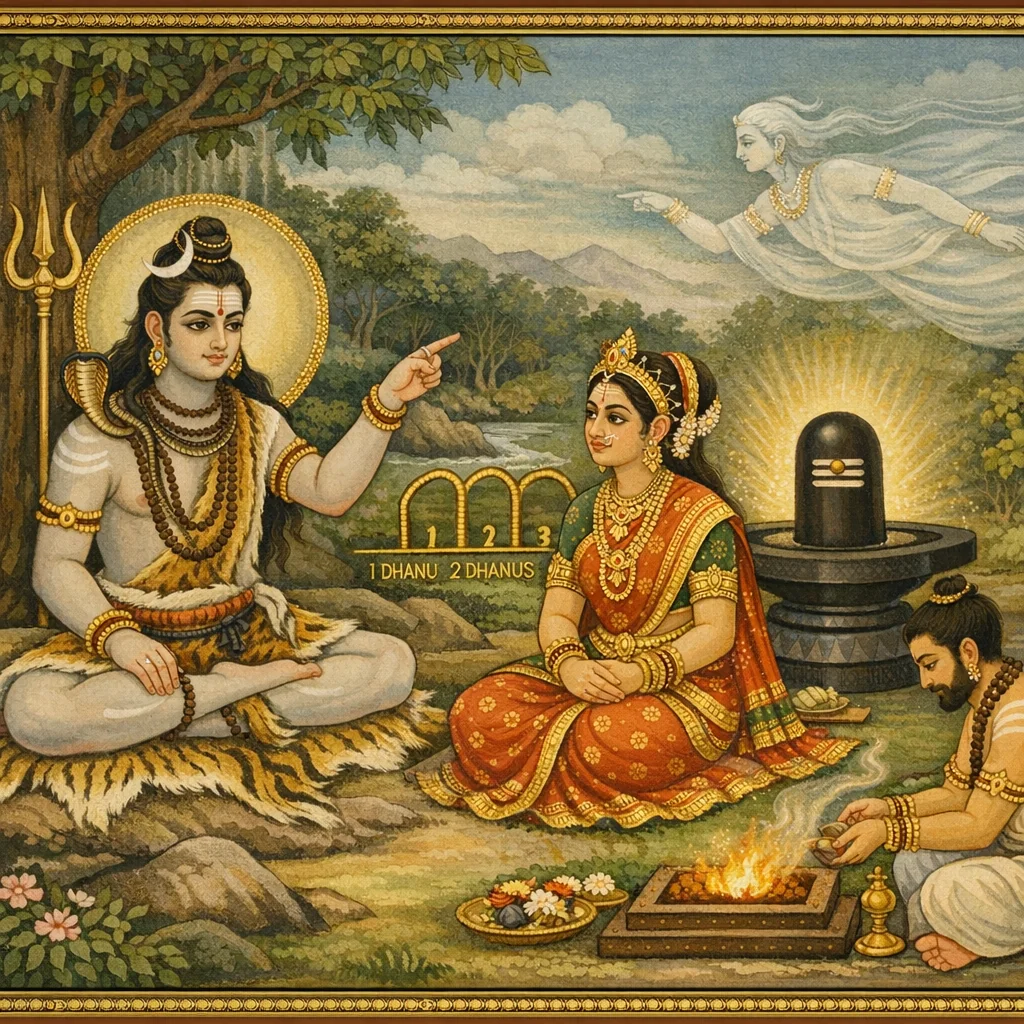
Īśvara instructs Mahādevī to proceed to the eminent sacred place of Anileśvara. It lies in the northern quarter, precisely marked as three dhanus away, and its liṅga is praised as of great power (mahāprabhāva), destroying sin through mere darśana. The account links Anila with the Vasus, naming him the fifth Vasu. Anila worshipped Mahādeva, made Śiva manifest before him (pratyakṣīkṛta), and with proper śraddhā established the liṅga. By Īśa’s power, Anila’s son Manojava becomes strong and exceedingly swift, his movement impossible to trace—an example of divine favor. Those who behold the form and the site are said to gain protection and auspiciousness: freedom from affliction, and the absence of disability and poverty. Even a minimal offering—placing a single flower upon the liṅga—bestows happiness, fortune, and beauty. The chapter ends with a phalāśruti: hearing and approving this sin-destroying māhātmya leads to the fulfillment of one’s aims.
Shlokas
Verse 1
ईश्वर उवाच । ततो गच्छेन्महादेवि अनिलेश्वरमुत्तमम् । तस्योत्तरेशानदिक्स्थं धनुषां त्रितये प्रिये
Īśvara said: Then, O Great Goddess, one should go to the excellent Anileśvara. Beloved, it stands to its north, in the Īśāna quarter, at a distance of three bow-lengths.
Verse 2
लिंगं महाप्रभावं हि दर्शनात्पापनाशनम् । वसूनां पञ्चमो योऽसावनिलः परिकीर्तितः
That liṅga is indeed of great power; merely by seeing it, sins are destroyed. Anila—so celebrated—is the fifth among the Vasus.
Verse 3
स चाऽराध्य महादेवं प्रत्यक्षीकृतवान्भवम् । लिंगं प्रतिष्ठयामास सम्यक्छ्रद्धासमन्वितः
And he, having worshipped Mahādeva, made Bhava manifest before his very eyes; endowed with proper faith, he duly established the liṅga.
Verse 4
एवमीशप्रभावेन सुतस्तस्याऽप्यभूद्बली । मनोजवेति विख्यातो ह्यविज्ञातगतिस्तथा
Thus, by the Lord’s power, even his son became mighty—famed as Manojava—whose movements were likewise unfathomable.
Verse 5
तं दृष्ट्वा व्याधिना मर्त्यो पीड्यते न कदाचन । नान्धो न बधिरो मूको न रोगी न च निर्धनः । कदाचिज्जायते मर्त्यस्तेन दृष्टेन भूतले
Having beheld Him (Śiva) at that holy spot, a mortal is never again tormented by disease. On this earth, one who has seen Him is never born—at any time—as blind, deaf, mute, sick, or poor.
Verse 6
पुष्पमेकं तु यो दद्यात्तस्य लिंगस्य चोपरि । सुखसौभाग्यसंपन्नः स सदा रूपवान्भवेत्
Whoever offers even a single flower upon that Liṅga becomes endowed with happiness and good fortune, and ever remains possessed of beauty and pleasing form.
Verse 7
इत्येवं कथितं देवि माहात्म्यं पापनाशनम् । श्रुत्वाऽनुमोद्य भावेन सर्वकामैः समृद्ध्यते
Thus, O Goddess, this greatness has been declared—destroyer of sins. One who hears it and assents with a devout, appreciative heart becomes fulfilled with all desired aims.
Verse 109
इति श्रीस्कांदे महापुराण एकाशीतिसाहस्र्यां संहितायां सप्तमे प्रभासखण्डे प्रथमे प्रभासक्षेत्रमाहात्म्ये ऽनिलेश्वरमाहात्म्यवर्णनंनाम नवोत्तरशतत मोऽध्यायः
Thus ends the one-hundred-and-ninth chapter, called “The Description of the Greatness of Anileśvara,” in the first Prabhāsa-kṣetra Māhātmya of the seventh, Prabhāsa Khaṇḍa of the Śrī Skanda Mahāpurāṇa, in the Ekāśīti-sāhasrī Saṃhitā.