Adhyaya 106
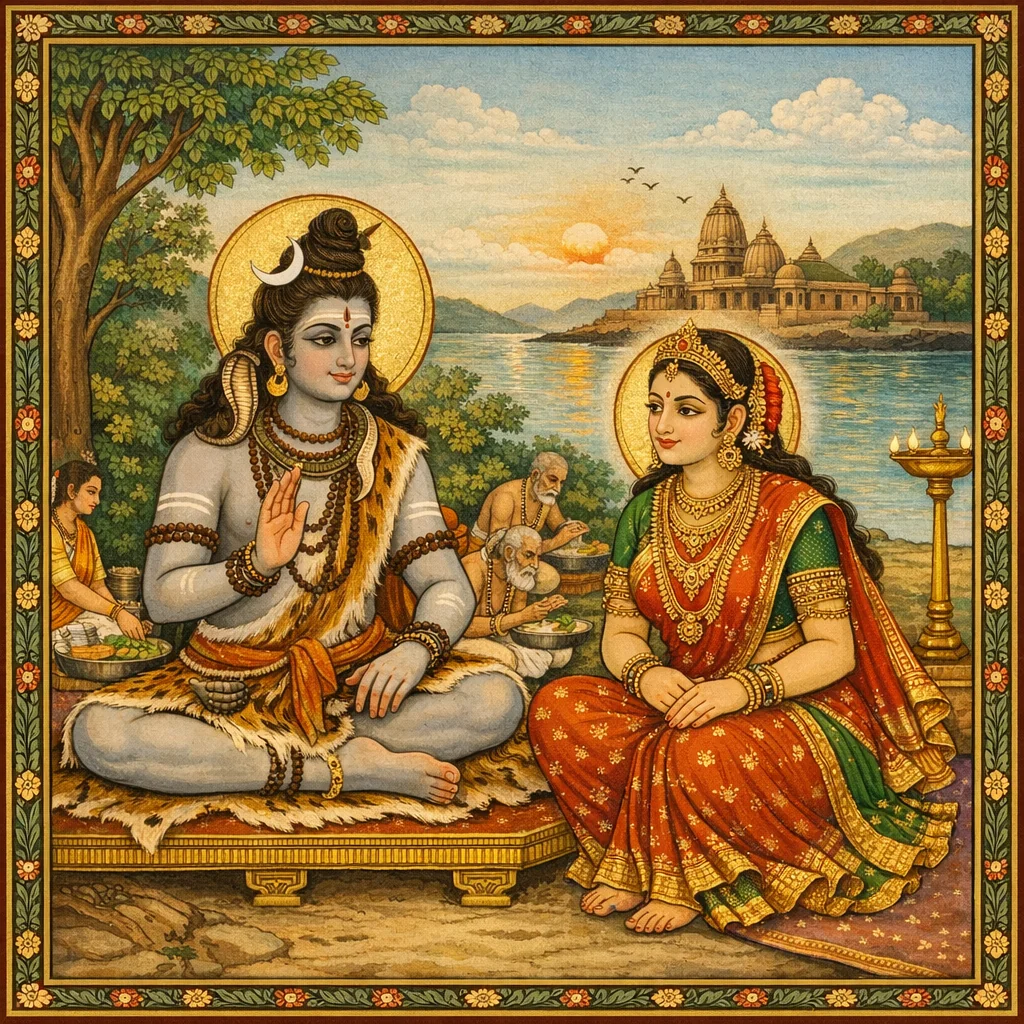
The chapter unfolds as a theological Q&A. Devī asks how the non-dual Brahman—manifest at Prabhāsa as Pitāmaha (Brahmā) in a child-form—is to be worshiped, which mantras and ritual rules apply, and what kinds of Brahmins dwell in the kṣetra and how their residence yields the kṣetra’s fruit. Īśvara answers by recasting worship in social-ethical ritual terms: Brahmins are proclaimed a direct earthly manifestation of the divine, and honoring them is treated as equal to—and in some statements greater than—honoring iconic forms. The text sternly forbids testing, insulting, or harming Brahmins, including those who are poor, sick, or physically impaired, and declares severe consequences for violence or humiliation. Offering food and drink is emphasized as a primary act of reverence. It then presents a typology of kṣetra-resident Brahmin livelihoods and disciplines (multiple named categories) with brief behavioral markers such as vows, austerities, and modes of subsistence. The chapter concludes that disciplined, Veda-engaged Brahmins in Prabhāsa are the proper worshipers of the child-form Pitāmaha, while those barred for major transgressions should not approach that worship.
Shlokas
Verse 1
देव्युवाच । एवमद्वैतभावेन यद्ब्रह्म परिकीर्तितम् । तस्य पूजा विधानं मे कथयस्व यथार्थतः
The Goddess said: “Since Brahman has been proclaimed in this manner as non-dual, tell me truly and precisely the procedure for Its worship.”
Verse 2
क्षेत्रे प्राभासिके देव बालरूपी पितामहः । स कथं पूज्यते लोकैः परब्रह्मस्वरूपवान्
O Lord, in the holy region of Prābhāsa, Pitāmaha (Brahmā) abides in the form of a child. How are people to worship him, whose true nature is the Supreme Brahman?
Verse 3
के मन्त्राः किं विधानं तद्बाह्मणास्तत्र कीदृशाः । तत्र स्थितानां विप्राणां कथं क्षेत्रफलं भवेत्
Which mantras are to be employed, and what is the proper procedure? What kind of brāhmaṇas are found there? And for the vipras who dwell there, how does the sacred merit of that kṣetra come to be gained?
Verse 4
कतिप्रकारास्ते विप्रास्तत्र क्षेत्रनिवासिनः । किमाचारा महादेव किंशीलाः किंपरायणाः
O Mahādeva, of how many kinds are the brāhmaṇas who dwell in that sacred field? What is their conduct? What is their character, and to what are they devoted as their highest refuge?
Verse 5
एतद्विस्तरतो ब्रूहि ब्राह्मणानां महोदयम्
Explain this in detail—the great eminence and exalted status of the brāhmaṇas.
Verse 6
ईश्वर उवाच । साधुसाधु महादेवि सम्यक्प्रश्नविशारदे । शृणुष्वैकमना भूत्वा माहात्म्यं विप्रदैवतम्
Īśvara said: “Excellent, excellent, O Mahādevī—skilled in asking the right questions. Listen with a one-pointed mind to the greatness of the brāhmaṇas, who are themselves a form of divinity.”
Verse 7
यच्छ्रुत्वा मानवो देवि मुच्यते सर्वपातकैः । ये केचित्सागरांतायां पृथिव्यां कीर्तिता द्विजाः
Hearing this, O Devī, a person is freed from all sins. Whatever Brāhmaṇas are renowned across the earth bounded by the ocean—their glory is encompassed herein.
Verse 8
तद्रूपं मम देवेशि प्रत्यक्षं धरणीतले प्रत्यक्षं ब्राह्मणा देवाः परोक्षं दिवि देवताः
O Deveśī, that very form of mine is visible upon the earth: the Brāhmaṇas are the manifest gods; the deities in heaven are only indirectly perceived.
Verse 9
ब्राह्मणा मत्प्रिया नित्यं ब्राह्मणा मामकी तनुः । यस्तानर्चयते भक्त्या स मामर्चयते सदा
Brāhmaṇas are always dear to me; Brāhmaṇas are my very body. Whoever worships them with devotion worships me continually.
Verse 11
ये ब्राह्मणाः सोऽहमसंशयं प्रिये तेष्वर्चितेष्वर्चितोऽहं भवेयम् । तेष्वेव तुष्टेष्वहमेव तुष्टो वैरं च तैर्यस्य ममापि वैरम्
Those Brāhmaṇas—indeed, that is I myself, without doubt, O beloved. When they are honored, I am honored. When they are pleased, I am pleased; and whoever bears enmity toward them, bears enmity toward me as well.
Verse 12
यश्चन्दनैः सागरुगन्धमाल्यै रभ्यर्चयेच्छैलमयीं ममार्चाम् । असौ न मामर्चयतेर्चयन्वै विप्रार्चनादर्चित एव चाहम्
Even if someone lavishly worships my stone image with sandalpaste and fragrant garlands, he does not truly worship me thereby; for I am worshiped in truth when Brāhmaṇas are worshiped.
Verse 13
यावंतः पृथिवीमध्ये चीर्णवेदव्रता द्विजाः । अचीर्णव्रतवेदा वा तेऽपि पूज्या द्विजाः प्रिये
All the Brāhmaṇas in the midst of the earth—whether they have duly undertaken Vedic vows and disciplines, or even if they have not—are to be honored, O beloved.
Verse 14
न ब्राह्मणान्परीक्षेत श्राद्धे क्षेत्रनिवासिनः । सुमहान्परिवादोऽस्य ब्राह्मणानां परीक्षणे
In a Śrāddha rite, one should not examine or test the Brāhmaṇas who reside in the sacred field. For in testing Brāhmaṇas, a very great fault and blame is incurred.
Verse 15
काणाः खञ्जाश्च कृष्णाश्च दरिद्रा व्याधितास्तथा । सर्वे श्राद्धे नियोक्तव्या मिश्रिता वेदपारगैः
Those who are one-eyed, lame, dark-complexioned, poor, or afflicted by disease—such persons too should all be invited and engaged in the Śrāddha, seated together along with Brāhmaṇas learned in the Vedas.
Verse 16
ब्राह्मणा जातितः पूज्या वेदाभ्यासात्ततः परम् । ततोर्थं हव्यकव्येषु न निन्द्या ब्राह्मणाः क्वचित्
Brāhmaṇas are worthy of honor by birth; even more so through the study and practice of the Vedas. Therefore, especially in offerings of oblations to gods and ancestors (havya and kavya), Brāhmaṇas should never be disparaged anywhere.
Verse 17
काणान्कुण्टांश्च कुब्जाश्च दरिद्रान्व्याधितानपि । नावमन्येद्द्विजान्प्राज्ञो मम रूपं यतः स्मृतम्
The wise should not disdain dvijas—even if they are one-eyed, maimed, hunchbacked, poor, or diseased—for they are remembered as bearing My very form.
Verse 18
बहवो हि न जानंति नरा ज्ञानबहिष्कृताः । यथाहं द्विजरूपेण चरामि पृथिवीमिमाम्
Many people, shut out from true understanding, do not know that I wander upon this earth in the very guise of a dvija (Brāhmaṇa).
Verse 19
मद्रूपान्घ्नन्ति ये विप्रान्विकर्म कारयंति च । अप्रेषणे प्रेषयंति दासत्वं कारयन्ति च
Those who strike Brāhmaṇas—who are of My own form—who make them do forbidden acts, who send them on errands unfit to be imposed, and who force them into servitude—(such people incur grievous sin).
Verse 20
मृतांस्तान्करपत्रेण यमदूता महाबलाः । निकृंतंति यथा काष्ठं सूत्रमार्गेण शिल्पिनः
After their death, mighty servants of Yama cut them with ‘karapatra’ blades, just as craftsmen cut wood along a measured line.
Verse 21
ये चैवाश्लक्ष्णया वाचा तर्जयन्ति नराधमाः । वदंति परुषं क्रोधात्पादेन निहनंति च
Those basest of men who threaten with harsh speech, who speak cruelly in anger, and who even strike with the foot—
Verse 22
मृतांस्तान्यमलोका हि निहत्य धरणीतले । क्रूरपादेन चाक्रम्य क्रोधसंरक्तलोचनाः
When those men die, the beings of Yama’s realm strike them down upon the ground, trampling them with cruel feet, their eyes reddened with wrath.
Verse 24
अब्रह्मण्यास्तु ते बाह्या नित्यं ब्रह्मद्विषो नराः । तेषां घोरा महाकाया वज्रतुंडा भयानकाः । उद्धरंति मुहूर्तेन चक्षुः काका यमाज्ञया
Those people who are hostile to the sacred order of Brāhmaṇas are outsiders, ever hating Brahman. For them, dreadful, huge-bodied, terrifying crows with thunderbolt-like beaks, by Yama’s command, pluck out the eyes in an instant.
Verse 25
यस्ताडयति विप्रं वै क्षते कुर्याद्धि शोणितम् । अस्थिभंगं च वा कुर्यात्प्राणैर्वापि वियोजयेत्
Whoever beats a Brāhmaṇa, causing wounds and bleeding, or breaks his bones, or even separates him from life—
Verse 26
ब्रह्मघ्नः स तु विज्ञेयो न तस्मै निष्कृतिः स्मृता । पञ्चाशत्कोटिसंख्येषु नरकेष्वनुपूर्वशः
Know him to be a slayer of a Brāhmaṇa; for such a one, no expiation is taught. In due order, he falls through hells numbering fifty crores.
Verse 27
स बहूनि सहस्राणि वर्षाणि पच्यते भृशम् । तस्माद्विप्रो वरारोहे नमस्कार्यो नृभिः सदा
He is tormented intensely for many thousands of years. Therefore, O fair-hipped goddess, a Brāhmaṇa should always be bowed to by all people.
Verse 28
अन्नपानप्रदानैस्तु पूज्या हि सततं द्विजाः । सर्वेषां चैव दानानां विप्राः सर्वेऽधिकारिणः
Indeed, the twice-born should always be honored through gifts of food and drink. For among all forms of charity, Brāhmaṇas are the rightful recipients.
Verse 29
नान्यः समर्थो देवेशि गृह्णन्यात्यधमां गतिम् । तपसा पावितो देवि ब्राह्मणो धृतकिल्विषः
O Devī, Lady of the Lord of the gods, none other is able: one who accepts gifts may fall into a low destiny. But a brāhmaṇa—purified by austerity (tapas), O Devī—even while bearing sin, is sustained by that very tapas.
Verse 30
न सीदेत्प्रतिगृह्णानः पृथिवीमनुसागराम् । नास्ति किंचिन्महादेवि दुष्कृतं ब्राह्मणस्य तु
Even if he were to accept (gifts) across the whole earth up to the oceans, he would not sink. For, O Mahādevī, no evil deed at all clings to a brāhmaṇa so endowed.
Verse 31
यस्तु स्थितः सदाऽध्यात्मे नित्यं सद्भावभावितः । ब्राह्मणो हि महद्भूतं जन्मना सह जायते
But one who abides always in the inner Self (adhyātma), ever shaped by noble disposition—such a brāhmaṇa is born together with greatness itself.
Verse 32
लोके लोकेश्वराश्चापि सर्वे ब्राह्मणपूजकाः । ततस्तान्नावमन्येत यदीच्छेज्जीवितं चिरम्
Even the rulers of worlds are all worshipers of brāhmaṇas. Therefore one should not slight them, if one desires long life.
Verse 33
ब्राह्मणाः कुपिता हन्युर्भस्मीकुर्युः स्वतेजसा । लोकानन्यान्सृजेयुश्च लोकपालांस्तथाऽपरान्
When angered, brāhmaṇas could slay and reduce to ash by their own spiritual radiance; they could even create other worlds and other guardians of worlds.
Verse 34
अपेयः सागरो यैश्च कृतः कोपान्महात्मभिः । येषां कोपाग्निरद्यापि दंडके नोपशाम्यति
By those great-souled ones, in wrath, the ocean was made undrinkable; and the fire of their anger, even today, in Daṇḍaka is not quenched.
Verse 35
एते स्वर्गस्य नेतारो देवदेवाः सनातनाः । एभिश्चापि कृतः पंथा देवयानः स उच्यते
These are the leaders to heaven—the eternal ‘gods of gods’. By them, too, the path was established; it is called the Devayāna, the divine way.
Verse 36
ते पूज्यास्ते नमस्कार्यास्तेषु सर्वं प्रतिष्ठितम् । ते वै लोकानिमान्सर्वान्पारयंति परस्परम्
They are worthy of worship; they are worthy of reverent salutation—upon them everything stands established. Indeed, they enable all these worlds to cross over, sustaining one another in due order.
Verse 37
गूढस्वाध्यायतपसो ब्राह्मणाः शंसितव्रताः । विद्यास्नाता व्रतस्नाता अनपाश्रित्य जीविनः
Brāhmaṇas, whose self-study and austerity are inward and restrained, are praised for their vows. Bathed in sacred knowledge and bathed in discipline, they live without dependence on others.
Verse 38
आशीविषा इव क्रुद्धा उपचर्या हि ब्राह्मणाः । तपसा दीप्यमानास्ते दहेयुः सागरानपि
Like venomous serpents when enraged, Brāhmaṇas must indeed be approached with proper honor. Blazing with ascetic power, they could burn even the oceans.
Verse 39
ब्राह्मणेषु च तुष्टुषु तुष्यंते सर्वदेवताः । ते गतिः सर्वभूतानामध्यात्मगतिचिन्तकाः
When the Brāhmaṇas are pleased, all the gods are pleased. They are the refuge and the course for all beings—those who contemplate the inner spiritual path.
Verse 40
आदिमध्यावसानानां ज्ञानानां छिन्नसंशयाः । परापरविशेषज्ञा नेतारः परमां गतिम् । अवध्या ब्राह्मणास्तस्मात्पापेष्वपि रताः सदा
They have cut away doubt regarding knowledge—its beginning, middle, and end. Knowing the distinctions of higher and lower realities, they lead one to the supreme goal. Therefore Brāhmaṇas are not to be slain—even if they are ever engaged in sinful acts.
Verse 41
यश्च सर्वमिदं हन्याद्ब्राह्मणं चापि तत्समम् । सोऽग्निः सोऽर्को महातेजा विषं भवति कोपितः
Whoever would destroy all this, and likewise a Brāhmaṇa—equal to that total ruin—that blazing power, like fire and like the sun, becomes poison when angered.
Verse 42
भूतानामग्रभुग्विप्रो वर्णश्रेष्ठः पिता गुरुः । न स्कन्दते न व्यथते न विनश्यति कर्हिचित्
The Brāhmaṇa partakes first among beings; he is foremost among the social orders—father and teacher. In his dharmic stature he does not slip, does not suffer, and does not perish at any time.
Verse 43
वरिष्ठमग्निहोत्राद्धि ब्राह्मणस्य मुखे हुतम् । विप्राणां वपुराश्रित्य सर्वास्तिष्ठंति देवताः
Superior even to the agnihotra is what is offered into the mouth of a Brāhmaṇa. Taking refuge in the body of the learned vipras, all the deities abide.
Verse 44
अतः पूज्यास्तु ते विप्रा अलाभे प्रतिमादयः
Therefore those Brāhmaṇas are indeed to be worshipped; when they are not available, then images and the like serve as substitutes.
Verse 45
अविद्यो वा सविद्यो वा ब्राह्मणो मम दैवतम् । प्रणीतश्चाप्रणीतश्च यथाग्निर्दैवतं महत्
Whether unlearned or learned, a Brāhmaṇa is my deity. Whether kindled or unkindled—just as fire is a great divinity in either state.
Verse 46
स्मशानेष्वपि तेजस्वी पावको नैव दुष्यति । हव्यकव्यव्यपेतोऽपि ब्राह्मणो नैव दुष्यति
Even in cremation-grounds the blazing fire is not defiled. In the same way, even when deprived of offerings meant for gods and ancestors, a Brāhmaṇa is not thereby tainted.
Verse 47
महापातकवर्ज्यं हि पूज्यो विप्रो वरानने । सर्वथा ब्राह्मणाः पूज्याः सर्वथा दैवतं महत् । तस्मात्सर्वप्रयत्नेन रक्षेदापद्गतं द्विजम्
O fair-faced One, a Brāhmaṇa—so long as he is free from the great sins—is worthy of worship. Brāhmaṇas are always to be honored; they are, in every way, a great divinity. Therefore, with every effort one should protect a twice-born who has fallen into danger.
Verse 48
एवं विप्रा महादेवि पूज्याः सर्वत्र मानवैः । किं पुनः संजितात्मानो विशेषात्क्षेत्रवासिनः
Thus, O Great Goddess, Brāhmaṇas are to be honored everywhere by people. How much more, then, those self-controlled ones who dwell in this sacred kṣetra—who deserve special reverence.
Verse 49
अथ क्षेत्रस्थितानां च चतुराश्रमवासिनाम् । विप्राणां वृत्तितो भेदं प्रवक्ष्याम्यानुपूर्व्यशः
Now I shall declare, in proper order, the distinctions of livelihood among the brāhmaṇas—twice-born—who dwell in the sacred kṣetra and abide in the four āśramas.
Verse 50
क्षेत्रस्य संन्यासविधिं ये जानंति द्विजातयः । वृत्तिभेदं क्रमाच्चैव ते क्षेत्रफलभागिनः
Those twice-born who know the kṣetra’s ordinance of renunciation, and who in due sequence understand the distinctions of livelihood—such indeed partake of the sacred fruits of this holy field.
Verse 51
यथा क्षेत्रे निवसता वर्तितव्यं द्विजातिना । प्राजापत्यादिभेदेन तच्छृणु त्वं वरानने
How a twice-born should conduct himself while dwelling in the sacred kṣetra—classified as Prājāpatya and the other kinds—hear that, O fair-faced one.
Verse 52
प्राजापत्या महीपालाः कपोता ग्रंथिकास्तथा । कुटिकाश्चाथ वैतालाः पद्महंसा वरानने
O fair-faced one, the categories are: the Prājāpatyas, the Mahīpālas, the Kapotas, the Granthikas; likewise the Kuṭikās; and also the Vaitālas and the Padmahaṃsas.
Verse 53
धृतराष्ट्रा बकाः कंका गोपालाश्चैव भामिनि । त्रुटिका मठराश्चैव गुटिका दंडिकाः परे
O lovely lady, there are also the Dhṛtarāṣṭras, the Bakas, the Kaṅkas, and the Gopālas; likewise the Truṭikās and the Maṭharas; and further the Guṭikās and the Daṇḍikas.
Verse 54
क्षेत्रस्थानामिमे भेदा वृत्तिं तेषां शृणुष्व च
These are the divisions among those who dwell in the sacred kṣetra; now hear also the manner of their livelihood and the conduct proper to them.
Verse 55
अहिंसा गुरुशुश्रूषा स्वाध्यायः शौचसंयमः । सत्यमस्तेयमेतद्धि प्राजापत्यं व्रतं स्मृतम्
Non-violence, devoted service to one’s teacher, self-study (svādhyāya), purity and restraint, truthfulness, and non-stealing—this indeed is remembered as the Prājāpatya vow.
Verse 56
क्षयपुष्ट्यर्थविद्वेषकर्मभिः शांतिकादिभिः । पालयंति महीं यस्मान्महीपालास्ततः स्मृताः
Because they protect the earth by rites such as śāntika (pacification) and other acts—meant to avert decay, foster prosperity, secure welfare, and counter hostility—they are remembered as ‘mahīpālas’, guardians of the realm.
Verse 57
पतिता ये कणा भूमौ संहरंति कपोतवत् । उद्धृत्याजीवनं येषां कपोतास्ते तु साधकाः
Those who, like pigeons, gather up the grains fallen upon the ground, and whose livelihood is sustained by what they thus pick up—such practitioners are called ‘Kapotāḥ’ (the Pigeon-type sādhakas).
Verse 58
गृहं कृत्वा तु सद्ग्रंथाः सहसैव त्यजंति ये । कुटिका साधकास्ते वै शिवाराधनतत्पराः
Those who, though capable and well-instructed, build a dwelling yet suddenly renounce it—such practitioners are known as ‘Kuṭikā’ sādhakas, wholly intent on the worship of Śiva.
Verse 59
तीर्थासक्ताः सपत्नीका यथालब्धोपजीविनः । महासाहसयुक्तास्ते वैतालाख्यास्तु साधकाः
Those devoted to the tīrthas (sacred fords), dwelling with their wives, living on whatever comes of itself, and endowed with great daring—such practitioners are called the “Vaitāla” sādhakas.
Verse 60
संयताः कामनासक्ता राज्यकामार्थसाधकाः । पद्मास्ते साधकाः ख्याता भिक्षाचर्यारताः सदा
Self-controlled yet still attached to desires, striving for royal power and worldly gain—those practitioners are known as the “Padma” sādhakas, ever engaged in the discipline of living on alms.
Verse 61
ज्ञानयोगसमायुक्ता द्वैताचाररताश्च ये । हंसास्ते साधकाः ख्याताः स्वयमुत्पन्नसंविदः
Those joined to the yoga of knowledge (jñāna-yoga), delighting in disciplined conduct within a dualistic framework—such practitioners are famed as “Haṃsa” sādhakas, whose insight arises from within.
Verse 62
ब्रह्मचर्येण सत्त्वेन तथाऽलुब्धतयापि वा । जितं जगद्धारयन्तो धृतराष्ट्रा मतास्तु ये
Those who, through brahmacarya (sacred celibacy), purity of character, and freedom from greed, uphold the world in steadiness as though it were conquered—such persons are regarded as “Dhṛtarāṣṭras”, the world-upholders.
Verse 63
गूढाश्चरंति ये ज्ञानं व्रतं धर्ममथापि वा । स्वार्थैकागतनिष्ठास्तु बकास्ते साधका मताः
Those who practice knowledge, vows (vrata), or even dharma in a concealed manner, yet remain fixed solely on their own advantage—such practitioners are considered “Bakāḥ” sādhakas, heron-like in nature.
Verse 64
जलाश्रयं समाश्रित्य स्थिता उत्कृष्टसिद्धये । बिसशृंगाटकाहारास्ते कंकाः साधकाः स्मृताः
Those who take refuge by the waters and abide there seeking the highest attainments, living on lotus-stalks and water-chestnuts—such practitioners are remembered as ‘Kaṅka’ sādhakas.
Verse 65
गोभिः सार्द्धं व्रजंत्यत्र गोष्ठे च निवसंति ये । पंचगव्यरसा ये वै गोपालास्ते तु साधकाः
Those who here move about with the cows and dwell in the cowherds’ settlement, living on the essences of the pañcagavya—such practitioners are indeed called ‘Gopāla’ sādhakas.
Verse 66
कृच्छ्रचांद्रायणैश्चैव क्षपयंति स्वकं वपुः । त्रुटिमात्राशनास्ते तु त्रुटिकाः साधका मताः
By severe austerities such as the Kṛcchra and Cāndrāyaṇa vows, they emaciate their own bodies. Those practitioners who subsist on food only in a measure as minute as a ‘truṭi’ are regarded as Truṭikā-sādhakas.
Verse 67
कृत्वा कुशमयीं पत्नीं मठे ये गृहमेधिनः । भैक्षवृत्तिरताः शुद्धा मठरास्ते तु साधकाः
Those householders who, dwelling in a monastery, fashion a ‘wife’ made of kuśa-grass, live by alms, and remain pure—such practitioners are known as Maṭharā-sādhakas.
Verse 68
ग्रासमात्रसमानाभिर्गुटिकाभिरथाष्टभिः । कन्दमूलफलोत्थाभिर्गुटिकास्ते द्विजातयः
Those twice-born who live on eight small pellets, each equal to a single mouthful, prepared from roots, tubers, and fruits—these are called Guṭikā practitioners.
Verse 69
स्वदेहदण्डनैर्युक्ता रात्रौ वीरासने स्थिताः । दंडिनस्ते समाख्याताः सर्वमेतत्तवोदितम्
Practicing self-discipline upon their own bodies and remaining seated at night in the vīrāsana posture, they are known as Daṇḍins. All this has been declared by you.
Verse 70
सामान्योऽपि विशेषश्च वृत्तिनो गृहिणोऽपि वा । तेषां भेदो मया ख्याताः सम्यक्क्षेत्रनिवासिनाम्
Whether ordinary or exceptional, whether living as a mendicant or even as a householder, I have explained the distinctions among those who truly dwell in the sacred kṣetra in the proper manner.
Verse 71
एवमादिधर्मयुक्ताः प्रभासक्षेत्रवासिनः । तैः पूज्यो भगवान्देवो बालरूपी पितामहः
Thus, endowed with the primordial dharma, the residents of Prabhāsa-kṣetra worship the Blessed Lord—Pitāmaha (Brahmā) who appears in the form of a child.
Verse 72
महापातकिनो ये तु ये तु विप्रैर्बहिष्कृताः । न च ते संस्पृशेयुर्वै ब्रह्माणं बालरूपिणम्
But those who are great sinners, and those who have been excluded by the brāhmaṇas, should not even touch Brahmā who is in the form of a child.
Verse 73
ब्रह्मचारी सदा दांतो जितक्रोधो जितेंद्रियः । एवं ते ब्राह्मणाः ख्याताः क्षेत्रमध्यनिवासिनः
Always observing brahmacarya, ever self-restrained, having conquered anger and mastered the senses—thus are those brāhmaṇas known who dwell in the heart of the sacred kṣetra.
Verse 74
तैः पूज्यो भगवान्देवो बालरूपी पितामहः । ये वेदाध्ययने युक्तास्तैः प्रपूज्यः पितामहः
By them the Blessed Lord—Pitāmaha (Brahmā) in the form of a Child—is to be worshipped. And by those devoted to Vedic study, Pitāmaha is to be worshipped with special reverence.
Verse 106
इति श्रीस्कान्दे महापुराण एकाशीतिसाहस्र्यां संहितायां सप्तमे प्रभासखण्डे प्रथमे प्रभासक्षेत्रमाहात्म्ये मध्ययात्रायां ब्राह्मणप्रशंसा वर्णनंनाम षडुत्तरशततमोऽध्यायः
Thus ends the one-hundred-and-sixth chapter, called “The Account of the Praise of the Brāhmaṇas,” in the Prabhāsa Khaṇḍa—within the Prabhāsakṣetra Māhātmya, in the context of the Middle Pilgrimage (Madhya-yātrā), of the Śrī Skanda Mahāpurāṇa in the Ekāśīti-sāhasrī Saṃhitā.