Adhyaya 104
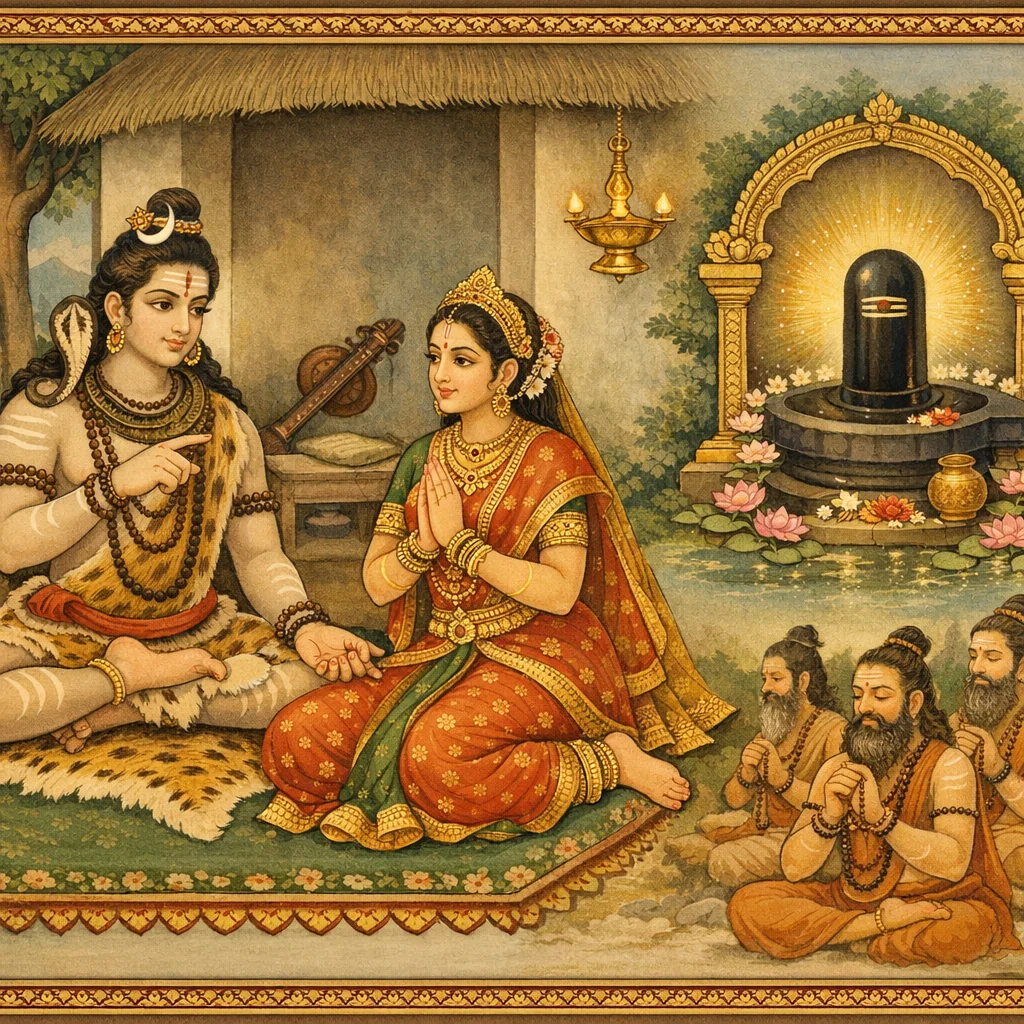
Īśvara instructs Devī on a directional order of pilgrimage: the seeker should go to the exalted Kotīśvara, and to its north the place is also known as Koṭīśa. The chapter explains the sanctity of the site through an earlier event near Kapāleśvara. Pāśupata ascetics—ash-smeared, matted-haired, wearing muñja-girdles, self-controlled and anger-conquering brāhmaṇa Śiva-yogins—performed intense tapas while ranging through the kṣetra in all four directions. Numbering a “koṭi” (a crore) and devoted to mantra-japa, they duly established a liṅga near Kapāleśa and worshiped it with devotion. Pleased, Mahādeva granted them mukti; and since a koṭi of ṛṣis attained siddhi there, the liṅga became renowned on earth as Kotīśvara. The text also states merit-equivalences: devoted worship of Kotīśvara yields the fruit of koṭi mantra-japa; gifting gold to a Veda-versed brāhmaṇa at this site yields merit comparable to koṭi homas, affirming the pilgrimage as truly fruitful.
Shlokas
Verse 1
ईश्वर उवाच । ततो गच्छेन्महादेवि कोटीश्वरमनुत्तमम् । तस्मादुत्तरतो देवि कोटीशमिति विश्रुतम्
Īśvara said: Then, O Mahādevī, one should go to the unsurpassed Koṭīśvara. To its north, O Goddess, lies the place renowned as Koṭīśa.
Verse 2
पापघ्नं सर्वजंतूनां पशुपाशविमोक्षदम् । पुरा पाशुपता देवि कपालेश्वरसंनिधौ
It destroys the sins of all beings and grants release from the bonds of Paśu (worldly fetters). Formerly, O Goddess, the Pāśupatas—near Kapāleśvara—
Verse 3
तपः कुर्वंति विपुलं भस्मोद्धूलितविग्रहाः । जटामुकुटसंयुक्ता मुंजमेखलधारिणः
They performed abundant austerities—bodies smeared with sacred ash, crowned with matted locks (jaṭā), and wearing girdles of muñja grass.
Verse 4
शांताः सर्वे जितक्रोधा ब्राह्मणाः शिवयोगिनः । तपः कुर्वंति तत्रस्था व्याप्य क्षेत्रं चतुर्द्दिशम्
All were tranquil, anger-conquered brāhmaṇas—Śiva-yogins—dwelling there and performing austerities, filling the sacred region in all four directions.
Verse 5
कोटिसंख्या महादेवि मन्त्रजाप्यपरायणाः । सम्यक्संस्थाप्य ते लिंगं कपालेशसमीपगम्
Numbering a koṭi, O Mahādevī, wholly devoted to mantra-recitation, they duly established a liṅga near Kapāleśa.
Verse 6
ततस्ते पूजयांचक्रुस्तल्लिंगं भक्तिसंयुताः । ततस्तुष्टो महादेवो मुक्तिं तेषां ददौ हरः
Then, filled with devotion, they worshipped that liṅga. Pleased, Mahādeva—Hara—granted them liberation (mokṣa).
Verse 7
ऋषयः कोटिसंख्यातास्तस्मिन्सिद्धा यतः प्रिये । तेन कोटीश्वरं लिंगं नाम्ना ख्यातं धरातले
O beloved, because sages numbering a koṭi attained perfection there, that liṅga became renowned on earth by the name Koṭīśvara.
Verse 8
यस्तं पूजयते भक्त्या कोटीश्वरमनामयम् । स कोटिमन्त्रजाप्यस्य फलं प्राप्स्यति मानवः
Whoever worships the flawless Lord Koṭīśvara with devotion attains the merit that arises from the japa of ten million mantras.
Verse 9
हिरण्यं तत्र दातव्यं ब्राह्मणे वेदपारगे । कोटिहोमफलं तस्य सम्यग्यात्राफलं भवेत्
There one should gift gold to a Brāhmaṇa well-versed in the Vedas; its fruit equals that of ten million homas and becomes the full, proper reward of the pilgrimage.
Verse 104
इति श्रीस्कांदे महापुराण एकाशीतिसाहस्र्यां संहितायां सप्तमे प्रभासखण्डे प्रथमे प्रभासक्षेत्रमाहात्म्ये कोटीश्वरमाहात्म्यवर्णनंनाम चतुरधिक शततमोऽध्यायः
Thus ends the one-hundred-and-fourth chapter, called “The Description of the Greatness of Koṭīśvara,” in the first Prabhāsa-kṣetra Māhātmya of the seventh book, the Prabhāsa Khaṇḍa, within the Śrī Skanda Mahāpurāṇa of eighty-one thousand verses.