Adhyaya 102
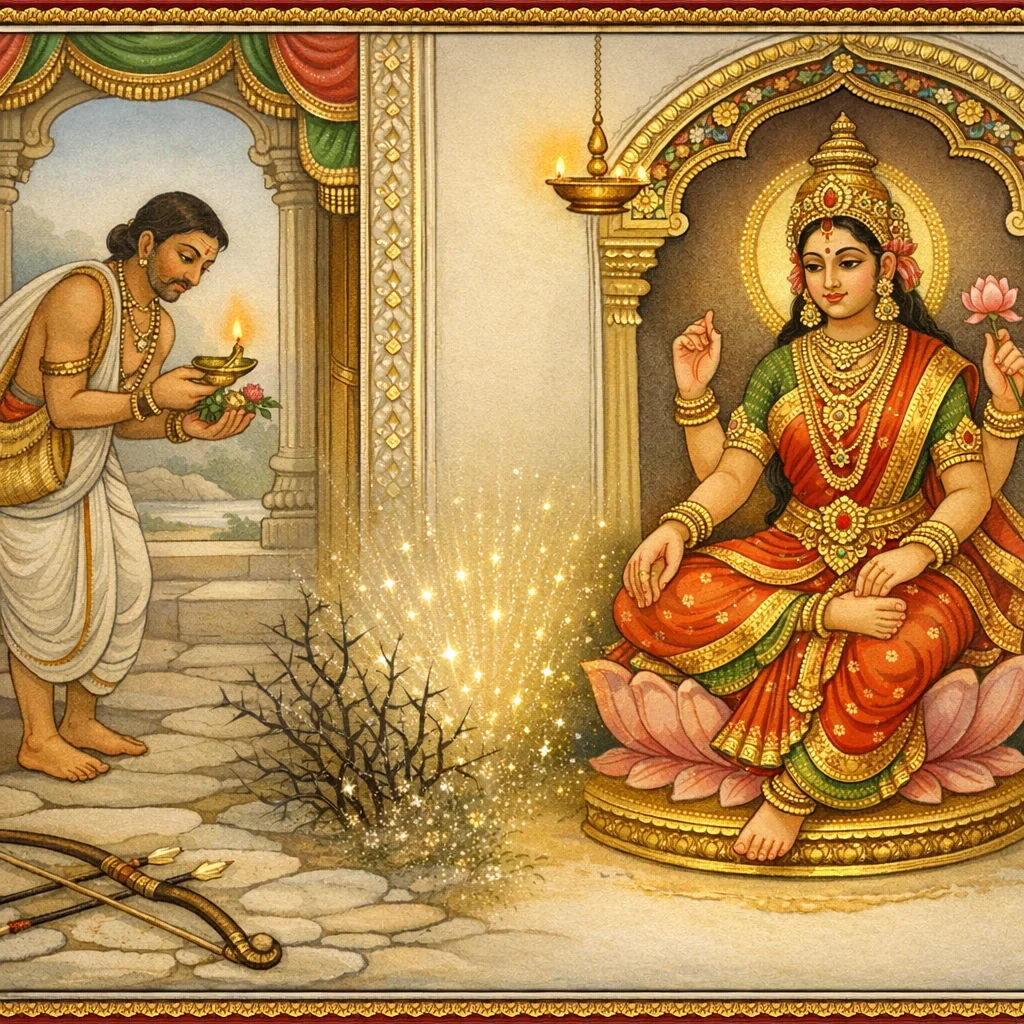
This adhyāya gives a brief tīrtha-focused instruction concerning the Devī Kaṇṭakaśodhinī, “Remover of Thorns/Obstacles.” Her shrine is located by directional description: the devotee is to go to the northern sector, at a distance of “two dhanus” (a traditional bow-length measure). She is praised with protective, martial epithets—Mahīṣaghnī (slayer of the buffalo-demon), great-bodied, and worshipped by Brahmā and the devarṣis—affirming her exalted place in Purāṇic devotion. A mythic purpose is stated: across successive ages she purifies and removes the “thorns,” the demonic forces called devakantaka who afflict the gods. The chapter prescribes worship on the bright-fortnight Navamī of Āśvayuja, with paśu offerings and floral oblations, along with fine lamps and incense. The phalaśruti promises the worshipper freedom from enemies for a year; and, when beheld with sincere devotion, the goddess protects the devotee like a son, whether one comes on a special visit or regularly. The closing frames this as a short, sin-destroying māhātmya whose very hearing is supremely protective.
Shlokas
Verse 1
ततो गच्छेन्महादेवि देवीं कंटकशोधिनीम् । तस्यैवोत्तरदिग्भागे धनुर्द्वितयसंस्थिताम्
Thereafter, O great Goddess, one should go to the Goddess called Kaṇṭakaśodhinī. She is situated to the northern side of that very sacred place, at a distance of two dhanu (bow-length measures).
Verse 2
महिषघ्नीं महाकायां ब्रह्मदेवर्षिपूजिताम् । पुरा ये कल्मषोपेता दानवा देवकंटकाः
She is the slayer of Mahīṣa (the buffalo-demon), vast in form, and worshipped by Brahmā, the Devas, and the seers. In former times the Dānavas—stained by sin and a thorn to the Devas—were subdued by her.
Verse 3
युगेयुगे शोधयेत्तांस्तेन कंटकशोधिनी । आश्वयुक्छुक्लपक्षे तु नवम्यां तामथार्चयेत्
Age after age she purifies and removes those “thorns” (afflictions); therefore she is called Kaṇṭakaśodhinī. One should worship her on Navamī, the ninth lunar day, in the bright fortnight of Āśvayuja.
Verse 4
पशुपुष्पोपहारैश्च दीपधूपैस्तथोत्तमैः । तस्याऽरयो न जायंते यावद्वर्षं वरानने
With offerings such as sacrificial animals and flowers, and with excellent lamps and incense, one should honor her. O fair-faced one, for that devotee enemies do not arise for the whole year.
Verse 5
यस्तां पश्यति सद्भक्त्या भूताया नित्यमेव वा तं पुत्रमिव कल्याणी संरक्षति न संशयः
Whoever beholds her with true devotion—whether at the sacred shrine or even day by day—she, the auspicious Goddess, protects that person like her own son; of this there is no doubt.
Verse 6
इति संक्षेपतः प्रोक्तं माहात्म्यं पापनाशनम् । देवि कंटकशोधिन्याः श्रुतं रक्षाकरं परम्
Thus, in brief, the sin-destroying greatness has been declared. O Devī, hearing the supreme glory of Kaṇṭakaśodhinī itself becomes the highest source of protection.