Adhyaya 101
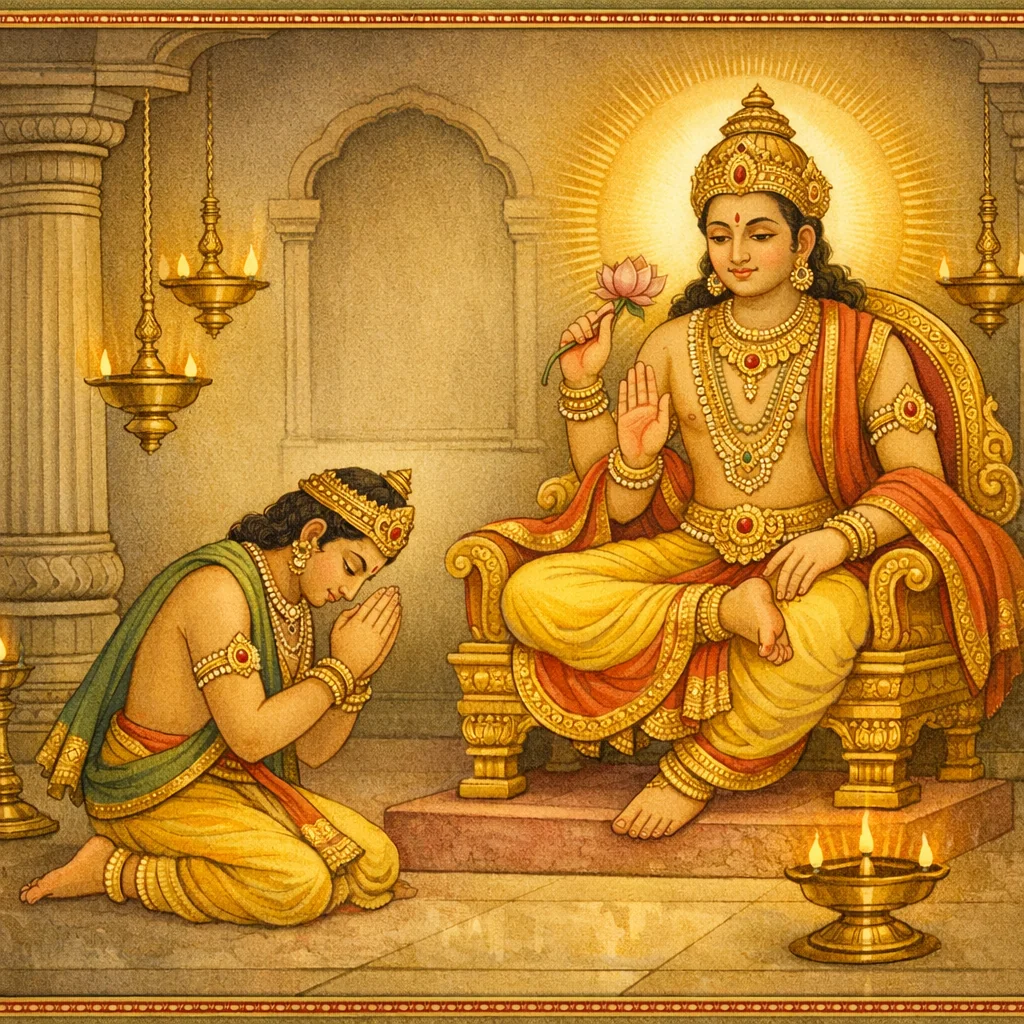
This chapter presents a theological and ethical episode that links conduct with karmic consequence and shows devotion as the remedy. Nārada comes to Dvāravatī and observes the courtly life of the Yādavas; Sāmba’s irreverence becomes the spark. Nārada raises the unsettling theme that attention becomes unstable under intoxication and social pressures, and Kṛṣṇa responds thoughtfully as events unfold like a test. On a pleasure outing, Nārada summons Sāmba before Kṛṣṇa and the women of the inner apartments; in agitation and loss of restraint—heightened by drink—disorder arises. Kṛṣṇa utters a curse as an ethical warning about diverted attention, social vulnerability, and the karmic cost of negligence: some women are said to fall from promised destinations and later be seized by bandits, while the principal queens are protected by their steadiness. Sāmba too is cursed with leprosy, turning the narrative toward expiation. Sāmba performs severe austerities at Prabhāsa, installs and worships Sūrya (the Sun-god) with a prescribed hymn, and receives a boon of healing along with restraints on conduct. The chapter then gives doctrinal and ritual catalogues: Sūrya’s twelve names, the twelve Ādityas aligned with the months, and a vrata sequence (notably in Māgha’s bright fortnight from the fifth to the seventh day) with offerings such as karavīra flowers and red sandal, worship procedures, feeding of brāhmaṇas, and promised fruits. The concluding phalāśruti declares that hearing this account removes sins and grants health.
Shlokas
Verse 1
ईश्वर उवाच । एतस्मिन्नेव काले तु नारदो भगवानृषिः । ब्रह्मणो मानसः पुत्रस्त्रिषु लोकेषु गर्वितः
Īśvara said: “At that very time, the divine sage Nārada—mind-born son of Brahmā—was renowned throughout the three worlds.”},{
Verse 2
सर्वलोकचरः सोऽपि युवा देवनमस्कृतः । तथा यदृच्छया चायमटमानः समंततः
He too was a wanderer through all the worlds—youthful, and honored even by the gods. Thus, roaming in every direction, he moved about by chance.
Verse 3
वासुदेवं स वै द्रष्टुं नित्यं द्वारवतीं पुरीम् । आयाति ऋषिभिः सार्द्धं क्रोधेन ऋषि सत्तमः
To behold Vāsudeva, he would regularly come to the city of Dvāravatī with sages; yet on this occasion, the foremost of seers arrived in anger.
Verse 4
अथाश्वागच्छतस्तस्य सर्वे यदुकुमारकाः । ये प्रद्युम्नप्रभृतयस्ते च प्रह्वाननाः स्थिताः
Then, as he swiftly approached, all the Yadu princes—Pradyumna and the others—stood with faces bowed down (in outward reverence).
Verse 5
अभावाच्चार्घ्यपाद्यानां पूजां चक्रुः समंततः । सांबस्त्ववश्यभावित्वात्तस्य शापस्य कारणात्
Since arghya and pādya were unavailable, they performed worship in every way they could. Yet Sāmba—driven by inescapable fate—became the cause of that curse.
Verse 6
अवज्ञां कुरुते नित्यं नारदस्य महात्मनः । रतक्रीडा स वै नित्यं रूपयौवनगर्वितः
He continually showed contempt for the great-souled Nārada. Ever absorbed in amorous sport, he remained intoxicated with pride in his beauty and youth.
Verse 7
अविनीतं तु तं दृष्ट्वा चिन्तयामास नारदः । अस्याहमविनीतस्य करिष्ये विनयं शुभम्
Seeing his lack of humility and discipline, Nārada reflected: “For this undisciplined one I shall bring about a wholesome correction—true restraint and humility.”
Verse 8
एवं स चिन्तयित्वातु वासुदेवमथाब्रवीत् । इमाः षोडशसाहस्राः स्त्रियो या देवसत्तम
Having thus deliberated, Nārada then addressed Vāsudeva: “O best among the gods, these sixteen thousand women…”
Verse 9
सर्वास्तासां सदा सांबे भावो देव समाश्रितः । रूपेणाप्रतिमः सांबो लोकेऽस्मिन्सचराचरे
O Lord, all of them are ever drawn in affection toward Sāmba. In beauty, Sāmba is unrivaled in this world of moving and unmoving beings.
Verse 10
सदाऽर्हंति च तास्तस्य दर्शनं ह्यपि सत्स्त्रियः । श्रुत्वैवं नारदाद्वाक्यं चिन्तयामास केशवः
Those virtuous women are ever worthy even of his audience. Hearing these words of Nārada, Keśava began to reflect.
Verse 11
यदेतन्नारदेनोक्तं सत्यमत्र तु किं भवेत् । एवं च श्रूयते लोके चापल्यं स्त्रीषु विद्यते । श्लोकाविमौ पुरा गीतौ चित्तज्ञैर्योषितां द्विजैः
“Could what Nārada has said here truly be so? Yet it is heard in the world that fickleness is found among women. Indeed, these two verses were formerly sung by discerning brāhmaṇas who understood the ways of women.”
Verse 12
पौंश्चल्यादतिचापल्यादज्ञानाच्च स्वभावतः । रक्षिता यत्नतो ह्येता विकुर्वंति हि भर्तृषु
“From wantonness, from excessive fickleness, and from ignorance arising from their nature—though guarded with effort—these women still act capriciously toward their husbands.”
Verse 13
नैता रूपं परीक्षंते नाऽसां वयसि संश्रयः । सुरूपं वा विरूपं वा पुमानित्येव भुंजते
“They do not examine beauty, nor do they hold to considerations of age; whether a man is handsome or not, they engage with him simply as ‘a man’.”
Verse 14
ईश्वर उवाच । मनसा चिन्तयित्वैवं कृष्णो नारदमब्रवीत् । नह्यहं श्रद्दधाम्येतद्यदेतद्भाषितं पुरा
The Lord said: Having considered thus in his mind, Kṛṣṇa spoke to Nārada: “I do not truly accept as credible what has been said in this way from of old.”
Verse 15
ब्रुवाणमेवं देवं तु नारदः प्रत्युवाच ह । तथाहं तु करिष्यामि यथा श्रद्धास्यते भवान्
As the Lord spoke thus, Nārada replied: “So be it—then I shall act in such a way that you will come to believe with faith.”
Verse 16
एवमुक्त्वा ययौ भूयो नारदस्तु यथागतम् । ततः कतिपयाहस्य द्वारकां पुनरभ्यगात्
Having said this, Nārada departed again, returning as he had come. Then, after some days, he went once more to Dvārakā.
Verse 17
तस्मिन्नहनि देवोऽपि सहांतःपौरकैर्जनैः । अनुभूय जलक्रीडां पानमासेवते रहः
On that very day, the Lord too—together with the residents of the inner palace—enjoyed water-sports, and then, in seclusion, partook of drink.
Verse 18
रम्ये रैवतकोद्याने नानाद्रुमविभूषिते । सर्वर्तुकुसुमैर्नित्यं वासिते सर्वकामने
In the delightful Raivataka garden—adorned with many kinds of trees—ever fragrant with flowers of every season, fulfilling every desire.
Verse 19
नानाजलजफुल्लाभिर्दीर्घिका भिरलंकृते । हंससारससंघुष्टे चक्रवाकोपशोभिते
It was embellished with many lotus-filled ponds, resonant with the calls of swans and cranes, and beautified by pairs of cakravāka birds.
Verse 20
तस्मिन्स रमते देवः स्त्रीभिः परिवृतस्तदा । हारनूपुरकेयूररसनाद्यैर्विभूषणैः
There the Lord sported then, surrounded by women adorned with ornaments—necklaces, anklets, armlets, girdles, and the like.
Verse 21
भूषितानां वरस्त्रीणां सर्वांगीणां विशेषतः । तत्रस्थः पिबते पानं शुभगन्धान्वितं शुभम्
In the company of exquisitely adorned noble women—beautiful in every limb—he remained there and drank an auspicious beverage, fragrant with pleasing scents.
Verse 22
एतस्मिन्नंतरे बुद्ध्वा मद्यमत्तास्ततः स्त्रियः । उवाच नारदः सांबमस्मिंस्तिष्ठ कुमारक
Meanwhile, realizing that the women had become intoxicated with liquor, Nārada said to Sāmba, “Stay here, young prince.”
Verse 23
त्वां समाह्वयते देवो न युक्तं स्थातुमत्र ते । तद्वाक्यार्थमबुद्ध्वैव नारदेनाथ नोदितः
“The Lord is summoning you; it is not proper for you to remain here.” Not understanding the import of those words, he was then urged onward by Nārada.
Verse 24
गत्वा तु सत्वरं सांबः प्रणाममकरोत्पितुः । निर्द्दिष्टमासनं भेजे यथाभावेन विष्णुना
Then Sāmba hurriedly went and bowed to his father. He took the seat that Viṣṇu indicated to him, in accordance with due decorum.
Verse 25
एतस्मिन्नंतरे तत्र यास्तु वै चाल्पसात्त्विकाः । ता दृष्ट्वा सहसा सांबं सर्वाश्चुक्षुभिरे स्त्रियः
At that moment, the women there, of little steadiness in sattva, on suddenly seeing Sāmba, all became agitated.
Verse 26
न स दृष्टः पुरा याभिरंतःपुरनिवासिभिः । मद्यदोषात्ततस्तासां स्मृतिलोपात्तथा बहु
For he had not been seen before by those women who lived in the inner apartments; and because of the fault of liquor, their memory failed greatly.
Verse 27
स्वभावतोऽल्पसत्त्वानां जघनानि विसुस्रुवुः । श्रूयते चाप्ययं श्लोकः पुराणप्रथितः क्षितौ
By their very nature, those of little inner strength became unsteady in their hips. And this verse, famed in the Purāṇas, is heard upon the earth as well.
Verse 29
लोकेऽपि दृश्यते ह्येतन्मद्यस्याप्यथ सेवनात् । लज्जां मुंचंति निःशंका ह्रीमत्यो ह्यपि च स्त्रियः
This is seen even in the world: by the consumption of wine, even modest women, casting off shame, become bold and unhesitating.
Verse 30
समांसैर्भोजनैः स्निग्धैः पानैः सीधुसुरासवैः । गंधैर्मनोज्ञैर्वस्त्रैश्च कामः स्त्रीषु विजृंभति
With rich meat-dishes, unctuous foods, and drinks—sīdhu, surā, and fermented liquors—along with pleasing perfumes and garments, desire swells and awakens in women.
Verse 31
मद्यं न देयमत्यर्थं पुरुषेण विपश्चिता । मदोन्मत्ताः स्वभावेन पूर्वं संति यतः स्त्रियः
A wise man should never give liquor in excess; for women, by their natural disposition, are already prone to be swept away by intoxication.
Verse 32
नारदोऽप्यथ तं सांबं प्रेषयित्वा त्वरान्वितः । आजगामाथ तत्रैव सांबस्यानुपदेन तु
Then Nārada too—having dispatched Sāmba—hurriedly came there himself, following close behind Sāmba’s footsteps.
Verse 33
आयांतं ताः स्वयं दृष्ट्वा प्रियसौमनसं मुनिम् । सहसैवोत्थिताः सर्वा मदोन्मत्ता अपि स्त्रियः
Seeing with their own eyes the sage approaching—dear and pleasing in countenance—all the women rose up at once, though they were intoxicated.
Verse 34
तासामथोत्थितानां तु वासुदेवस्य पश्यतः । भित्त्वा वासांस्यनर्घाणि पात्रेषु पतितानि तु
But as they rose—while Vāsudeva looked on—their priceless garments tore and fell into the vessels there.
Verse 35
जघनेषु विलग्नानि तानि पेतुः पृथक्पृथक् । तद्दृष्ट्वा तु हरिः कुद्धस्ताः शशाप ततोऽबलाः
Clinging to their hips, those garments dropped away one by one. Seeing that, Hari became angry and then cursed those helpless women.
Verse 36
यस्माद्गतानि चेतांसि मां मुक्त्वाऽन्यत्र वः स्त्रियः । तस्मात्पतिकृतांल्लोकानायुषोंऽते न यास्यथ
“Because your minds, O women, have turned elsewhere, abandoning Me—therefore, at the end of your lives you shall not attain the worlds gained through devotion to one’s husband.”
Verse 37
पतिलोकात्परिभ्रष्टाः स्वर्गमार्गात्तथैव च । भूत्वा ह्यशरणा भूयो दस्युहस्तं गमिष्यथ
“Fallen from the husband’s realm, and likewise from the path to heaven, you shall become without refuge—and again you will fall into the hands of robbers.”
Verse 38
शापदोषात्ततस्तस्मात्ताः स्त्रियो गां गते हरौ । हृताः पांचनदैश्चौरैरर्जुनस्य प्रपश्यतः
Therefore, due to the taint of that curse, when Hari had departed for heaven, those women were carried off by the thieves of the Pañcanada region—while Arjuna looked on.
Verse 39
अल्पसत्त्वाश्च याश्चासंस्ता गता दूषणं स्त्रियः । रुक्मिणी सत्यभामा च तथा जांबवती प्रिये
Those women who were of little inner strength—and those who had fallen into blame—were taken away; but Rukmiṇī, Satyabhāmā, and likewise Jāmbavatī, O beloved, were not among them.
Verse 40
न प्राप्ता दस्युहस्तं ताः स्वेन सत्त्वेन रक्षिताः । शप्त्वैवं ताः स्त्रियः कृष्णः सांबमप्यशपत्पुनः
They did not fall into the hands of bandits, being safeguarded by their own steadfast virtue. Thus, having cursed those women, Kṛṣṇa then again cursed Sāmba as well.
Verse 41
यस्मादतीव ते कांतं दृष्ट्वा रूपमिमाः स्त्रियः । क्षुब्धाः सर्वा यतस्तस्मात्कुष्ठरोगमवाप्नुहि
Because, on beholding your exceedingly handsome form, these women were all stirred by desire—therefore, for that very reason, may you incur the disease of leprosy.
Verse 42
तस्य तद्वचनं श्रुत्वा सांबो लज्जासमन्वितः । उवाच प्रहसन्वाक्यं स स्मरन्नृषिसत्तमम्
Hearing those words, Sāmba, filled with shame, spoke with a half-smile, while remembering that best of sages.
Verse 43
अनिमित्तमहं तात भावदोषविवर्जितः । शप्तो न मेऽत्र वै कुद्धो दुर्वासा नान्यथा वदेत्
“Without cause, dear father, though free from any fault of intention, I have been cursed. In this matter I am not truly angered—Durvāsā would not speak otherwise.”
Verse 44
एवमुक्त्वा ततः सांबः कृष्णं कमललोचनम् । ततो वैराग्यसंयुक्तश्चिन्ताशोकपरायणः
Having spoken thus, Sāmba approached Kṛṣṇa of lotus-eyes; thereafter, seized by dispassion, he became intent upon worry and grief.
Verse 45
प्रभासक्षेत्रमगमत्सर्वपातकनाशनम् । एवं तत्क्षेत्रमासाद्य तपस्तेपे सुदारुणम्
He went to Prabhāsa Kṣetra, the destroyer of all sins. Having reached that sacred field, he undertook a most severe austerity.
Verse 46
प्रतिष्ठाप्य सहस्रांशुं देवं पापनिषूदनम् । ततश्चाराधयामास परं नियममाश्रितः
Having installed Sahasrāṁśu (the Sun), the deity who destroys sin, he then worshipped Him, having embraced the highest discipline and restraint.
Verse 47
त्रिसंध्यं पूजयामास दिव्यगंधानुलेपनैः । स्तोत्रेणानेन भक्त्या वै स्तौति नित्यं दिनाधिपम्
At the three junctions of the day he worshipped with divine fragrances and unguents; and with this hymn, in devotion, he praised daily the Lord of the Day (the Sun).
Verse 48
सांब उवाच । नमस्त्रैलोक्यदीपाय नमस्ते तिमिरापह । नमः पंकजनाथाय नमः कुमुदशत्रवे
Sāmba said: “Salutations to You, the lamp of the three worlds; salutations to You, the remover of darkness. Salutations to the Lord of the lotus; salutations to You, the foe of the night-lotus (kumuda).”
Verse 49
नमो जगत्प्रतिष्ठाय जगद्धात्रे नमोऽस्तु ते । देवदेव नमस्यामि सूर्यं त्रैलोक्यदीपकम्
“Salutations to You, the foundation of the universe; salutations to You, the sustainer of the world. O God of gods, I bow to Sūrya, the illuminator of the three worlds.”
Verse 50
आदित्यवर्णो भुवनस्य गोप्ता अपूर्व एष प्रथमः सुराणाम् । हिरण्यगर्भः पुरुषो महात्मा स पठ्यते वै तमसः परस्तात्
“Radiant like Āditya, the protector of the worlds—unique, the foremost among the gods—He is Hiraṇyagarbha, the great-souled Purusha. He is indeed spoken of as being beyond darkness.”
Verse 51
इति स्तुतस्तदा सूर्यः प्रसन्नेनांतरात्मना । उवाच दर्शनं गत्वा सांबं जांबवतीसुतम्
Thus praised, Sūrya—gladdened in his inmost heart—appeared in a sacred vision and spoke to Sāmba, the son of Jāmbavatī.
Verse 52
सांबसांब महावाहो शृणु गोविन्दनन्दने । स्तोत्रेणानेन तुष्टोऽहं वरं ब्रूहि यदीप्सितम्
“Sāmba, Sāmba, O mighty-armed one—listen, O descendant of Govinda. Pleased am I by this hymn; speak the boon you desire.”
Verse 53
सांब उवाच । कृष्णेनाहं सुरश्रेष्ठ शप्तः पापः सुदुर्मतिः । कुष्ठांतं कुरु मे देव यदि तुष्टोऽसि मे प्रभो
Sāmba said: “O best among the gods, I—sinful and of wicked understanding—have been cursed by Kṛṣṇa. O Lord, if you are pleased with me, end my leprosy.”
Verse 54
श्रीभानुरुवाच । भूय एव महाभाग नीरोगस्त्वं भविष्यसि । यादृग्रूपः पुरा ह्यासीर्मम चैव प्रसादतः
Śrī Bhānu (Sūrya) said: “Once again, O fortunate one, you shall be free from disease; by my grace you will be restored to the very form you formerly had.”
Verse 55
अद्य प्रभृति नेक्ष्यास्ता विष्णुभार्याः कथंचन । न तासां दर्शने जातु स्थातव्यं यदुनन्दन
“From today onward, you must not look upon Viṣṇu’s wives in any way. Never should you remain in their presence, O delight of the Yadus.”
Verse 56
तासामीर्ष्यापरीतेन विष्णुना प्रभविष्णुना । कुष्ठं ते यादवश्रेष्ठ प्रदत्तं हि महात्मना
O best of the Yadus, that great-souled Viṣṇu—Prabhaviṣṇu—overcome by jealousy on their account, indeed bestowed this leprosy upon you.
Verse 57
यो मां स्तोत्रेण चानेन समागत्य च स्तोष्यति । न तस्यान्वयसंभूतः कुष्ठी कश्चिद्भविष्यति
Whoever comes and praises me with this very hymn—no one born in that person’s lineage shall ever become afflicted with leprosy.
Verse 58
अथादित्यस्य नामानि सम्यग्जानीहि द्वादश । द्वादशैव तथान्यानि तानि वक्ष्याम्यशेषतः
Now understand properly the twelve names of Āditya (the Sun). There is also another set of twelve; I shall declare them to you completely, without omission.
Verse 59
आदित्यः सविता सूर्यो मिहिरोऽर्कः प्रतापनः । मार्त्तंडो भास्करो भानुश्चित्रभानुर्द्दिवाकरः
Āditya, Savitṛ, Sūrya, Mihira, Arka, Pratāpana, Mārtaṇḍa, Bhāskara, Bhānu, Citrabhānu, and Divākara—these are the Sun’s celebrated names.
Verse 60
रविर्द्वादशनामैवं ज्ञेयः सामान्यनामभिः । विष्णुर्धाता भगः पूषा मित्रोंऽशुर्वरुणो ऽर्यमा
Thus Ravi (the Sun) is to be known by these twelve common names: Viṣṇu, Dhātṛ, Bhaga, Pūṣan, Mitra, Aṃśu, Varuṇa, and Aryaman.
Verse 61
इन्द्रो विवस्वांस्त्वष्टा च पर्जन्यो द्वादशः स्मृतः । इति ते द्वादशादित्याः पृथक्त्वेन प्रकीर्तिताः
Indra, Vivasvān, Tvaṣṭṛ, and Parjanya are remembered as completing the twelve. Thus these twelve Ādityas have been proclaimed distinctly, each in his own form.
Verse 62
उत्तिष्ठंति सदा ह्येते मासैर्द्वादशभिः क्रमात् । विष्णुस्तपति वै चैत्रे वैशाखे चार्यमा सदा
Indeed, these Ādityas ever arise and preside in due succession through the twelve months. Viṣṇu blazes in Caitra, and Aryaman always blazes in Vaiśākha.
Verse 63
विवस्वाञ्ज्येष्ठमासे तु आषाढे चांशुमांस्तथा । पर्ज्जन्यः श्रावणे मासि वरुणः प्रौष्ठसंज्ञिके
Vivasvān presides in Jyeṣṭha; likewise Aṃśumān in Āṣāḍha. Parjanya, the rain-giver, in Śrāvaṇa; and Varuṇa in the month called Prauṣṭha.
Verse 64
इन्द्रश्चाश्वयुजे मासि धाता तपति कार्तिके । मार्गशीर्षे तथा मित्रः पौषे पूषा दिवाकरः
Indra presides in Āśvayuja; Dhātṛ blazes in Kārtika. Likewise Mitra in Mārgaśīrṣa, and Pūṣan in Pauṣa, O Divākara (Sun).
Verse 65
माघे भगस्तु विज्ञेयस्त्वष्टा तपति फाल्गुने । शतैर्द्वादशभिर्विष्णू रश्मीनां दीप्यते सदा
Bhaga is to be known as presiding in Māgha; Tvaṣṭṛ blazes in Phālguna. And Viṣṇu ever shines with twelve hundreds of rays.
Verse 66
दीप्यते गोसहस्रेण शतैश्च त्रिभिरर्यमा । द्विसप्तकैर्विवस्वांस्तु अंशुमान्पञ्चकैस्त्रिभिः
Aryaman shines with a thousand rays and three hundreds; Vivasvān shines with twice seven (hundreds), and Aṃśumān with three sets of five (hundreds).
Verse 67
विवस्वानिव पर्जन्यो वरुणश्चार्यमा इव । इन्द्रस्तु द्विगुणैः षड्भिर्भात्येकादशभिः शतैः
Parjanya shines like Vivasvān, and Varuṇa shines like Aryaman. Indra, however, shines with eleven hundreds, increased by twice six.
Verse 68
मित्रवच्च भगस्त्वष्टा सहस्रेण शतेन च । उत्तरोपक्रमेऽर्कस्य वर्धन्ते रश्मयः सदा । दक्षिणोपक्रमे भूयो ह्रसन्ते सूर्यरश्मयः
Mitra, Bhaga, Tvaṣṭṛ, and the rest—together numbering one thousand and one hundred—are the solar powers. During the Sun’s northern course (uttarāyaṇa) his rays continually increase; during his southern course (dakṣiṇāyana) the Sun’s rays again diminish.
Verse 69
एवं द्वादश मूर्तिस्थः प्रभासक्षेत्रमध्यतः । सांबादित्येति विख्यातः स्थास्ये मन्वन्तरान्तरे
Thus, abiding here in twelve forms at the very center of Prabhāsa Kṣetra, I shall remain through the Manvantaras, renowned by the name “Sāṃbāditya.”
Verse 70
माघस्य शुक्लपक्षे तु पञ्चम्यां यादवोत्तम । एकभक्तं सदा ख्यातं षष्ठ्यां नक्तमुदाहृतम्
In the bright fortnight of Māgha, O best of the Yādavas, on the fifth day one should observe the vow called ekabhakta (a single meal); on the sixth day, the naktavrata is prescribed (taking food only at night).
Verse 71
सप्तम्यामुपवासं तु कृत्वा सांबार्कसंनिधौ । रक्तचन्दनमिश्रैस्तु करवीरैर्महाव्रतः
Then, on the seventh day, having observed a fast in the presence of Sāṃbārka (Sūrya worshipped by Sāmba), the votary of the great vow should worship with oleander blossoms mixed with red sandal paste.
Verse 72
दत्त्वा कुन्दरकं धूपं पूजयेद्भास्करं बुधः । ब्राह्मणान्दिव्यभोज्येन भोजयित्वाऽपि शक्तितः
Having offered kundaraka incense, the wise person should worship Bhāskara (the Sun). And, according to one’s capacity, one should also feed Brāhmaṇas with excellent food.
Verse 73
एवं यः कुरुते सम्यक्सांबादित्यस्य पूजनम् । सम्यक्छ्रद्धासमायुक्तः संप्राप्स्यत्यखिलं फलम्
Whoever performs in this manner the proper worship of Sāṃbāditya, endowed with sincere faith, attains the complete fruit (of the rite).
Verse 74
ईश्वर उवाच । एवमुक्त्वा सहस्रांशुस्तत्रैवांतरधीयत । सांबोऽपि निर्जरो भूत्वा द्वारकां पुनरागमत्
Īśvara said: Having spoken thus, Sahasrāṃśu (the thousand-rayed Sun) vanished right there. And Sāmba too, becoming free from affliction and decay, returned again to Dvārakā.
Verse 75
इत्येतत्कथितं देवि सांबादित्यमहोदयम् । श्रुतं हरति पापानि तथाऽरोग्यं प्रयच्छति
Thus, O Goddess, the great exaltation of Sāṃbāditya has been told. Merely hearing it removes sins and also bestows health and freedom from disease.
Verse 101
इति श्रीस्कान्दे महा पुराण एकाशीतिसाहस्र्यां संहितायां सप्तमे प्रभासखण्डे प्रथमे प्रभासक्षेत्रमाहात्म्ये सांबादित्यमाहात्म्यवर्णनंनामैकोत्तरशततमोऽध्यायः
Thus ends the one-hundred-and-first chapter, called “The Description of the Glory of Sāṃbāditya,” in the Prabhāsa Khaṇḍa—within the Prabhāsa Kṣetra Māhātmya—of the Śrī Skanda Mahāpurāṇa, in the compilation of eighty-one thousand verses.