Adhyaya 44
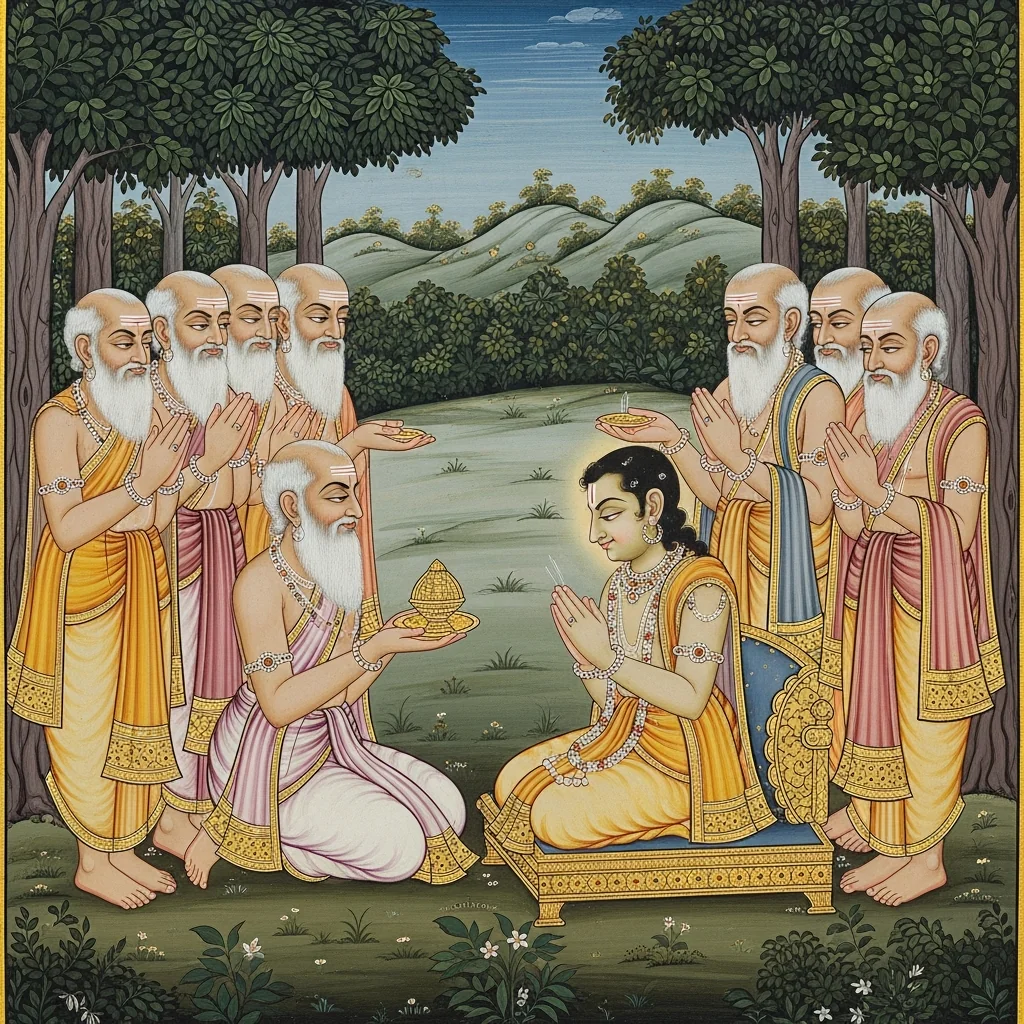
This adhyāya serves as a concluding phalaśruti and closing frame for the Skanda Purāṇa within the Dvārakā Māhātmya. Sūta first sets forth the authorized transmission lineage (paramparā)—Skanda → Bhṛgu → Aṅgiras → Cyavana → Ṛcīka, and others—establishing tradition as the ground of sacred authority. It then proclaims the fruits of hearing and reciting: freedom from sin, long life, social well-being in accord with varṇa-duties, and the fulfillment of aims such as sons, wealth, marital happiness, and reunion with relatives. Even partial hearing—down to a single pāda of a śloka—is said to lead toward salvific destinations. An ethical and pedagogical emphasis follows: honoring the reciter is equated with honoring Brahmā, Viṣṇu, and Rudra; and the debt to the guru who imparts even one syllable is declared beyond repayment, urging respectful support through gifts, offerings, and sustenance. The chapter closes in Vyāsa’s narration as sages praise Sūta for covering the standard purāṇic themes (creation, secondary creation, dynasties, manvantaras, cosmology), bless and honor him with garments and ornaments, and return to their rites—sealing the text’s completion and reaffirming communal norms of learning, gratitude, and ritual continuity.
Shlokas
Verse 1
सूत उवाच । एतत्पुराणमखिलं पुरा स्कन्देन भाषितम् । भृगवे ब्रह्मपुत्राय तस्माल्लेभे तथांऽगिराः
Sūta said: This entire Purāṇa was formerly spoken by Skanda to Bhṛgu, the son of Brahmā; from him, Aṅgiras too received it.
Verse 2
ततश्च च्यवनः प्राप ऋचीकश्च ततो मुनिः । एवं परंपरा प्राप्तं सर्वेषु भुवनेष्वपि
Then Cyavana received it, and after him the sage Ṛcīka. Thus, by unbroken succession, it was handed down—indeed throughout all the worlds.
Verse 3
स्कान्दं पुराणमेतच्च कुमारेण पुरोद्धृतम् । यः शृणोति सतां मध्ये नरः पापाद्विमुच्यते
This Skanda Purāṇa was first brought forth by the Divine Youth (Kumāra). Whoever listens to it in the company of the virtuous is freed from sin.
Verse 4
इदं पुराणमायुष्यं चतुर्वर्णसुखप्रदम् । निर्मितं षण्मुखेनेह नियतं सुमहात्मना
This Purāṇa bestows longevity and grants well-being to all four social orders. Here it was composed and duly established by the great-souled Six-Faced Lord (Ṣaṇmukha).
Verse 5
एवमेतत्समाख्यातमाख्यानं भद्रमस्तु वः
Thus has this narrative been duly related. May auspiciousness be yours.
Verse 6
मण्डितं सप्तभिः खण्डैः स्कान्दं यः शृणुयान्नरः । न तस्य पुण्यसंख्यानं कर्तुं शक्येत केनचित्
Whoever listens to the Skanda (Purāṇa), adorned with seven major divisions, cannot have the measure of his merit computed by anyone.
Verse 7
य इदं धर्ममाहात्म्यं ब्राह्मणाय प्रयच्छति । स्वर्गलोके वसेत्तावद्यावदक्षरसंख्यया
Whoever gifts this “Greatness of Dharma” to a brāhmaṇa dwells in the heavenly world for as long as its syllables can be counted.
Verse 8
यथा हि वर्षतो धारा यथा वा दिवि तारकाः । गंगायां सिकता यद्वत्तद्वत्संख्या न विद्यते
Just as the streams of rain, the stars in the sky, and the grains of sand in the Gaṅgā cannot be counted—so too that merit has no measure.
Verse 9
यो नरः शृणुयाद्भक्त्या दिनानि च कियन्ति वै । सर्वार्थसिद्धो भवति य एतत्पठते नरः
Whatever man hears this with devotion, for as many days as he is able, attains success in all aims; and the man who recites it likewise becomes fulfilled in every purpose.
Verse 10
पुत्रार्थी लभते पुत्रान्धनार्थी लभते धनम् । लभते पतिकामा या पतिं कन्या मनोरमम्
One who longs for a son obtains sons; one who longs for wealth obtains wealth. A maiden who desires a husband obtains a charming husband.
Verse 11
समागमं लभन्ते च बान्धवाश्च प्रवासिभिः । स्कान्दं पुराणं श्रुत्वा तु पुमानाप्नोति वाञ्छितम्
Relatives too gain reunion with those who have gone abroad. And a man, having heard the Skanda Purāṇa, attains what he desires.
Verse 12
शृण्वतः पठतश्चैव सर्वकामप्रदं नृणाम्
For those who listen and for those who recite, it grants people the fulfillment of all desired aims.
Verse 13
पुण्यं श्रुत्वा पुराणं वै दीर्घमायुश्च विन्दति । महीं विजयते राजा शत्रूंश्चाप्यधितिष्ठति
Having heard this meritorious Purāṇa, one indeed gains long life. A king conquers the earth and also brings his enemies under control.
Verse 14
वेदविच्च भविद्विप्रः क्षत्रियो राज्यमाप्नुयात् । धनं धान्यं तथा वैश्यः शूद्रः सुखमवाप्नुयात्
A brāhmaṇa becomes a knower of the Vedas; a kṣatriya attains sovereignty. A vaiśya gains wealth and grain, and a śūdra attains happiness.
Verse 15
अध्यायमेकं शृणुयाच्छ्लोकं श्लोकार्धमेव वा । यः श्लोकपादं शृणुयाद्विष्णुलोकं स गच्छति
Even if one hears but a single chapter, a single verse, or even half a verse—whoever hears even one quarter of a verse goes to the world of Viṣṇu.
Verse 16
श्रुत्वा पुराणमेतद्धि वाचकं यस्तु पूजयेत् । तेन ब्रह्मा च विष्णुश्च रुद्रश्चैव प्रपूजितः
After hearing this Purāṇa, whoever honors the reciter—by that act Brahmā, Viṣṇu, and Rudra are indeed honored.
Verse 17
एकमप्यक्षरं यस्तु गुरुः शिष्ये निवेदयेत् । पृथिव्यां नास्ति तद्द्रव्यं यद्दत्त्वा ह्यनृणी भवेत्
Even if a guru imparts to a student but a single syllable, there is no wealth on earth which—if given—could make one truly free of that debt.
Verse 18
अतः संपूजनीयस्तु व्यासः शास्त्रोपदेशकः । गोभू हिरण्यवस्त्राद्यैर्भोजनैः सार्वकामिकैः
Therefore the Vyāsa—teacher who instructs in the scriptures—should be duly honored with gifts such as cows, land, gold, garments, and with meals that satisfy every need.
Verse 19
य एवं भक्तियुक्तस्तु श्रुत्वा शास्त्रमनुत्तमम् । पूजयेदुपदेष्टारं स शैवं पदमाप्नुयात्
Whoever, endowed with devotion, hears this unsurpassed sacred teaching and then honors the instructor, attains the Śaiva state (the supreme abode of Śiva).
Verse 20
पुराणश्र वणादेव अनेकभवसंचितम् । पापं प्रशममायाति सर्वतीर्थफलं लभेत्
By the very act of hearing the Purāṇa, the sins accumulated across many births come to rest; one gains the fruit of all pilgrimage-sites.
Verse 21
अमृतेनोदरस्थेन म्रियन्ते सर्वदेवताः । कण्ठस्थितविषेणापि यो जीवति स पातु वः
Even the gods would perish if nectar lay trapped in the belly; but he who lives even with poison lodged in his throat—may that one protect you.
Verse 22
व्यास उवाच । इत्युक्त्वोपरते सूते शौनकादि महर्षयः । संपूज्य विधिवत्सूतं प्रशस्याथाभ्यनन्दयन्
Vyāsa said: When Sūta had spoken thus and then fell silent, the great sages led by Śaunaka duly honored him according to rite, praised him, and joyfully signified their approval.
Verse 23
ऋषय ऊचुः । कथितो भवता सर्गः प्रतिसर्गस्तथैव च । वंशानुवंशचरितं पुराणानामनुक्रमः
The sages said: You have explained creation and re-creation, and likewise the accounts of dynasties and sub-dynasties, together with the orderly sequence of the Purāṇas.
Verse 24
मन्वन्तरप्रमाणं च ब्रह्माण्डस्य च विस्तरः । ज्योतिश्चक्रस्वरूपं च यथावदनुवर्णितम्
You have also properly described the measures of the Manvantaras, the expanse of the brahmāṇḍa—the cosmic egg—and the true form of the wheel of the luminaries.
Verse 25
धन्याः स्म कृतकृत्याः स्म वयं तव मुखाम्बुजात् । स्कान्दं महापुराण हि श्रुत्वा सूतातिहर्षिताः
Blessed are we; our purpose is fulfilled—for having heard the Skanda Mahāpurāṇa from the lotus of your mouth, O Sūta, we are filled with exceeding delight.
Verse 26
वयं महर्षयो विप्राः प्रदद्मोऽद्य तवाऽशिषः । व्यासशिष्य महाप्राज्ञ चिरं जीव सुखी भव
We, the brahmin great sages, bestow our blessings upon you today: O disciple of Vyāsa, O greatly wise one—live long and be happy.
Verse 27
इति दत्त्वाऽशिषस्तस्मै दत्त्वा वासोविभूषणम् । विसृज्य लोमशं सूतं यज्ञकर्माण्यथाचरन्
Thus, having bestowed blessings upon him, and also garments and ornaments, they respectfully sent off Lomaharṣaṇa Sūta, and then proceeded to perform their sacrificial rites (yajña).
Verse 44
इति श्रीस्कान्दे महापुराण एकाशीतिसाहस्र्यां संहितायां सप्तमे प्रभासखण्डे चतुर्थे द्वारकामाहात्म्ये स्कन्दमहापुराणश्रवणपठनपुस्तकप्रदानपौराणिकव्यासपूजनमाहात्म्यवर्णनपूर्वकं समस्तस्कान्दमहा पुराणग्रन्थसमाप्त्युपसंहारसूतसत्कारवृत्तान्तवर्णनंनाम चतुश्चत्वारिंशत्तमोऽध्यायः
Thus ends the Forty-Fourth Chapter of the revered Skanda Mahāpurāṇa (the Saṃhitā of eighty-one thousand verses): in the seventh part, the Prabhāsa Khaṇḍa, within the fourth division, the Dvārakā Māhātmya—describing the greatness of hearing and reading the Skanda Mahāpurāṇa, of gifting its book, and of worshiping the Purāṇic Vyāsa; and concluding with the completion and closing summary of the entire Skanda Purāṇa and the account of honoring Sūta.