Adhyaya 26
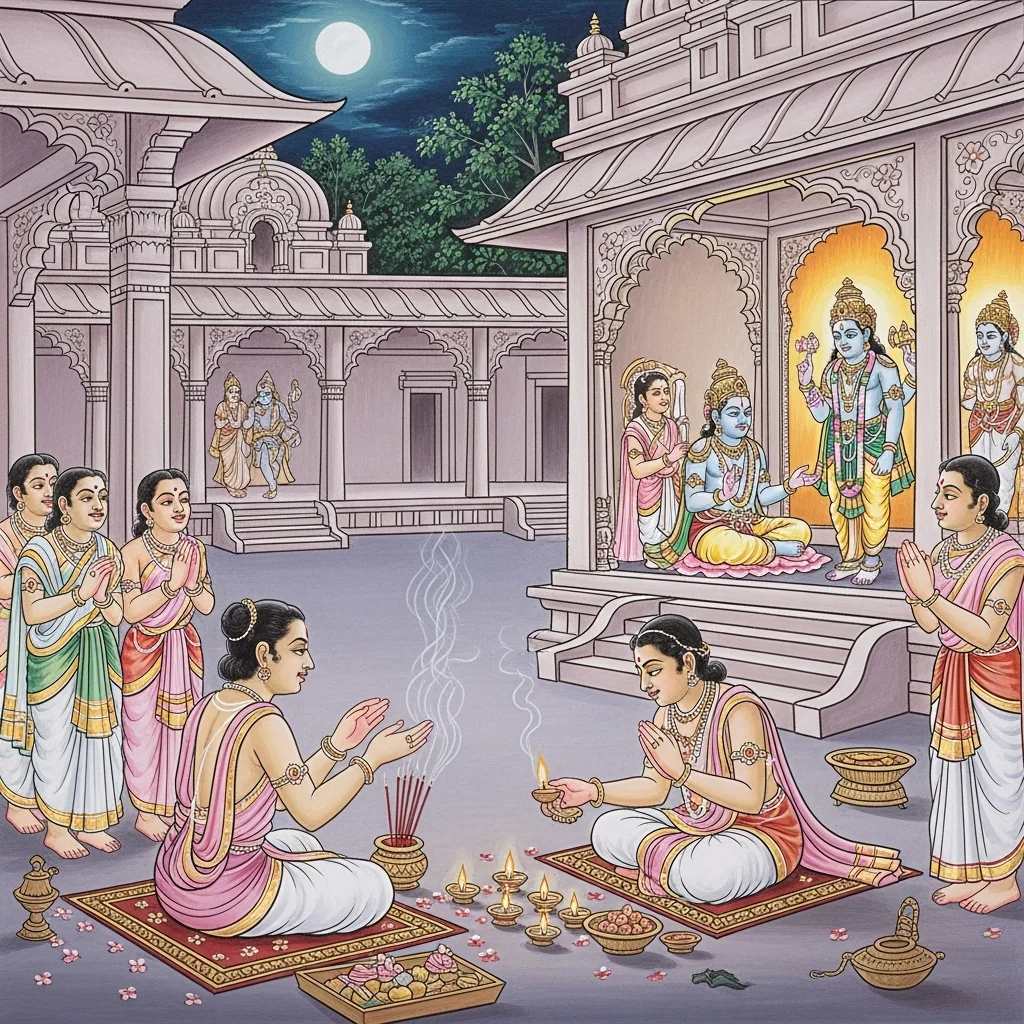
The chapter begins with Mārkaṇḍeya portraying Prahlāda as a learned, disciplined Vaiṣṇava authority. Sages approach him seeking a brief teaching for attaining the highest state without arduous prerequisites, and Prahlāda reveals a “secret within secrets,” the distilled essence of Purāṇic instruction that grants both worldly welfare and liberation. The narrative then turns to Skanda (Ṣaṇmukha) petitioning Īśvara for a remedy to suffering and a practical path to release. Īśvara prescribes Hari-jāgaraṇa—the night-vigil for Viṣṇu—especially on Dvādāśī in Vaiṣṇava observance: nocturnal reading of Vaiṣṇava śāstra, singing hymns, taking darśana of the deity, reciting texts such as the Gītā and the nāma-sahasra, and worship with lamps, incense, offerings, and tulasī. Repeated phala statements promise swift destruction of accumulated sins, merit equal or superior to great sacrifices and vast gifts, benefit to lineage and ancestors, and freedom from rebirth for steadfast practitioners, while also praising faithful observers and censuring neglect or hostility toward Janārdana.
Shlokas
Verse 1
श्रीमार्कण्डेय उवाच । प्रह्लादं सर्वधर्मज्ञं वेदशास्त्रार्थपारगम् । वैष्णवागमतत्त्वज्ञं भगवद्भक्तितत्परम्
Śrī Mārkaṇḍeya said: (I shall speak of) Prahlāda—knower of all dharma, who has crossed to the far shore of the meanings of Veda and Śāstra, a knower of the truths of the Vaiṣṇava tradition, and wholly devoted to the Lord in bhakti.
Verse 2
सुखासीनं महाप्राज्ञमृषयो द्रष्टुमागताः । सर्वशास्त्रार्थतत्त्वज्ञाः स्वधर्मप्रतिपालकाः
The sages came to see that great, wise one who sat at ease—knowers of the true purport of all śāstras, and steadfast upholders of their own sacred duties (svadharma).
Verse 3
ऋषय ऊचुः । विना ज्ञानाद्विना ध्यानाद्विना चेन्द्रियनिग्रहात् । अनायासेन येनैतत्प्राप्यते परमं पदम्
The sages said: Without (formal) knowledge, without meditation, and even without rigorous restraint of the senses—by what means can this supreme state be attained effortlessly?
Verse 4
संक्षेपात्कथय स्नेहाद्दृष्टादृष्टफलोदयम् । धर्मान्मनुजशार्दूल ब्रूहि सर्वानशेषतः
Out of kindness, tell us briefly the rise of fruits—both seen and unseen—arising from dharma. O tiger among men, describe all the dharmas, without remainder.
Verse 5
इत्युक्तोऽसौ महाभागो नारायणपरायणः । कथयामास संक्षेपात्सर्वलोकहितोद्यतः
Thus addressed, that blessed devotee—wholly devoted to Nārāyaṇa—began to explain in brief, intent on the welfare of all worlds.
Verse 6
श्रीप्रह्लाद उवाच । श्रूयतामभिधास्यामि गुह्याद्गुह्यतरं महत् । यस्य संश्रवणादेव सर्वपापक्षयो भवेत्
Śrī Prahlāda said: Listen; I shall declare a great secret—more secret than secrets—by the mere hearing of which all sins are destroyed.
Verse 7
अष्टादशपुराणानां सारात्सारतरं च यत् । तदहं कथयिष्यामि भुक्तिमुक्तिफलप्रदम्
That which is the very essence—more essential than the essence—of the eighteen Purāṇas, I shall narrate: it bestows the fruits of both worldly prosperity and liberation.
Verse 8
सुखासीनं महादेवं जगतः कारणं परम् । पप्रच्छ षण्मुखो भक्त्या सर्वलोकहितोद्यतः
Śaṇmukha (Skanda), intent on the welfare of all worlds, questioned with devotion Mahādeva as he sat at ease—the supreme cause of the universe.
Verse 9
स्कन्द उवाच । भगवन्सर्वलोकानां दुःखसंसारभेषजम् । कथयस्व प्रसादेन सुखोपायं विमुक्तये
Skanda said: O Lord, out of grace, tell the remedy for the sorrow of saṃsāra for all beings—the easy means that leads to liberation.
Verse 10
ईश्वर उवाच । चतुर्विधं तु यत्पापं कोटिजन्मार्जितं कलौ । जागरे वैष्णवं शास्त्रं वाचयित्वा व्यपोहति
Īśvara said: In the Kali age, the fourfold sin amassed through millions of births is driven away by having the Vaiṣṇava scripture recited during the night-vigil (jāgara).
Verse 11
वैष्णवस्य तु शास्त्रस्य यो वक्ता जागरे हरेः । मद्भक्तं तं विजानीयाद्विपन्नस्त्वन्यथा भवेत्
But whoever expounds the Vaiṣṇava scripture during Hari’s vigil—know that person to be My devotee; otherwise one falls into misfortune.
Verse 12
हरिजागरणं कार्यं मद्भक्तेन विजानता । अन्यथा पापिनो ज्ञेया ये द्विषन्ति जनार्द्दनम्
A discerning devotee of Mine should certainly observe the night-vigil for Hari. Otherwise, know them to be sinners—those who bear hatred toward Janārdana.
Verse 13
जागरं ये च कुर्वंति गायंति हरिवासरे । अग्निष्टोमफलं तेषां निमिषार्द्धेन षण्मुख
O Ṣaṇmukha, those who keep the vigil and sing on Hari’s sacred day gain the fruit of the Agniṣṭoma sacrifice—in but half a moment.
Verse 14
जागरे पश्यतां विष्णोर्मुखं रात्रौ मुहुर्मुहुः । येषां हृष्यंति रोमाणि रात्रौ जागरणे हरेः । कुलानि दिवि तावंति वसंति हरिसन्निधौ
While keeping vigil, those who gaze again and again upon Viṣṇu’s face through the night, and whose hairs stand on end in joy during Hari’s vigil—so many of their lineages ascend to heaven and dwell in Hari’s presence.
Verse 15
यमस्य पथि निर्मुक्ता जनाः पापशतैर्वृताः । गीतशास्त्रविनोदेन द्वादशीजागरान्विताः
Even those hemmed in by hundreds of sins are released from Yama’s path when they keep the Dvādaśī night-vigil, delighting in sacred songs and the recitation of scripture.
Verse 16
सुप्रभाता निशा तेषां धन्याः सुकृतिनो नराः । प्राणात्ययेन मुह्यंति यैः कृतं जागरं हरेः
For them that night is like a radiant dawn; blessed and full of merit are those who have kept Hari’s vigil—at life’s final moment they do not sink into delusion.
Verse 17
पुत्रिणस्ते नरा लोके धनिनः ख्यातपौरुषाः । येषां वंशोद्भवाः पुत्राः कुर्वंति हरिजागरम्
Truly prosperous, renowned, and blessed with sons are those men in the world whose sons, born in their lineage, perform the vigil for Hari.
Verse 18
इष्टं मखैः कृतं दानं दत्तं पिंडं गयाशिरे । स्नातं नित्यं प्रयागे तु यैः कृतं जागरं हरेः
For those who have performed Hari’s vigil, it is as though they had offered sacrifices, given gifts, made piṇḍa-offerings at Gayāśiras, and bathed daily at Prayāga.
Verse 19
दयिता विष्णुभक्ताश्च नित्यं मम षडानन । कुर्वंति वासरं विष्णोर्यस्माज्जागरणं हितम्
O Ṣaḍānana, those dear to me—the devotees of Viṣṇu—regularly observe Viṣṇu’s sacred day, for the night-vigil is beneficial.
Verse 20
श्रुत्वा हर्षं न चाप्नोति जागरं न करोति यः । प्रकटीकरोति तन्नूनं जनन्या दुर्विचेष्टितम्
One who hears this yet feels no joy and keeps no vigil surely reveals the misconduct of his mother.
Verse 21
संप्राप्य वासरं विष्णोर्न येषां जागरो हरेः । व्यर्थं गतं च तत्पुण्यं तेषां वर्षशतोद्भवम्
Those who obtain Vishnu's sacred day but fail to keep Hari's vigil lose the merit accumulated over a hundred years.
Verse 22
पुत्रो वा पुत्रपुत्रो वा दौहित्रो दुहिताऽपि वा । करिष्यति कुलेऽस्माकं कलौ जागरणं हरेः
Whether a son, grandson, daughter's son, or daughter—if anyone in our lineage performs Hari's vigil in the Kali age, we are blessed.
Verse 23
पात्यमानाः प्रजल्पंति पितरो यमकिंकरैः । मुक्तिर्भविष्यत्यस्माकं नरकाज्जागरे कृते
While being dragged by Yama's servants, the ancestors cry out: "We shall be freed from hell when the vigil is performed."
Verse 24
नान्यथा जायतेऽस्माकं मुक्तिर्यज्ञशतैरपि । विना जागरणेनैव नरलोकात्कथंचन । तस्माज्जागरणं कार्यं पितॄणां हितमिच्छता
Liberation comes not by hundreds of sacrifices, but only through the vigil. Therefore, seeking the ancestors' welfare, one must perform it.
Verse 25
भक्तिर्भागवतानां च गोविंदस्यापि कीर्तनम् । न देहग्रहणं तस्मात्पुनर्लोके भविष्यति
For the devotees of the Bhagavān there is bhakti and the singing of Govinda’s praises; therefore, there will be no taking up of another body again in the world (no rebirth).
Verse 26
जागरं कुरुते यश्च संगमे विजयादिने । पुनर्द्देहप्रजननं दग्धं तेनाऽत्मना स्वयम्
Whoever performs the vigil at the sacred confluence on the day of victory—by that very act, his own further birth into bodies is burned away.
Verse 27
त्रिस्पृशा वासरं येन कृतं जागरणान्वितम् । केशवस्य शरीरे तु स लीनो नात्र संशयः
He who observes the day of Trispr̥śā together with the vigil—he is absorbed into the very being of Keśava; of this there is no doubt.
Verse 28
उन्मीलिनी कृता येन रात्रौ जागरणान्विता । प्रभवंति न पापानि स्थूलसूक्ष्माणि तस्य तु
For one who keeps awake at night in vigil (unmīlinī), sins—whether gross or subtle—do not arise for him.
Verse 29
सतालवाद्यसंयुक्तं संगीतं जागरं हरेः । यः कारयति देवस्य द्वादश्यां दानसंयुतम्
He who arranges for Hari’s vigil with devotional music accompanied by tāla and instruments, and who does so on Dvādaśī with charity (dāna), is praised as a foremost devotee.
Verse 30
तस्य पुण्यं प्रवक्ष्यामि महाभागवतस्य हि । तिलप्रस्थहस्रं तु सहिरण्यं द्विजातये । दत्त्वा यत्फलमाप्नोति ह्ययने रविसंक्रमे
Now I shall declare the merit of that great devotee: the very fruit one gains by giving a thousand prasthas of sesame together with gold to a twice-born (brāhmaṇa) at the solstice and at the Sun’s transit—that fruit accrues to him.
Verse 31
हेमभारशतं नित्यं सवत्सं कपिलायुतम् । प्रेक्षणीयप्रदानेन तत्फलं प्राप्नुयात्कलौ
In Kali-yuga, by making the “prekṣaṇīya” gift, one obtains that same fruit—as though one had given a hundred loads of gold and a thousand tawny cows, each with a calf.
Verse 32
यः पुनर्वासरे पुत्र दिव्यैरृषिकृतैः स्तवैः । तोषयेत्पद्मनाभं वै वैदिकैर्विष्णुसामभिः
But, my son, whoever on that day delights Padmanābha (Viṣṇu) with divine hymns composed by seers—namely, with Vedic chants and Sāman-hymns dedicated to Viṣṇu—truly pleases the Lord.
Verse 33
ऋग्यजुःसामसम्भूतैवैष्णवैश्चैव पुत्रक । संस्कृतैः प्राकृतैः स्तोत्रैरन्यैश्च विविधैस्तथा
O dear son, (one may praise Him) with Vaiṣṇava hymns arising from the Ṛg, Yajus, and Sāman traditions, and likewise with stotras in refined Sanskrit or in common speech, and with many other diverse hymns as well.
Verse 34
प्रीतिं करोति देवेशो द्वादश्यां जागरे स्थितः । शृणु पुण्यं समासेन यद्गीतं ब्रह्मणा मम
The Lord of gods becomes pleased when one remains in night-vigil on Dvādaśī. Hear, in brief, the sacred merit that was sung by Brahmā to me.
Verse 35
त्रिःसप्तकृत्वो धरणीं त्रिगुणीकृत्य षण्मुख । दत्त्वा यत्फलमाप्नोति तत्फलं प्राप्नुयान्नरः
O Ṣaṇmukha, the very fruit a man gains by gifting the earth itself—made threefold and offered twenty-one times—that same fruit is attained by one who observes this rite.
Verse 36
गवां शतसहस्रेण सवत्सेनापि यत्फलम् । तत्फलं प्राप्नुयान्मर्त्त्यः स्तोत्रैर्यस्तोषयेद्धरिम्
Whatever merit is gained by gifting a hundred thousand cows, each with a calf, that very merit is attained by the mortal who pleases Hari through hymns.
Verse 37
वैदिकी दशगुणा प्रीतिर्यामेनैकेन जागरे । एवं फलानुसारेण कार्य्यं जागरणं हरेः
In the night-vigil, the delight born of Vedic praise becomes tenfold even for a single watch (yāma). Therefore, according to the fruit one seeks, one should keep vigil for Hari.
Verse 38
यः पुनः पठते रात्रौ गीतां नामसहस्रकम् । द्वादश्यां पुरतो विष्णोर्वेष्णवानां समीपतः
Moreover, whoever at night recites the Gītā and the Sahasranāma (the Thousand Names) on Dvādaśī—before Viṣṇu and in the presence of Vaiṣṇavas—(wins extraordinary merit).
Verse 39
पुण्यं भागवतं स्कांदपुराणं दयितं हरेः । माधुरं बालचरितं गोपीनां चरितं तथा
The holy Bhāgavata, the Skanda Purāṇa—beloved of Hari—and the sweet accounts of His childhood, as well as the narratives of the gopīs too (are fit to be read in that vigil).
Verse 40
एतान्पठति रात्रौ यः पूजयित्वा तु केशवम् । न वेद्म्यहं फलं वत्स यदि ज्ञास्यति केशवः
Whoever, after worshipping Keśava, recites these at night—O child, I do not know the full measure of his reward; only Keśava could know it.
Verse 41
दीपं प्रज्वालयेद्रात्रौ यः स्तवैर्हरिजागरे । न चास्तं गच्छते तस्य पुण्यं कल्पशतैरपि
Whoever, during the night, lights a lamp while keeping Hari’s vigil with hymns—his merit does not diminish, even over hundreds of kalpas.
Verse 42
मंजरीसहितैः पत्रैस्तुलसीसम्भवैर्हरिम् । जागरे पूजयेद्भक्त्या नास्ति तस्य पुनर्भवः
Whoever, during the sacred night-vigil, worships Hari with devotion using tulasī leaves together with their blossoms—there is no rebirth for that person.
Verse 43
स्नानं विलेपनं पूजा धूपं दीपं च संस्तवम् । नैवेद्यं च सतांबूलं जागरे दत्तमक्षयम्
Bathing, anointing, worship, incense, lamp-offering, hymns of praise, food-offerings, and even excellent tāmbūla (betel) given during the night-vigil—these are declared imperishable in their merit.
Verse 44
ध्यातुमिच्छति षड्वक्त्रं यो मां भक्तिपरायणः । स करोतु महाभक्त्या द्वादश्यां जागरं हरेः
Whoever, devoted to bhakti, desires to meditate upon me, the Six-faced one—let that person, with great devotion, keep the night-vigil for Hari on Dvādaśī.
Verse 45
वासरे वासुदेवस्य सर्वे देवाः सवासवाः । देहमाश्रित्य तिष्ठंति ये प्रकुर्वंति जागरम्
On the sacred day of Vāsudeva, all the gods—together with Indra—take refuge in the very bodies of those who keep the night-vigil.
Verse 46
जागरेवासुदेवस्य महाभारतकीर्तनम् । ये कुर्वंति गतिं यांति योगिनां ते न संशयः
Those who, during Vāsudeva’s night-vigil, recite and proclaim the Mahābhārata attain the very goal of the yogins—of this there is no doubt.
Verse 47
चरितं रामदेवस्य ये वधं रावणस्य च । पठंति जागरे विष्णोस्ते यांति परमां गतिम
Those who, during Viṣṇu’s night-vigil, read the deeds of Lord Rāma and the slaying of Rāvaṇa attain the supreme destination.
Verse 49
अधीत्य चतुरो वेदान्कृत्वा चैवार्चनं हरेः । स्नात्वा च सर्वतीर्थेषु जागरे तत्फलं हरेः
The fruit that arises from studying the four Vedas, from worshiping Hari, and from bathing at all tīrthas—that very fruit is obtained through Hari’s night-vigil.
Verse 50
धान्यशैलसहस्रैस्तु तुलापुरुषको टिभिः । यत्फलं मुनिभिः प्रोक्तं तत्फलं जागरे हरेः
Whatever merit the sages have declared from thousands of ‘mountains of grain’ and from crores of tulā-puruṣa gifts—that same merit is gained by keeping the night-vigil for Hari.
Verse 51
कन्याकोटिप्रदानं च स्वर्णभारशतं तथा । दत्तं रत्नायुतशतं यैः कृतो जागरो हरेः
For those who have kept Hari’s night-vigil, it is as though they had bestowed marriage-gifts upon crores of maidens, given a hundred loads of gold, and offered hundreds of tens-of-thousands of gems.
Verse 52
अष्टादशपुराणैस्तु पठितैर्यत्फलं भवेत् । तत्फलं शतसाहस्रं कृते जागरणे हरेः
Whatever merit arises from reading the eighteen Purāṇas—by keeping the night-vigil for Hari, one gains that merit a hundred-thousandfold.
Verse 53
मन्वादि पठतां शास्त्रं यत्फलं हि द्विजन्मनः । अधिकं फलमाप्नोति कुर्वाणो जागरं हरेः
Whatever spiritual fruit the twice-born attain by reciting the scriptures beginning with the Manv-ādi teachings, one who keeps vigil for Hari gains an even greater reward.
Verse 54
दुर्भिक्षे चान्नदातॄणां पुंसां भवति यत्फलम् । संन्यासिनां सहस्रैस्तु यत्फलं भोजितैः कलौ । फलं तत्समवाप्नोति कुर्वतां जागरं हरेः
The merit gained by giving food during famine, and the merit gained in the Kali age by feeding even a thousand renunciants—those very fruits are attained by those who keep vigil for Hari through the night.