Adhyaya 63
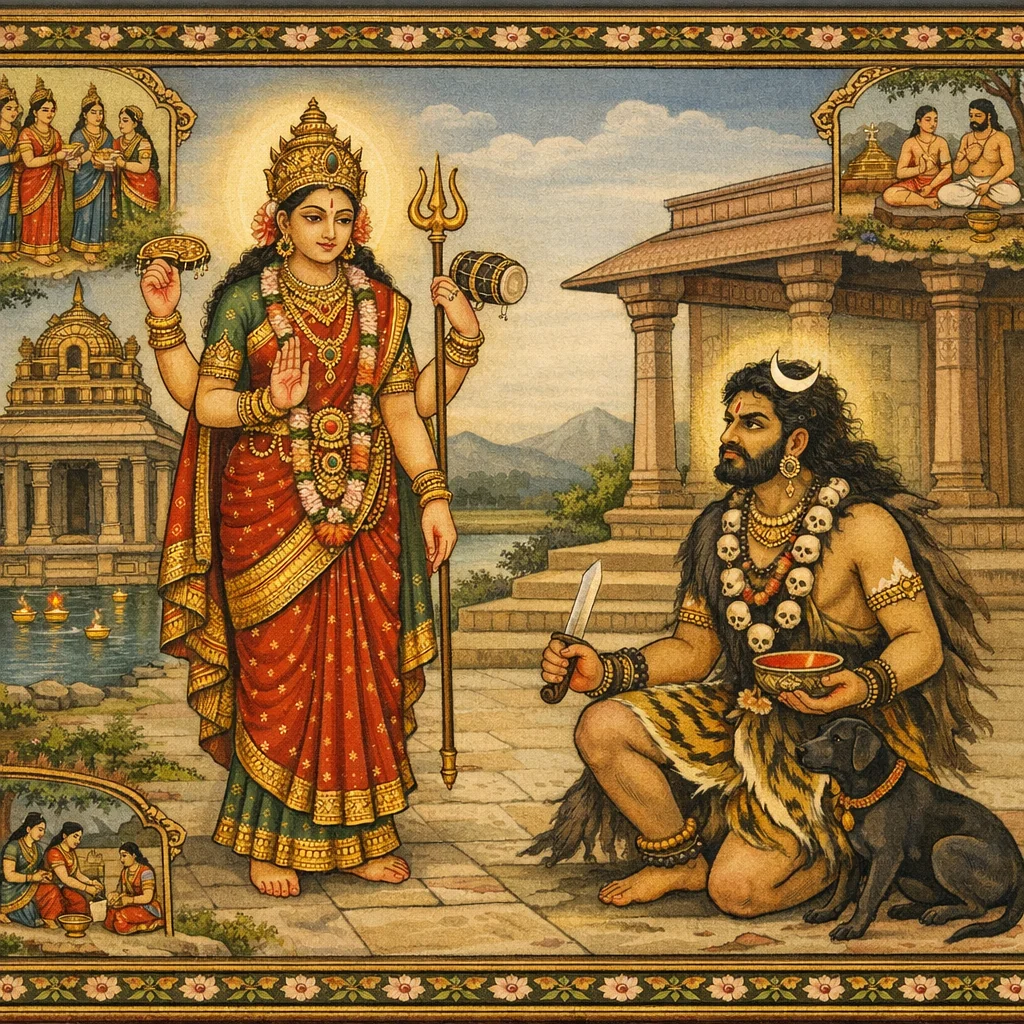
Pulastya concludes a compressed account of Arbuda’s greatness, saying that a full enumeration would surpass even centuries of narration because of the innumerable tīrthas and sanctified abodes established by the ṛṣis. The chapter declares that sacrality pervades Arbuda: no tīrtha, siddhi, sacred tree, river, or divine presence is absent there. Those who dwell on the “beautiful Arbuda mountain” are portrayed as bearers of merit, while one who does not behold Arbuda “on all sides” is said to miss the practical worth of life, wealth, and austerity. The saving power is extended beyond humans to all beings—insects, animals, birds, and all creatures of the four modes of birth. Death on Arbuda—whether desireless or even with desire—is proclaimed to lead to Śiva-sāyujya, union with Śiva, free from aging and death. Finally, the phalaśruti teaches that daily, faithful hearing of this purāṇic account grants the fruit of pilgrimage; therefore one should undertake the journey to Arbuda to attain siddhi in this world and the next.
Shlokas
Verse 1
पुलस्त्य उवाच । एतत्ते सर्वमाख्यातं यन्मां त्वं परिपृच्छसि । अर्बुदस्य महाराज माहात्म्यं हि समासतः
Pulastya said: O great king, all that you asked of me has been explained to you; indeed, the greatness of Arbuda has been stated in brief.
Verse 2
विस्तरेण च संख्या स्यादपि वर्षशतैरपि । असंख्यानीह तीर्थानि पुण्यान्यायतनानि च । पदेपदे गृहाण्येव निर्मितानि महर्षिभिः
Even if one were to enumerate them in full detail, the count would not be completed even over hundreds of years. Here are countless tīrthas and holy sanctuaries; at every step there are āśramas and dwellings built by great seers.
Verse 3
न तत्तीर्थं न सा सिद्धिर्न स वृक्षो महीपते । न सा नदी न देवेशो यस्य तत्रास्ति न स्थितिः
O lord of the earth, there is no tīrtha, no spiritual attainment, no tree, no river, and no Lord of the gods—whose presence is not established there.
Verse 4
ये वसंति महाराज सुरम्येऽर्बुदपर्वते । नूनं ते पुण्यकर्माणो न वसंति त्रिविष्टपे
O great king, those who dwell on the beautiful Arbuda mountain are surely doers of great merit; indeed, they have no need to dwell in Triviṣṭapa (heaven).
Verse 5
किं तस्य जीवितेनार्थः किं धनैः किं जपैर्नृप । यो न पश्यति मन्दात्मा समन्तादर्बुदाचलम्
O king, what worth is his life—what worth his wealth, what worth his japa—if that dull-minded man does not behold Mount Arbuda in its full expanse on every side?
Verse 6
अपि कीटपतंगा ये पशवः पक्षिणो मृगाः । स्वेदजाश्चाण्डजाश्चापि ह्युद्भिज्जाश्च जरायुजाः
Even insects and moths, cattle, birds, and wild beasts—those born of sweat, those born of eggs, those that sprout from the earth, and those born from the womb—all are encompassed within this sacred sphere.
Verse 7
तस्मिन्मृता महाराज निष्कामाः कामतोऽपि वा । ते यान्ति शिवसायुज्यं जरा मरणवर्जितम्
O great king, those who die there—whether desireless or even still bearing desires—attain Śiva-sāyujya, union with Śiva, a state untouched by old age and death.
Verse 8
यश्चैतच्छुणुयान्नित्यं पुराणं श्रद्धयान्वितः । अर्बुदस्य महाराज स यात्राफलमश्नुते
And whoever, endowed with faith, regularly hears this Purāṇa concerning Arbuda, O great king, gains the very merit that comes from undertaking the pilgrimage.
Verse 9
तस्मात्सर्वप्रयत्नेन यात्रां तत्र समाचरेत् । य इच्छेदात्मनः सिद्धिमिह लोके परत्र च
Therefore, with every effort one should undertake the pilgrimage there, if one seeks one’s own siddhi—spiritual accomplishment—in this world and in the next.
Verse 63
इति श्रीस्कांदे महापुराण एकाशीतिसाहस्र्यां संहितायां सप्तमे प्रभासखण्डे तृतीयेऽर्बुदखंडेऽर्बुदखण्डमाहात्म्यफलश्रुतिवर्णनंनाम त्रिषष्टितमोऽध्यायः
Thus ends the sixty-third chapter, entitled “The Description of the Phalaśruti of the Arbuda-khaṇḍa Māhātmya,” in the Prabhāsa Khaṇḍa, in the third subdivision, the Arbuda Khaṇḍa, of the Śrī Skanda Mahāpurāṇa, in the Ekāśīti-sāhasrī Saṃhitā.