Adhyaya 56
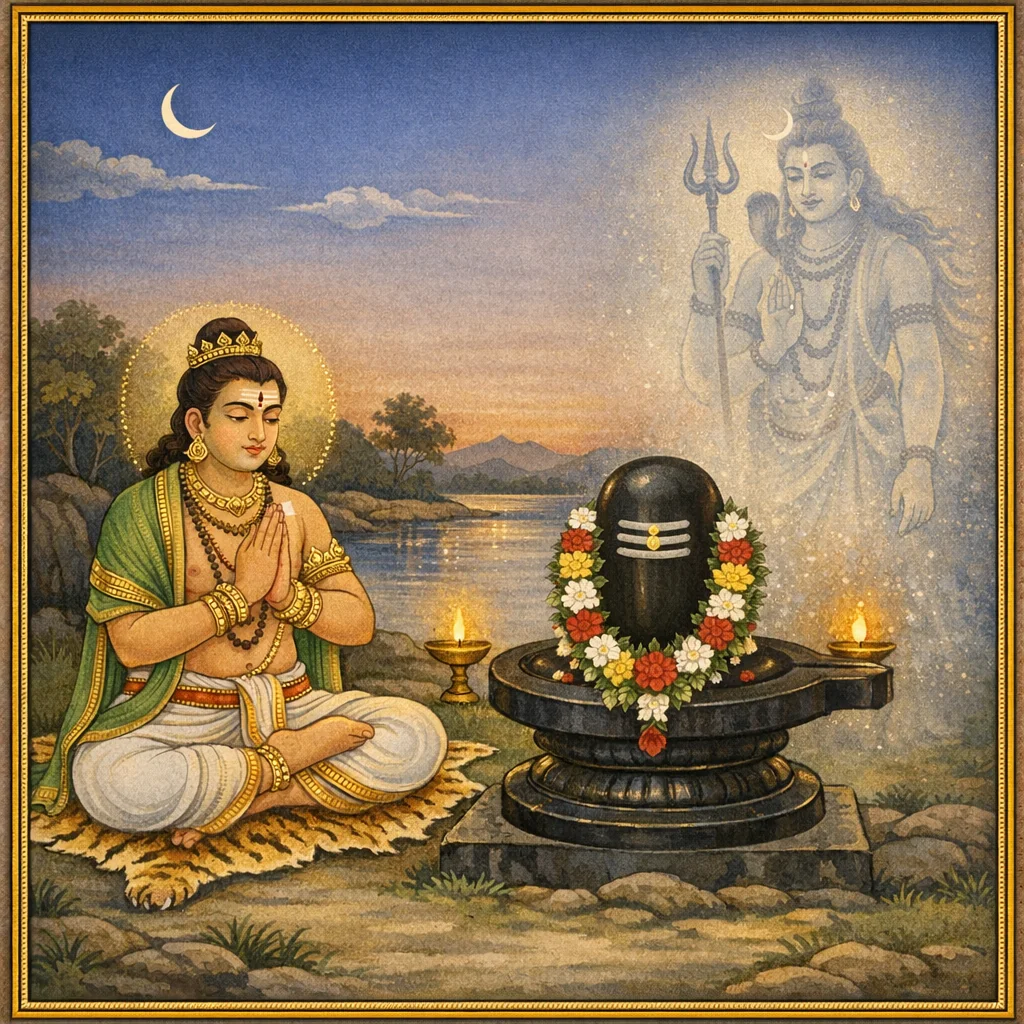
This chapter records Pulastya’s instruction to a king about the eminent shrine called Guhēśvara. It is described as a liṅga set within a cave (a liṅga in the midst of the cavern) and is authenticated by the statement that siddhas in former times worshipped there. Pulastya then explains the fruits of worship according to intention: one who approaches and venerates the Lord while holding a particular desire attains the corresponding goal, whereas worship performed without desire (niṣkāma) is said to lead toward mokṣa, liberation. The colophon places this as the 56th adhyāya of the Skanda Mahāpurāṇa, in the Prabhāsa Khaṇḍa, Arbuda Khaṇḍa.
Shlokas
Verse 1
पुलस्त्य उवाच । ततो गच्छेन्नृपश्रेष्ठ गुहेश्वरमनुत्तमम् । गुहामध्ये गतं लिंगं सिद्धैः संपूजितं पुरा
Pulastya said: Then, O best of kings, one should go to the unsurpassed Guheśvara. Within a cave abides a liṅga, worshipped long ago with full reverence by the Siddhas.
Verse 2
यंयं काममभिध्याय संपूजयति मानवः । तंतं स लभते राजन्निष्कामो मोक्षमाप्नुयात्
Whatever desire a person holds in contemplation and worships (Guheśvara) for, O king, that very fruit is attained; but one who worships without desire reaches mokṣa, liberation.
Verse 56
इति श्रीस्कांदे महापुराण एकाशीतिसाहस्र्यां संहितायां सप्तमे प्रभासखंडे तृतीयेऽर्बुदखण्डे गुहेश्वरमाहात्म्यवर्णनंनाम षट्पञ्चाशत्तमोऽध्यायः
Thus ends the fifty-sixth chapter, entitled “The Description of the Greatness of Guheśvara,” in the third division (Arbuda Khaṇḍa) of the seventh book (Prabhāsa Khaṇḍa) of the Śrī Skanda Mahāpurāṇa, the compendium of eighty-one thousand verses.