Adhyaya 52
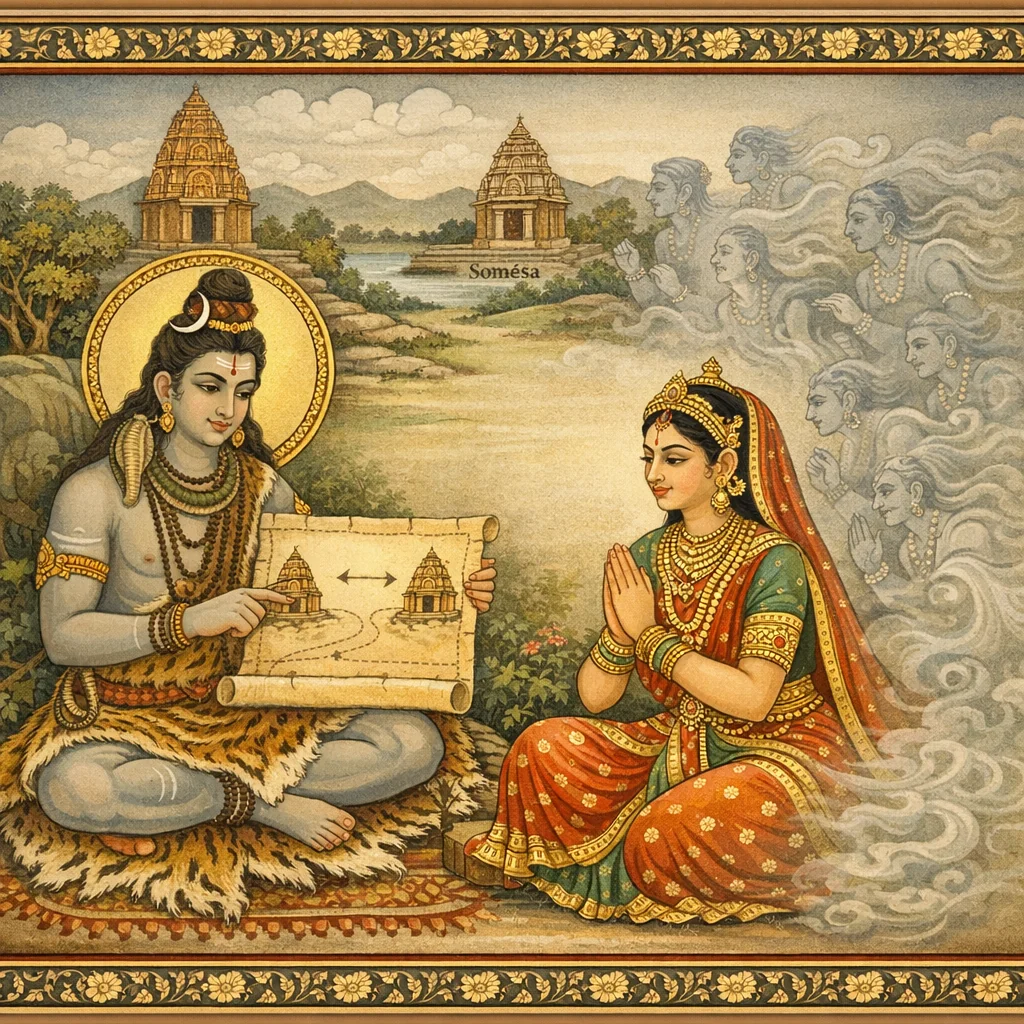
Pulastya tells King Yayāti of the famed holiness of the great peak called Īśānīśikhara, declaring that mere sight of it frees one from pāpa and bestows auspiciousness through seven births. Asked when and why Devī performed austerities there, Pulastya recounts a divine episode. Fearing cosmic disorder if Śiva’s potency were to fall within Devī’s domain, the devas secretly send Vāyu to request restraint. Śiva, moved by modesty, withdraws; Devī, distressed, utters curses— the devas become deprived of progeny, and Vāyu becomes bodiless—then departs in anger to Arbuda. Indra and the devas seek reconciliation. Śiva explains he acted out of duty for the welfare of the divine world and promises Devī a son from her own body on the fourth day. Devī forms a four-armed Vināyaka from bodily unguent; Śiva animates him, and he becomes the universally worshipped leader to be honored first. The devas proclaim the peak sin-destroying by service and sight; bathing in its sacred waters leads to an immortal station, and Māgha observances (bright third) grant happiness across seven births.
Shlokas
Verse 1
पुलस्त्य उवाच । ततो गच्छेन्नृपश्रेष्ठ ईशानीशिखरं महत् । यत्र गौर्या तपस्तप्तं सुपुण्यं लोकविश्रुतम्
Pulastya said: “Then, O best of kings, one should go to the great peak called Īśānī-śikhara, where the Goddess Gaurī performed austerities—an exceedingly meritorious act renowned throughout the worlds.”
Verse 2
यस्य संदर्शनेनापि नरः पापात्प्रमुच्यते । लभते चातिसौभाग्यं सप्तजन्मांतराणि च
By merely beholding it, a person is released from sin; and he also gains extraordinary good fortune across seven successive births.
Verse 3
ययातिरुवाच । कस्मिन्काले तपस्तप्तं देव्या तत्र मुनीश्वर । किमर्थं च महत्त्वेतत्कौतुकं वक्तुमर्हसि
Yayāti said: “At what time did the Goddess perform austerities there, O lord among sages? And for what reason is this place so great? Please explain this wondrous matter.”
Verse 4
पुलस्त्य उवाच । शृणु राजन्कथां दिव्यामद्भुतां लोकविश्रुताम् । यस्याः संश्रवणादेव मुच्यते सर्वपातकैः
Pulastya said: “Listen, O king, to this divine and wondrous account, renowned throughout the worlds—by mere hearing of it one is freed from all sins.”
Verse 6
वीर्यं यदि त्रिनेत्रस्य क्षेत्रे गौर्याः पतिष्यति । अस्माकं पतनं नूनं जगतश्च भविष्यति
“If the potency of the Three-eyed Lord should fall upon Gaurī’s sacred ground, then surely our ruin—and the ruin of the world—will come to pass.”
Verse 7
संततेस्तु विनाशाय ततो गच्छामहे वयम्
“Therefore, to prevent the destruction of progeny and continuity, we shall go at once.”
Verse 8
एवं संमंत्र्य देवास्ते कैलासं पर्वतं गताः । ततस्तु नंदिना सर्वे निषिद्धाः समयं विना
Thus, after deliberating together, those gods went to Mount Kailāsa. Then all of them were stopped by Nandin, for they had come without prior leave or appointment.
Verse 9
पुरा गौर्या समासक्तं ज्ञात्वा देवाः सवासवाः । मंत्रं चक्रुर्भयाविष्टा एकांते समुपाश्रिताः
Formerly, learning that (Śiva) was deeply attached to Gaurī, the gods—along with Indra—were seized with fear and held counsel in a secluded place.
Verse 10
अथ देवगणाः सर्वे वञ्चयित्वा च तं गणम् । प्रैषयंस्तत्र वायुं च गुप्तमूचुर्वचस्त्विदम्
Then all the hosts of the gods, having outwitted that band of attendants, dispatched Vāyu there and secretly spoke these words:
Verse 11
गत्वा वायो भवं ब्रूहि न कार्या संततिस्त्वया । एवं देवगणा देव प्रार्थयंति भयातुराः
“Go, O Vāyu, and tell Bhava (Śiva): ‘You must not beget offspring.’ Thus, O god, the hosts of gods, distressed by fear, implore you.”
Verse 12
ततो वायुर्द्रुतं गत्वा स्थितो यत्र महेश्वरः । उच्चैर्जगाद तद्वाक्यं यदुक्तं त्रिदशालयैः
Then Vāyu swiftly went to where Maheśvara was standing, and loudly delivered to Him the very message spoken by the dwellers of heaven, the gods.
Verse 13
ततस्तु भगवाञ्छर्वो व्रीडया परया युतः । गौरीं त्यक्त्वा समुत्तस्थौ बाढमित्येव चाब्रवीत्
Then the Blessed Lord Śarva (Śiva), filled with profound embarrassment, rose up—leaving Gaurī—and said only, “So be it.”
Verse 14
ततो गौरी सुदुःखार्ता शशाप त्रिदशालयान्
Then Gaurī, afflicted with intense sorrow, cursed the dwellers of heaven, the gods.
Verse 15
गौर्युवाच । यस्मादहं कृता देवैः पुत्रहीना समागतैः । तस्मात्तेऽपि भविष्यन्ति सन्तानेन विवर्ज्जिताः
Gaurī said: “Since the gods, gathered together, have made me childless, therefore they too shall be bereft of progeny, deprived of lineage.”
Verse 16
यस्माद्वायो समायातः स्थानेऽस्मिञ्जनवर्जिते । तस्मात्कायविनिर्मुक्तस्त्वं भविष्यसि सर्वदा
“And since you, O Vāyu, came to this lonely place devoid of people, therefore you shall ever remain bodiless, released from physical form.”
Verse 17
एवमुक्त्वा ततो दीर्घं भर्तुः कोपपरायणा । त्यक्त्वा पार्श्वं गता राजन्नर्बुदं नगसत्तमम्
Having spoken thus, and for long remaining intent on anger toward her husband, she left his side and went, O King, to Arbuda, the best of mountains.
Verse 19
इन्द्राद्यैर्विबुधैः सार्द्धं तदंतिकमुपागमत् । अथ शक्रो विनीतात्मा देवीं ता प्रत्यभाषत
Along with Indra and the other gods, he approached her vicinity. Then Śakra (Indra), humble in spirit, addressed that Goddess.
Verse 20
एष देवः शिवः प्राप्तस्तव पार्श्वं स्वलज्जया । नायाति तत्प्रसादोऽस्य क्रियता महती भव
“This very Lord Śiva has come near you, held back by His own modest shame; yet he does not come forward. O Great Lady, please bestow on him your gracious favor.”
Verse 21
देव्युवाच । त्यक्ताऽहं तव वाक्येन पतिना समयान्विता । पुत्रं लब्ध्वा प्रयास्यामि तस्य पार्श्वे सुरेश्वर
The Goddess said: “At your word my husband cast me away, though we were bound by our mutual covenant. O Lord of the gods, I shall return to his side only after I obtain a son.”
Verse 22
तस्यास्तं निश्चयं ज्ञात्वा स्वयं देवः समाययौ । अब्रवीत्प्रहसन्वाक्यं प्रसादः क्रियतामिति
Knowing her steadfast resolve, the Lord Himself came there and, smiling, spoke these words: “Let grace be bestowed; be appeased.”
Verse 23
दृष्टिदानेन देवेशि भाषणेन वरानने । मया देवहितं कार्यं सर्वावस्थासु पार्वति
O Goddess, Lady of the gods—O fair-faced Pārvatī—by the gift of your glance and by your words, I must, in every circumstance, accomplish what is for the welfare of the gods.
Verse 24
अकाले तेन मुक्ताऽसि निवृत्तिः सुरते कृता । पुत्रार्थं ते समारंभो यतश्चासीत्सुरेश्वरि
O Queen of the gods, he released you before the proper time, and there was a withdrawal from the union of love—because your undertaking was for the sake of a son.
Verse 25
तस्मात्ते भविता पुत्रो निजदेहसमुद्भवः । मत्प्रसादादसंदिग्धं चतुर्थे दिवसे प्रिये
Therefore, beloved, you shall indeed have a son, born from your own body. By my grace, without doubt, it shall be on the fourth day.
Verse 26
निजांगमलमादाय यादृग्रूपं सुरेश्वरि । करिष्यसि न सन्देहस्तादृगेव भविष्यति
O Queen of the gods, taking the impurity from your own limbs, whatever form you fashion—without doubt—it shall become that very form.
Verse 27
सद्यो देवगणानां च दैत्यानां च विशेषतः । तथा वै सर्वमर्त्त्यानां सिद्धिदो बहुरूपधृक्
At once, for the hosts of gods—and especially for the Daityas—and likewise for all mortals, he becomes a giver of success, assuming many forms.
Verse 28
एवमुक्ता त्रिनेत्रेण परितुष्टा सुरेश्वरी । आलापं पतिना चक्रे सार्द्धं हर्षसमन्विता
Thus addressed by the Three-eyed Lord, the Goddess—delighted—conversed with her husband, filled with joy.
Verse 29
चतुर्थे दिवसे प्राप्ते ततः स्नात्वा शिवा नृप । तदोद्वर्त्तनजं लेपं गृहीत्वा कौतुकात्किल । चतुर्भुजं चकाराऽथ हरवाक्याद्विनायकम्
When the fourth day arrived, O King, Śivā bathed; then, truly out of curiosity, taking the paste produced by rubbing the body, she fashioned Vināyaka—four-armed—according to Hara’s words.
Verse 30
ततः सजीवतां प्राप्य हरवाक्येन तं तदा । विशेषेण महाराज नायकोऽसौ कृतः क्षितौ । सर्वेषां चैव मर्त्यानां ततः ख्यातो बभूव ह
Then, receiving life through Hara’s word, he was at that time—especially, O great King—made the Leader upon the earth; and thereafter he became renowned among all mortals.
Verse 31
विनायक इति श्रीमान्पूज्यस्त्रैलोक्यवासिनाम् । सर्वेषां देवमुख्यानां बभूव हि विनायकः
Truly glorious, he came to be known as “Vināyaka,” worthy of worship by the dwellers of the three worlds; and among all the foremost gods, Vināyaka became preeminent.
Verse 32
ततो देवगणाः सर्वे देवीप्रियहिते रताः । तस्मै ददुर्वरान्दिव्यान्प्रोचुर्देवीं च पार्थिव
Then all the hosts of gods—intent on what was pleasing and beneficial to the Goddess—bestowed divine boons upon him, and they also addressed the Goddess, O King.
Verse 33
देवा ऊचुः । तवायं तनयो देवि सर्वेषां नः पुरःसरः । प्रथमं पूजिते चास्मिन्पूजा ग्राह्या ततः सुरैः
The gods said: “O Goddess, this son of yours is the foremost leader among us all. When he is worshiped first, then the gods may accept worship thereafter.”
Verse 34
एतच्छृंगं गिरे रम्यं तव संसेवनाच्छुभे । सर्वपापहरं नृणां दर्शनाच्च भविष्यति
“O auspicious one, this lovely mountain-peak, through your devoted presence and service, will become a remover of all sins for people—merely by being seen.”
Verse 35
येऽत्र स्नानं करिष्यन्ति सुपुण्ये सलिलाश्रये । ते यांस्यंति परं स्थानं जरामरणवर्जितम्
“Those who will bathe here, in this most sacred refuge of waters, shall attain the supreme abode—free from old age and death.”
Verse 36
माघमासे तृतीयायां शुक्लायां ये समाहिताः । सप्तजन्मांतराण्येव भविष्यन्ति सुखान्विताः
Those who, composed and intent, observe the bright third lunar day in the month of Māgha will be endowed with well-being through seven successive lifetimes.
Verse 37
एवमुक्त्वा सुराः सर्वे स्वस्थानं तु ततो गताः । देवोऽपि सहितो देव्या कैलासं पर्वतं गतः
Having spoken thus, all the gods then departed to their own abodes. The Lord too, accompanied by the Goddess, went to Mount Kailāsa.
Verse 52
इति श्रीस्कांदे महापुराण एकाशीतिसाहस्र्यां संहितायां सप्तमे प्रभासखंडे तृतीयेऽर्बुदखण्ड ईशानीशिखरमाहात्म्यवर्णनंनाम द्विपञ्चाशत्तमोऽध्यायः
Thus ends the fifty-second chapter, called “The Description of the Glory of Īśānī Peak,” in the third subdivision—Arbuda Khaṇḍa—of the seventh major book, the Prabhāsa Khaṇḍa, of the Śrī Skanda Mahāpurāṇa, in the Ekāśīti-sāhasrī Saṃhitā.
Verse 918
सुतार्थं सा तपस्तेपे यतवाक्कायमानसा । ततो वर्षसहस्रान्ते देवदेवो महेश्वरः
Seeking a son, she performed austerities, restraining speech, body, and mind. Then, at the end of a thousand years, Maheśvara—the God of gods—(appeared/acted).