Adhyaya 51
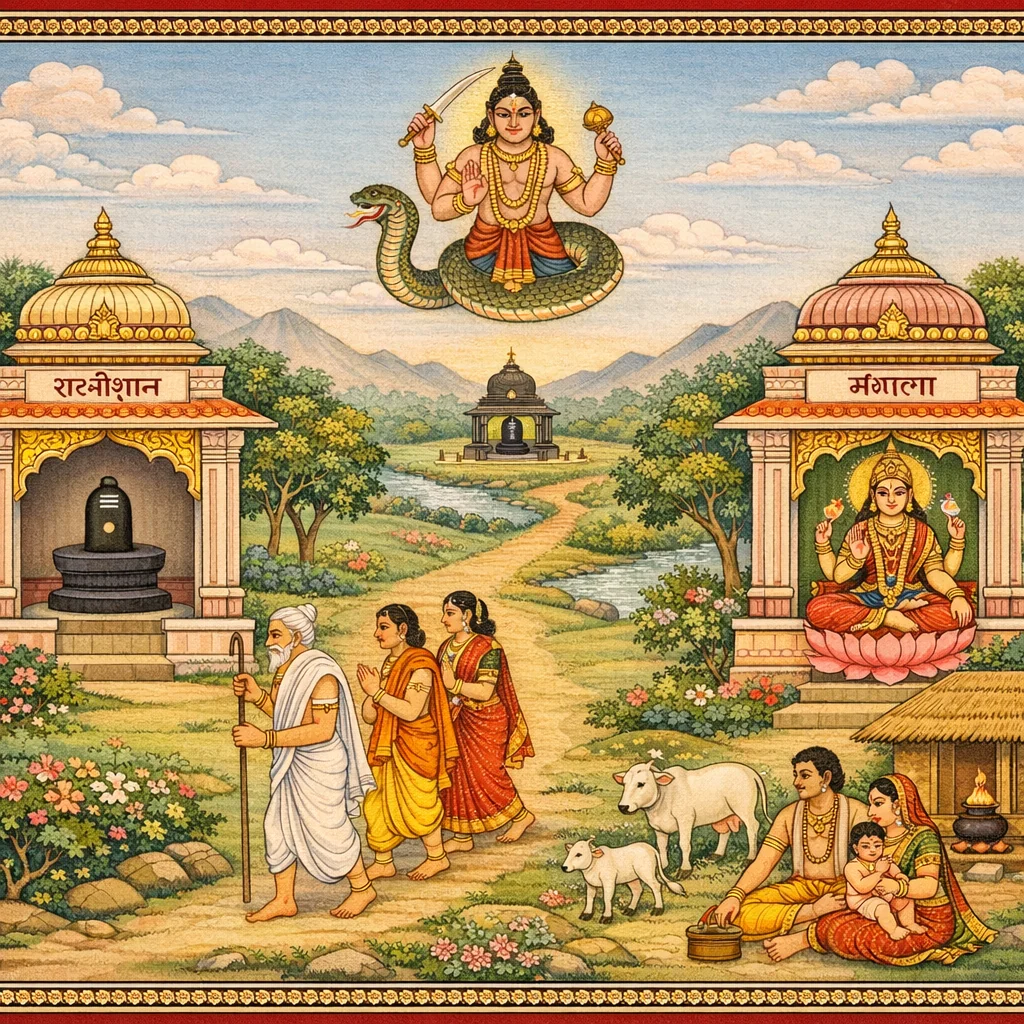
This adhyāya, framed within Pulastya’s instruction to a king, proclaims an “unsurpassed” sin-destroying tīrtha connected with Candra, the Moon. It introduces the sacred site as uniquely potent for purification and auspicious welfare. The chapter then recounts the eclipse (grahaṇa) myth: Rāhu, hostile since the amṛta episode, becomes deathless by drinking nectar; Viṣṇu severs his head, yet that head endures and terrifies the devas, especially Candra during eclipses. Seeking protection, Candra goes to Arbuda, splits the mountain peak, forms a deep cavern, and performs severe tapas within it. Pleased, Maheśvara (Śiva) grants a boon. Candra asks to be freed from Rāhu’s promised “seizing” at eclipse times. Śiva acknowledges Rāhu’s power but establishes a compensatory ritual order: during a lunar eclipse, those who perform snāna (sacred bathing) and dāna (charity) at this spot gain auspicious well-being; their sukṛta becomes imperishable, and Candra’s distress is ritually neutralized. Because the peak was cleft for tapas, the place is named Chandrodbheda; bathing there during an eclipse grants release from rebirth, and bathing with darśana on Somavāra (Monday) assures residence in Candra’s realm. Śiva then disappears, and Candra returns joyfully to his station.
Shlokas
Verse 1
पुलस्त्य उवाच । ततो गच्छेन्नृपश्रेष्ठ चंद्रोद्भेदमनुत्तमम् । तीर्थं पापहरं नृणां निशानाथेन निर्मितम्
Pulastya said: Then, O best of kings, one should go to the unsurpassed Candrodbheda—a sacred tīrtha that removes the sins of people, established by the Lord of the Night, the Moon.
Verse 2
प्रतिज्ञातं यदा राजन्ग्रहणे चंद्रसूर्ययोः । राहुणा कृतवैरेण च्छिन्ने शिरसि विष्णुना
O King, when it had been vowed that an eclipse would befall the Moon and the Sun—after Rāhu, driven by enmity, had his head cut off by Viṣṇu—
Verse 3
तदा भयान्वितश्चन्द्रो मत्वा दैत्यं दुरासदम् । पीयूषभक्षणोद्युक्तं ततश्चार्बुदमभ्यगात्
Then the Moon, seized by fear, deeming that Daitya hard to overcome and bent on consuming the nectar, thereafter went to Mount Arbuda.
Verse 4
तत्र भित्त्वा गिरेः शृंगे कृत्वा विवरमुत्तमम् । प्रविष्टस्तस्य मध्ये तु तपस्तेपे सुदुश्चरम्
There, splitting the mountain’s peak and making an excellent opening, he entered within it and performed austerities exceedingly hard to accomplish.
Verse 5
ततः कालेन महता तुष्टस्तस्य महेश्वरः । अब्रवीद्वृणु भद्रं ते वरं यत्ते हृदिस्थितम्
After a long time, Maheśvara was pleased with him and said: “May it be well with you—choose the boon that abides within your heart.”
Verse 6
चंद्र उवाच । प्रतिज्ञातं सुरश्रेष्ठ राहुणा ग्रहणं मम । बलवानेष दुर्धर्षः प्रकृत्या सिंहिकासुतः
Candra said: O best of gods, Rāhu has vowed to seize me (to eclipse me). He is mighty and by nature hard to repel—the son of Siṃhikā.
Verse 7
सांप्रतं भक्षितं तेन पीयूषं सुरसत्तम । अहं मध्ये धृतश्चापि राहुणाऽसौ दुरासदः
Just now he has consumed the nectar, O best of gods; and I too am held fast in his grasp—this Rāhu is hard to drive away.
Verse 8
पीयमानेऽमृते देव देवैः पूर्वं पराजितैः । दैवतं रूपमास्थाय दानवोऽसौ समागतः
When the nectar was being drunk, O God—after the gods had earlier been defeated—that Dānava came there, assuming the form of a deity.
Verse 9
अपिबच्चामृतं राहुस्तेनास्य मृत्युवर्जितम् । अमृतं चाक्षयं जातं शिरो देवभयप्रदम्
Rāhu drank the nectar; by that he became free from death. The nectar became imperishable in its effect, and his head became a source of fear to the gods.
Verse 10
ततो देवैः कृतं साम ग्रहमध्ये प्रतिष्ठितः । प्रतिज्ञाते ग्रहेऽस्माकं ततो मे भयमाविशत्
Then, after the gods had offered conciliatory words, he remained stationed in the midst of the eclipse. But when that eclipse upon us was resolved and fixed by agreement, fear entered me.
Verse 11
भयात्तस्य सुरश्रेष्ठ भित्त्वा शृंगं गिरेरिदम् । कृतं श्वभ्रमगाधं च तपोऽर्थं सुरसत्तम । तस्मादत्र प्रसादं मे कुरु कामनिषूदन
Out of fear of him, O best of gods, I split this mountain-peak and made a deep cavern for the sake of austerity. Therefore, O slayer of Kāma, show me your grace here.
Verse 12
भगवानुवाच । अवध्यः सर्वदेवानामजेयः स महाबलः । करिष्यति ग्रहं नूनं राहुः कोपपरायणः । परं तव निशानाथ करिष्येऽहं प्रतिक्रियाम्
The Blessed Lord said: “Rāhu is indeed invulnerable to all the gods, unconquerable, and of great might; devoted to wrath, he will surely cause an eclipse. Yet, O lord of the night, I shall provide the counter-rite for you.”
Verse 13
ग्रहणे तव संप्राप्ते स्नानदानादिकाः क्रियाः । करिष्यंति जना लोके सम्यक्छ्रेयःसमन्विताः
When your eclipse arrives, people in the world will perform rites such as sacred bathing and charity, endowed with true spiritual welfare.
Verse 14
ताभिस्तव न संतापः स्वल्पोऽप्येवं भविष्यति । अक्षयं सुकृतं तेषां कृतं कर्म भविष्यति
By those observances, you will not suffer even the slightest distress; and for them, the merit of the deeds they perform will become imperishable.
Verse 15
ग्रहणे तव संजाते मम वाक्यादसंशयम् । एतद्भिन्नं त्वया यस्मात्तपोऽर्थं शिखरं गिरेः । चन्द्रोद्भेदमिति ख्यातं तीर्थं लोके भविष्यति
When your eclipse occurs, by my word—without doubt—because you split this mountain-peak for the sake of austerity, this sacred ford will become renowned in the world as ‘Candrodbheda’.
Verse 16
ग्रहणे तव संप्राप्ते योऽत्र स्नानं करिष्यति । न तस्य पुनरेवात्र जन्म लोके भविष्यति
When your eclipse comes, whoever performs bathing here will not be born again in this world.
Verse 17
यो वा सोमदिने स्नानं दर्शनं तत्र चाचरेत् । तव लोके ध्रुवं वासस्तस्य चंद्र भविष्यति
Or, whoever on a Soma-day (Monday) performs bathing and makes a worshipful visit there—O Candra—will dwell surely in your world.
Verse 18
एवमुक्त्वा स भगवांस्ततश्चांतर्दधे हरः । चन्द्रोऽपि प्रययौ हृष्टः स्वस्थानं नृपसत्तम
Having spoken thus, the Blessed Hara vanished from that place. And Candra too, delighted, departed to his own abode, O best of kings.
Verse 51
इति श्रीस्कांदे महापुराण एकाशीतिसाहस्र्यां संहितायां सप्तमे प्रभासखण्डे तृतीयेऽर्बुदखण्डे चन्द्रोद्भेदतीर्थमाहात्म्यवर्णनंनामैकपंचाशत्तमोऽध्यायः
Thus ends the fifty-first chapter, called “The Narration of the Greatness of Candrodbheda Tīrtha,” in the third division, Arbuda Khaṇḍa, within the seventh Prabhāsa Khaṇḍa, of the Śrī Skanda Mahāpurāṇa in the Ekāśīti-sāhasrī Saṃhitā.