Adhyaya 48
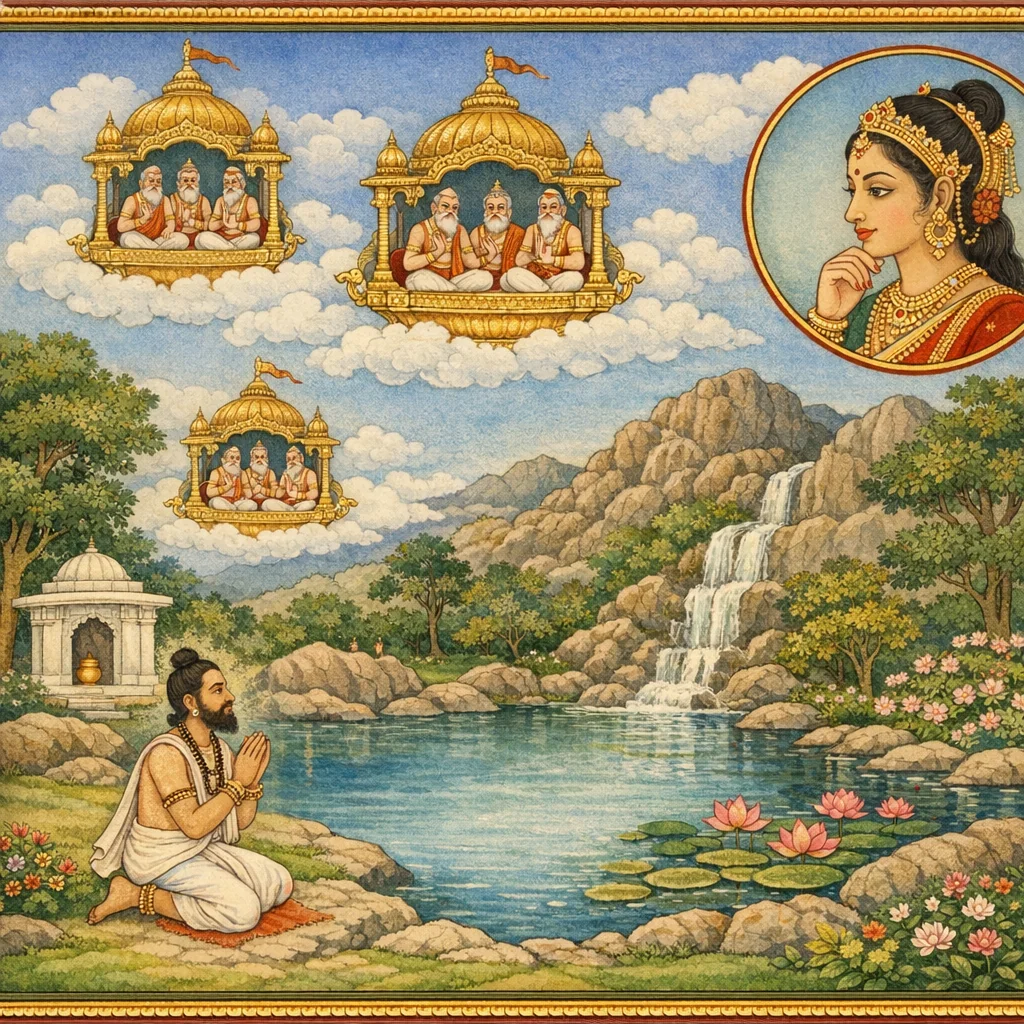
Pulastya describes the tīrtha called Kulasantāraṇa, proclaimed an “unsurpassed” holy place where bathing in the proper manner is said to uplift an entire lineage. The chapter presents the former king Aprastuta as ethically wayward—ruling with violence, committing acquisitive wrongs, and neglecting dāna (giving), jñāna (sacred knowledge), and disciplined conduct. In old age the king receives a dream-encounter: suffering pitṛs (ancestors) explain that though they lived dharmically, they have fallen into hell because of his deeds, and they urge him toward auspicious worship and corrective rites. He confides in Queen Indumatī, who affirms that a good son elevates ancestors while a bad son harms them, and advises consulting dharma-versed brāhmaṇas. The brāhmaṇas prescribe a graded remedy—dīkṣā and bodily purification, then extensive tīrtha-pilgrimage with snāna (sacred bathing) and dāna, and only afterward eligibility for further sacrificial acts. The king undertakes the journey, reaches Arbuda’s pure waters, and bathes with focused faith; the ancestors are freed from a fierce hell and appear in divine conveyances. They declare the site will be known as Kulasantāraṇa and invite the king to ascend bodily to heaven by the tīrtha’s power. Pulastya closes by reaffirming the tīrtha’s efficacy and noting auspicious calendrical moments—such as rākā-soma and the vyatīpāta conjunction—that further amplify the merit of the bath.
Shlokas
Verse 1
पुलस्त्य उवाच । कुलसंतारणं गच्छेत्तत्र तीर्थमनुत्तमम् । यत्र स्नातो नरः सम्यक्कुलं तारयतेऽखिलम्
Pulastya said: One should go to Kulasantāraṇa, that unsurpassed sacred ford; for by bathing there rightly, a person truly delivers his entire lineage.
Verse 2
दश पूर्वान्भविष्यांश्च तथात्मानं नृपोत्तम । उद्धरेच्छ्रद्धयायुक्तस्तत्र दानेन मानवः
O best of kings, a person endowed with faith, by making gifts there, rescues ten forebears, ten future descendants, and also himself.
Verse 3
आसीदप्रस्तुतो नाम राजा पूर्वं स पापकृत् । नापि दानं तथा ज्ञानं न ध्यानं न च सत्क्रिया
Formerly there was a king named Aprastuta, a doer of sin. He practiced neither charity nor sacred knowledge, neither meditation nor any righteous conduct.
Verse 4
तस्मिञ्छासति लोकानां नासीत्सौख्यं कदाचन । परदार रुचिर्नित्यं महादण्डपरश्च सः
While he ruled, the people never knew happiness. He was ever inclined toward others’ wives and was devoted to harsh punishments.
Verse 5
न्यायतोऽन्यायतो वापि करोति धनसंग्रहम् । स घातयति लोकांश्च निर्दोषान्पापकृत्तमः
Whether by lawful means or unlawful, he amassed wealth; and that worst of sinners even had innocent people killed.
Verse 6
ततो वार्धक्यमापन्नस्तथापि न शमं गतः । कस्यचित्त्वथ कालस्य पितृभिः प्रतिबोधितः । तं प्रसुप्तं समासाद्य नारकेयैः सुदुःखितैः
Then he came to old age, yet even so he did not attain self-restraint (śama). After some time, he was awakened by his forefathers—tormented in hell and sorely afflicted—who approached him as he lay asleep.
Verse 7
पितर ऊचुः । वयं शुद्धसमाचारा नित्यं धर्मपरायणाः । दानयज्ञतपःशीलाः स्वदारनिरतास्तथा
The ancestors said: “We were of pure conduct and ever devoted to dharma—given to charity (dāna), sacrifice (yajña), and austerity (tapas), and faithful to our own spouses.”
Verse 8
स्वकर्मभिः कुलांगार दिवं प्राप्ता यथार्हतः । कुपुत्रं त्वां समासाद्य नरकं समुपस्थिताः । तस्मादुद्धर नः सर्वान्कृत्वा किंचिच्छुभार्चनम्
“O ember of the lineage! By our own deeds we had reached heaven, as was fitting. But having obtained you as a wicked son, we have now fallen into hell. Therefore, rescue us all by performing at least some auspicious worship.”
Verse 9
कर्मभिस्तव पापात्मन्वयं नरकमाश्रिताः । नरकं दश यास्यंति भविष्याश्च तथा भवान्
“Because of your deeds, O sinful-minded one, we have taken refuge in hell. Ten more hells are yet to be undergone—and you too will face them in the future.”
Verse 10
एवमुक्त्वा च ते सर्वे पितरस्तु सुदुःखिताः । याताश्च नरकं भूयः प्रबुद्धः सोऽपि पार्थिवः
Having spoken thus, all those ancestors—overwhelmed with sorrow—went again to hell; and that king too awoke.
Verse 11
ततो दुःखमनुप्राप्तः पितृवाक्यानि संस्मरन् । रुरोद प्रातरुत्थाय तं भार्या प्रत्यभाषत
Then, seized by sorrow and recalling the words of his forefathers, he rose at dawn and wept; his wife spoke to him.
Verse 12
इन्दुमत्युवाच । किमर्थं राजशार्दूल त्वं रोदिषि महास्वनम् । कथं ते कुशलं राज्ये शरीरे वा पुरेऽथवा
Indumatī said: “For what reason, O tiger among kings, do you weep with such a mighty cry? Is all well in your kingdom, in your body, or in the city?”
Verse 13
राजोवाच । मया दृष्टोऽद्य स्वप्नांते पिता ह्यथ पितामहः । अपश्यं दुःखितान्देवि ताभ्यामथाग्रजान्पितॄन्
The king said: “Today, at the end of a dream, I saw my father and then my grandfather. O Devī, I beheld them in distress, and with them the earlier ancestors as well.”
Verse 14
उपालब्धोऽस्मि तैः सर्वैस्तव कर्मभिरीदृशैः । दारुणे नरके प्राप्ता अधर्मादिविचेष्टितैः
“I was reproached by them all because of such deeds of yours. Through acts born of adharma and similar wrongdoing, they have reached a dreadful hell.”
Verse 15
अथान्ये दश यास्यन्ति भविष्याश्च भवानपि । तस्मात्कृत्वा शुभं कर्म दुर्गतेश्चोद्धरस्व नः
“Moreover, ten (hells) still remain to be undergone—and you too will face them in time. Therefore perform auspicious deeds and lift us up from misfortune and ruin.”
Verse 16
एवमुक्तः प्रबुद्धोऽहं पितृभिर्वरवर्णिनि । तेनाहं दुःखमापन्नस्तद्वाक्यं हृदि संस्मरन्
O fair-complexioned one, thus addressed by my ancestors, I awoke. Therefore I have fallen into grief, keeping their words remembered within my heart.
Verse 17
इन्दुमत्युवाच । सत्यमेतन्महाराज यदुक्तोऽसि पितामहैः । न त्वया सुकृतं कर्म संस्मरेऽहं कृतं पुरा
Indumatī said: “This is indeed true, O great king, that you have been so addressed by the ancestors. I do not recall any meritorious deed that you performed previously.”
Verse 18
यथा सुपुत्रमासाद्य तरंति पितरो नृप । कुपुत्रेण तथा यांति नरकं नात्र संशयः
O King, just as the ancestors cross over to welfare and higher realms by obtaining a virtuous son, so too, because of an unworthy son they go to hell—of this there is no doubt.
Verse 19
स त्वमाहूय विप्रेंद्रान्धर्मशास्त्रविचक्षणान् । पृष्ट्वा तान्कुरु यच्छ्रेयः पितॄणामात्मना सह
Therefore, summon the foremost brāhmaṇas—those skilled in the Dharma-śāstras—and, after consulting them, do what is truly beneficial for your ancestors, together with your own welfare.
Verse 20
आनयामास राजाऽसौ ततो विप्राननेकशः । वेदवेदांगतत्त्वज्ञान्धर्मशास्त्रविचक्षणान् । उवाच विनयोपेतो भार्यया सहितो हितान्
Thereupon that king brought many brāhmaṇas—knowers of the true purport of the Vedas and Vedāṅgas, and skilled in the Dharma-śāstras. Endowed with humility, and accompanied by his queen, he addressed those well-wishers.
Verse 21
राजोवाच । कर्मणा केन पितरो निरयस्था द्विजोत्तमाः । स्वर्गं यांति सुपुत्रेण तारिताः प्रोच्यतां स्फुटम्
The King said: O best of brāhmaṇas, by what rite do the ancestors abiding in hell attain heaven, being delivered by a virtuous son? Declare it clearly.
Verse 22
ब्राह्मणा ऊचुः । पितृमेधेन राजेंद्र कृतेन विधिपूर्वकम् । निरयस्था दिवं यांति यद्यपि स्युः सुपापिनः
The brāhmaṇas said: O lord of kings, when the Pitṛmedha is performed in due form according to the prescribed rule, the ancestors dwelling in hell ascend to heaven, even though they be greatly sinful.
Verse 23
राजोवाच । दीक्षयंतु द्विजाः सर्वे तदर्थं मां धृतव्रतम् । यत्किंचिदत्र कर्त्तव्यं प्रोच्यतामखिलं हि तत्
The King said: Let all the brāhmaṇas initiate me for that purpose; I am steadfast in my vow. Whatever must be done in this matter—tell me all of it in full.
Verse 24
तथोक्तास्ते नृपेंद्रेण ब्राह्मणाः सत्यवादिनः । समग्राः पार्थिवं प्रोचुर्यदुक्तं यज्ञकर्मणि
Thus addressed by the king, those truth-speaking brāhmaṇas explained to the monarch in full what is taught regarding the rites and acts of sacrifice (yajña).
Verse 25
दीक्षा ग्राह्या नृपश्रेष्ठ पुरश्चरणमादितः । कृत्वा कायविशुद्ध्यर्थं ततः श्रेयस्करी भवेत्
O best of kings, you should first accept dīkṣā (initiation) and then begin with the preparatory observances called puraścaraṇa. When done for the purification of the body, it becomes a bestower of the highest good.
Verse 26
स त्वं पापसमाचारो बाल्यात्प्रभृति पार्थिव । असंख्यं पातकं तस्मात्तीर्थयात्रां समाचर
But you, O king, from childhood onward have engaged in sinful conduct, and your transgressions are countless; therefore undertake pilgrimage to the sacred tīrthas.
Verse 27
सर्वतीर्थाभिषिक्तस्त्वं यदा स्यान्नृपसत्तम । प्रायश्चित्तेन योग्यः स्यास्ततो यज्ञस्य नान्यथा
O best of kings, only when you have been purified by bathing in all the sacred tīrthas will you, through expiation (prāyaścitta), become fit for the sacrifice (yajña)—never otherwise.
Verse 28
प्रभासादीनि तीर्थानि यानि संति धरातले । गंतव्यं तेषु सर्वेषु स्नानं कुरु समाहितः
All the sacred tīrthas upon the earth—beginning with Prabhāsa—should be visited. In each of them, bathe with a collected and disciplined mind.
Verse 29
मनसा गच्छ दुर्गाणि ददद्दानमनुत्तमम् । नश्येत्तेनाशुभं किंचिदपि ब्रह्मवधोद्भवम् । यन्न याति नृणां राजंस्तीर्थस्नानादिना भुवि
O King, go forth—if only with steadfast resolve—to difficult and remote holy places, giving unsurpassed gifts. By that, every trace of inauspiciousness—even that arising from the slaying of a brāhmaṇa—perishes; a purification not attained on earth by mere tīrtha-bathing and the like alone.
Verse 30
पुलस्त्य उवाच । विप्राणां वचनं श्रुत्वा स राजा श्रद्धयाऽन्वितः । तीर्थयात्रापरो भूत्वा परिबभ्राम मेदिनीम्
Pulastya said: Hearing the words of the brāhmaṇas, that king—endowed with faith (śraddhā)—became devoted to pilgrimage and wandered across the earth.
Verse 31
नियतो नियताहारो ददद्दानानि भूरिशः । राज्ये पुत्रं प्रतिष्ठाप्य वसुं सत्यपराक्रमम्
Self-restrained and measured in diet, he bestowed abundant gifts. Having established his son Vasu—of truthful valor—upon the throne, he set forth.
Verse 32
कस्यचित्त्वथ कालस्य तीर्थयात्रानुषंगतः । यातोऽसौ नृपतिश्चैव ह्यर्बुदे निर्मलोदकम्
After some time, while engaged in pilgrimage to the tīrthas, that king came to Arbuda—to the tīrtha of pure waters called Nirmalodaka.
Verse 33
स स्नानमकरोत्तत्र श्रद्धापूतेन चेतसा । स्नातमात्रस्य तस्याथ तस्मिन्नेव जलाशये
There he performed the sacred bath with a heart purified by faith. And as soon as he had bathed, right there in that very reservoir…
Verse 34
विमुक्ताः पितरो रौद्रान्नरकात्सुप्रहर्षिताः । ततो दिव्यविमानस्था दिव्यमाल्यांबरान्विताः
His forefathers were freed from the terrible hells, filled with great joy. Then they appeared, seated in divine aerial chariots, adorned with heavenly garlands and garments.
Verse 35
तमूचुस्तारिताः सर्वे वयं पुत्र त्वयाऽधुना । तीर्थस्यास्य प्रभावेण भविष्याश्च तथा दश
All of them, having been delivered, said to him: “O son, by you we have now been saved. By the power of this tīrtha, ten more generations shall likewise be so.”
Verse 36
आत्मा च पार्थिवश्रेष्ठ स्नानाच्च जलतर्पणात् । यस्मात्कुलं त्वया पुत्र तीर्थेऽस्मिंस्तारितं ततः
O best of kings, by this sacred bathing and by the offering of water-oblations (tarpana), your own self too is purified; for, O son, by you this lineage has been delivered at this very tīrtha.
Verse 37
कुलसंतारणंनाम तीर्थमेतद्भविष्यति । तस्मात्त्वमपि राजेंद्र सहाऽस्माभिर्दिवं प्रति । आगच्छानेन देहेन तीर्थस्यास्य प्रभावतः
This tīrtha shall be known as ‘Kulasaṃtāraṇa’—the Deliverer of the Lineage. Therefore, O lord of kings, come with us to heaven in this very body, by the power of this sacred place.
Verse 38
पुलस्त्य उवाच । एवमुक्तः स राजेंद्रो दिव्यकांतिवपुस्तदा । तं विमानमथारुह्य गतः स्वर्गं च तैः सह
Pulastya said: Thus instructed, that best of kings—then radiant with a divine splendor—ascended that celestial chariot and, together with them, departed to heaven.
Verse 39
एष प्रभावो राजर्षे कुलसंतारणस्य च । मया ते वर्णितः सम्यग्भूयः किं परिपृच्छसि
O royal sage, such is the power of the Kulasaṃtāraṇa tīrtha. I have explained it to you properly—what more do you wish to ask?
Verse 40
ययातिरुवाच । स किंप्रभावो राजा स तथा पापसमन्वितः । स्वदेहेन गतः स्वर्गमेतन्मे कौतुकं महत्
Yayāti said: What extraordinary power did that king possess, that—though burdened with sin—he went to heaven in his very body? This is a great wonder to me.
Verse 41
पुलस्त्य उवाच । राकासोमव्यतीपात समकाले नृपोत्तम । स स्नातो यत्र भूपालस्तन्महच्छ्रेयसे परम्
Pulastya said: O best of kings, at the auspicious concurrence of Rākā (the full moon), the Moon, and Vyatīpāta, when that ruler bathed at that very place, that bath became the supreme means to great welfare.
Verse 48
इति श्रीस्कांदे महापुराण एकाशीतिसाहस्र्यां संहितायां सप्तमे प्रभास खण्डे तृतीयेऽर्बुदखंडे कुलसंतारणतीर्थमाहात्म्यवर्णनंनामाष्टचत्वारिंशोऽध्यायः
Thus ends the forty-eighth chapter, entitled “The Description of the Māhātmya of Kulasaṃtāraṇa Tīrtha,” in the seventh section (Prabhāsa Khaṇḍa) and the third section (Arbuda Khaṇḍa) of the Śrī Skanda Mahāpurāṇa, within the Ekāśītisāhasrī Saṃhitā.