Adhyaya 46
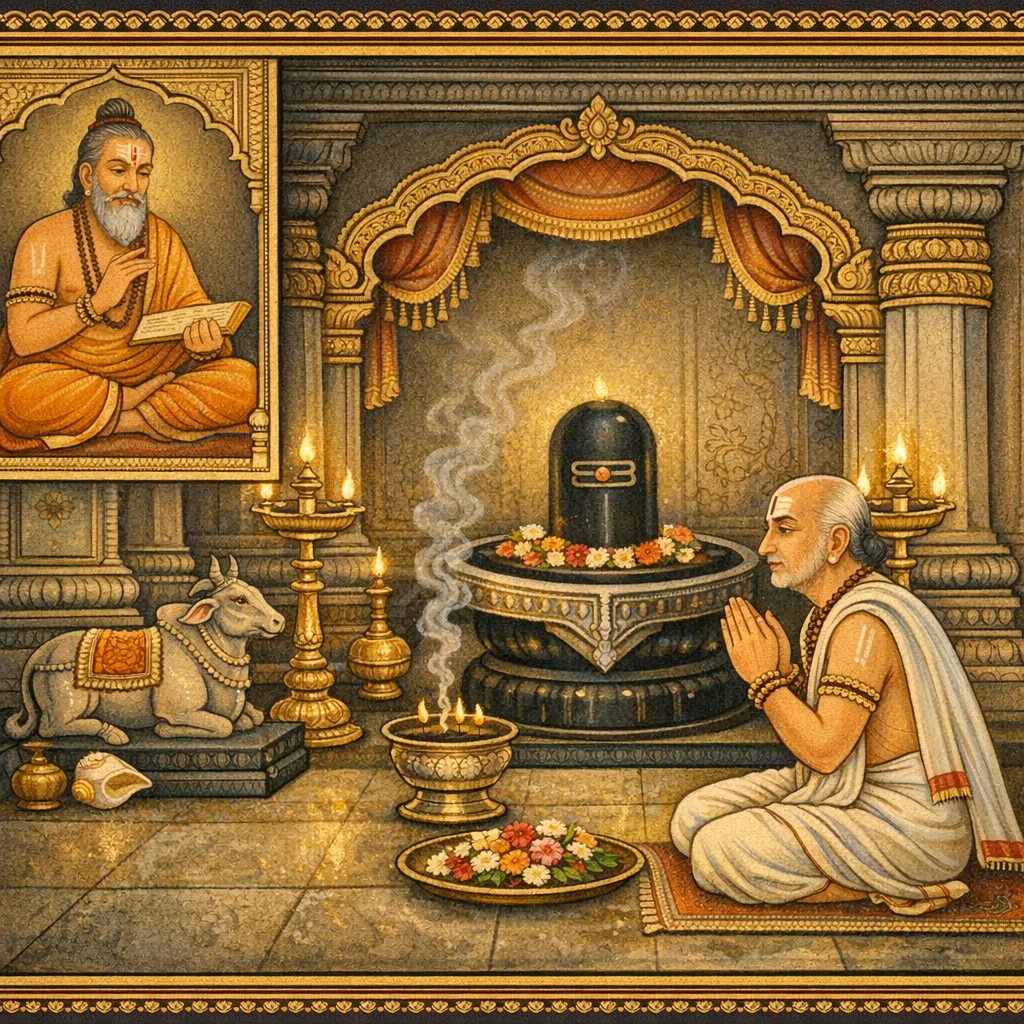
This adhyāya is cast as Pulastya’s instructive narration, guiding the listener to a definite sacred destination: Vyāseśvara, the shrine established by Vyāsa. The opening injunction—“then one should go to Vyāseśvara”—places pilgrimage as an ordered step within the wider sacred landscape of Arbuda. Its core teaching exalts darśana as transformative knowing: the very sight of the deity and holy site is said to bestow medhā (clarity of intellect), mati (discernment), and śuci (purity). The closing colophon identifies the passage as part of the 81,000-verse Skanda Mahāpurāṇa, within the seventh Prabhāsa Khaṇḍa and the third Arbuda Khaṇḍa, naming this as the forty-sixth chapter for canonical recitation, citation, and preservation.
Shlokas
Verse 1
पुलस्त्य उवाच । ततो व्यासेश्वरं गच्छेद्व्यासेन स्थापितं हि यत् । तं दृष्ट्वा जायते मर्त्यो मेधावी मतिमाञ्छुचिः । सप्तजन्मांतराण्येव व्यासस्य वचनं यथा
Pulastya said: “Then one should go to Vyāseśvara, which indeed was established by Vyāsa. By beholding it, a mortal becomes intelligent, discerning, and pure—so it is said, in accordance with Vyāsa’s own statement, for seven lifetimes.”
Verse 46
इति श्रीस्कांदे महापुराण एकाशीतिसाहस्र्यां संहितायां सप्तमे प्रभासखण्डे तृतीयेऽर्बुदखण्डे व्यासतीर्थमाहात्म्यवर्णनंनाम षट्चत्वारिंशोऽध्यायः
Thus ends the forty-sixth chapter, entitled “The Description of the Greatness of Vyāsa’s Tīrtha,” in the third subdivision called Arbuda Khaṇḍa, within the seventh Prabhāsa Khaṇḍa of the Śrī Skanda Mahāpurāṇa, in the Ekāśīti-sāhasrī Saṃhitā.