Adhyaya 41
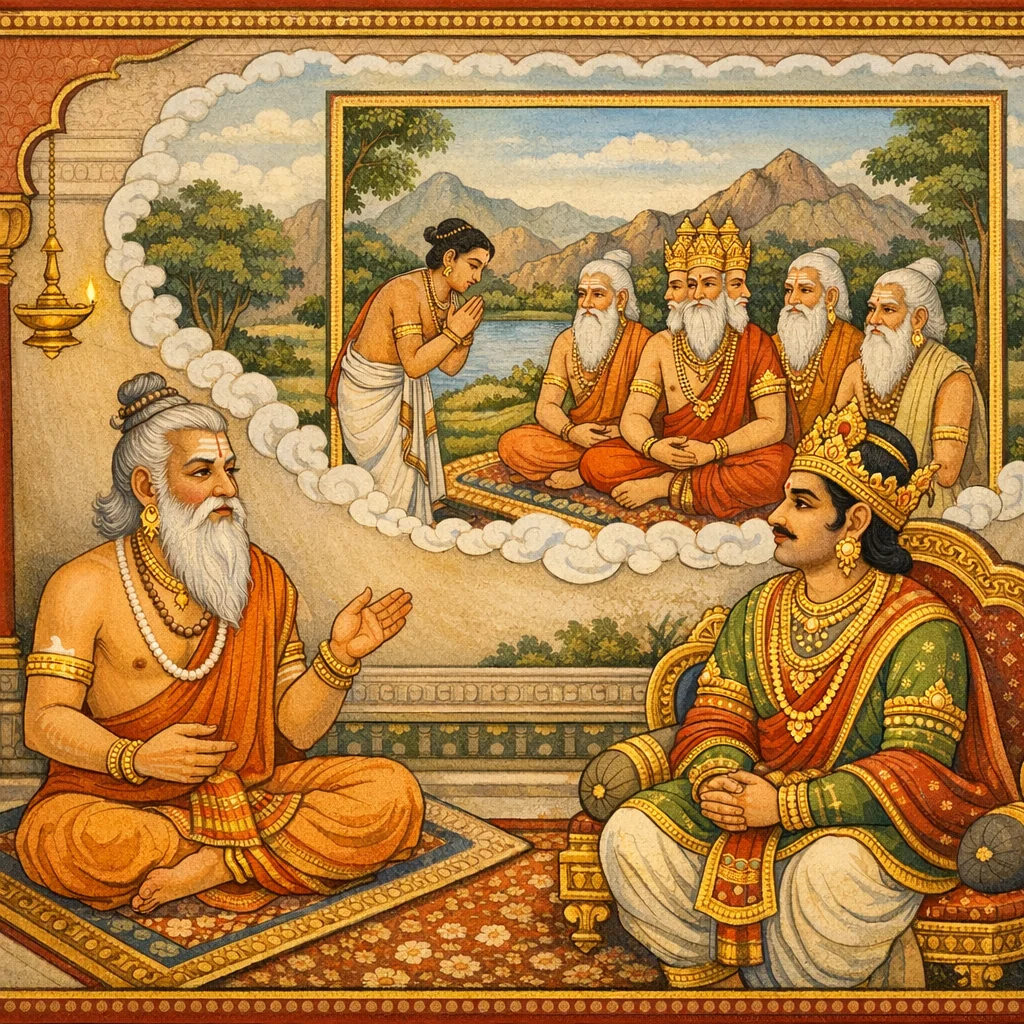
Pulastya recounts to a king the story of Mṛkaṇḍu’s son: a child bearing auspicious marks, yet foretold by a learned visitor to die within six months. The father hastens the boy’s upanayana and trains him in disciplined reverence, teaching him to bow to Brahmins of every age. When the Saptarṣi arrive on pilgrimage, the child greets them with devotion and receives their blessing of long life. But Aṅgiras, with subtle insight, perceives death approaching on the fifth day and urges a remedy so their blessing may not conflict with truth. The sages carry the child to Brahmaloka, where Brahmā inquires and grants him longevity lasting for a full kalpa. Returned to his parents, the child proclaims the boon and resolves to found a beautiful āśrama on Mount Arbuda and worship Brahmā. The chapter ends with a local phalaśruti: pitṛ-tarpaṇa there on the Śrāvaṇa full-moon yields complete fruit like a pitr̥medha; tarpaṇa to eminent Brahmins through ṛṣi-yoga grants long residence in Brahmaloka; and faithful bathing there removes fear of untimely death within one’s lineage.
Shlokas
Verse 1
पुलस्त्य उवाच । ततो गच्छेन्नृपश्रेष्ठ मार्कंडेयस्य चाश्रमम् । यत्र पूर्वं तपस्तप्तं मार्कंडेन महात्मना
Pulastya said: “Then, O best of kings, one should go to the hermitage of Mārkaṇḍeya, where in former times the great-souled Mārkaṇḍeya performed austerities (tapas).”
Verse 2
मृकण्डो ब्राह्मणोनाम पुराऽसीच्छंसितव्रतः । अन्ते वयसि संजातस्तस्य पुत्रोऽतिसुन्दरः
There once was a brāhmaṇa named Mṛkaṇḍu, steadfast in his praised vows. In his later years, a son was born to him—exceedingly handsome.
Verse 3
सर्वलक्षणसंपूर्णः शांतः सूर्यसमप्रभः । कस्यचित्त्वथ कालस्य तस्याश्रमपदे नृप
Complete in every auspicious mark, serene and radiant like the sun—after some time, O king, events unfolded at that hermitage-settlement.
Verse 4
आगतो ब्राह्मणो ज्ञानी कश्चित्सामुद्रविच्छुभः । ततोऽसौ क्रीडमानस्तु बालकः पंचवार्षिकः
A certain learned brāhmaṇa arrived, skilled in samudrikā—reading the signs of the body. Then the five-year-old boy, playing about, came into view.
Verse 5
आनासाग्रशिखाग्राभ्यां चिरं चैवावलोकितः । ततोऽहसत्स सहसा तं मृकण्डो ह्यलक्षयत्
He examined him for a long while, from the tip of the nose up to the crown of the head. Then he suddenly laughed, and Mṛkaṇḍu noticed it.
Verse 6
अथाऽब्रवीच्चिरं दृष्टस्त्वया पुत्रो मम द्विज । ततो हसितवान्भूयः किमिदं कारणं वद
Then he said: “O brāhmaṇa, you have looked at my son for a long time. And then you laughed again—tell me, what is the reason for this?”
Verse 7
असकृत्स मृकण्डेन यावत्पृष्टो द्विजोत्तमः । उपरोधवशात्तस्मै यथार्थं संन्यवेदयत्
When Mṛkaṇḍu questioned him repeatedly, that excellent brāhmaṇa—pressed by insistence—disclosed to him the matter as it truly was.
Verse 8
अस्य बालस्य चिह्नानि यानि काये द्विजोत्तम । अजरश्चामरश्चैव तैर्भवेत्पुरुषः किल
O best among brāhmaṇas, the marks upon this boy’s body are such that, by them, a man would indeed be expected to be free from aging and death.
Verse 9
षण्मासेनास्य बालस्य नूनं मृत्युर्भविष्यति । एतस्मात्कारणाद्धास्यं मयाऽकारि द्विजोत्तम । अनृतं नोक्तपूर्वं मे वैरिष्वपि कदाचन
In six months, this child will certainly die. It was for this reason, O best among brāhmaṇas, that I laughed. I have never spoken falsehood before—at any time, not even to enemies.
Verse 10
पुलस्त्य उवाच । एवमुक्त्वा तु स ज्ञानी उषित्वा तत्र शर्वरीम् । मृकंडेनाभ्यनुज्ञात इष्टं देशं जगाम ह
Pulastya said: Having spoken thus, that wise sage spent the night there; and, with Mṛkaṇḍa’s permission, he departed for the place he desired.
Verse 11
मृकंडोपि सुतं ज्ञात्वा ततः क्षीणायुषं नृप । पंचवार्षिकमप्यार्त्तश्चकारोपनयान्वितम्
O king, Mṛkaṇḍa too, realizing that his son was then short-lived, anxiously performed his initiation (upanayana) even though the boy was only five years old.
Verse 12
श्रुताध्ययनसंपन्नं यंयं पश्यसि चाग्रतः । तस्याभिवादनं कार्यं त्वया पुत्रक नित्यशः
My son, whoever you see before you who is endowed with sacred learning and study—offer him respectful salutations; this you must do every day.
Verse 13
ततश्चक्रे ब्रह्मचारी पितुर्वाक्यं विशेषतः
Thereupon the brahmacārī carried out his father’s instruction with special care.
Verse 14
बालं वृद्धं युवानं च यंयं पश्यति चक्षुषा । नमस्करोति तं सर्वं ब्राह्मणं विनयान्वितः
Whether a boy, an elder, or a youth—whichever brāhmaṇa he saw with his eyes, he bowed to them all, being filled with humility.
Verse 15
कस्यचित्त्वथ कालस्य तस्याश्रमसमीपतः । सप्तर्षयः समायातास्तीर्थयात्रापरायणाः
After some time, near that hermitage, the Seven Sages arrived—wholly devoted to pilgrimage among the sacred tīrthas.
Verse 16
अथ तान्सत्वरं गत्वा वंदयामास पार्थिव । बालः सविनयोपेतः सर्वांश्चैव यथाक्रमम्
Then, O king, the boy quickly went to them and paid homage—endowed with humility—saluting each of them in due order.
Verse 17
दीर्घायुर्भव तैरुक्तः स बालस्तुष्टितत्परैः । आस्थिताश्च यथाभीष्टं देशं बालं विसर्ज्य तम्
Pleased with him, they said to the boy, “May you be long-lived.” Then, dismissing the boy, they proceeded to whatever place they wished.
Verse 18
तेषां मध्येंऽगिरानाम दिव्यज्ञानसमन्वितः । तेनावलोकितो बालः सूक्ष्मदृष्ट्या परंतप
Among them was a sage named Aṅgirā, endowed with divine knowledge; and with subtle vision he examined the boy, O scorcher of foes.
Verse 19
अथ तानब्रवीत्सर्वान्मुनीन्किंचित्सविस्मयः । दीर्घायुर्न च बालोऽयं युष्माभिः संप्रकीर्तितः
Then, somewhat astonished, he said to all the sages: “This boy is not long-lived, as you have proclaimed.”
Verse 20
गमिष्यति कुमारोऽयं निधनं पंचमे दिने । तन्न युक्तं हि नो वाक्यमसत्यं द्विजसत्तमाः
“This young boy will meet his end on the fifth day. That would make our words untrue—an unseemly thing, O best of the twice-born.”
Verse 21
यथाऽयं चिरजीवी स्यात्तथा नीतिर्विधीयताम् । अथ ते मुनयो भीता मिथ्या वाक्यस्य पार्थिव
“Let a means be ordained by which this child may become long-lived.” Thus those sages, fearful that their statement might turn false, spoke, O king.
Verse 22
बालकं तं समादाय ब्रह्मलोकं गतास्तदा । तत्र दृष्ट्वा चतुर्वक्त्रं नमश्चक्रुर्मुनीश्वराः
Taking that child with them, they then went to Brahmā’s world. There, beholding the Four-faced Lord, the great sages offered their reverent salutations.
Verse 23
तेषामनंतरं तेन बालके नाभिवादितः । दीर्घायुर्भव तेनाऽपि ब्रह्मणोक्तः स बालकः
Immediately thereafter, the boy did not bow to them. Yet Brahmā spoke to that very child: “Be long-lived.”
Verse 24
ततः सप्तर्षयो हृष्टाः स्वचित्ते नृपसत्तम । सुखासीनान्सविश्रांतानब्रवीन्मुनिपुंगवान्
Then the Seven Sages rejoiced at heart, O best of kings. When they were seated at ease and rested, the foremost among sages spoke.
Verse 25
ब्रह्मोवाच । परिपृच्छत किं कार्यं कुतो यूयमिहागताः
Brahmā said: “Ask—what is your purpose, and from where have you come here?”
Verse 26
ऋषय ऊचुः । तीर्थयात्राप्रसंगेन भ्रममाणा महीतलम् । अर्बुदं पर्वतं नाम तस्य तीर्थेषु वै गताः
The sages said: “While roaming the earth in connection with pilgrimage to the tīrthas, we came to the mountain called Arbuda, and indeed visited its sacred fords.”
Verse 27
अथागत्य द्रुतं दूराद्बालेनानेन वंदिताः । दीर्घायुर्भव संदिष्टस्ततश्चायमनेकधा । पंचमे दिवसेऽस्यापि मृत्युर्देव भविष्यति
“Then, coming swiftly from afar, we were saluted by this boy. We instructed him, ‘Be long-lived,’ and he repeated it in many ways. Yet, O Lord, for him too death will come on the fifth day.”
Verse 28
यथा वयं त्वया सार्द्धमसत्या न चतुर्मुख । भवामोऽस्य कृते देव तथा किंचिद्विधीयताम्
“O Four-faced One, arrange something so that we, along with you, do not become speakers of falsehood on his account, O Lord.”
Verse 29
अथ ब्रह्मा प्रहृष्टात्मा दृष्ट्वा तं मुनिदारकम् । मत्प्रसादादयं बालो भावी कल्पायुरब्रवीत्
Then Brahmā, delighted at heart, seeing that sage’s child, declared: “By my grace, this boy shall have a lifespan of an aeon (kalpa).”
Verse 30
ततस्ते मुनयो हृष्टास्तमादाय गृहं प्रति । प्रस्थिता ब्रह्मलोकात्तु नमस्कृत्वा चतुर्मुखम्
Then those sages, filled with joy, took him along and set out for their home. Departing from Brahmaloka, they bowed to the Four-faced Lord (Brahmā) and went forth.
Verse 31
अथ तस्य पिता तत्र मृकंडो मुनिसत्तमः । ततो भार्यासमायुक्तो विललाप सुदुःखितः
Now there, his father—Mṛkaṇḍu, the best of sages—together with his wife, lamented bitterly, overwhelmed by sorrow.
Verse 32
हा पुत्रपुत्र करुणं रुदित्वा धर्मवत्सलः । अनामंत्र्य च मां कस्माद्दीर्घं पंथानमाश्रितः
‘Alas, my son, my son!’—thus he wept piteously, devoted to dharma. ‘Why, without even taking leave of me, have you taken to a long road?’
Verse 33
अकृत्वापि क्रियाः कार्याः कथं मृत्युवशं गतः । सोऽहं त्वया विना पुत्र न जीवामि कथंचन
“Without even performing the rites that ought to be done, how have you fallen under the power of death? Without you, my son, I cannot live at all.”
Verse 34
एवं विलपतस्तस्य बहुधा नृपसत्तम । बालश्चाभ्यागतस्तत्र यत्र देशे पुरा स्थितः
As he lamented in many ways, O best of kings, the boy returned there—to the very place where he had previously been staying.
Verse 35
अथासौ प्रययौ बालः प्रहृष्टेनांतरात्मना । तं दृष्ट्वा पथि तातश्च संप्रहृष्टो बभूव ह
Then that boy went on, inwardly delighted. Seeing him on the road, his father too became exceedingly joyful.
Verse 36
पप्रच्छांकं समारोप्य चिरागमन कारणम् । ततः स कथयामास सर्वं मुनिविचेष्टितम् । दर्शनं ब्रह्मलोकस्य पद्मयोनेर्वरं तथा
Lifting him onto his lap, he asked the reason for his long absence. Then the boy narrated everything—the sages’ actions, the vision of Brahmaloka, and also the boon granted by the Lotus-born (Brahmā).
Verse 37
बालक उवाच । अजरश्चामरश्चाहं कृतस्तात स्वयंभुवा । तस्मात्सत्यं मदर्थे ते व्येत्वसौ मानसो ज्वरः
The boy said: “Father, the Self-born (Brahmā) has made me free from old age and death. Therefore, be assured on my account—let this fever of the mind (your grief) now depart.”
Verse 38
सोऽहमाराधयिष्यामि तथैव चतुराननम् । कृत्वाऽश्रमपदं रम्यमर्बुदे पर्वतोत्तमे
I shall worship that very Four-faced Lord, Brahmā. Having established a delightful hermitage upon Arbuda, the best of mountains, I will devote myself to his adoration.
Verse 39
अमृतस्रावि तद्वाक्यं श्रुत्वा पुत्रस्य स द्विजः । मृकंडो हर्षसंयुक्तो वाचमित्यब्रवीच्च तम्
Hearing his son’s words, sweet as nectar, that twice-born sage Mṛkaṇḍu, filled with joy, then spoke to him in reply.
Verse 40
मार्क्कंडोऽपि द्रुतं गत्वा रम्य मर्बुदपर्वतम् । तपस्तेपे सुविस्तीर्णं ध्यायन्देवं पितामहम्
Mārkaṇḍeya too quickly went to the lovely Arbuda mountain and performed long, extensive austerities there, meditating upon the divine Pitāmaha (Brahmā).
Verse 41
तस्याश्रमपदे पुण्ये श्रावणे मासि पार्थिव । पौर्णमास्यां विशेषेण यः कुर्यात्पितृतर्पणम् । पितृमेधफलं तस्य सकलं स्यादसंशयम्
O king, at that sacred site of the sage’s āśrama—especially on the full-moon day in the month of Śrāvaṇa—whoever performs offerings of water to the ancestors (pitṛ-tarpaṇa) surely obtains, without doubt, the complete fruit of a Pitṛmedha sacrifice.
Verse 42
ऋषियोगेन यस्तत्र तर्पयेद्ब्राह्मणोत्तमान् । ब्रह्मलोके चिरं वासस्तस्य संजायते नृप
O king, whoever there, following the rṣi-tradition (ṛṣi-yoga), offers due satisfaction (tarpaṇa) to the best of brāhmaṇas gains a long dwelling in Brahmaloka.
Verse 43
यः स्नानं कुरुते तत्र सम्यक्छ्रद्धासमन्वितः । नाल्पमृत्युभयं तस्य कुले क्वापि प्रजायते
Whoever bathes there with proper faith, in that person’s family line no fear of untimely death arises anywhere.