Adhyaya 39
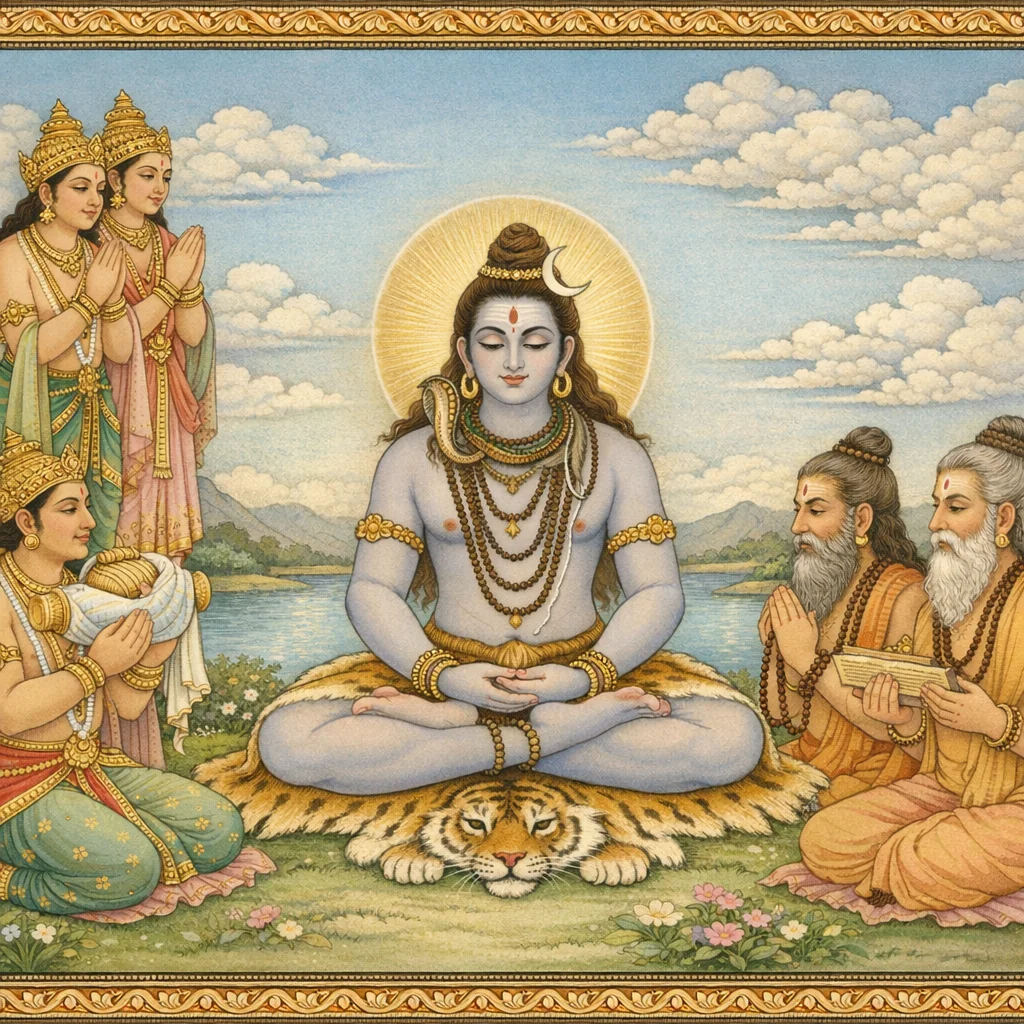
The chapter unfolds as a dialogue: King Yayāti asks Pulastya why a liṅga once established by Mahādeva became dislodged, and what merit comes from beholding that sacred spot. Pulastya relates an origin-legend: after Satī’s death and Dakṣa’s insult, a bewildered Śiva arrives at the āśrama of the Vālakhilya sages. Their wives, captivated by his splendor, approach him; the sages, failing to recognize the Lord, utter a curse, and thus the liṅga “falls.” The cosmos wavers—earthquakes and troubled seas—so the devas report the crisis to Brahmā, who discerns the cause and leads them to Arbuda. The devas then hymn Śiva in Vedic-style praise and beg for restoration. Śiva declares the fallen liṅga to be “immovable” (acala) and not to be relocated, prescribing a single remedy: worship in sequence—first Brahmā, then Viṣṇu, Indra, the other devas, and finally the Vālakhilyas with Śatarudrīya mantras—after which the ominous portents cease. A further boon is sought: that even touching the liṅga removes impurity; Indra covers it with the vajra so it is unseen by ordinary mortals, while its purifying power through proximity remains. The chapter ends with calendrical and ritual instruction: on the concluding Caturdaśī of the month of Phālguna, offering fresh barley (yava) and feeding Brahmins yields extraordinary fruit, surpassing many other rites. An exemplum follows: a diseased man’s accidental association with saktū (parched grain flour) at the site brings an auspicious rebirth; realizing its efficacy, he later performs the observance annually with fasting, night vigil, and generous saktū-dāna. The final phalaśruti promises release from day-and-night accrued faults for faithful listeners.
Shlokas
Verse 1
ययातिरुवाच । यत्त्वया कीर्तितं ब्रह्मन्पूर्वं देवैः प्रसादितः । लिंगं संस्थापयामास स्थिररूपो महेश्वरः
Yayāti said: “O Brahmin, as you recounted earlier—when Maheśvara, graciously propitiated by the gods, assumed a steadfast form and established a liṅga…”
Verse 2
कस्मात्तत्पातितं लिंगं वालखिल्यैर्महात्मभिः । कस्मात्तत्राचलो जातो देवदेवो महेश्वरः
“Why was that liṅga caused to fall by the great-souled Vālakhilyas? And why did the God of gods, Maheśvara, become immovable there?”
Verse 3
एतन्मे कौतुकं सर्वं यथावद्वक्तुमर्हसि । तस्मिन्दृष्टे च किं पुण्यं नराणां तत्र जायते
“Please explain to me properly this entire matter that has aroused my curiosity. And when that holy presence/place is beheld, what merit (puṇya) is generated there for human beings?”
Verse 4
पुलस्त्य उवाच । महेश्वरस्य माहात्म्यं शृणु पार्थिवसत्तम । अत्र ते कीर्तयिष्यामि पूर्ववृत्तं कथांतरम्
Pulastya said: “O best of kings, listen to the greatness of Maheśvara. Here I shall relate to you an earlier account—another episode from the ancient narrative.”
Verse 5
यदा पञ्चत्वमापन्ना सती सत्यपराक्रमा । अपमानेन दक्षस्य यज्ञे न च निमंत्रिता
“When Satī—whose valor was founded on truth—met her end, it was because of Dakṣa’s insult, and because she was not invited to his sacrifice (yajña).”
Verse 6
तदा कामो द्रुतं गृह्य पुष्पचापं तमभ्यगात् । कन्दर्प्पं सहसा दृष्ट्वा सन्धितेषुं सुदुर्जयम्
Then Kāma swiftly took up his flower-bow and drew near to him. Seeing Kandarpa all at once—his arrow already set, hard to overcome—(Śiva was disturbed).
Verse 7
आपतन्तं भयात्तस्य प्रणष्टस्त्रिपुरांतकः । स तदा भ्रममाणश्च इतश्चेतश्च पार्थिव
Fearing him as he rushed in, Tripurāntaka (Śiva) vanished. Then, O king, he wandered about, moving this way and that.
Verse 8
वालखिल्याश्रमं प्राप्तः पुण्यं सद्वृक्षशोभितम् । स तत्र भगवांस्तेषां दारैर्दृष्टः सुरूपवान्
He reached the hermitage of the Vālakhilyas—holy, adorned with noble trees. There the Blessed One was seen by their wives, appearing exceedingly handsome.
Verse 9
दिग्वासाः सुप्रियालापस्ततस्ताः काममोहिताः । त्यक्त्वा पुत्रगृहाद्यं च सर्वास्तत्पृष्ठसंस्थिताः । बभूवुश्चानिशं राजन्मां भजस्वेति चाब्रुवन्
Clad in the directions (naked), speaking sweet and pleasing words, those women—bewildered by desire—abandoned sons, home, and all else, and all stood close behind him. Constantly, O king, they kept saying, “Consort with me; adore me,” and the like.
Verse 10
चक्रुरालिंगनं काश्चिच्चुम्बनं च तथापराः । अन्यास्तस्य हि लिंगं तत्स्पृशंति च मुहुर्मुहुः
Some embraced him, and others kissed him. Others again repeatedly touched his liṅga.
Verse 11
स चापि भगवाञ्छम्भुर्निष्कामः परमेश्वरः । जगद्व्याप्तिं समाश्रित्य सर्वप्राणिषु वर्तते
Yet the Blessed Śambhu, the Supreme Lord, is free from desire. Resting as the all-pervading presence of the universe, he dwells within all living beings.
Verse 12
स चापि भगवाच्छंभुस्तासां सरति प्राङ्मुखः । भ्रांतस्तत्राश्रमे तेषां दारान्कामेन पीडयन्
And that very Lord Śambhu moved about before them, facing east. Wandering within that hermitage, he stirred the power of kāma, troubling their wives with desire.
Verse 13
अथ ते मुनयो दृष्ट्वा विकृतिं दारसंभवाम् । अजानन्तो महादेवं रुष्टास्तस्य महात्मनः
Then those sages, seeing the strange disturbance arising from the matter of their wives, and not recognizing him as Mahādeva, became angry with that great-souled one.
Verse 14
ददुः शापं सुसंतप्ताः कलत्रार्थे परंतप । पततां पततां लिङ्गमेतत्ते पापकृत्तम
Burning with indignation over the matter of their wives, they pronounced a curse: “Let your liṅga fall—fall indeed! O worst-doer of sinful deeds!”
Verse 15
विडम्बयसि नो दारानजस्रं चास्य दर्शनात् । ततश्चैवापतल्लिंगं तत्क्षणात्तत्पुरद्विषः
“By your very sight you continually mock our wives!”—and at that very moment the liṅga of the Destroyer of the Three Cities (Tripuradviṣ) fell.
Verse 16
ब्रह्मवाक्येन राजर्षे चकम्पे वसुधा ततः । शीर्णानि गिरिशृंगाणि चुक्षुभुर्मकरालयाः
O royal seer, by that Brahmā-like utterance the earth then trembled; mountain peaks were shattered, and the oceans—abodes of makaras—heaved in turmoil.
Verse 17
ततो देवगणाः सर्वे भयत्रस्ता नराधिप । अकाले प्रलयं मत्वा त्रैलोक्ये पर्यवस्थितम्
Then all the hosts of gods, terrified, O lord of men, thinking that an untimely dissolution had come upon the three worlds, stood in fearful suspense.
Verse 18
तत पितामहं जग्मु स्तस्मै सर्वं न्यवेदयन् । प्रलयस्येव चिह्नानि दृश्यन्ते परमेश्वर
Then they went to Pitāmaha (Brahmā) and reported everything to him: “O Supreme Lord, signs like those of dissolution are being seen!”
Verse 19
किं निमित्तं सुरश्रेष्ठ न जानीमो वयं प्रभो । तेषां तद्वचनं श्रुत्वा चिरं ध्यात्वा पितामहः
“For what reason is this so, O best of the gods? We do not know, O Lord.” Hearing their words, Pitāmaha (Brahmā) pondered long.
Verse 20
अब्रवीत्पातितं लिंगं वालखिल्यैः पिनाकिनः । तेनैते दारुणोत्पाताः संजाता भयसूचकाः
He said, “The liṅga of the bearer of the Pināka has been made to fall by the Vālakhilya sages; therefore these dreadful portents have arisen, foretelling fear.”
Verse 21
तस्मान्मया समायुक्ताः सर्वे तत्र दिवौकसः । व्रजंतु येन तल्लिंगं स्थाने संस्थापयेच्छिवः
Therefore, all you dwellers of heaven whom I have assembled, go there, so that Śiva may re-establish that liṅga in its rightful place.
Verse 22
यावन्नो जायते लोके प्रलयोऽ कालसंभवः । एवं संमंत्र्य ते सर्वे ततोऽर्बुदमुपाययुः
So that an untimely dissolution, born of Time, may not arise in the world. Having thus deliberated, they all set out and reached Arbuda.
Verse 23
वालखिल्याश्रमे यत्र तल्लिंगं निपपात ह । तुष्टुवुर्विविधैः सूक्तैर्वेदोक्तैर्विनयान्विताः
There, at the hermitage of the Vālakhilyas, that Liṅga fell down. Then, endowed with humility, they praised (the Lord) with many kinds of hymns—utterances sanctioned by the Vedas.
Verse 24
देवा ऊचुः । नमस्ते देवदेवेश भक्तानां चाभयंकर । नमस्ते सर्ववासाय सर्वयज्ञमयाय च
The Devas said: Salutations to you, Lord of the gods, who grant fearlessness to your devotees. Salutations to you, the indweller of all, and to you who are the very essence of every sacrifice.
Verse 25
सर्वेश्वराय देवाय परमज्योतिषे नमः । नमः स्फुटतर ज्ञानगम्याय वेधसे
Salutations to the divine Lord of all, the supreme Light. Salutations to Vedhas, the Creator, attainable through the clearest and highest knowledge.
Verse 26
त्र्यंबकाय च भीमाय पिनाकवरपाणये । त्वयि सर्वमिदं प्रोतं सूत्रे मणिगणा इव
Salutations to Tryambaka, to the Terrible One, to him whose excellent hand bears the Pināka bow. In you, all this is strung together—like clusters of gems upon a thread.
Verse 27
संसारे विबुधश्रेष्ठ जगत्स्थावरजंगमम् । न तदस्ति त्रिलोकेऽस्मिन्सुसूक्ष्ममपि शंकर । यत्त्वया न प्रभो व्याप्तं सृष्टिसंहारकारणात्
O best among the gods, O Śaṅkara: in this world—among all that is moving and unmoving—there is nothing anywhere in the three worlds, not even the subtlest thing, that is not pervaded by you, O Lord, for you are the cause of creation and dissolution.
Verse 28
पृथिव्यादीनि भूतानि त्वया सृष्टानि कामतः । यास्यंति तानि भूयोऽपि तव काये जगत्पते
The elements beginning with earth were created by you at will. And again they return into your very body, O Lord of the world.
Verse 29
प्रसीद भगवंस्तस्माल्लिंगमेतत्सुरेश्वर । स्थाने स्थापय भद्रं ते यावन्न स्यात्प्रजाक्षयः
Therefore be gracious, O Blessed Lord, O ruler of the gods: place this Liṅga in its proper place—may it be well with you—so that there may not be the destruction of creatures.
Verse 30
श्रीभगवानुवाच । निर्विकारस्य मल्लिंगं वालखिल्यैः प्रपातितम् । कथं भूयः प्रगृह्णामि यावच्छुद्धिर्न जायते
The Blessed Lord said: This Liṅga of mine—unchanging in nature—has been cast down by the Vālakhilyas. How can I take it up again until purity is restored?
Verse 31
शक्तोऽहं वालखिल्यानां निग्रहं कर्त्तुमञ्जसा । किन्तु मे ब्राह्मणा मान्याः पूज्याश्च सुरसत्तमाः
I can, with ease, restrain the Vālakhilyas. Yet, O best among the gods, the brāhmaṇas are honored by me and are worthy of worship.
Verse 32
अचलं लिंगमेतद्धि नोद्धर्त्तुं शक्यते विभो । एक एवात्र निर्दिष्ट उपायो नापरः स्मृतः
Indeed, this Liṅga is immovable, O Lord; it cannot be lifted up. Here, only one means has been indicated—no other method is remembered.
Verse 33
यदि मे त्वं पुरा लिंगं पूजयेथाः पितामह । ततो देवगणाः सर्वे ततो विप्रास्ततोऽपरे
“If you, O Grandfather (Brahmā), would first worship My liṅga, then all the hosts of gods would follow; then the brāhmaṇas, and then the others as well.”
Verse 34
ततो नौ शांतिमागच्छेज्जगत्स्थावरजंगमम्
“Then peace would come to us, and to the whole world—both the unmoving and the moving beings.”
Verse 35
पुलस्त्य उवाच । एवमुक्तः स भगवाञ्छंकरेण नृपोत्तम । ततस्तं पूजयामास ब्रह्मा पूर्वं सुभक्तितः
Pulastya said: “Thus addressed by Śaṅkara, O best of kings, Brahmā then worshipped Him first, with excellent devotion.”
Verse 36
ब्रह्मणोऽनन्तरं विष्णुस्ततः शक्र स्ततोऽपरे । वालखिल्यादयो विप्रा मन्त्रैश्च शतरुद्रियैः
After Brahmā, Viṣṇu offered worship; then Śakra (Indra), and thereafter the others. The brāhmaṇa sages such as the Vālakhilyas worshipped with mantras, including the Śatarudriya.
Verse 37
ततस्ते दारुणोत्पाता उपशांताश्च तत्क्षणात् । अभवत्सुमुखो लोको वृत्तो गन्धवहो मृदुः
Then those dreadful portents were pacified at that very moment. The world became serene and bright-faced, and a gentle, fragrant breeze began to blow.
Verse 38
अथोवाच महादेवः सर्वांस्तांस्त्रिदशालयान् । वृणुध्वं सुवरं सर्वे मत्तो यन्मनसीप्सितम्
Then Mahādeva spoke to all those dwellers among the thirty gods: “All of you choose a noble boon from Me—whatever your hearts desire.”
Verse 39
देवा ऊचुः । तव लिंगस्य संस्पर्शादपि पापकृतो नराः । स्वर्गं यास्यंति देवेश नाशं यास्यति किल्बिषम् । व्रतदानानि सर्वाणि तीर्थयात्रायुतानि च
The gods said: “O Lord of gods, even by merely touching Your liṅga, men who have committed sins will go to heaven, and their guilt (kilbiṣa) will be destroyed. Therefore, all vows and gifts—and even countless pilgrimages to the tīrthas—are, as it were, contained in this.”
Verse 40
तस्माद्वज्रेण देवेन्द्रस्तवैतल्लिंगमुत्तमम् । छादयिष्यति सर्वत्र यदि त्वं मन्यसे प्रभो
“Therefore, O Lord, if You approve, Devendra (Indra) will cover this excellent liṅga of Yours everywhere with the vajra (thunderbolt), so that it may not be approached indiscriminately.”
Verse 41
श्रीभगवानुवाच । अभिप्रायो ममाप्येष वर्तते हृदि पद्मज । एवं करोतु देवेन्द्रः सर्वधर्मविवृद्धये
The Blessed Lord said: “O Lotus-born Brahmā, this very intention abides in My heart as well. Let Devendra (Indra) do so, for the increase of all dharma.”
Verse 42
पुलस्त्य उवाच । ततः संछादयामास वज्रेण त्रिदशाधिपः । तल्लिंगं सर्वमर्त्यानां यथाऽदृश्यं व्यजायत
Pulastya said: “Then the lord of the thirty (Indra) covered it with the vajra; and that liṅga became, for all mortals, as though invisible.”
Verse 43
अद्यापि वज्रसंस्पर्शात्तत्सान्निध्यं गतो नरः । आजन्ममरणात्पापान्मुच्यते नात्र संशयः
Even today, one who comes into that Presence through contact with the Vajra is freed from the sins accumulated from birth until death—of this there is no doubt.
Verse 44
माहात्म्यं कीर्तितं यस्मात्तल्लिंगे शंकरेण तु । वस्त्रेणाच्छादितं चैव शक्रेणैव धरातले
Because Śaṅkara Himself proclaimed the greatness of that Liṅga, Śakra (Indra) covered it with a cloth upon the surface of the earth.
Verse 45
ततःप्रभृति लिंगस्य मर्त्त्ये पूजा व्यजायत । पुरासीच्छंकरः पूज्यो यथान्ये त्रिदशालयाः
From that time onward, worship of the Liṅga arose among mortals. In former times, Śaṅkara was worshipped only as the other gods are worshipped in their celestial abodes.
Verse 46
एवमेतत्पुरावृत्तमर्बुदे पर्वतोत्तमे । लिंगस्य पतनात्पूजां यन्मां त्वं परि पृच्छसि
Thus it came to pass in ancient times on Arbuda, the most excellent of mountains. You ask me of the worship that arose from the descent (falling) of the Liṅga.
Verse 47
फाल्गुनान्तचतुर्द्दश्यां नैवेद्यं नूतनैर्यवैः । यो ददात्यचलेशाय स भूयो नेह जायते
On the fourteenth day at the close of Phālguna, whoever offers to Acaleśa naivedya made of fresh barley is not born here again.
Verse 48
ब्राह्मणान्भोजयेद्यस्तु भक्त्या तस्मिन्नवैर्यवैः । यवसंख्याप्रमाणानि युगानि दिवि मोदते
Whoever, with devotion, feeds Brāhmaṇas there with fresh barley rejoices in heaven for yugas equal in number to the grains of barley offered.
Verse 49
तत्र दानं प्रशंसन्ति सक्तूनां मुनिसत्तमाः । नूतनानां महाराज यतः प्रोक्तं पुरारिणा
There, the best of sages praise the gifting of fresh saktū (parched-barley flour), O great king, for it was taught by the Slayer of the ancient foe (Śiva).
Verse 50
किं दानैर्विविधैर्दत्तैः किं यज्ञैश्च सुविस्तरैः । किं तीर्थैर्विविधैहोमैस्तपोभिः किं च कष्टदैः
What need is there of many kinds of gifts, or of elaborate sacrifices? What need of various pilgrimages, fire-offerings (homa), or austerities that are painful to perform?
Verse 51
फाल्गुनान्तचतुर्द्दश्यां सुमहेश्वरसन्निधौ । धर्माण्येतानि सर्वाणि कलां नार्हंति षोडशीम्
On the Caturdaśī at the close of Phālguna, in the presence of Sumaheśvara, all these acts of dharma do not equal even one sixteenth part of its merit.
Verse 52
शृणु राजन्पुरा वृत्तं तत्राश्चर्यं यदुत्तमम् । कश्चित्पापसमाचारः कुष्ठी क्षामतनुर्नरः
Listen, O king, to what happened long ago—an excellent marvel that occurred there. There was a certain man of sinful conduct, afflicted with leprosy, his body emaciated.
Verse 53
भिक्षार्थमागतस्तत्र लोकैरन्यैः समन्वितः । तेन भिक्षार्जितं तत्र सक्तूनां कुडवं नृप
O King, he arrived there seeking alms, accompanied by other people; and by that begging he obtained there a single kuḍava measure of saktu (parched grain flour).
Verse 54
ततो रोग परिक्लेशाद्भोजनं न चकार सः । दाघार्दितो जले तस्मिन्स्नातो भक्तिविवर्जितः । सक्तून्कृत्वोपधाने तान्स च सुप्तो निशागमे
Then, afflicted by the torment of illness, he did not eat. Scorched by heat, he bathed in that water—without devotional feeling—and placing those saktu by his pillow, he fell asleep at nightfall.
Verse 55
ततो निद्राभिभूतस्य सारमेयो जहार च । भक्षयामास युक्तोऽन्यैः सारमेयैर्बुभुक्षितः
Then, while he was overcome by sleep, a dog carried it off; hungry, it ate it together with other dogs.
Verse 56
अथासौ विस्मयाद्राजन्पंचत्वं समुपस्थितः । ततो जातिस्मरो जातो विदर्भाधिपतेर्गृहे
Then, O King, through astonishment he met his end, returning to the state of the five elements. After that he was born in the house of the ruler of Vidarbha, endowed with memory of his former birth.
Verse 57
भीमोनाम नृपश्रेष्ठ दमयन्तीपिता हि यः । तं प्रभावं हि विज्ञाय सक्तूनां तत्र पर्वते
That foremost king was named Bhīma—indeed, the father of Damayantī. Having understood the extraordinary power of saktu there on that mountain,
Verse 58
फाल्गुनांतचतुर्दश्यां वर्षे वर्षे जगाम सः । कृत्वा चैवोपवासं तु रात्रौ जागरणं तथा
Year after year, on the fourteenth day at the close of Phālguna, he would go there; and he would observe a fast, and likewise keep vigil through the night.
Verse 59
अचलेश्वरसान्निध्ये ददौ सक्तूंस्ततो बहून् । सहिरण्यान्द्विजेन्द्राणां पशुपक्षिमृगेषु च
In the presence of Acaleśvara, he then gave abundant saktu—together with gold—to the foremost of brāhmaṇas, and also, as food-gifts, to cattle, birds, and wild animals.
Verse 60
अथ ते मुनयः सर्वे गालवप्रमुखा नृप । पप्रच्छुः कौतुकाविष्टाः सक्तुदानकृते नृपम्
Then all those sages—Gālava foremost—curious, questioned the king about the reason for his offering of saktu.
Verse 61
ऋषय ऊचुः । हस्त्वश्वरथदानानां शक्तिरस्ति तवाद्भुता । कस्मात्सक्तून्प्रमुक्त्वा त्वं नान्यद्दातुमिहेच्छसि
The sages said: “You possess a wondrous power to bestow elephants, horses, and chariots in gift. Why then, setting those aside, do you wish to give nothing else here except saktu?”
Verse 62
पुलस्त्य उवाच । अथाऽसौ कथयामास पूर्वमेतत्समुद्भवम् । सक्तुदानस्य माहात्म्यं मुनीनां भावितात्मनाम्
Pulastya said: Then he recounted to those self-controlled sages the earlier origin of this matter, and thus explained the greatness of saktu-dāna, the gift of saktu.
Verse 63
पूर्वं भक्त्या विहीनस्य शुना वै सक्तवो हृताः । तत्प्रभावादियं प्राप्तिर्मम जाता द्विजोत्तमाः
Formerly, when I was devoid of devotion, a dog indeed stole away my saktu offering. Yet by the very power of that act, O best of the twice-born, this attainment has come to me.
Verse 64
सांप्रतं भक्तिद त्तानां किं स्याज्जानामि नो फलम् । एतस्मात्कारणाद्दानं सक्तूनां प्रकरोम्यहम् । तीर्थेऽस्मिन्भक्तिसंयुक्तः सत्येनात्मानमालभे
Now, I do not know what fruit may arise when gifts are given with devotion. For this reason I shall perform the offering of saktu. Here at this sacred tīrtha, joined with bhakti, I shall dedicate myself through truthfulness.
Verse 65
पुलस्त्य उवाच । ततस्ते मुनयो हृष्टाः साधुसाध्विति चाब्रुवन् । चक्रुश्चैवात्मशक्त्या ते सक्तूनां दानमुत्तमम्
Pulastya said: Then those sages, delighted, exclaimed, “Well done! Well done!” And by their own spiritual power they carried out that excellent offering of saktu.
Verse 66
एष प्रभावो राजर्षे सक्तुदानस्य कीर्त्तितः । महेश्वरस्य माहात्म्यं सत्यं चापि प्रकीर्त्तितम्
O royal sage, thus has the power of the gift of saktu—parched flour—been proclaimed; and the greatness of Maheśvara, and the truth of it, has also been declared.
Verse 67
यश्चैतच्छृणुयाद्भक्त्या कथ्यमानं द्विजाननात् । अहोरात्र कृतात्पापान्मुच्यते नात्र संशयः
And whoever hears this with devotion, as it is recited from the mouth of a brāhmaṇa, is freed from sins committed within a day and a night—of this there is no doubt.