Adhyaya 38
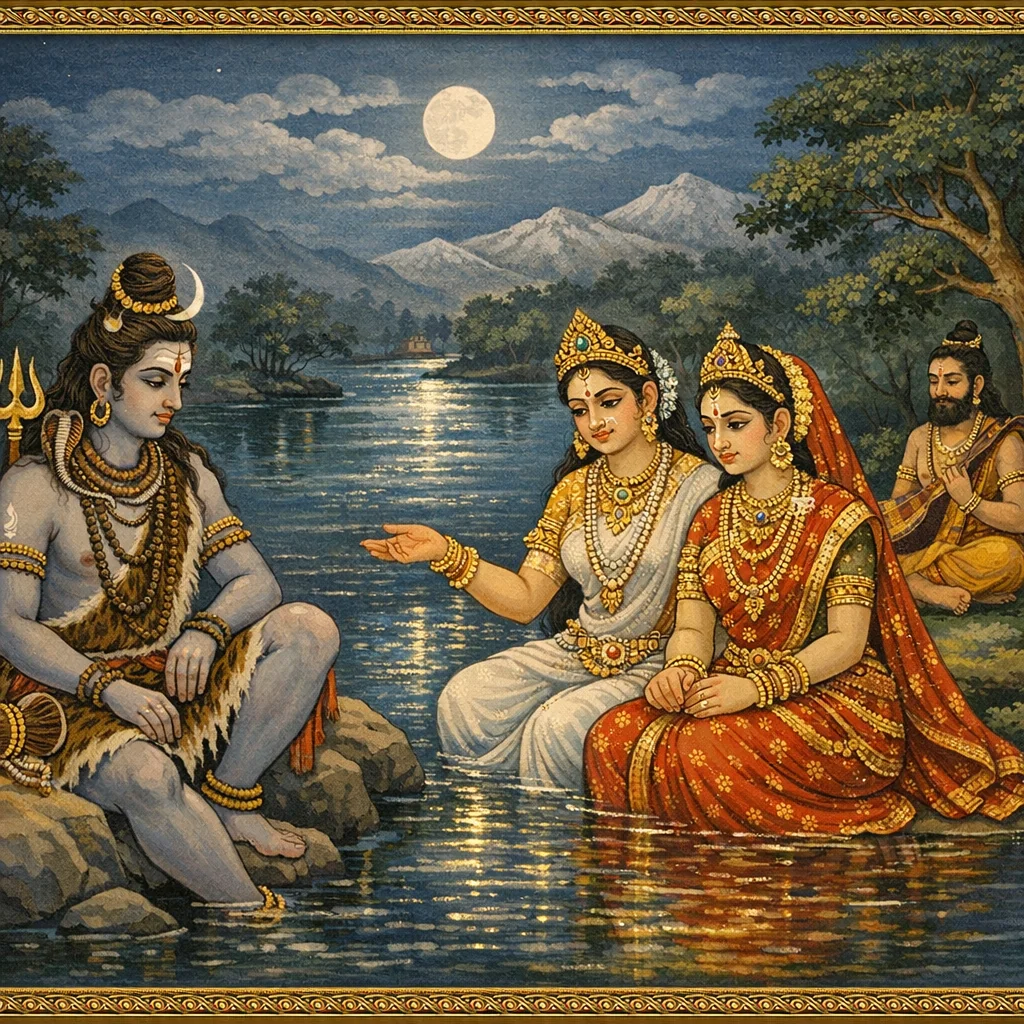
This adhyāya unfolds as a theological question-and-answer between Pulastya and King Yayāti. Pulastya points to a kuṇḍa connected with a Śiva-liṅga, where Jāhnavī (Gaṅgā) is said to remain “concealed” (guptā). Bathing there is praised as yielding the merit of all tīrthas and erasing the lifetime’s accumulated sins. The cause is then narrated: after the gods propitiate Śiva and establish Him on Mount Arbuda, Śiva longs for continual nearness to Gaṅgā while keeping discretion before Pārvatī. Gaṇas led by Nandin and Bhṛṅgin build a splendid, clear-water kuṇḍa; Śiva enters it under the pretext of a vow (vrata-vyāja) and mentally invokes Gaṅgā, who arrives at once. Nārada notices Śiva’s unusual mood, realizes the hidden attachment through meditative insight, and reports it; Pārvatī approaches in anger. Forewarned, Gaṅgā pacifies Pārvatī with respectful speech, recalls their earlier connection through Bhagiratha’s episode and her being “held” during descent, and asks for one full day of sportive association with Śiva on Caitra-śukla Trayodaśī, naming the place “Śiva-kuṇḍa / Śiva-Gaṅgā.” The chapter ends with observance: bathing on Caitra śukla Caturdaśī with focused intent destroys inauspiciousness, and a dāna is prescribed—gifting a bull to a brāhmaṇa—bearing a heavenward fruit.
Shlokas
Verse 1
पुलस्त्य उवाच । कुंडं तु शिवलिंगाख्यं ततो गच्छेन्महीपते । यत्र सा जाह्नवी गुप्ता तिष्ठते भूपसत्तम
Pulastya said: Then, O lord of the earth, one should go to the pond called Śivaliṅga, where Jāhnavī (Gaṅgā) remains concealed, O best of kings.
Verse 2
तस्यां स्नातो नरः सम्यक्सर्वतीर्थफलं लभेत् । मुच्यते पातकात्कृत्स्नादाजन्ममरणांतिकात्
A man who bathes there in the proper manner gains the fruit of all tīrthas, and is released from every sin—even those that cling on until the very end of birth and death.
Verse 3
ययाति रुवाच । किमर्थं तत्र सा गुप्ता जाह्नवी तिष्ठते विभो । कस्मिन्काले समायाता परं कौतूहलं हि मे
Yayāti said: “For what reason does that Jāhnavī (the Gaṅgā) remain hidden there, O revered one? At what time did she come to that place? Great indeed is my curiosity.”
Verse 4
पुलस्त्य उवाच । यदा प्रसादितो देवैर्भगवान्वृषभध्वजः । अर्बुदेऽस्मिन्सदा स्थेयमचलेन त्वया विभो
Pulastya said: “When the gods had propitiated the Lord who bears the bull-banner (Śiva), O Mighty One, he was entreated: ‘On this Arbuda mountain, may you abide forever—steadfast and unmoving.’”
Verse 5
तत्र संस्थापिते लिंगे स्वयं देवेन शंभुना । यत्पातितं पुरा लिंगं वालखिल्यैर्महर्षिभिः
“There, when the liṅga was established by Śambhu himself, it was that very liṅga which long ago had been cast down by the great sages, the Vālakhilyas…”
Verse 6
अतिकोपसमायुक्तैः कस्मिंश्चित्कारणांतरे । तदा देवेन प्रतिज्ञातं सर्वेषां त्रिदिवौकसाम्
“On a certain occasion, seized by intense anger for a particular reason, the Lord then made a solemn vow before all the dwellers of the three heavens (the gods).”
Verse 7
अचले तु मयात्रैव स्थातव्यं नात्र संशयः । ततः कालेन महता वसतस्तस्य तत्र च
“But on this mountain I must indeed remain here—of this there is no doubt.” Then, after a great length of time had passed, as he continued dwelling there…
Verse 8
अचलेश्वररूपस्य गंगा चित्ते व्यजायत । कथं नित्यं तया सार्द्धं भविष्यति समागमः
For him who had assumed the form of Acaleśvara, Gaṅgā arose within his mind: “How will there be a constant meeting with her?”
Verse 9
अथ जानाति नो गौरी मानिनी परमेश्वरी । तस्यैवं चिन्तयानस्य बहुशो नृपसत्तम
Then the proud and supreme Goddess Gaurī came to know his thought. As he pondered thus again and again, O best of kings…
Verse 10
उपायं सुमहद्ध्यात्वा जाह्नवीसंगसंभवम् । तेनादिष्टा गणाः सर्वे नंदिभृङ्गिपुरःसराः
Having conceived a very great plan by which union with Jāhnavī (Gaṅgā) could be brought about, he commanded all the gaṇas, led by Nandin and Bhṛṅgin.
Verse 11
अभिप्रायोऽस्ति मे कश्चिज्जलाश्रयव्रतोद्भवः । क्रियतामुत्तमं कुण्डमस्मिन्पर्वतरोधसि
“I have a certain intention, born of a vow connected with dwelling in water. Let an excellent kuṇḍa, a sacred tank, be made here upon this mountain-slope/embankment.”
Verse 12
तत्राहं जलमध्यस्थः स्थास्यामि जलतत्परः । तच्छ्रुत्वा त्वरितं चक्रुर्गणाः कुण्डमनेकशः
“There I shall remain, stationed in the midst of the water, devoted to the waters.” Hearing this, the gaṇas swiftly fashioned the kuṇḍa in many ways, with great effort and careful arrangement.
Verse 13
स्वच्छोदकसमाकीर्णं सुतीर्थं सुसुखावहम् । ततो गौरीमनुज्ञाप्य जाह्नवीसंगलालसः
Filled with clear water—an excellent tīrtha that bestows great comfort—then, having obtained Gaurī’s permission, he, eager for union with Jāhnavī (Gaṅgā)…
Verse 14
व्रतव्याजेन देवेशो विवेश तदनन्तरम् । चिन्तयामास तत्रस्थो गंगां त्रैलोक्यपाविनीम्
Then the Lord of the gods, under the pretext of observing a vow (vrata), entered the water. Remaining there, he began to contemplate Gaṅgā, the purifier of the three worlds.
Verse 15
सा ध्याता तत्क्षणात्तत्र शिवेन सह संगता । एवं स भगवांस्तत्र जाह्नवीं भजते सदा
The moment she was meditated upon, she appeared there and joined with Śiva. Thus, in that place, the Blessed Lord ever remains devoted to Jāhnavī (Gaṅgā).
Verse 16
व्रतव्याजेन राजेन्द्र न तु गौरी व्यजानत । कस्यचित्त्वथ कालस्य नारदो भगवान्मुनिः । कैवल्यज्ञानसंपन्नस्तत्रायातः परिभ्रमन्
O best of kings, by this pretext of a vow (vrata), Gaurī did not recognize what was truly occurring. After some time, the revered sage Nārada—endowed with the knowledge that leads to kaivalya (liberation)—arrived there while wandering about.
Verse 17
स तु दृष्ट्वा महादेवं जलस्थं व्रतधारिणम् । कामजैरिंगितैर्युक्तं तत्राऽसौ विस्मयान्वितः
Seeing Mahādeva standing in the water, steadfast in his vow, yet marked by gestures born of desire, Nārada was filled with astonishment there.
Verse 18
वक्त्रनेत्रविकारोऽयं किमस्य व्रतधारिणः । ईदृक्कामसमायुक्तस्ततो ध्यानस्थितो मुनिः
“Why do the face and eyes of this keeper of vows show such changes? Being so filled with desire—” thinking thus, the sage entered into meditation.
Verse 19
अथाऽपश्यद्ध्यानदृष्ट्या गंगासक्तं महेश्वरम् । गौर्या भयेन सव्याजं ततो विस्मयमागतः
Then, with the vision born of meditation, he saw Maheśvara attached to Gaṅgā, and saw it was done under a pretext out of fear of Gaurī; thereupon he was struck with wonder.
Verse 20
तदा स कथयामास सर्वं हरविचेष्टितम्
Then he related in full everything about Hara’s conduct.
Verse 21
ततो देवी त्वरायुक्ता ययौ यत्र महेश्वरः । आताम्रनयना रोषाद्वेपमाना मुहुर्मुहुः
Then the Goddess, seized by haste, went to where Maheśvara was. Her eyes reddened with anger, she trembled again and again.
Verse 22
तां दृष्ट्वा कोपसंयुक्तां समायातां महेश्वरीम् । उवाच जाह्नवी भीता ज्ञात्वा दिव्येन चक्षुषा
Seeing Maheśvarī approach, filled with wrath, Jāhnavī—afraid—spoke, having understood the matter with her divine sight.
Verse 23
आवयोः संगमे देवी नारदेन निवेदिता । सेयं रुष्टा समायाति कुरुष्व यदनन्तरम्
“Goddess, our meeting has been reported by Nārada. She, angered, has come here; do now what should be done next.”
Verse 24
श्रीमहादेव उवाच । कर्त्तव्यं जाह्नवि श्रेयः पुरो गत्वा नगात्मजाम् । अत्यर्थं मानिनी ह्येषा साम्ना च वशवर्तिनी
Śrī Mahādeva said: “O Jāhnavī, it is best that you go forward first and approach the Mountain-Daughter (Pārvatī). She is exceedingly proud of her honor, yet she may be won over by gentle conciliation.”
Verse 25
तत्क्षणाज्जायते साध्वी तस्मात्सामपरा भव । नो चेच्छापं मया सार्धं तव दास्यत्यसंशयम्
“At that very moment she will become gracious; therefore, be devoted to conciliation. Otherwise, I shall certainly give you a curse—without doubt.”
Verse 26
एवमुक्ता च रुद्रेण जाह्नवी नृपसत्तम । कुण्डान्निर्गत्य सा गंगा सम्मुखं प्रययौ तदा
Thus addressed by Rudra, O best of kings, Jāhnavī—Gaṅgā—came out from the sacred pool and then proceeded straight ahead to meet her.
Verse 27
प्रत्युद्ययौ सलज्जा च कृतांजलिपुरःसरा । प्रणम्य शिरसा चेयं ततः प्राह स्वलंकृता
She stepped forward with modesty, her hands folded in añjali before her. Bowing her head in reverence, she—adorned—then spoke.
Verse 28
पुराऽहं तव कांतेन निपतन्ती नभस्तलात् । धृता देवि तवा प्येतद्विदितं नृपतेः कृते
“Formerly, as I was falling from the sky, your beloved upheld me. O Devī, this too is known to you—so that the king may understand.”
Verse 29
भगीरथाभिधानस्य ततः स्नेहो व्यवर्धत । आवयोस्तव भीत्या च नाभूत्क्वापि समागमः
“Thereafter, affection for the one named Bhagīratha increased; yet out of fear of you, there was never any meeting between us anywhere.”
Verse 30
अधुना तव वाक्येन जानेऽहं न सुरेश्वरि । समाहूताऽस्मि रुद्रेण किं वा स्वच्छन्दतः शुभे
“But now, by your words, O Queen of the gods, I understand: have I been summoned by Rudra—or, O auspicious one, have I come of my own free will?”
Verse 31
त्रैलोक्यस्य प्रभुरयं तन्निष्क्रम्य कथञ्चन । तस्मादत्रैव संप्राप्ता सत्यमेतन्मयोदितम्
“He is the Lord of the three worlds; having in some way gone forth from him, I have therefore arrived right here. What I have said is the truth.”
Verse 32
पुलस्त्य उपाच । तस्यास्तद्वचनं श्रुत्वा ततो देवी प्रहर्षिता । प्रोवाच मधुरं वाक्यं सत्यमेतत्त्व योदितम्
Pulastya said: Hearing her words, the Devī rejoiced and spoke sweetly: “What you have said is indeed true.”
Verse 33
तस्माद्वरय भद्रं ते वरं मत्तो यथेप्सितम् । मुक्त्वैकं पतिधर्म्मत्वे मम कांतं महेश्वरम्
“Therefore, choose—may good be yours—a boon from me as you desire; except for one matter: in the duty of a wife, do not seek to part me from my beloved, Maheśvara.”
Verse 34
गंगोवाच । अपि दौर्भाग्ययुक्ताऽहं भार्या जाताऽस्मि शूलिनः । तस्मादेकं दिनं देहि क्रीडनार्थमनेन तु
Gaṅgā said: “Though I am marked by misfortune, I have become the wife of the Trident-bearing Lord. Therefore, grant me just one day, so that I may sport with Him.”
Verse 35
चैत्रशुक्लत्रयोदश्यामहोरात्रं सुरेश्वरि । शिवकुंडं तथास्त्वेतन्मया यस्मात्समावृतम्
“O Queen of the Gods, on the thirteenth day of the bright fortnight of Caitra—throughout that day and night—let this be known as ‘Śiva-kuṇḍa’, for it was covered over by me.”
Verse 36
शिवगंगाभिधानं च तस्मात्कुण्डं धरातले । ख्यातिं यातु प्रसादेन तव पर्वतनंदिनि
“Therefore, on the surface of the earth, let that pond be called ‘Śivagaṅgā’; and by your grace, O Daughter of the Mountain, may it attain wide renown.”
Verse 37
पुलस्त्य उवाच । एवमस्त्विति सा देवी प्रोच्य गंगां महानदीम् । ततो विसर्जयामास तामालिंग्य मुहुर्मुहुः
Pulastya said: Saying, “So be it,” the Goddess spoke to Gaṅgā, the great river; then she sent her forth, embracing her again and again.
Verse 38
गतायामथ गंगायामधोवक्त्रं सुलज्जितम् । पाणौ गृह्य ययौ रुद्रं भ्रममाणा गृहं प्रति
When Gaṅgā had departed, the bashful Goddess—her face cast down—took Rudra by the hand and, turning back, went toward her home.
Verse 39
एवमेतत्पुरावृत्तं तस्मिन्कुण्डे नराधिप । तस्मात्सर्वप्रयत्नेन चतुर्द्दश्यां समाहितः
“Thus did this happen in ancient times at that pond, O king. Therefore, with every effort, be disciplined and intent on the fourteenth lunar day (Caturdaśī).”
Verse 40
शुक्लायां चैत्रमासे तु स्नानं तत्र समाचरेत् । सांनिध्याद्देवदेवस्य गंगायाश्च नृपोत्तम
“In the bright fortnight of the month of Caitra, one should perform bathing there, O best of kings—because of the presence of the God of gods (Śiva) and of Gaṅgā.”
Verse 41
यत्र संक्षयमायाति सर्वं तत्राशुभं कृतम् । तत्र यो वृषभं दद्याद्ब्राह्मणाय नृपोत्तम । तद्रोमसंख्ययास्वर्गे स पुमान्वसति ध्रुवम्
“Where all evil deeds come to destruction, O best of kings—whoever there gives a bull to a brāhmaṇa, that man surely dwells in heaven for as many (years) as there are hairs on that bull’s body.”