Adhyaya 31
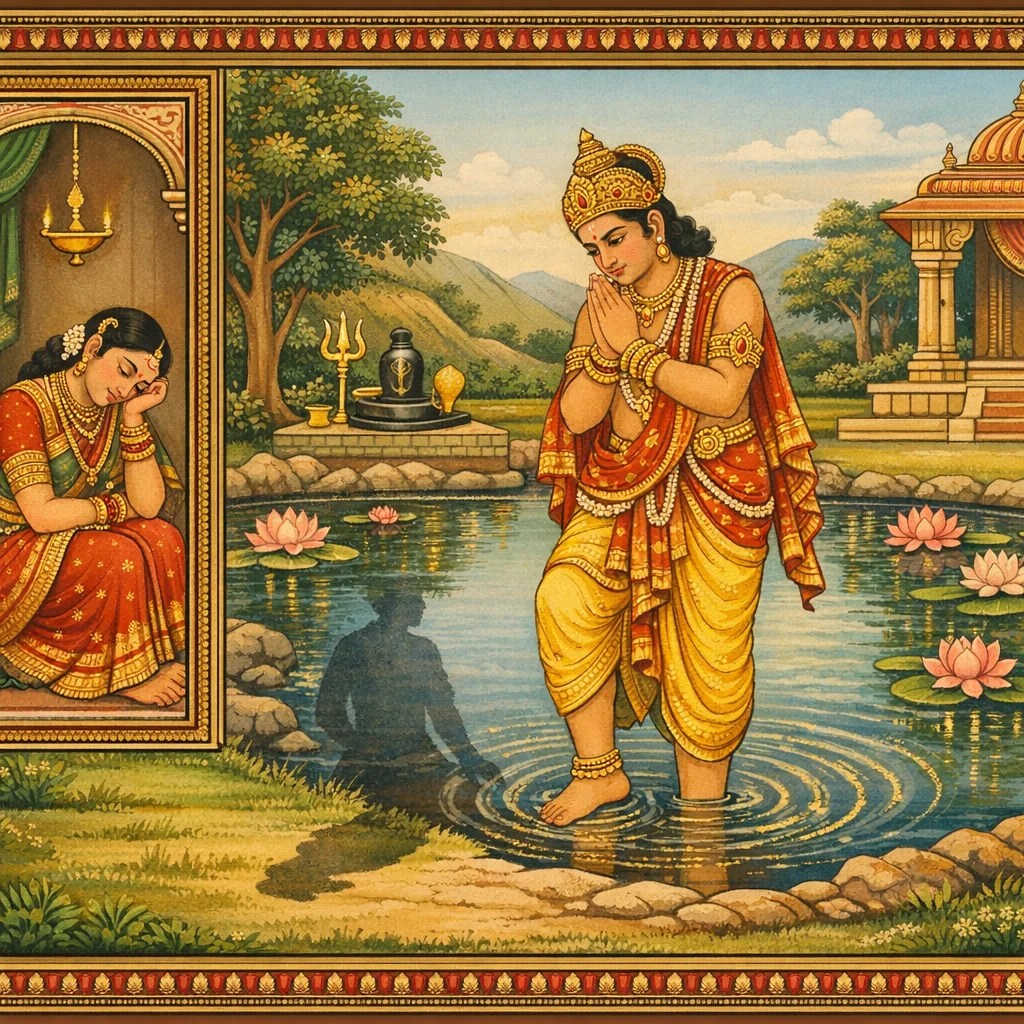
Pulastya recounts an expiatory case centered on the famed Raktānubandha tīrtha. King Indrasena, returning from war, sends a deceitful messenger to test Queen Sunandā’s pativratā fidelity by falsely reporting the king’s death; Sunandā, portrayed as patipraṇā and unwavering, dies upon hearing it. The king is then seized by the karmic consequence of strī-vadha (woman-killing): a second shadow clings to him, with heaviness, loss of tejas, and a foul odor—bodily marks of moral pollution. He performs funerary rites and undertakes wide pilgrimage to many tīrthas, including Kāśī/Varanasi and Kapālamocana, yet the affliction persists. After long wandering he reaches Arbuda mountain and bathes at Raktānubandha; the second shadow vanishes and auspicious qualities return. But when he crosses beyond the tīrtha’s boundary the taint reappears; returning at once, he is purified again, revealing the site’s bounded efficacy. Knowing the tīrtha’s supreme status, he gives dāna, builds a pyre, and enters fire as a final renunciation, ascending to Śivaloka. The concluding phala extols the tīrtha: offerings and śrāddha performed there are highly efficacious; bathing at a solar saṅkrānti is said to remove even brahmahatyā; and gifts during eclipses—especially go-dāna—are credited with liberating seven generations.
Shlokas
Verse 1
पुलस्त्य उवाच । रक्तानुबन्धं वै गच्छेत्तीर्थं त्रैलोक्यविश्रुतम् । यत्र स्नातो नरः सम्यङ्मुच्यते ब्रह्महत्यया
Pulastya said: “One should indeed go to the tīrtha called Raktānubandha, renowned throughout the three worlds; for there, when a man bathes properly, he is fully released from the sin of brahmahatyā (brahma-slaughter).”
Verse 2
पुराऽसीत्पार्थिवोनाम इंद्रसेनो महीपतिः । तस्याऽसीत्सुप्रिया भार्या सुनन्दानाम भामिनी । पतिव्रता पतिप्राणा सदा पत्युः प्रिये स्थिता
In former times there was a king named Indrasena, lord of the land. His beloved wife was the lady Sunandā—steadfast as a pativratā, holding her husband as her very life, ever abiding in what was dear to him.
Verse 3
कस्यचित्त्वथ कालस्य स राजा सपरिग्रहः । परदेशं गतो हंतुं शत्रुसंघं दुरासदम्
Then, at a certain time, that king—taking his retinue and war-gear—went to a foreign land to destroy an enemy host that was hard to overcome.
Verse 4
तं निहत्य धनं भूरि गृहीत्वा प्रस्थितो गृहम् । ततोऽग्रे प्रेषयामास स दूतं कृत्रिमं नृप
Having slain them and taken abundant wealth, the king set out for home. Then, in advance, he dispatched a fabricated messenger.
Verse 5
सुनन्दां ब्रूहि गत्वा त्वमिन्द्रसेनो हतो रणे । तदाकारस्ततो लक्ष्यः पातिव्रत्ये ममाज्ञया
“Go and tell Sunandā: ‘Indrasena has been slain in battle.’ Then observe her condition—her wifely fidelity—by my command.”
Verse 6
यदि सा निश्चयं गच्छेन्मरणं प्रति भामिनी । तदा रक्ष्या प्रयत्नेन वाच्यं हास्यं ममोद्भवम्
If that lady resolves to die, then she must be protected with effort; and you should speak words that bring forth laughter, born of me, to divert her.
Verse 7
एवमुक्तो गतो दूतस्तत्क्षणान्नृपसत्तम । तस्यै निवेददामास यदुक्तं तेन भूभुजा
Thus instructed, the messenger went at once, O best of kings, and reported to her exactly what had been spoken by that ruler.
Verse 8
अथ तस्य वचः श्रुत्वा सुनंदा चारुहासिनी । गतप्राणा नृपश्रेष्ठ पतिप्राणा महासती
Hearing his words, Sunandā—smiling sweetly—gave up her life, O best of kings; that great virtuous satī, whose very breath was her husband.
Verse 9
यस्मिन्काले मृता सा तु सुनन्दा शीलमंडना । तस्मिन्काले नृपः सोऽपि तत्पापेन समाश्रितः
At the very moment when Sunandā—adorned with noble character—died, at that same moment the king too was seized by that sin.
Verse 10
अथापश्यद्द्वितीयां स च्छायां गात्रस्य चोपरि । तथा गुरुतरं कायं सालस्यं समपद्यत
Then he beheld a second shadow upon his own body; his frame grew heavier, and he fell into a slothful torpor.
Verse 11
तेजोहीनं सुदुर्गंधि विवर्णं नृपसत्तम । अथ प्राप्तो गृहं राजा श्रुत्वा भार्यासमुद्भवम्
Devoid of radiance, foul-smelling, and discolored—O best of kings—the king then returned home, having heard what had arisen concerning his wife.
Verse 12
विनाशं दुःखशोकार्तः करुणं पर्यदेवयत् । स ज्ञात्वा पापमात्मानं स्त्रीहत्यासुविदूषितम्
Afflicted by grief and sorrow, he lamented piteously over his ruin; for he recognized himself as sinful, grievously tainted by the killing of a woman.
Verse 13
ब्राह्मणानां समादेशात्तथा यात्रापरोऽभवत् । कृत्वौर्द्ध्वदैहिकं तस्या लघुमात्र परिग्रहः । वाराणस्यां गतः पूर्वं तत्र दानं ददौ बहु
By the injunction of the brāhmaṇas, he became devoted to pilgrimage. Having performed her funerary rites, taking only minimal provisions, he first went to Vārāṇasī and there gave abundant charity.
Verse 14
कपालमोचने तीर्थे सर्वपापप्रणाशने । त्रिनेत्रो यत्र निर्मुक्तः पुरा वै ब्रह्महत्यया
At the Kapālamocana Tīrtha, the destroyer of all sins—where the Three-eyed Lord was formerly released from the sin of brahma-slaughter.
Verse 15
तस्य च्छाया द्वितीया सा न नष्टा तत्र भूपते । ततः कनखलं प्राप्तः सुपुण्यं शुद्धिदं नृणाम्
Yet there, O king, his second shadow did not disappear. Then he reached Kanakhala, exceedingly meritorious and a giver of purification for men.
Verse 16
तथैव पुष्करारण्यं तस्मादमरकण्टकम् । कुरुक्षेत्रं ततो राजन्प्राप्तोऽसौ नृपसत्तमः
Likewise he went to the forest of Puṣkara; from there to Amarakantaka; and then, O king, that best of rulers reached Kurukṣetra.
Verse 17
प्रभासं सोमतीर्थं च ततस्तु कृमिजांगले । एकहंसं ततो राजन्पुण्यपारिप्लवं ततः
He went to Prabhāsa and to Somatīrtha; then to Kṛmijāṅgala; then, O king, to Ekahaṃsa; and thereafter to Puṇyapāriplava.
Verse 18
रुद्रकोटिं विरूपाक्षं ततः पंचनदं नृप । एवमादीनि तीर्थानि पुण्यान्यायतनानि च । परिभ्रमन्महीपाल परिश्रांतो नराधिपः
To Rudrakoṭi and Virūpākṣa, then to Pañcanada, O king—thus he wandered through these and other holy tīrthas and meritorious shrines. Roaming the earth, the ruler of men grew weary, O protector of the land.
Verse 19
ततो वर्षसहस्रांते संप्राप्तोऽर्बुदपर्वते । तत्रापश्यन्नरपतिस्तीर्थान्यायतनानि च
Then, at the end of a thousand years, he arrived at Mount Arbuda. There the king beheld sacred tīrthas and holy sanctuaries as well.
Verse 20
तपस्विसंघान्विविधान्ब्राह्मणान्वेदपारगान् । ददौ दानानि बहुशो ब्राह्मणेभ्यो यदृच्छया
Again and again, as occasion arose, he bestowed gifts upon many gatherings of ascetics—Brāhmaṇas who had mastered the Vedas.
Verse 21
प्राप्तो रक्तानुबंधं च तीर्थं तत्रैव पर्वते । तत्र स्नातो विनिष्क्रांतो यावत्पश्यति भूमिपः
He reached the sacred ford called Raktānubandha on that very mountain. Bathing there, he came out and looked about, as the king observed his own condition.
Verse 22
तावन्न दृश्यते च्छाया द्वितीया स्त्रीवधोद्भवा । लघुत्वं सर्वगात्राणि संप्राप्तानि महीपते
Then that second shadow—born of the sin of killing a woman—was no longer seen; and a lightness came upon all his limbs, O lord of the earth.
Verse 23
विगन्धता प्रणष्टा च तेजोवृद्धिः पराभवत् । ततो हृष्टमना भूत्वा दत्त्वा दानानि भूरिशः । स्तूयमानश्चतुर्दिक्षु बंदिभिः प्रस्थितो गृहम्
His foul odor vanished, and his tejas—radiant splendor—grew greatly. Then, rejoicing in heart, he bestowed abundant gifts; and, praised in the four directions by heralds, he set out for home.
Verse 24
ततो रक्तानुबंधस्य सोमातिक्रमणं नृप । यावत्करोति राजेन्द्र तावदस्य पुनस्तथा
Then, O king, whenever he transgressed the rule concerning the drinking of Soma, O lord of kings, for just so long did the affliction called Raktānubandha return to him again in the same way.
Verse 25
सा च्छाया दृश्यते देहे द्वितीया नृपसत्तम । स एव गन्धो गात्रेषु तेजोहानिश्च सा नृप
O best of kings, that second shadow was again seen upon his body. The same odor returned upon his limbs, and his tejas—radiance—diminished, O king.
Verse 26
ततो दुःखाभिसंतप्तो गतस्तत्रैव तत्क्षणात् । रक्तबंधमनुप्राप्तो विपाप्मा सोऽभवत्पुनः
Then, scorched by sorrow, he returned there at once. Reaching Raktabandha again, he became free from sin once more.
Verse 27
स ज्ञात्वा तीर्थमाहात्म्यं परं पार्थिवसत्तमः । तत्र दारूणि चाहृत्य चितां कृत्वा ततो नृप । दानं दत्त्वा द्विजाग्रेभ्यः प्रविष्टो हव्यवाहनम्
Knowing the supreme greatness of that tīrtha, the best of kings brought firewood there and built a funeral pyre. Then, O king, after giving gifts to the foremost Brāhmaṇas, he entered the sacrificial fire—Havyavāhana, Agni.
Verse 28
ततो विमानमारुह्य परित्यज्य कलेवरम् । दिव्यमाल्यांबरधरः शिवलोकमुपागमत्
Then, mounting the celestial vimāna and casting off his mortal body, adorned with divine garlands and garments, he went to Śiva’s world.
Verse 29
शिवलोकमनुप्राप्ते तस्मिन्पार्थिवसत्तमे । देवर्षयस्तदा वाक्यमिदमाहुः सुविस्मयात्
When that best of kings had reached Śiva’s world, the divine sages, filled with wonder, then spoke these words.
Verse 30
तीर्थेभ्यस्तु परं तीर्थमिदं वै पावनं परम् । इन्द्रसेनो ह्यतः पापात्तीर्थसंगाद्व्यमुच्यत
This indeed is the supreme tīrtha, higher than other sacred fords—most excellent in its power to purify. For Indrasena was freed from sin precisely through contact with this tīrtha.
Verse 31
ततः प्रभृति तत्तीर्थं ख्यातं च धरणीतले । रक्तानां प्राणिनां यस्मादनुबन्धं करोति यत्
From that time onward, that tīrtha became renowned upon the earth, because it creates a “bond” with beings of blood—that is, embodied creatures.
Verse 32
रक्तानुबन्धमित्येव तस्मात्तत्कीर्त्त्यते क्षितौ । तत्र सन्तर्प्य वै देवान्यः श्राद्धं कुरुते नृप
Therefore it is celebrated on earth by the very name “Raktānubandha”. O King, whoever there first satisfies the gods with offerings and then performs śrāddha—
Verse 33
तत्र संक्रमणे भानोर्यः स्नानं कुरुते नरः । श्रद्धया परया युक्तो मुच्यते ब्रह्महत्यया
There, at the Sun’s saṅkramaṇa (solar transit), whoever bathes with the highest faith is freed even from the sin of brahmahatyā.
Verse 34
पितृक्षेत्रे गयायां च श्राद्धं यः कुरुते नरः । गयाश्राद्धसमं प्राहुः फलं तस्य महर्षयः
And in Gayā, famed as the ‘field of the ancestors’, whoever performs śrāddha—the great seers declare that his fruit is equal to the śrāddha performed at Gayā.
Verse 35
चन्द्रसूर्योपरागे वा गोदानं नृपसत्तम । यः करोति नरस्तत्र स कुलान्सप्त तारयेत्
O best of kings, there, during a lunar or solar eclipse, whoever gives a cow in charity delivers seven generations of his lineage.