Adhyaya 28
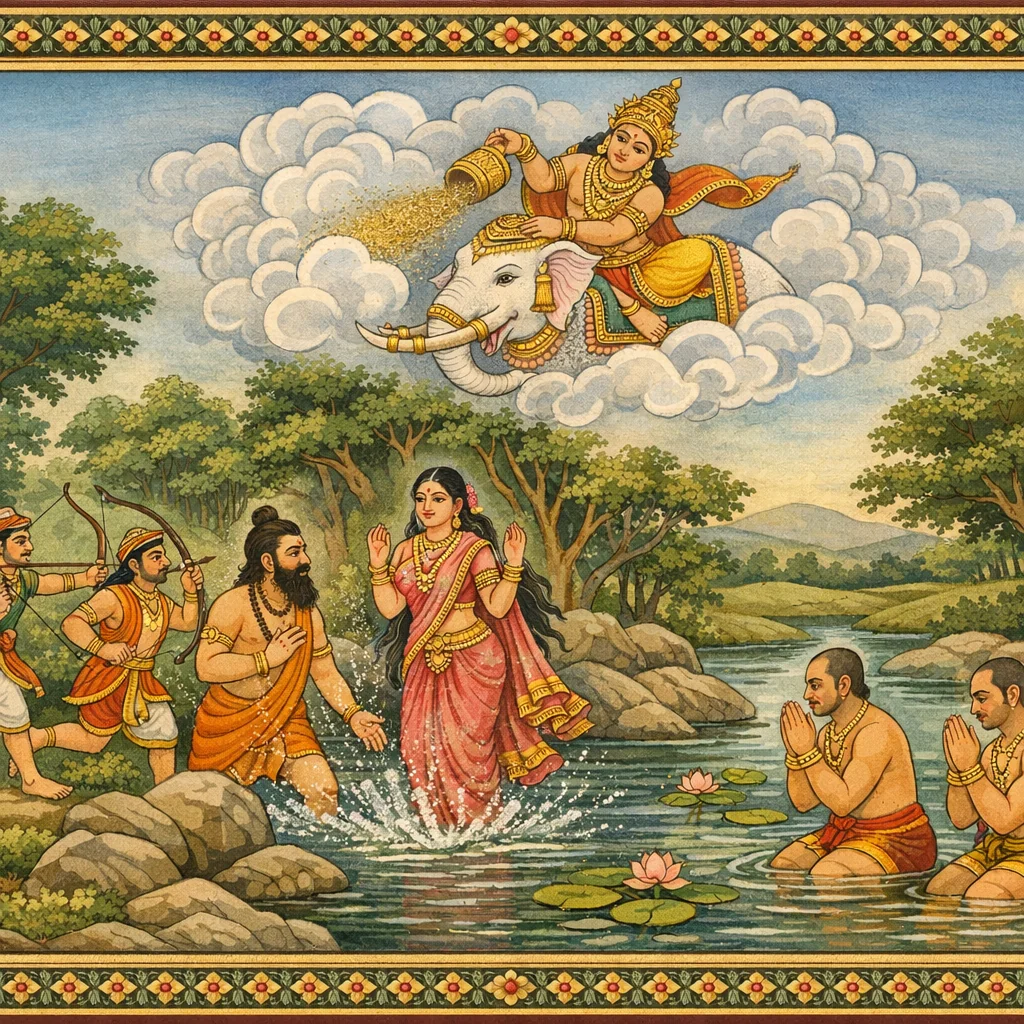
Pulastya instructs a royal listener about a supremely meritorious water-pilgrimage site at Prabhāsa called “Mānuṣya-hrada/Mānuṣya-tīrtha.” The chapter teaches that bathing there stabilizes one’s human status: even a person burdened with grave sins is said not to fall into an animal birth. To demonstrate this, a herd of deer, driven by hunters, rushes into the water; at once they become human and retain memory of their former life. The armed hunters arrive and ask where the deer went, and the newly human beings reply that the transformation occurred solely through the tīrtha’s power. The hunters then cast aside their weapons, bathe, and attain a “siddhi,” a sacred spiritual attainment. Seeing the tīrtha’s sin-destroying potency, Śakra (Indra) tries to blunt it by filling the pool with dust, yet its efficacy is upheld: those who bathe there on Budhāṣṭamī are said not to incur animality, and by performing śrāddha-dāna they gain the full fruit of pitṛ-medha for the ancestors.
Shlokas
Verse 1
पुलस्त्य उवाच । ततो गच्छेन्नृपश्रेष्ठ सुपुण्यं मानुषं ह्रदम् । यत्र स्नातो नरः सम्यङ्मनुष्यो जायते सदा
Pulastya said: Then, O best of kings, one should go to the supremely meritorious lake called Mānuṣa. Having bathed there properly, one is always born as a human.
Verse 2
न तिर्यक्त्वमवाप्नोति कृत्वाऽपि बहुपातकम् । तत्राश्चर्यमभूत्पूर्वं यत्तच्छृणु नराधिप
Even after committing many grave sins, one does not attain an animal birth (after bathing there). An astonishing event once occurred there—listen to it, O king.
Verse 3
मृगयूथमनुप्राप्त व्याधव्याप्तं समन्ततः । ते मृगा भयसन्त्रस्ताः प्रविष्टा जलमध्यतः
A herd of deer, hemmed in on every side by hunters who had come upon them, entered the midst of the water in terror.
Verse 4
सद्यो मनुष्यतां प्राप्ताः पूर्वजातिस्मरास्तथा । एतस्मिन्नेव काले तु व्याधास्ते समुपागताः
Instantly they attained human form and remembered their former births; at that very time, those hunters arrived there as well.
Verse 5
चापबाणधराः सर्वे यथा वै यमकिंकराः । पप्रच्छुश्च मृगान्भूप मानुषत्वमुपागतान्
All of them, bearing bows and arrows like the servants of Yama, questioned—O king—those deer who had attained humanhood.
Verse 6
मृगयूथमनु प्राप्तमस्मिन्स्थाने जलाश्रये । केन मार्गेण तद्यातं वदध्वं सत्वरं हि नः । वयं सर्वे परिश्रांताः क्षुत्तृड्भ्यां च विशेषतः
“We have pursued the herd of deer to this place by the waters. By which path did it go? Tell us quickly. We are all exhausted—especially by hunger and thirst.”
Verse 7
मनुष्या ऊचुः । वयं ते हरिणाः सर्वे मानुष्यं भावमाश्रिताः । तीर्थस्यास्य प्रभावेण सत्यमेतदसंशयम्
The men said: “We are those very deer; we have taken on the state of humanity. By the power of this tīrtha, this is true—without doubt.”
Verse 8
पुलस्त्य उवाच । ततस्ते शबराः सर्वे त्यक्त्वा चापानि पार्थिव । कृत्वा स्नानं जले तस्मिन्सद्यः सिद्धिं गता नृप
Pulastya said: Then all those Śabara hunters, O king, cast aside their bows and, having bathed in that water, immediately attained siddhi—spiritual accomplishment—O ruler.
Verse 9
ततः शक्रस्तु तद्दृष्ट्वा तीर्थं पापहरं नृप । पूरयामास सर्वत्र पांसुभिर्नृपसत्तम
Then Śakra (Indra), seeing that sin-destroying tīrtha, O king, filled it everywhere with dust, O best of rulers.
Verse 10
अद्यापि मनुजास्तत्र बुधाष्टम्यां नराधिप । स्नानं ये प्रकरिष्यंति तिर्यक्त्वं न व्रजंति ते
Even today, O lord of men, those who perform ritual bathing there on Budhāṣṭamī (the eighth lunar day falling on a Wednesday) do not fall into an animal birth.
Verse 11
पितृमेधफलं कृत्स्नं श्राद्धदानादवाप्नुयुः
By making gifts in connection with Śrāddha, they obtain in full the fruit of the Pitṛmedha sacrifice.
Verse 28
इति श्रीस्कांदे महापुराण एकाशीतिसाहस्र्यां संहितायां सप्तमे प्रभासखण्डे तृतीयेऽर्बुदखंडे मनुष्यतीर्थप्रभाव वर्णनंनामाष्टाविंशोऽध्यायः
Thus ends the twenty-eighth chapter, called “The Description of the Glory of Manuṣya Tīrtha,” in the third Arbuda Khaṇḍa, within the seventh Prabhāsa Khaṇḍa, of the Śrī Skanda Mahāpurāṇa, in the Saṃhitā of eighty-one thousand verses.