Adhyaya 27
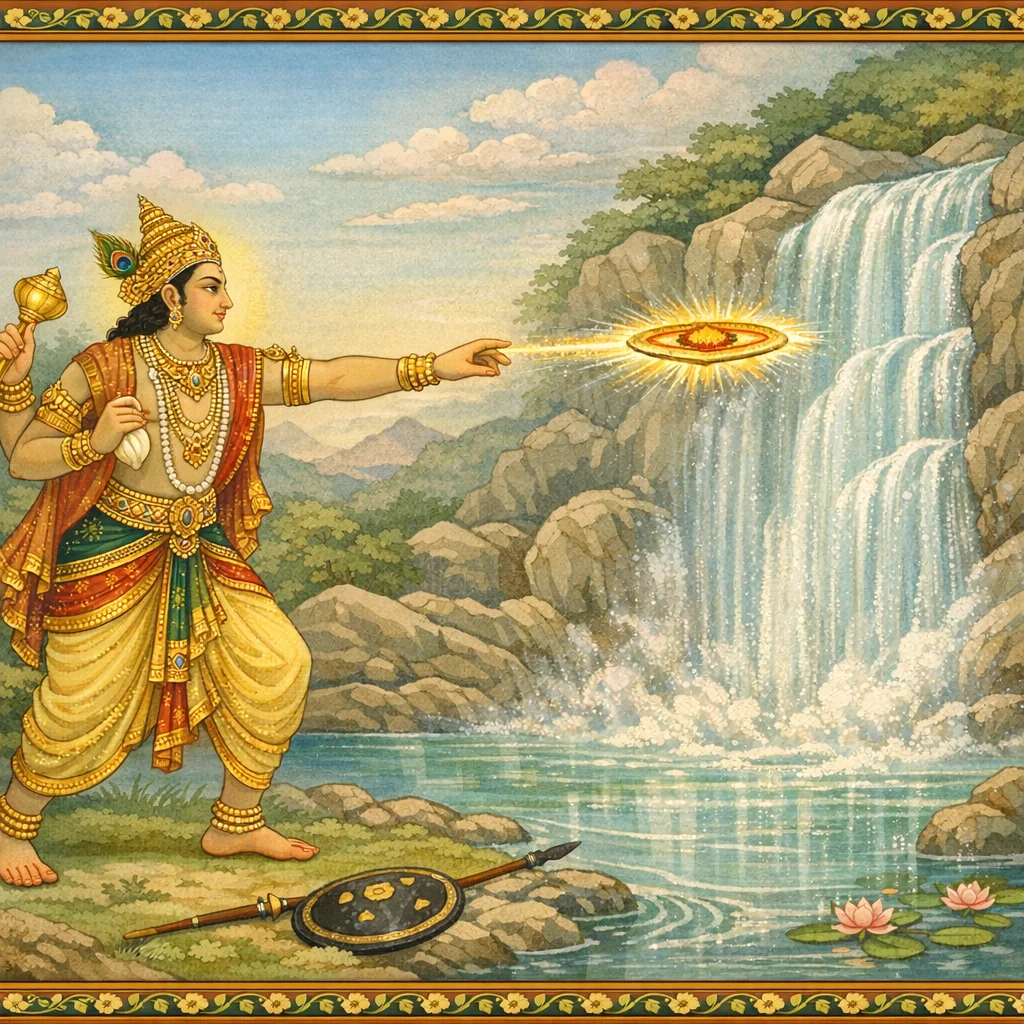
Pulastya instructs the royal listener to proceed to the eminent Cakratīrtha. The chapter establishes the site’s sanctity through an origin narrative: Viṣṇu, praised as Prabhaviṣṇu, once slew the Dānavas in battle and there released his cakra. After this, Viṣṇu performs a purificatory bathing sequence at a clear cascade or spring (sunnirjhara), as though washing the very waters; the text explains that this divine contact is the cause of the tīrtha’s heightened purity (medhyatā). It then prescribes that one who performs śrāddha here on the occasions of Hari’s “sleeping” and “awakening” (śayane, bodhane) grants enduring satisfaction to the ancestors, lasting for an entire kalpa. The chapter ends with a colophon identifying it as the 27th adhyāya of the Arbuda Khaṇḍa within the Prabhāsa Khaṇḍa of the Skanda Mahāpurāṇa.
Shlokas
Verse 1
पुलस्त्य उवाच । ततो गच्छेन्नृपश्रेष्ठ चक्रतीर्थमनुत्तमम् । यत्र चक्रं पुरा मुक्तं विष्णुना प्रभविष्णुना
Pulastya said: Then, O best of kings, one should go to the unsurpassed Cakra-tīrtha—where long ago Viṣṇu, the mighty Lord and source of all power, cast forth the sacred discus (cakra).
Verse 2
निहत्य दानवान्संख्ये कृत्वा स्नानं सुनिर्झरे । विष्णुः प्राक्षालयत्तोयं तेन तन्मेध्यतां गतम्
After slaying the Dānavas in battle and bathing in the lovely waterfall, Viṣṇu washed himself there with that water; by this act the water attained sanctity and ritual purity.
Verse 3
तत्र श्राद्धं तु यः कुर्याच्छयने बोधने हरेः । आकल्पं पितरस्तस्य तृप्तिं यांति नराधिप
O king, whoever performs śrāddha there—at the time of Hari’s reclining and at his awakening—his ancestors attain satisfaction until the end of the age.
Verse 27
इति श्रीस्कांदे महापुराण एकाशीतिसाहस्र्यां संहितायां सप्तमे प्रभासखण्डे तृतीयेऽर्बुदखंडे चक्रतीर्थप्रभाववर्णनंनाम सप्तविंशोऽध्यायः
Thus, in the holy Skanda Mahāpurāṇa—within the Saṃhitā of eighty-one thousand verses—ends the twenty-seventh chapter in the seventh, the Prabhāsa Khaṇḍa, and in its third division, the Arbuda Khaṇḍa, entitled “The Description of the Greatness of Cakra Tīrtha.”