Adhyaya 17
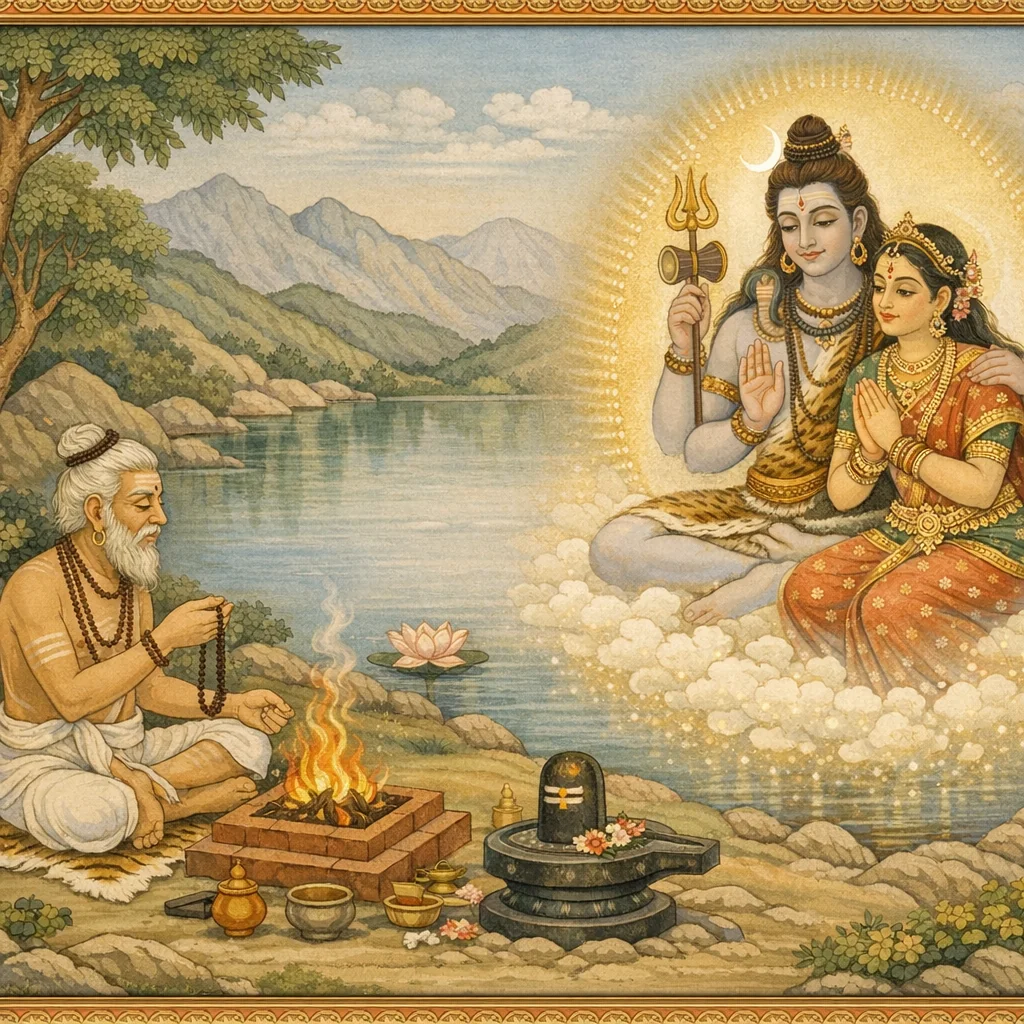
This chapter, as narrated by Pulastya, proclaims the sanctifying power of Paṅgu-tīrtha, famed as the destroyer of all sins (sarva-pātaka-nāśana). It tells of a Brahmin named Paṅgu, born in the lineage of Cyavana, who is lame and unable to walk, and who suffers abandonment and sorrow when his relatives leave him behind for household duties. Reaching Arbudācala, Paṅgu finds a lake and undertakes severe tapas. He installs a liṅga and worships Śiva with disciplined faith, offering gandha (fragrance), puṣpa (flowers), and naivedya (food offerings). His devotion ripens into sustained ascetic practice—living on wind, and performing japa and homa. Pleased, Mahādeva speaks to him directly and grants a boon. Paṅgu asks that the tīrtha be renowned by his name, that his lameness be removed there by Śiva’s grace, and that Śiva, with Pārvatī, remain continually present. Īśvara grants this and declares assured presence on Caitra śukla caturdaśī. The fruit is stated plainly: by bathing alone Paṅgu attains a divine form, and pilgrims who bathe on that day are freed from lameness and gain an auspicious, transformed embodiment.
Shlokas
Verse 1
पुलस्त्य उवाच । पंगु तीर्थं ततो गच्छेत्सर्वपातकनाशनम् । यत्र पूर्वं तपस्तप्तं पंगुना ब्राह्मणेन च
Pulastya said: Then one should go to Paṅgu Tīrtha, the destroyer of all sins—where, in former times, the brāhmaṇa named Paṅgu performed austerities.
Verse 2
पंगुनामा द्विजः पूर्वं च्यवनस्यान्वयेऽभवत् । अशक्तश्चलितुं भूमौ पंगुभावान्नृपोत्तम
O best of kings, formerly there was a brāhmaṇa named Paṅgu, born in the lineage of Cyavana; and because he was lame, he was unable to move about upon the earth.
Verse 3
गृहकृत्यनियुक्तोऽसावेकदा बान्धवैर्नृप । पंगुर्गंतुं न शक्तोऽसौ परं दुःखमवाप्तवान्
O king, once—being assigned to household duties by his relatives—Paṅgu was unable to go with them, and he fell into deep sorrow.
Verse 4
अथासौ तैः परित्यक्तो गत्वार्बुदमथाचलम् । एकं सरः समासाद्य तपस्तेपे सुदारुणम्
Then, abandoned by them, he went to Arbuda Mountain; reaching a certain lake, he undertook exceedingly severe austerities.
Verse 5
लिंगं संस्थाप्य तत्रैव पूजयामास तं विभुम् । गन्धपुष्पादिनैवेद्यैः सम्यक्छ्रद्धासमन्वितः
There itself he established a liṅga and worshipped that Lord with offerings of fragrance, flowers, and naivedya (food oblation), endowed with steady and proper faith.
Verse 6
शिवभक्तिपरो जातो वायुभक्षो बभूव ह । जपहोमरतो नित्यं पंगुनामा द्विजोत्तमः
That foremost brāhmaṇa, named Paṅgu, became wholly devoted to Śiva; he lived on air alone, and each day remained intent on japa and homa.
Verse 7
ततस्तुष्टो महादेवो ब्राह्मणं नृपसत्तम । पंगुं प्रति महाराज वाक्यमेतदुवाच ह
Then Mahādeva, pleased, spoke these words to the brāhmaṇa Paṅgu—O best of kings, O great king.
Verse 8
ईश्वर उवाच । पंगो तुष्टो महादेवो वरं वरय सुव्रत । तव दास्याम्यहं सर्वं यद्यपि स्यात्सुदुर्लभम्
Īśvara said: “O Paṅgu, Mahādeva is pleased. Choose a boon, O man of good vows. I shall grant you everything—even that which is exceedingly difficult to obtain.”
Verse 9
पंगुरुवाच । नाम्ना मे ख्यातिमायातु तीर्थमेतत्सुरेश्वर । पंगुभावोऽत्र मे यातु प्रसादात्तव शंकर
Paṅgu said: “O Lord of the gods, let this sacred ford become renowned by my name. And, O Śaṅkara, by your grace let my lameness be left behind here.”
Verse 10
तवास्तु सततं चात्र सांनिध्यं सह भार्यया । एवमुक्तः स तेनाथ विप्रं प्रति वचोब्रवीत्
“So be it. May my presence here be continual, together with my consort.” Having spoken thus, he then addressed words to the brāhmaṇa.
Verse 11
ईश्वर उवाच । नाम्ना तव द्विजश्रेष्ठ तीर्थमेतद्भविष्यति । ख्यातिं तपःप्रभावेन तीर्थं यास्यति सत्तम
Īśvara said: “O best of brāhmaṇas, this tīrtha shall indeed bear your name. By the power of your tapas, O noble one, this sacred ford shall attain great renown.”
Verse 12
चैत्रशुक्लचतुर्द्दश्यां सांनिध्यं मे भवेत्तथा
“And on the fourteenth lunar day (caturdaśī) of the bright fortnight of Caitra, my presence shall be manifest here as well.”
Verse 13
पुलस्त्य उवाच । स्नानमात्रेण विप्रोऽसौ दिव्यरूपमवाप ह । तत्र तस्थौ महादेवो गौर्या सह महेश्वरः
Pulastya said: “By bathing alone, that brāhmaṇa attained a divine form. And there Mahādeva—Maheśvara—remained, together with Gaurī.”
Verse 14
तस्मिन्दिने नृपश्रेष्ठ स्नानं तत्र समाचरेत् । स पंगुत्वाद्विनिर्मुक्तो दिव्यरूपमवाप्नुयात्
“On that very day, O best of kings, one should perform bathing there. Freed from lameness, he would attain a divine form.”
Verse 17
इति श्रीस्कान्दे महापुराण एकाशीति साहस्र्यां संहितायां सप्तमे प्रभासखण्डे तृतीयेऽर्बुदखण्डे पंगुतीर्थमाहात्म्यवर्णनंनाम सप्तदशोऽध्यायः
Thus ends the seventeenth chapter, entitled “The Description of the Greatness of Paṃgu Tīrtha,” in the third Arbuda-khaṇḍa of the seventh Prabhāsa-khaṇḍa, within the Śrī Skanda Mahāpurāṇa, the Saṃhitā of eighty-one thousand verses.