Adhyaya 16
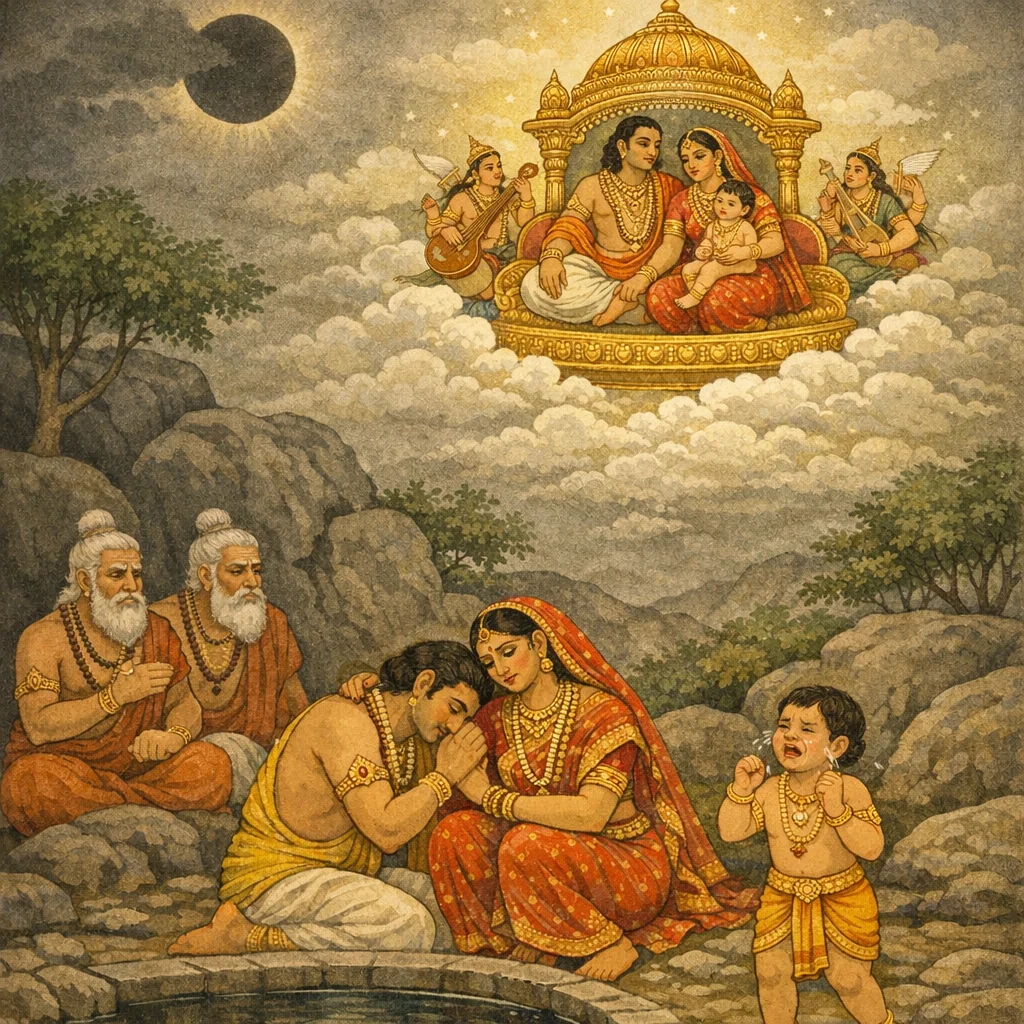
Pulastya instructs a royal listener to go to the famed, sin-destroying Maṇikarṇikā tīrtha. In a mountain recess the Vālakhilya sages have made a beautiful kuṇḍa. At midday during a solar eclipse, a Kirāta woman named Maṇikarṇikā—dark and fearsome in appearance—enters the water in thirst, and before the sages emerges transformed into a divinely radiant beauty, rare even among the gods, by the tīrtha’s power. Her husband arrives searching for her, distressed by their crying child. Urged to bathe, he enters the water with the child; but when the eclipse passes he becomes deformed again, is overcome by grief, and dies at that very waterside. Maṇikarṇikā, steadfast in pativratā-dharma, resolves to enter the funeral fire; questioned by the sages, she proclaims the ethic of exclusive spousal fidelity: for a woman, the husband is the sole refuge in the three worlds, regardless of beauty, poverty, or rank, and she entrusts the child to the sages. Moved by compassion, the sages restore the husband to life with auspicious marks and a worthy form. A celestial vehicle arrives, and the couple ascends to heaven with their son. Granted a boon, Maṇikarṇikā asks that the local mahāliṅga bear her name; the sages affirm the tīrtha’s renown as Maṇikarṇikā. The chapter ends with phala: bathing and giving at a solar eclipse yields merit equal to Kurukṣetra; concentrated bathing grants desired aims—therefore one should bathe with effort, give according to capacity, and offer to devas, ṛṣis, and ancestors.
Shlokas
Verse 1
पुलस्त्य उवाच । ततो गच्छेन्नृपश्रेष्ठ तीर्थं पापप्रणाशनम् । मणिकर्णिकसंज्ञं तु सर्वलोकेषु विश्रुतम्
Pulastya said: Then, O best of kings, one should go to the sin-destroying tīrtha known as Maṇikarṇikā, renowned throughout all the worlds.
Verse 2
यत्र सिद्धिं गता राजन्वालखिल्या महर्षयः । तैस्तत्र निर्मितं कुण्डं सुरम्यं गिरि गह्वरे
O king, it is there that the Vālakhilya great sages attained siddhi; and there, in a hollow of the mountain, they fashioned a splendid and beautiful sacred pond (kuṇḍa).
Verse 3
तेषां तत्रोपविष्टानां मुनीनां भावितात्मनाम् । महाश्चर्यमभूत्तत्र तत्त्वं शृणु नराधिप
As those sages, disciplined and inwardly cultivated, sat there, a great wonder occurred. Listen, O lord of men, to the truth of what happened.
Verse 4
किरातवनिता काचिन्नाम्ना च मणिकर्णिका । अतिकृष्णा विरूपाक्षी कराला भीषणाकृतिः
There was a certain Kirāta (tribal) woman named Maṇikarṇikā—very dark, with misshapen eyes, gaunt and fearsome in appearance.
Verse 5
तृषार्त्ता तत्र संप्राप्ता मध्यंदिनगते रवौ । ग्रस्ते च राहुणा सूर्ये प्रविष्टा सलिले तु सा
Tormented by thirst, she arrived there when the sun stood at midday; and when the sun was seized by Rāhu (during an eclipse), she entered the water.
Verse 6
एतस्मिन्नेव काले तु दिव्यरूपवपुर्धरा । मुनीनां पश्यतां चैव विनिष्क्रांता सुमध्यमा
At that very time, a woman of divine form and body—slender-waisted—emerged, even as the sages looked on.
Verse 7
अथ तस्याः पतिः प्राप्तस्तदन्वेषणतत्परः । पप्रच्छ तां वरारोहां पत्न्या दुःखेन दुःखितः
Then her husband arrived, intent on searching for her; distressed by his wife’s suffering, he questioned that noble-looking woman.
Verse 8
मम भार्यात्र संप्राप्ता यदि दृष्टा सुमध्यमे । शीघ्रं वद वरारोहे बालकोऽयं तदुद्भवः
If you have seen my wife who came here, O slender-waisted one, tell me quickly, O noble lady. This child is born of her.
Verse 9
तृषार्त्तश्च क्षुधाविष्टो रुदते च मुहुर्मुहुः । दृष्टा चेत्कथ्यतां सुभ्रूर्विनाऽयं तां मरिष्यति
He is tormented by thirst and overcome with hunger, and he keeps crying again and again. If you have seen her, O fair-browed lady, please tell me—without her, he will die.
Verse 10
स्त्र्युवाच । साऽहं ते दयिता कान्त तीर्थस्यास्य प्रभावतः । दिव्यरूपमिदं प्राप्ता देवैरपि सुदुर्लभम्
The woman said: “Beloved husband, I—your dear one—by the very power of this sacred tīrtha have attained this divine form, a state exceedingly difficult to obtain even for the gods.”
Verse 11
त्वं चापि सलिले ह्यस्मिन्कुरु स्नानं त्वरान्वितः । प्राप्स्यसि त्वं परं रूपं यथा प्राप्तं मयाऽनघ
“You too, in this very water, quickly perform the sacred bath. Blameless one, you will attain a supreme form—just as I have attained.”
Verse 12
अथासौ सह पुत्रेण प्रविष्टस्तत्र निर्झरे । विमुक्ते भास्करे राजन्विरूपश्चाभवत्पुनः
Then he entered that waterfall-spring together with his son. But when the sun’s influence was removed, O King, he again became deformed.
Verse 13
दुःखेन मृत्युमापन्नस्तस्मिन्नेव जलाशये । अथ सा भर्तृशोकाच्च मरणे कृतनिश्चया
Overwhelmed by sorrow, he met his death in that very pool of water. Then she, stricken by grief for her husband, resolved to die as well.
Verse 14
चितिं कृत्वा समं तेन ज्वालयामास पावकम् । अथ ते मुनयो दृष्ट्वा तथाशीलां शुभांगनाम्
Having built a funeral pyre equal to his, she kindled the fire. Then those sages, seeing the virtuous and auspicious woman of such steadfast conduct, looked on in concern.
Verse 15
कृपया परयाविष्टास्तामूचुर्विस्मयान्विताः । सर्वे तस्याश्च संदृष्ट्वा साहसं च नृपोत्तम
Filled with deep compassion and astonishment, they spoke to her. All of them, O best of kings, having witnessed her daring resolve, were moved.
Verse 16
ऋषय ऊचुः । दिव्यरूपं त्वया प्राप्तं देवैरपि सुदुर्लभम् । कस्मादेनं सुपाप्मानमनुगच्छसि भामिनि
The sages said: “You have attained a divine form—rare even for the gods. Why, O passionate lady, do you follow after this greatly sinful man?”
Verse 17
स्त्र्युवाच । पतिव्रताहं विप्रेन्द्राः सदा भर्तृपरायणा । किं रूपेण करिष्यामि विना पत्या निजेन च
The woman said: “O best of Brahmins, I am a pativratā, ever devoted to my husband. What would I do with any form at all, if I am without my own husband?”
Verse 18
विरूपो वा सुरूपो वा दरिद्रो वा धनाधिपः । स्त्रीणामेकः पतिर्भर्त्ता गतिर्नान्या जगत्त्रये
Whether ugly or handsome, whether poor or wealthy: for women, the husband alone is lord and refuge—there is no other course in the three worlds.
Verse 19
बालकोऽयं मुनिश्रेष्ठा भवच्छरणमागतः । अहं कान्तेन संयुक्ता प्रविशामि हुताशनम्
O best of sages, this boy has come seeking refuge at your feet. I, united with my beloved, shall enter the sacred fire.
Verse 20
पुलस्त्य उवाच । अथ ते मुनयः सर्वे ज्ञात्वा तस्याः सुनिश्चयम् । कृपया परयाविष्टाः संवीक्ष्य च परस्परम्
Pulastya said: Then all those sages, understanding her firm resolve, were filled with deep compassion and, looking at one another, conferred together.
Verse 21
ततो जीवापयामासुस्तत्पतिं ते मुनीश्वराः । सद्रूपेण समायुक्तं दिव्य लक्षणलक्षितम्
Then those lordly sages restored her husband to life, endowing him with a noble form, marked by divine signs and auspicious characteristics.
Verse 22
एतस्मिन्नेव कालं तु विमानं मनसेप्सितम् । देवकन्यासमाकीर्णं सद्यस्तत्र समागतम्
At that very moment, a celestial chariot—desired in the mind—arrived there at once, filled with divine maidens.
Verse 23
अथ तौ दंपती तेषां मुनीनां भावितात्मनाम् । पुरतः प्रणिपत्याथ प्रस्थितौ त्रिदिवं प्रति
Then the husband and wife bowed down before those sages of perfected minds, and thereafter set forth toward Tridiva, the heaven-world.
Verse 24
अथ तैर्मुनिभिः प्रोक्ता सा नारी मणिकर्णिका । वरं वरय कल्याणि सर्वे तुष्टा वयं तव
Then those sages addressed that woman, Maṇikarṇikā: “O auspicious one, choose a boon. We are all pleased with you.”
Verse 25
पतिव्रतत्वेन तुष्टाः सत्येन च विशेषतः । नास्माकं दर्शनं व्यर्थं जायते च कथंचन
“We are pleased by your steadfast devotion to your husband and, especially, by your truthfulness. The sight and blessing of us is never fruitless in any way.”
Verse 26
मणिकर्णिकोवाच । यदि मां मुनयस्तुष्टाः प्रयच्छथ वरं मुदा । यदत्रास्ति महालिंगं मन्नाम्ना तद्भविष्यति
Maṇikarṇikā said: “If you sages are pleased with me and gladly grant a boon, then let the great Liṅga that is here become known by my name.”
Verse 27
एतदेव ममाभीष्टं नान्यदस्ति प्रयोजनम् । सर्वेषां च प्रसादेन स्वर्गं गच्छामि सांप्रतम्
“This alone is my cherished desire; I have no other purpose. By the grace of you all, I now go to heaven.”
Verse 28
ऋषय ऊचुः । एवं भवतु ते ख्यातिस्तीर्थलिंगे वरानने । तव नामान्वितं जातं तीर्थं वै मणिकर्णिका
The sages said: “So be it—O fair-faced one. May your renown endure through this tīrtha and this liṅga. Truly a sacred ford has arisen bearing your name: Maṇikarṇikā.”
Verse 29
पुलस्त्य उवाच । भर्त्रा सह दिवं प्राप्ता पुत्रेणैव समन्विता । वालखिल्यास्तपोनिष्ठा विशेषात्तत्र संस्थिताः
Pulastya said: Having reached heaven together with her husband, and accompanied by her son as well, she dwelt there in a special manner among the Vālakhilya sages, steadfast in austerity.
Verse 30
तत्र सूर्यग्रहे प्राप्ते स्नानदानादिकाः क्रियाः । यः करोति फलं तस्य कुरुक्षेत्र समं भवेत्
When a solar eclipse occurs there, whoever performs acts such as sacred bathing, charity, and related rites—his merit becomes equal to that gained at Kurukṣetra.
Verse 31
यं यं काममभिध्याय स्नानं तत्र करोति यः । तं तं प्राप्नोति राजेन्द्र सम्यग्ध्यानसमन्वितः
O best of kings, whatever desire a person contemplates and then bathes there with proper meditative focus—he attains that very wish.
Verse 32
तस्मात्सर्वप्रयत्नेन स्नानं तत्र समाचरेत् । तीर्थे दानं यथाशक्त्या देवर्षिपितृतर्पणम्
Therefore, with every effort one should perform bathing there; and at that tīrtha one should give charity according to one’s capacity, and offer tarpaṇa—libations of water—to the gods, sages, and ancestors.