Adhyaya 12
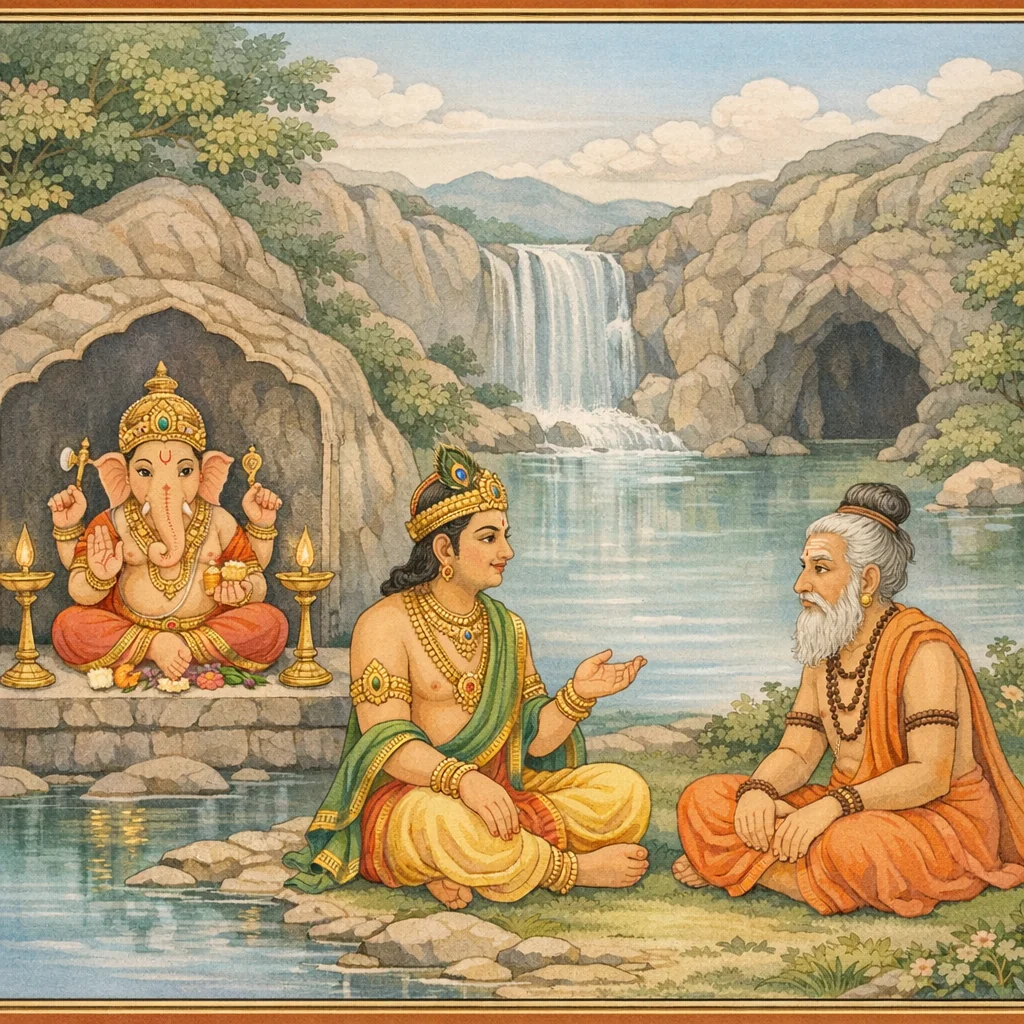
Pulastya directs the listener to Rūpatīrtha, praised as a supreme bathing-place that destroys demerit and bestows beauty and an auspicious form. A local legend explains its power: a cowherd woman (ābhīrī), first shown as deformed, falls into a mountain cascade on Māgha-śukla-tṛtīyā and, by the tīrtha’s might, rises forth with divine beauty and auspicious marks. Indra arrives for sport, is enamored, and speaks with her; she asks that on this date any man or woman who bathes there with devotion will please all the gods and gain rare beauty. Indra grants the boon and takes her to heaven, where she becomes known as the apsaras Vapu. The chapter then catalogs nearby sacred micro-sites: an eastern cave where netherworld maidens bathe; a Gaṇeśa seat (vaināyaka-pīṭha) whose water grants siddhi and protection; a Tilaka tree whose flowers and fruits fulfill aims; and the transformative virtues of stones and water. A phalaśruti-like list promises relief from infertility, disease, astrological affliction, and harmful influences. When Yayāti asks the deeper cause, Pulastya attributes the tīrtha’s heightened sanctity to Aditi’s austerities, her concealment and care of the infant Viṣṇu (Trivikrama) in the cascade during a crisis in Indra’s sovereignty, and her nurturing of the Tilaka tree. The chapter ends by urging diligent bathing there, declaring it wish-fulfilling in this world and beyond.
Shlokas
Verse 1
पुलस्त्य उवाच । ततो गच्छेन्नृपश्रेष्ठ रूपतीर्थमनुत्तमम् । सर्वपापहरं नॄणां रूपसौभण्यदायकम्
Pulastya said: “Then, O best of kings, one should go to the unsurpassed Rūpatīrtha—remover of all sins for people and bestower of beauty and auspicious radiance.”
Verse 2
तत्र पूर्वं वपुर्नाम्ना लोके ख्याता वराप्सराः । सिद्धिं गता महाराज यथा पूर्वं निगद्यते
There, in ancient times, a noble apsaras renowned in the world by the name Vapur attained perfection, O great king—as is recounted from of old.
Verse 3
पुराऽसीत्काचिदाभीरी विरूपा विकृतानना । लम्बोदरी च कुग्रीवा स्थूलदंतशिरोरुहा
Long ago there was an Ābhīrī woman—ugly, with a distorted face; pot-bellied, thick-necked, with coarse teeth and unkempt hair.
Verse 4
एकदा फलमादातुं भ्रममाणाऽर्बुदाचले । माघशुक्लतृतीयायां पतिता गिरिनिर्झरे
Once, while wandering on Mount Arbuda to gather fruit, she fell into a mountain stream—on the third lunar day of the bright fortnight of Māgha.
Verse 5
दिव्यमाल्यांबरधरा दिव्यैरंगैः समन्विता । पद्मनेत्रा सुकेशांता सर्वलक्षणलक्षिता
Adorned with heavenly garlands and garments, endowed with radiant, divine limbs—lotus-eyed, with beautiful hair—she was marked by every auspicious sign of excellence.
Verse 6
सा संजाता महाराज तीर्थस्यास्य प्रभावतः । एतस्मिन्नेव काले तु शक्रस्तत्र समागतः
Thus, O great king, she came to be through the very power of this sacred place; and at that very time Śakra (Indra) arrived there.
Verse 7
क्रीडार्थं पर्वतश्रेष्ठे तां ददर्श शुभेक्षणाम् । ततः कामशरैर्विद्धस्तामुवाच सुमध्यमाम्
Having come for sport upon that best of mountains, he saw her—auspicious-eyed. Then, pierced by the arrows of desire, he spoke to that slender-waisted woman.
Verse 8
इन्द्र उवाच । का त्वं वद वरारोहे किमर्थं त्वमिहागता । देवी वा नागकन्या वा सिद्धा विद्याधरी तु वा
Indra said: “Who are you? Tell me, O lovely one—why have you come here? Are you a goddess, a nāga-maiden, a perfected siddhā, or a Vidyādharī?”
Verse 9
मनो मेऽपहृतं सुभ्रूस्त्वया च पद्मनेत्रया । शक्रोऽहं सर्वदेवेशो भज मां चारुहासिनि
“O fair-browed, lotus-eyed one—my mind has been carried away by you. I am Śakra, lord of all the gods; O sweet-smiling lady, accept me and unite with me.”
Verse 10
नार्युवाच । आभीरी त्रिदशाधीश तथाहं बहुभर्तृका । फलार्थं तु समायाता पतिता गिरिनिर्झरे
The woman said: “O lord of the thirty gods, I am an Ābhīrī, and I already have many husbands. I came seeking fruits of merit, but I have fallen into this mountain-stream.”
Verse 11
स्नात्वा रूपमिदं प्राप्ता सुरूपं च शुभं मया । दुर्ल्लभस्त्वं हि देवानां किं पुनर्मर्त्यजन्मनाम्
“Having bathed, I have obtained this form—beautiful and auspicious. You are indeed hard to attain even for the gods; how much more so for those born as mortals!”
Verse 12
वशगास्ते सुराः सर्वे मयि किं क्रियते स्पृहा । भज मां त्रिदशाधीश यथाकामं सुराधिप
“All the gods are under your sway—why then should you feel longing for me? O lord of the thirty, O ruler of the gods, accept me and enjoy according to your desire.”
Verse 13
पुलस्त्य उवाच । एवमुक्तस्तया शक्रः कामयामास तां तदा । निवृत्तमदनो भूत्वा तामुवाच सुमध्यमाम्
Pulastya said: Thus addressed by her, Śakra then desired her; yet, restraining his passion, he spoke again to that slender-waisted woman.
Verse 14
इन्द्र उवाच । वरं वरय कल्याणि यत्ते मनसि वर्त्तते । विनयात्तव तुष्टोऽहं दास्यामि वरमुत्तमम्
Indra said: “Choose a boon, O auspicious lady—whatever abides in your mind. Pleased by your humility, I shall grant you an excellent boon.”
Verse 15
नार्युवाच । माघशुक्लतृतीयायां नरो वा वनिता तथा । स्नानं यः कुरुते भक्त्या प्रीताः स्युः सर्वदेवताः
The woman said: On the bright third lunar day of Māgha, whether man or woman, whoever performs a devotional bath—by that act all the gods become pleased.
Verse 16
सुरूपं जायतां तेषां दुर्ल्लभं त्रिदशैरपि । मां नय त्वं सहस्राक्ष सुरावासं सुराधिप
May they attain radiant beauty—something hard to obtain even for the Thirty-Three Gods. O Thousand-Eyed Lord, ruler of the gods, lead me to the celestial abode of the devas.
Verse 17
पुलस्त्य उवाच । एवमस्त्विति तामुक्त्वा गृहीत्वा तां सुराधिपः । विमाने च तया सार्द्धं जगाम त्रिदिवं प्रति
Pulastya said: Saying to her, “So be it,” the Lord of the gods took her; and together with her in a celestial chariot he went toward heaven.
Verse 18
वपुः प्राप्तं तया यस्मात्तस्मात्पा र्थिवसत्तम । नाम्ना वपुरिति ख्याता सा बभूव वराप्सराः
Because she obtained a splendid body (vapuḥ), therefore, O best of kings, she became renowned by the name “Vapur” and came to be an excellent apsaras.
Verse 19
माघशुक्लतृतीयायां देवास्तस्मिञ्जलाशये । स्नानं सर्वे प्रकुर्वंति प्रभाते भक्तिसंयुताः
On the bright third lunar day of Māgha, the gods, at that very lake, all perform their morning bath at dawn, endowed with devotion.
Verse 20
तत्रान्या देवकन्याश्च सिद्धयक्षांगनास्तथा । यस्तत्र कुरुते स्नानं तस्मिन्काले नराधिप
There, other celestial maidens are present, and likewise the women of the Siddhas and Yakṣas. O king, whoever bathes there at that very time—
Verse 21
रूपं च लभते तादृग्यादृग्लब्धं तया पुरा । सर्वे तत्र भविष्यंति सिद्धविद्याधरोरगाः
He gains a beauty like that which she formerly obtained. And there will be present all the Siddhas, Vidyādharas, and Nāgas.
Verse 22
तस्यैव पूर्वदिग्भागे बिलमस्ति सुशोभनम् । यत्रागत्य प्रकुर्वंति स्नानं पातालकन्यकाः
In its eastern quarter there is a most splendid cave, where the maidens of Pātāla come and perform bathing.
Verse 23
तत्र स्नात्वा गृहीत्वापो बिले तस्मिन्व्रजंति ताः । तत्र वैनायके पीठे महत्पाषाणजं जलम्
Having bathed there, they take up water and enter that cave. There, at the sacred seat of Vaināyaka, abundant water springs forth from a great stone.
Verse 24
तेनोदकेन संयुक्तः सिद्धो भवति मानवः । गृहीत्वा तज्जलं यस्तु यत्र यत्राभिगच्छति
United with that water, a human being becomes accomplished, a siddha. And whoever, having taken that water, goes wherever he may—
Verse 25
स्वर्गे वा भूतले वापि न केनापि प्रधृष्यते । तत्रास्ति विवरद्वारे तिलकोनाम पादपः
Whether in heaven or upon the earth, none can violate it. There, at the entrance of the cleft-like passage, stands a tree named Tilaka.
Verse 26
तस्य पुष्पैः फलैश्चैव सर्वं कार्यं प्रसिद्ध्यति । भक्षणाद्धारणाद्वापि सिद्धो भवति मानवः
By its flowers and fruits, every undertaking becomes successful. By eating them, or even by wearing or keeping them, a person attains siddhi, true accomplishment.
Verse 27
तस्मिन्बिले तु पाषाणाः समन्ताच्छंखसन्निभाः । तेनोदकेन संस्पृष्टा भवंति च हिरण्मयाः
In that cavern, stones lie all around, resembling conch-shells. When touched by that water, they become golden.
Verse 28
वन्ध्या नारी जलं तत्र या पिबेत्तिलकान्वितम् । अपि वर्षशताब्दा च सद्यो गर्भवती भवेत्
A barren woman who drinks the water there, imbued with the merit of the Tilaka, becomes pregnant at once—even if she has been childless for a hundred years.
Verse 29
व्याधिग्रस्तोऽपि यो मर्त्त्यः स्नानं तत्र समाचरेत् । नीरोगो जायते सद्यो ग्रहग्रस्तो विमुच्यते
Even a mortal afflicted by disease, if he bathes there, becomes healthy at once; and one tormented by grahas (seizing spirits or astral afflictions) is released.
Verse 30
भूतप्रेतपिशाचानां दोषः सद्यः प्रणश्यति । तेनोदकेन संस्पृष्टे सर्वं नश्यति दुष्कृतम्
The affliction caused by bhūtas, pretas, and piśācas is destroyed at once. When one is touched by that water, all evil deeds are wiped away.
Verse 31
अपि कीटपतंगा ये पिशाचाः पक्षिणो मृगाः । तेनोदकेन ये स्पृष्टाः सद्यो यास्यंति सद्गतिम्
Even insects and birds, even beasts—and even piśācas—who are touched by that water immediately attain a good state (sugati, a fortunate destiny).
Verse 32
ययातिरुवाच । अप्यद्भुतमिदं ब्रह्मन्माहात्म्यं भवता मम । कथितं रूपतीर्थस्य न भूतं न भविष्यति
Yayāti said: “O Brahmin, this greatness you have told me of Rūpatīrtha is truly wondrous—such a marvel has not been, nor will it be.”
Verse 33
किमत्र कारणं ब्रह्मन्सर्वेभ्योऽप्यधिकं स्मृतम् । सर्वं विस्तरतो ब्रूहि परं कौतूहलं हि मे
What is the reason, O Brahmin, that it is remembered as superior to all others? Tell me everything in detail, for my curiosity is intense.
Verse 34
पुलस्त्य उवाच । तत्र पूर्वं तपस्तप्तमदित्या नृपसत्तम । इन्द्रे राज्यपरिभ्रष्टे बलौ त्रैलोक्यनायके । अवतीर्णश्चतुर्बाहुरदित्यां नृपसत्तम
Pulastya said: There, long ago, Aditi performed austerities, O best of kings. When Indra had fallen from sovereignty and Bali was lord of the three worlds, the four-armed Lord descended into Aditi, O best of kings.
Verse 35
तस्मिञ्जाते महाविष्णावदित्या चासुरान्तके । गुप्तया विवरद्वारे भयाद्दानवसंभवात्
When that Great Viṣṇu—Aditi’s son, the slayer of the Asuras—was born, Aditi, out of fear of the Dānava-born foes, kept him concealed at a fissured doorway, a hidden cleft-entrance.
Verse 36
जातमात्रो हरिस्तस्मिन्स्थापितो निर्झरे तया । तस्मात्पवित्रतां प्राप्तं तीर्थं नॄणामभीष्टदम्
As soon as he was born, Hari was placed by her in that mountain-spring (nirjhara). Therefore that place became a purified tīrtha, granting people their desired boons.
Verse 37
न चान्यत्कारणं राजन्सत्यमेतन्मयोदितम् । माघशुक्लतृतीयायां तत्र जातस्त्रिविक्रमः
And there is no other cause, O King—this is the truth as I have spoken it: on the bright third day of Māgha, Trivikrama was born there.
Verse 38
तिलकः सर्व वृक्षाग्र्यः पुत्रवत्परिपालितः । अदित्या सेवितो नित्यं स्वहस्तेन जलैः शुभैः
The Tilaka tree—foremost among all trees—was tended like a son, and Aditi served it each day, watering it with her own hand with auspicious waters.
Verse 39
एतत्ते सर्वमाख्यातं तीर्थमाहात्म्यमुत्तमम् । तस्मात्सर्वप्रयत्नेन स्नानं तत्र समाचरेत् । सर्वकामप्रदं नॄणामिह लोके परत्र च
Thus I have fully declared to you the supreme greatness of this tīrtha. Therefore, with every effort one should bathe there; it grants people all desired aims—here in this world and in the world beyond.