Adhyaya 99
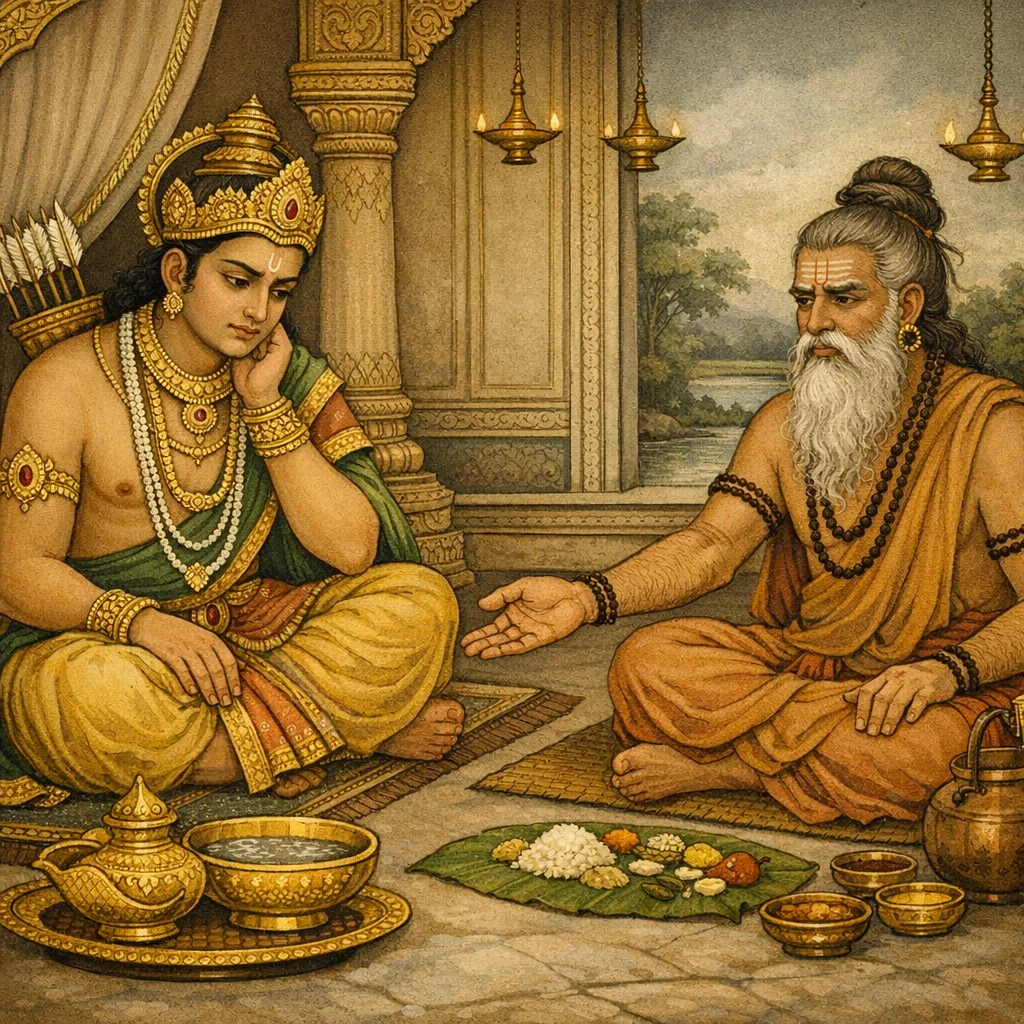
Chapter 99 unfolds as a clarifying dialogue. The ṛṣis ask Sūta about an apparent contradiction: earlier it was said that Rāma, Sītā, and Lakṣmaṇa arrived together and departed to the forest together, yet it is also said that Rāma established Rāmeśvara and related works “there” at another time. Sūta resolves this by distinguishing different days and occasions, affirming that the sanctity of the kṣetra endures and does not diminish. The narrative then moves to a later royal setting. Rāma, affected by public censure, rules with restraint and purity (brahmacarya is explicitly mentioned) and holds a confidential exchange with a divine messenger (devadūta) bearing Indra’s command—inviting Rāma to return to the divine realm after completing the mission of destroying Rāvaṇa. The secrecy is disrupted by Durvāsā’s arrival, hungry after a vow; Lakṣmaṇa faces a dharmic dilemma between guarding the king’s privacy-order and preventing a curse upon the dynasty. He chooses to inform Rāma, enabling the sage’s entry and hospitality. Rāma dismisses the messenger with a deferred promise, receives Durvāsā with arghya and pādya, and feeds him with varied offerings, portraying kingship as accountable to both divine mandate and ascetic claim through dharma and sacred hospitality.
Shlokas
Verse 1
ऋषय ऊचुः । यदेतद्भवता प्रोक्तं तत्र रामेण निर्मितः । रामेश्वरस्तथा सीता तेन तत्र विनिर्मिता
The sages said: “What you have stated—that there Rāmeśvara was established by Rāma, and that Sītā too was fashioned there by him—”
Verse 2
तथा च लक्ष्मणार्थाय निर्मितस्तेन संश्रयः । एतन्महद्विरुद्धं ते प्रतिभाति वचोऽखिलम्
And likewise you said that he made a sacred refuge for Lakṣmaṇa. Yet all this appears greatly contradictory to your words.
Verse 3
त्वया सूत पुरा प्रोक्तं रामो लक्ष्मणसंयुतः । सीतया सहितः प्राप्तः क्षेत्रेऽत्र प्रस्थितो वने
Earlier, O Sūta, you said that Rāma, accompanied by Lakṣmaṇa and together with Sītā, arrived in this sacred region and set out into the forest.
Verse 4
श्राद्धं कृत्वा गयाशीर्षे लक्ष्मणेन विरुद्ध्य च । पुनः संप्रस्थितोऽरण्यं क्रोधाविष्टश्च तं प्रति
Having performed the śrāddha rites at Gayāśīrṣa, and then falling into conflict with Lakṣmaṇa, he again departed for the forest, overcome with anger toward him.
Verse 5
यत्त्वयोक्तं तदा तेन निर्मितोऽत्र महेश्वरः । एतच्च सर्वमाचक्ष्व संदेहं सूतनन्दन
And what you said—that at that time Maheśvara was established here by him—explain all this fully, O son of Sūta, and remove the doubt.
Verse 6
सूत उवाच । अत्र मे नास्ति संदेहो युष्माकं च पुनः स्थितः । ततो वक्ष्याम्यशेषेण श्रूयतां द्विजसत्तमाः । एतत्क्षेत्रं पुनश्चाद्यं न क्षयं याति कुत्रचित्
Sūta said: “For my part there is no doubt here—though it has arisen again among you. Therefore I shall explain everything completely; listen, O best of the twice-born. This sacred region is primeval and ever-renewed; it never diminishes anywhere.”
Verse 7
अन्यस्मिन्दिवसे प्राप्ते स तदा रघुनंदनः । यदा विरोधमापन्नः सार्धं सौमित्रिणा सह
On another day, that scion of Raghu—when he had fallen into conflict together with Saumitrī (Lakṣmaṇa)—
Verse 8
एतत्पुनर्दिनं चान्यद्यत्र तेन प्रतिष्ठितः । रामेश्वरः स्वयं भक्त्या दुःखितेन महात्मना
But on yet another day—on that very spot—Rāmeśvara was himself consecrated in devotion by that great-souled one, though afflicted with sorrow—
Verse 9
ऋषय ऊचुः । अन्यस्मिन्दिवसे तत्र कस्मिन्काले रघूत्तमः । संप्राप्तस्तस्य किं दुःखं संजातं तत्प्रकीर्तय
The sages said: “On another day there, at what time did Raghu’s best (Rāma) arrive? And what sorrow arose for him then—please recount it in detail.”
Verse 10
सूत उवाच । कृत्वा सीतापरित्यागं रामो राजीवलोचनः । लोकापवादसंत्रस्तस्ततो राज्यं चकार सः
Sūta said: “After casting off Sītā, lotus-eyed Rāma—distressed by fear of the world’s reproach—then carried on the governance of the kingdom.”
Verse 12
दशवर्षसहस्राणि दशवर्षशतानि च । ब्रह्मचर्येण चक्रे स राज्यं निहतकंटकम्
For ten thousand years and a further one thousand years, he governed the kingdom through brahmacarya, making it free of thorns—without affliction or disturbance.
Verse 14
तेनोक्तं देवराजेन प्रेषितोऽहं तवांतिकम् । तस्मात्कुरु समालोकं विजने त्वं मया सह
Thus instructed by the king of the gods, I have been sent into your presence. Therefore come—meet with me and speak with me in a secluded, solitary place.
Verse 16
तस्यैवमुपविष्टस्य मंत्रस्थाने महात्मनः । बहुत्वादिष्टलोकस्य न रहस्यं प्रजायते
As that great-souled one sat thus in the council-place, because many favored persons were present, no secrecy could be maintained.
Verse 17
ततः कोपपरीतात्मा दूतः प्रोवाच सादरम् । विहस्य जनसंसर्गं दृष्ट्वैकांतेऽपि संस्थिते
Then the envoy, his mind overtaken by anger, spoke with outward courtesy; and, laughing, he mocked the press of people, though the meeting was said to be in private.
Verse 18
यथा दंष्ट्राच्युतः सर्पो नागो वा मदवर्जितः । आज्ञाहीनस्तथा राजा मानवैः परिभूयते
Just as a snake whose fangs are gone, or an elephant deprived of its must, is disregarded, so too a king without authority is scorned by men.
Verse 19
सेयं तव रघुश्रेष्ठ नाज्ञास्ति प्रतिवेद्म्यहम् । शक्रालापमपि त्वं च नैकांते श्रोतुमर्हसि
O best of the Raghus, I inform you: this is not your command. And you are not fit to hear even Indra’s message unless it is in true privacy.
Verse 20
तस्य तद्वचनं श्रुत्वा कोपसंरक्तलोचनः । त्रिशाखां भृकुटीं कृत्वा ततः स प्राह लक्ष्मणम्
Hearing those words, his eyes reddened with anger; knitting his brows into three furrows, he then spoke to Lakṣmaṇa.
Verse 21
ममात्र संनिविष्टस्य सहानेन प्रजल्पतः । यदि कश्चिन्नरो मोहादागमिष्यति लक्ष्मण । स्वहस्तेन न संदेहः सूदयिष्यामि तं द्रुतम्
“While I am seated here and he is speaking with me, if—out of delusion—any man comes in, O Lakṣmaṇa, then with my own hand, without doubt, I will swiftly slay him.”
Verse 22
न हन्मि यदि तं प्राप्तमत्र मे दृष्टिगोचरम् । तन्मा भून्मे गतिः श्रेष्ठा धर्मिणां या प्रपद्यते
If I do not strike down that man when he has come here within the range of my sight, then may I not attain that highest destiny which the righteous obtain.
Verse 23
एवं ज्ञात्वा प्रयत्नेन त्वया भाव्यमसंशयम् । राजद्वारि यथा कश्चिन्न मया वध्यतेऽधुना
Knowing this, you must act with utmost effort, without doubt—so that now no one at the royal gate is slain by me.
Verse 24
तमोमित्येव संप्रोच्य लक्ष्मणः शुभलक्षणः । राजद्वारं समासाद्य चकार विजनं ततः
Having said, “Tamoṃ!”, the auspiciously marked Lakṣmaṇa approached the royal gate and then cleared the place, making it deserted.
Verse 25
देवदूतोऽपि रामेण समं चक्रे ततः परम् । मंत्रं शक्रसमादिष्टं तथान्यैः स्वर्गवासिभिः
Thereafter, the divine messenger also acted in concert with Rāma, and conveyed and undertook the mantra enjoined by Śakra (Indra) and by other dwellers of heaven.
Verse 26
देवदूत उवाच । त्वं रावणविनाशार्थमवतीर्णो धरातले । स च व्यापादितो दुष्टः पापस्त्रैलोक्यकंटकः
The divine messenger said: “You descended upon the earth for the destruction of Rāvaṇa; and that wicked, sinful thorn to the three worlds has indeed been slain.”
Verse 27
कृतं सर्वं महाभाग देव कृत्यं त्वयाऽधुना । तस्मात्संतु सनाथास्ते देवाः शक्रपुरोगमाः
O greatly fortunate one, O divine lord, all that had to be done has now been accomplished by you; therefore let the gods—led by Śakra—be secure under your protection.
Verse 28
यदि ते रोचते चित्ते नोपरोधेन सांप्रतम् । प्रसादं कुरु देवानां तस्मादागच्छ सत्वरम् । स्वर्गलोकं परित्यज्य मर्त्यलोकं सुनिंदितम्
If it pleases your heart now, without any impediment, show favor to the gods; therefore come quickly—leaving the heavenly world behind for this much-criticized mortal realm.
Verse 29
सूत उवाच । एतस्मिन्नंतरे प्राप्तो दुर्वासा मुनिसत्तमः । प्रोवाचाथ क्षुधाविष्टः क्वासौ क्वासौ रघूत्तमः
Sūta said: Meanwhile, Durvāsā, best among sages, arrived; afflicted by hunger, he exclaimed, “Where is he—where is Raghūttama (Rāma)?”
Verse 30
लक्ष्मण उवाच । व्यग्रः स पार्थिवश्रेष्ठो देवकार्येण केनचित् । तस्मादत्रैव विप्रेंद्र मुहूर्तं परिपालय
Lakṣmaṇa said: “That best of kings is occupied with some divine task; therefore, O best of brāhmaṇas, wait here for just a moment.”
Verse 31
यावत्सांत्वयते रामो दूतं शक्रसमुद्भवम् । ममोपरि दयां कृत्वा विनयावनतस्य हि
Until Rāma finishes consoling the messenger sprung from Śakra (Indra), have compassion on me—for I am bowed down in humility.
Verse 32
दुर्वासा उवाच । यदि यास्यति नो दृष्टिं मम द्राक्स रघूत्तमः । शापं दत्त्वा कुलं सर्वं तद्धक्ष्यामि न संशयः
Durvāsā said: “If that best of the Raghus does not come at once into my sight, then—having pronounced a curse—I shall burn up his entire lineage. Of this there is no doubt.”
Verse 33
ममापि दर्शनादन्यन्न किंचिद्विद्यते गुरु । कृत्यं लक्ष्मण यावत्त्वमन्यन्मूढ़ प्रकत्थसे
“For me as well, there is nothing else more important than meeting him, O revered one. Lakṣmaṇa—so long as you keep boasting of other things, deluded as you are—tell me what must be done.”
Verse 34
तच्छ्रुत्वा लक्ष्मणश्चित्ते चिंतयामास दुःखितः । वरं मे मृत्युरेकस्य मा भूयात्कुलसंक्षयः
Hearing that, Lakṣmaṇa, sorrowing, reflected in his heart: “Better that I alone should die, than that the destruction of the whole dynasty should occur.”
Verse 35
एवं स निश्चयं कृत्वा ततो राममुपाद्रवत् । उवाच दंडवद्भूमौ प्रणिपत्य कृतांजलिः
Thus, having made his resolve, he hurried to Rāma and spoke—prostrating himself on the ground like a staff, with hands joined in reverence.
Verse 36
दुर्वासा मुनिशार्दूलो देव ते द्वारि तिष्ठति । दर्शनार्थी क्षुधाविष्टः किं करोमि प्रशाधि माम्
“Lord, Durvāsā—the tiger among sages—stands at your gate, seeking an audience and afflicted by hunger. What should I do? Please instruct me.”
Verse 37
तस्य तद्वचनं श्रुत्वा ततो दूतमुवाच तम् । गत्वेमं ब्रूहि देवेशं मम वाक्यादसंशयम् । अहं संवत्सरस्यांत आगमिष्यामि तेंऽतिके
Hearing his words, he then said to that messenger: “Go and tell the Lord of gods this message of mine without doubt: at the end of a year, I shall come to you again.”
Verse 38
एवमुक्त्वा विसृज्याथ तं दूतं प्राह लक्ष्मणम् । प्रवेशय द्रुतं वत्स तं त्वं दुर्वाससं मुनिम्
Having spoken thus and dismissed the messenger, he said to Lakṣmaṇa: “Dear one, quickly bring in that sage Durvāsā.”
Verse 39
ततश्चार्घ्यं च पाद्यं च गृहीत्वा सम्मुखो ययौ । रामदेवः प्रहृष्टात्मा सचिवैः परिवारितः
Then, taking the offerings of arghya and water for washing the feet, Lord Rāma went forth to meet him—joyful at heart and surrounded by his ministers.
Verse 40
दत्त्वार्घ्यं विधिवत्तस्य प्रणिपत्य मुहुर्मुहुः । प्रोवाच रामदेवोऽथ हर्षगद्गदया गिरा
Having duly offered him arghya and bowing again and again, Lord Rāma then spoke in a voice choked with joy.
Verse 41
स्वागतं ते मुनिश्रेष्ठ भूयः सुस्वागतं च ते । एतद्राज्यममी पुत्रा विभवश्च तव प्रभो
“Welcome to you, best of sages—again, most welcome to you. This kingdom, these sons, and all prosperity are yours, O lord.”
Verse 42
कृत्वा मम प्रसादं च गृहाण मुनिसत्तम । धन्योऽस्म्यनुगृहीतोऽस्मि यत्त्वं मे गृहमागतः । पूज्यो लोकत्रयस्यापि निःशेषतपसांनिधिः
“Having shown me your favor, please accept my humble offering, O best of sages. I am blessed—I am truly graced—because you have come to my house. You are worthy of worship even by the three worlds, a treasury of austerities without remainder.”
Verse 43
मुनिरुवाच । चातुर्मास्यव्रतं कृत्वा निराहारो रघूत्तम । अद्य ते भवनं प्राप्य आहारार्थं बुभुक्षितः
The sage said: “O best of the Raghus, having undertaken the Cāturmāsya vow and remaining without food, today I have reached your dwelling—hungry and seeking sustenance.”
Verse 44
तस्मात्त्वं यच्छ मे शीघ्रं भोजनं रघुनंदन । नान्येन कारणं किंचित्संन्यस्तस्य धनादिना
“Therefore, O joy of the Raghu line, quickly give me food. For one who has renounced, there is no other purpose at all—no concern with wealth and the like.”
Verse 45
ततस्तं भोजयामास श्रद्धापूतेन चेतसा । स्वयमेवाग्रतः स्थित्वा मृष्टान्नैर्विविधैः शुभैः
Then, with a mind purified by faith, he fed the sage. Standing personally before him, he served many kinds of auspicious, well-prepared foods.
Verse 46
लेह्यैश्चोष्यैस्तथा चर्व्यैः खाद्यैरेव पृथग्विधैः । यावदिच्छा मुनेस्तस्य तथान्नैर्विविधैरपि
He offered him distinct varieties of foods—those to be licked, sucked, chewed, and eaten—along with many kinds of dishes, as much as that sage desired.