Adhyaya 83
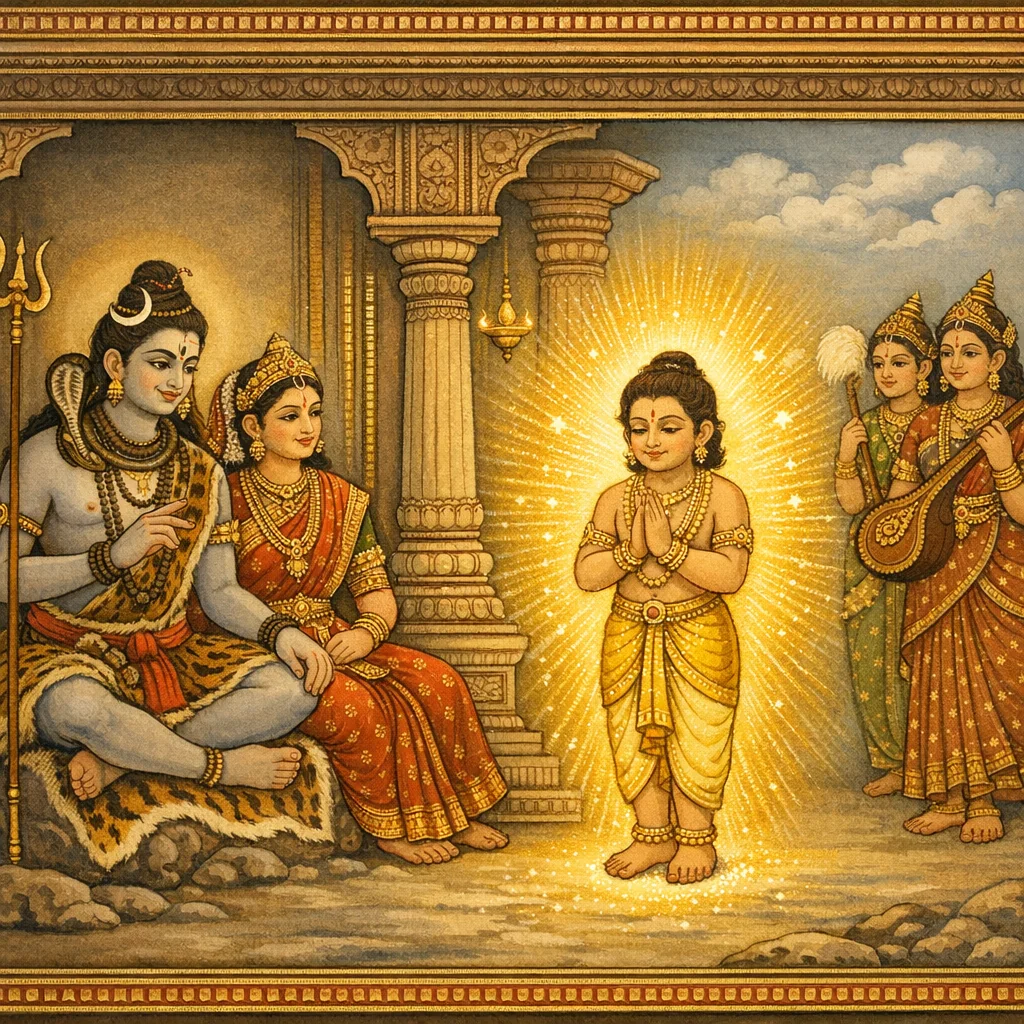
Sūta recounts an ancient marvel preserved in Purāṇic tradition. King Veṇu of the Solar dynasty is portrayed as relentlessly unrighteous: he blocks worship and sacrifice, seizes grants meant for brāhmaṇas, harms the vulnerable, perverts justice by protecting thieves, and demands that all adore him as the supreme. As karmic retribution he is struck with severe leprosy and his dynasty collapses; without heirs or support he is driven out and wanders alone, tormented by hunger and thirst. Reaching the Supaṇākhya prāsāda/temple within the sacred kṣetra, he dies there from exhaustion, in an involuntary fast. By the power of that sanctuary he attains a divine form, ascends in a celestial vehicle, and arrives in Śiva’s realm, honored by apsarases, gandharvas, and kinnaras. When Pārvatī asks who this newcomer is and what deed enabled such attainment, Śiva explains that dying within this auspicious shrine—especially in a state akin to prāyopaveśa, the cessation of eating—bestows extraordinary spiritual fortune; the claim is extended even to insects, birds, and animals that die within the prāsāda. Amazed, Pārvatī listens, and thereafter seekers of liberation come from afar to undertake prāyopaveśana with faith and gain supreme success. The chapter concludes by naming this account a “destroyer of all sins” within the Śrīhāṭakeśvara-kṣetra māhātmya.
Shlokas
Verse 1
सूत उवाच । तत्राश्चर्यमभूत्पूर्वं यत्तद्ब्राह्मणसत्तमाः । अहं वः कीर्तयिष्यामि पुराणे यदुदाहृतम्
Sūta said: There, O best of brāhmaṇas, a wondrous event once occurred. I shall recount it to you, just as it is related in the Purāṇa.
Verse 2
वेणुर्नाम महीपालः पुरासीत्सूर्यवंशजः । सदैव पापसंयुक्तो दुर्मेधाः कामपीडितः
There once was a king named Veṇu, born in the Solar dynasty. He was ever entangled in sin—of poor understanding and tormented by desire.
Verse 3
शासनानि प्रदत्तानि ब्राह्मणानां महात्मनाम् । अन्यैः पार्थिवशार्दूलैस्तेन तानि हृतान्यलम्
He brazenly confiscated the royal grants that had been bestowed upon great-souled Brāhmaṇas by other lion-like kings.
Verse 4
विध्वंसिताः स्त्रियो नैका विधवाश्च विशेषतः
Many women were ruined, and widows in particular suffered grievously.
Verse 5
देवताराधनं पूजां कर्तुं नैव ददाति सः । न च यज्ञं न होमं च स्वाध्यायं न च पापकृत्
He would not allow the worship and adoration of the deities to be performed; and that sinner engaged in neither sacrifice, nor fire-offering, nor sacred study.
Verse 6
प्रोवाचाथ जनान्सर्वान्मां पूजयत सर्वदा । न मामभ्यधिकोऽन्योऽस्ति देवो वा ब्राह्मणोऽपि वा
Then he addressed all the people: “Worship me always! There is none superior to me—neither a god nor even a Brāhmaṇa.”
Verse 7
मया तुष्टेन सर्वेषां संपत्स्यति हृदि स्थितम् । इह लोकेष्वसंदिग्धं शुभं वा यदि वाऽशुभम्
“If I am pleased, whatever lies in anyone’s heart will surely come to pass in this world—whether auspicious or inauspicious.”
Verse 9
तेन शस्त्रविहीनानां विश्वस्तानां वधः कृतः । संत्यक्ताः शरणं प्राप्ताः पुरुषा भयविह्वलाः
By him, the slaughter of unarmed and trusting people was carried out; men, terrified and bewildered, were abandoned even after they had sought refuge.
Verse 10
अचौराः प्रगृहीताश्च चौराः संरक्षिताः सदा । साधवः क्लेशिता नित्यं तेषां संहरता धनम्
The innocent were seized, while thieves were always protected; the righteous were continually afflicted as their wealth was confiscated.
Verse 11
न कृतं च व्रतं तेन श्रद्धापूतेन चेतसा । न दत्तं ब्राह्मणेभ्यश्च न च यष्टं कदाचन
With a mind unpurified by faith, he performed no vow; he gave nothing to Brāhmaṇas, and he never offered sacrifice.
Verse 12
एवं तस्य नरेन्द्रस्य पापासक्तस्य नित्यशः । कुष्ठव्याधिरभूदुग्रो वंशोच्छेदश्च सद्द्विजाः
Thus, for that king who was ever devoted to sin, a dreadful leprosy arose—and, O good Brāhmaṇas, his lineage too was cut off.
Verse 13
ततस्तं व्याधिना ग्रस्तं पुत्रपौत्रविवर्जितम् । दायादाः सहसोपेता राज्यं जह्रुस्ततः परम्
Then, when he was seized by disease and left without sons or grandsons, his kinsmen quickly gathered and carried off the kingdom from him.
Verse 14
तं च निर्वासयामासुस्तस्माद्देशात्पदातिकम् । एकाकिनं परित्यक्तं सर्वैरपि सुहृद्गणैः
They drove him out from that land on foot; left utterly alone, he was abandoned even by all his circles of friends and well-wishers.
Verse 15
सोऽपि सर्वैः परित्यक्तस्तेन पापेन कर्मणा । कलत्रैरपि चात्मीयैः स्मृत्वा पूर्वविचेष्टितम्
He too was forsaken by everyone because of that sinful action—abandoned even by his wife and his own kin, as they recalled his former misdeeds.
Verse 16
एकाकी भ्रममाणोऽथ सोऽपि कष्टवशं गतः । क्षुत्तृष्णासुपरिश्रांतः क्षेत्रेऽत्रैव समागतः
Then, wandering alone, he too came under the grip of misery; worn out by hunger and thirst, he arrived here in this sacred kṣetra itself.
Verse 17
ततः प्रासादमासाद्य सुपर्णाख्यसमुद्भवम् । यावत्प्राप्तः परित्यक्तस्ताव त्प्राणैरुपोषितः
Thereupon he reached the temple that had arisen at the place called Suparṇākhyā. Forsaken, he endured as though fasting, with only the life-breath remaining, until he arrived.
Verse 18
ततो दिव्यवपुर्भूत्वाविमानवरमाश्रितः । जगामशिवलोकं स दुर्लभं धार्मिकैरपि
Then, assuming a divine body and ascending an excellent celestial chariot, he went to Śiva’s world—rarely attained even by the righteous.
Verse 19
सेव्यमानोप्सरोभिश्च स्तूयमानश्च किन्नरैः । गीयमानश्च गन्धर्वैः शिवपार्श्वे व्यवस्थितः
Attended by apsarases, praised by kinnaras, and sung of by gandharvas, he stood established at Śiva’s side.
Verse 20
अथ तं संनिधौ दृष्ट्वा गौरी पप्रच्छ सादरम् । कोऽयं देव समायातः सुकृती तव मन्दिरे । अनेन किं कृतं कर्म यत्प्राप्तोऽत्र विभूतिधृक्
Then Gaurī, seeing him present nearby, asked with reverence: “O Lord, who is this meritorious one who has come to Your abode? What deed has he performed, by which he has attained this state here, bearing divine splendor?”
Verse 21
श्रीभगवानुवाच । एष पापसमाचारः सदाऽसीत्पृथिवीपतिः । वेणुसंज्ञो धरापृष्ठे कुष्ठव्याधिसमाकुलः
The Blessed Lord said: “This man, ever engaged in sinful conduct, was a king upon the earth. Known as Veṇu, he was afflicted in the world with the disease of leprosy (kuṣṭha).”}]}}】}
Verse 22
स संत्यक्तो निजैर्दारैः शत्रुवर्गेण धर्षितः । भ्रममाणः समायातः सुपर्णाख्यस्य मन्दिरे
Abandoned by his own wife and harassed by the ranks of enemies, he wandered and at last came to the temple called Suparṇākhyā.
Verse 23
उपवासपरिश्रांतः सांनिध्यं मम यत्र च । सर्वप्राणैः परित्यक्तस्तस्मिन्नायतने शुभे
Exhausted by fasting, he reached the holy sanctuary where My presence abides; and there, in that auspicious abode, he cast off life itself—his breath wholly departing.
Verse 24
तत्प्रभावादिह प्राप्तः सत्यमेतन्म योदितम् । अन्योऽप्यनशनं कृत्वा प्राणान्यस्तत्र संत्यजेत्
By the very power of that place one attains the fruit here itself—this is the truth I have declared. Whoever else, too, undertakes anāśana (fasting) and gives up life there, attains that supreme state.
Verse 25
स सर्वाभ्यधिकां भूतिं प्राप्नुयाद्वरवर्णिनि । यानेतान्वीक्षसे देवि गणान्मे पार्श्वसंस्थितान्
O fair-complexioned one, such a person attains prosperity surpassing all. O Goddess, those very attendants (gaṇas) whom you see standing at my side are witnesses to that attainment.
Verse 26
एतैस्तत्र कृतं सर्वैर्देवि प्रायोपवेशनम् । अपि कीटपतंगा ये पशवः पक्षिणो मृगाः । प्रासादे तत्र निर्मुक्ताः प्राणैर्यांति ममांतिकम्
O Goddess, all these have performed prāyopaveśa (the vow of fasting unto death) there. Even insects and moths, cattle, birds, and wild animals—if they cast off their life-breaths there in that sanctuary—come into my very presence.
Verse 27
सूत उवाच । तच्छ्रुत्वा पार्वती वाक्यं प्रोक्तं देवेन शम्भुना । विस्मयाविष्टहृदया साधु साध्विति साऽब्रवीत्
Sūta said: Hearing those words spoken by the god Śambhu, Pārvatī—her heart filled with wonder—said, “Well said! Well said!”
Verse 28
ततःप्रभृति लोकेऽत्र पुरुषा मुक्तिमिच्छवः । दूरतोऽपि समभ्येत्य स्वान्प्राणांस्तत्र तत्यजुः
From that time onward in this world, men desiring liberation would come even from afar and relinquish their lives there.
Verse 29
प्रायोपवेशनं कृत्वा श्रद्धया परया युताः । गच्छन्ति च परां सिद्धिमपि पापपरायणाः
Having undertaken prāyopaveśa with the highest faith, they go to the supreme attainment—even those who were devoted to sin.
Verse 30
एतद्वः सर्वमाख्यातं सर्वपातकनाशनम् । सुपर्णाख्यस्य माहात्म्यं यन्मया स्वपितुः श्रुतम्
All this has been told to you—the destroyer of all sins: the greatness of Suparṇākhya, as I heard it from my own father.
Verse 83
इति श्रीस्कन्दे महापुराण एकाशीतिसाहस्र्यां संहितायां षष्ठे नागरखण्डे श्रीहाटकेश्वरक्षेत्रमाहात्म्ये सुपर्णाख्यमाहात्म्यवर्णनंनाम त्र्यशीतितमोऽध्यायः
Thus ends the eighty-third chapter, titled “The Description of the Greatness of Suparṇākhya,” in the Śrīhāṭakeśvara-kṣetra Māhātmya, within the sixth Nāgara-khaṇḍa of the Skanda Mahāpurāṇa (in the Ekāśīti-sāhasrī Saṃhitā).