Adhyaya 82
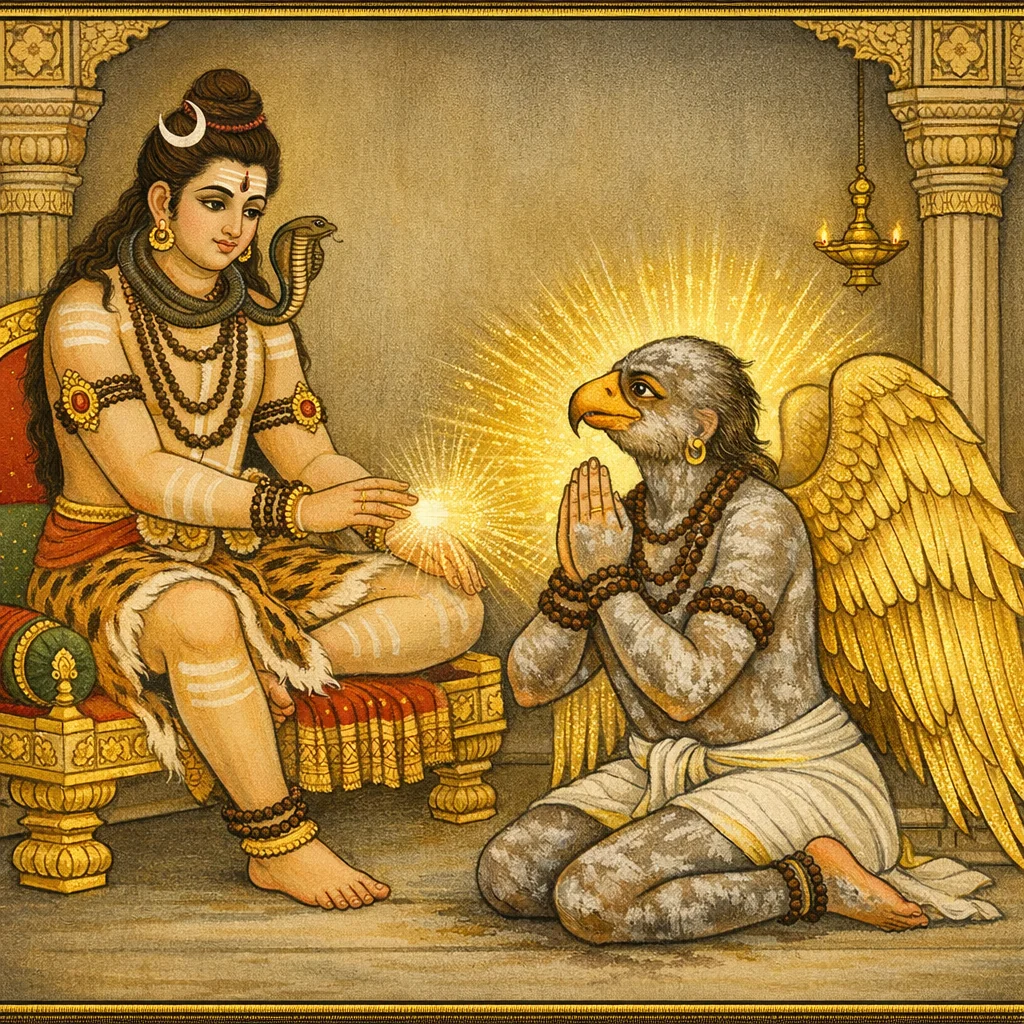
The chapter unfolds in three movements. Viṣṇu notices an uncanny weakness in Garuḍa—his wings have fallen—and seeks a cause beyond mere physical force. He approaches the ascetic woman Śāṇḍilī, who explains that this restraint was imposed through tapas-śakti in response to a widespread disparagement of women, effected by mental resolve rather than bodily action. When Viṣṇu asks for reconciliation, she prescribes a definite remedy: Garuḍa must worship Śaṅkara (Śiva), for restoration depends upon Śiva’s grace. Garuḍa undertakes long observances: a Pāśupata orientation, austerities such as cāndrāyaṇa and other kṛcchra disciplines, thrice-daily bathing, the ash-bath regimen, Rudra-mantra recitation, and formal pūjā with offerings. After an extended period, Maheśvara grants boons—abiding at the liṅga and the immediate return of wings and divine splendor. The chapter ends with stated merits: even the morally tainted may rise through sustained worship; mere darśana on a Monday is praised; and prāyopaveśana (religious fasting unto death) at this shrine is said to end further rebirth.
Shlokas
Verse 1
सूत उवाच । तद्दृष्ट्वा पुंडरीकाक्षो गरुडस्य विचेष्टितम् । विस्मितश्चिंतयामास किमिदं सांप्रतं स्थितम्
Sūta said: Seeing that strange occurrence involving Garuḍa, the Lotus-eyed Lord was astonished and began to reflect: “What is this condition that has come about just now?”
Verse 2
अपि वज्रप्रहारेण यस्य रोमापि न च्युतम् । तौ पक्षौ सहसा चास्य कथं निपतितौ भुवि
“Even by a blow of the thunderbolt, not even a hair of his would fall—so how, then, did his two wings suddenly drop down to the earth?”
Verse 3
नूनमेतेन या स्त्रीणां कृता निंदा महात्मना । दूषितं ब्रह्मचर्यं यच्छांडिलीं समवेक्ष्य च
“Surely, because this great being spoke in blame of women, and because he thereby tainted the ideal of celibacy while looking upon Śāṇḍilī, this has occurred.”
Verse 4
अनया पातितौ पक्षौ तपःशक्तिप्रभावतः । नान्यस्य विद्यते शक्तिरीदृशी भुवनत्रये
“By her—through the power born of tapas—these wings have been brought down. No other being possesses such power as this in the three worlds.”
Verse 5
ततः प्रसादयामास शांडिलीं गरुडध्वजः । तदर्थं विनयोपेतः स्मितं कृत्वा द्विजोत्तमाः
Then the Lord whose banner bears Garuḍa sought to appease Śāṇḍilī; and for that purpose, endowed with humility and a gentle smile, he addressed the best among the twice-born.
Verse 6
श्रीभगवानुवाच । सामान्यवचनं प्रोक्तं सर्वस्त्रीणामनेन हि । तत्किमर्थं महाभागे त्वया चैवेदृशः कृतः
The Blessed Lord said: “He spoke only a general statement about all women. Why then, O fortunate one, have you done such a deed?”
Verse 7
शांडिल्युवाच । मम वक्त्रं समालोक्य स्मितं चक्रे जनार्दन । स्त्रीनिंदा विहितानेन स्वमत्यापि जगद्गुरो
Śāṇḍilya said: “O Janārdana, when he looked upon my face, he smiled. Yet, O Teacher of the world, by his own misguided will he committed the fault of censuring women.”
Verse 8
एतस्मात्कारणादस्य निग्रहोऽयं मया कृतः । मनसा न च वाक्येन न च केशव कर्मणा
“For this reason I have imposed this restraint upon him; yet, O Keśava, neither by thought, nor by word, nor by deed did I act out of personal malice.”
Verse 9
श्रीभगवानुवाच । तथापि कुरु चास्य त्वं प्रसादं गतकल्मषे । मम वाक्यानुरोधेन यदिमां मन्यसे शुभे
The Blessed Lord said: “Even so, grant him your favor, O auspicious one whose impurities are gone; if you hold me dear, then do so in deference to my word.”
Verse 10
शांडिल्युवाच । मनसापि मया ध्यातं शुभं वा यदिवाऽशुभम् । नान्यथा जायते देव विशेषात्कोपयुक्तया
Śāṇḍilya said: “O Deva, even what is only conceived in the mind—whether auspicious or inauspicious—does not become otherwise, especially when joined with anger.”
Verse 11
तस्मादेष ममादेशादाराध यतु शंकरम् । पक्षलाभाय नान्यस्य शक्तिर्दातुं व्यवस्थिता
“Therefore, by my command, let him worship Śaṅkara; for the gaining back of wings, no other power is appointed to bestow it.”
Verse 12
अथवा पुंडरीकाक्ष रूपमीदृग्व्यवस्थितः । एष संस्थास्यते लोके सत्यमेतद्ब्रवीम्यहम्
“Or else, O Lotus-eyed One, established in such a form, he will remain in the world. This is the truth I declare.”
Verse 13
सूत उवाच । तस्यास्तद्वचनं श्रुत्वा तं प्रोवाच जनार्दनः । गरुडं दैन्यसंयुक्तं भासपिंडोपमं स्थितम्
Sūta said: “Having heard her words, Janārdana spoke to him—to Garuḍa, overcome with misery, standing like a lump of dull metal.”
Verse 14
एष एव वरश्चास्या द्विपदेश्या द्विजोत्तम । पक्षलाभाय यत्प्रोक्तं तव शंभुप्रसादनम्
“This indeed is the boon for her who is to be instructed in two steps, O best of twice-born: for the recovery of wings, what has been declared is the winning of Śambhu’s favor.”
Verse 15
तस्मादाराधय क्षिप्रं त्वं देवं शशिशेखरम् । अव्यग्रं चित्तमास्थाय दिवारात्रमतंद्रितः
Therefore, quickly worship the Lord Śaśiśekhara (Śiva), keeping the mind undistracted, day and night, without negligence.
Verse 16
येन ते तत्प्रभावेन भूयः स्यात्तादृशं वपुः । तस्य देवस्य माहात्म्यादचिरादपि काश्यप
By that Lord’s power your body will again become as it was; through the greatness of that Deva, O Kāśyapa, it will happen even in no long time.
Verse 17
तच्छ्रुत्वा गरुडस्तूर्णं धृतपाशुपतव्रतः । संस्थाप्य देवमीशानं ततस्तं तोषमानयत्
Hearing this, Garuḍa at once undertook the Pāśupata vow. Having duly installed Lord Īśāna (Śiva), he then proceeded to win His satisfaction.
Verse 18
चांद्रायणानि कृच्छ्राणि तथा सांतपनानि च । प्राजापत्यानि चक्रेऽथ पाराकाणि तदग्रतः
He performed the Cāndrāyaṇa observances, the Kṛcchra penances, and the Sāṃtapana austerities; and further undertook the Prājāpatya and Pārāka disciplines before that Lord.
Verse 19
स्नात्वा त्रिषवणं पश्चाद्भस्मस्नान परायणः । जपन्रुद्रशिरो रुद्रान्नीलरुद्रांस्तथापरान्
After bathing thrice daily, devoted to bathing with sacred ash, he recited the Rudraśiras, the Rudra hymns, the Nīlarudra, and other such prayers.
Verse 20
चक्रे पूजां स्वयं तस्य स्नापयित्वा यथाविधि । बलिपूजोपहारांश्च विधानेन प्रयच्छति
He himself performed worship of Him, bathing the deity according to the rite, and offering bali, ritual honors, and other upahāras in the prescribed manner.
Verse 21
एवं तस्य व्रतस्थस्य जपपूजापरस्य च । ततो वर्षसहस्रांते गतस्तुष्टिं महेश्वरः । अब्रवीद्वरदोऽस्मीति वृणुष्वेष्टं द्विजोत्तम
Thus, as he remained steadfast in his vow and devoted to japa and worship, at the end of a thousand years Maheśvara became pleased and said, “I am the giver of boons—choose what you desire, O best of the twice-born.”
Verse 22
गरुड उवाच । पश्यावस्थां ममेशान शांडिल्या या विनिर्मिता । पक्षपातः कृतोऽस्माकं तमहं प्रार्थयामि वै
Garuḍa said: “O Īśāna, behold my condition—brought about by Śāṇḍilī. Partiality has been shown against us; for that I truly petition You.”
Verse 23
त्वयात्रैव सदा लिंगे स्थेयं हर ममाधुना । मम वाक्यादसंदिग्धं यदि चेष्टं प्रयच्छसि
“Therefore, O Hara, from now on You should dwell here always in this liṅga—this is my certain request—if You truly grant what I desire.”
Verse 24
भगवानुवाच । अद्यप्रभृति मे चात्र लिंगे वासो भविष्यति । त्वं च तद्रूपसंपन्नो विशेषाद्बलवेगभाक्
The Lord said: “From today onward, My dwelling shall indeed be here in this liṅga. And you too shall assume that form, and especially become endowed with strength and swiftness.”
Verse 25
भविष्यसि न संदेहो मत्प्रसादाद्विहंगम । एवमुक्त्वाथ तं देवः स्वयं पस्पर्श पाणिना
“So it shall be—without doubt—by My favor, O bird.” Having spoken thus, the God then touched him with His own hand.
Verse 26
ततोऽस्य पक्षौ संजातौ तत्क्षणादेव सुन्दरौ । तथा रोमाणि दिव्यानि जातरूपोपमानि च
Then, in that very instant, beautiful wings sprang forth for him; and likewise his feathers became divine—resembling gleaming gold.
Verse 27
ततः प्रणम्य तं देवं प्रहष्टः स विहंगमः । गतः स्वभवनं पश्चादनुज्ञाप्य महेश्वरम्
Then that bird, delighted at heart, bowed to that God; and, having received Mahādeva’s permission, he returned thereafter to his own abode.
Verse 29
तस्य चायतने पुण्ये योगात्प्राणान्परित्यजेत् । प्रायोपवेशनं कृत्वा न स भूयोऽपि जायते
And in that sacred sanctuary, one may relinquish the life-breath through yogic composure; having undertaken prāyopaveśana (a vowed fast unto death), such a person is not born again.
Verse 30
अपि पाप समाचारः कौलो वा निर्घृणोऽपि वा । ब्रह्मघ्नो वा सुरापो वा चौरो वा भ्रूणहाऽपि वा
Even one of sinful conduct—whether a Kaula, or even a cruel person—whether a slayer of a brāhmaṇa, a drinker of liquor, a thief, or even a destroyer of an embryo—
Verse 31
त्रिकालं पूजयन्यस्तु श्रद्धापूतेन चेतसा । संवत्सरं वसेत्सोऽपि शिवलोके महीयते
But whoever worships there at the three times of day, with a mind purified by faith, and dwells there for a year—he too is honored in Śiva’s world.
Verse 32
अथवा सोमवारेण यस्तं पश्यति मानवः । कृत्वा क्षणं सुभक्त्या यो यावत्संवत्सरं द्विजाः
Or, O twice-born, if a person beholds him on a Monday—even offering but a moment of sincere devotion—it is as though he had served for a full year.
Verse 33
सोऽपि याति न संदेहः पुरुषः शिवमन्दिरे । विमानवरमारूढः सेव्यमानोऽप्सरोगणैः
That person too goes—without doubt—to Śiva’s abode, mounted upon an excellent celestial car, attended by hosts of apsarases.
Verse 34
तस्मात्सर्वप्रयत्नेन कलिकाले विशेषतः । द्रष्टव्यो वै सुपर्णाख्यो देवः श्रद्धासमन्वितैः
Therefore, with every effort—especially in the age of Kali—those endowed with faith should indeed go to visit and behold the deity known as Suparṇa.
Verse 35
संत्याज्याश्च तथा प्राणास्तदग्रेप्रायसंश्रितैः । वांछद्भिः शिवसांनिध्यं सत्यमेतन्मयोदितम्
And there, in his very presence, those who take refuge in prāya (the vowed final fast) should also relinquish the life-breath—if they long for nearness to Śiva. This is truth, as declared by me.