Adhyaya 78
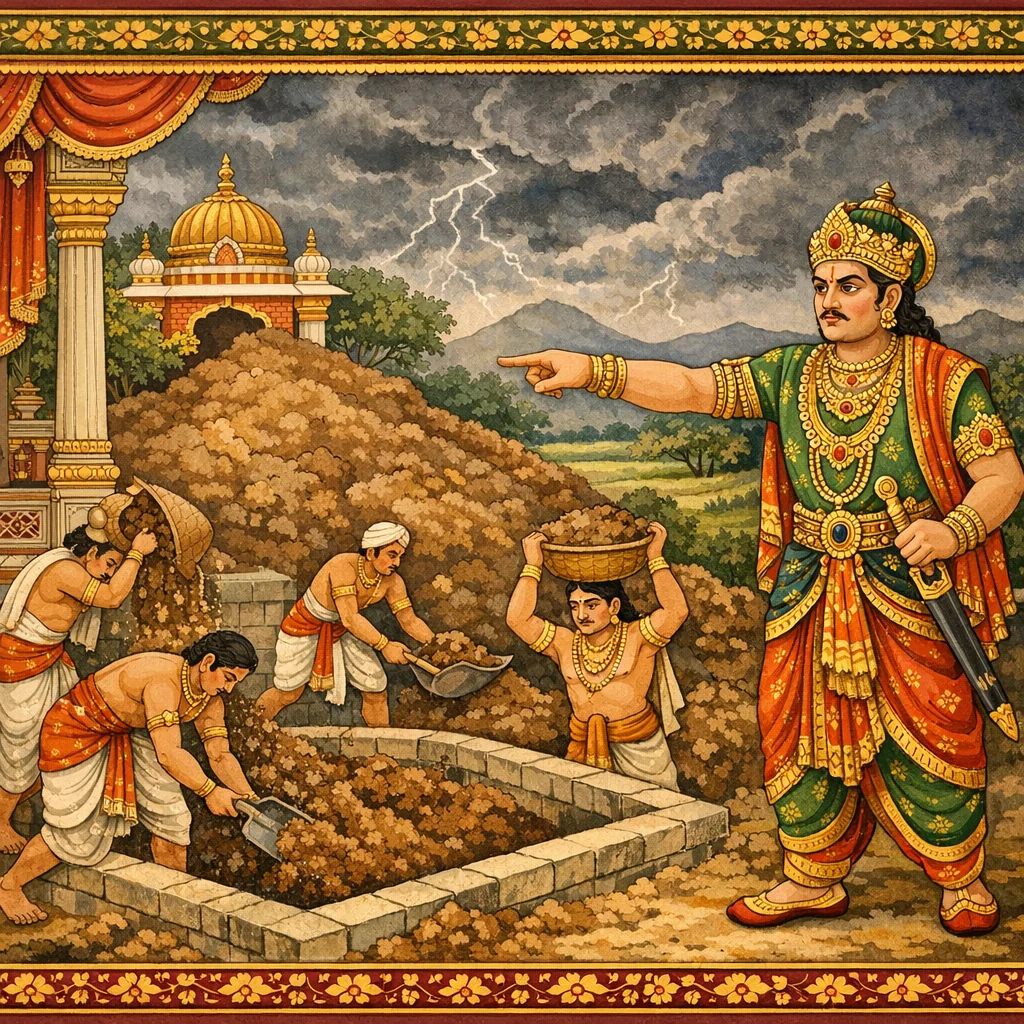
The chapter is framed as a dialogue: the ṛṣis ask about the place where Brahmā and the Vālakhilya sages performed tapas, and Sūta locates it within a direction-marked sacred terrain featuring a seat/shrine known as Rudraśīrṣa and a kuṇḍa (sacred pool). A moral-ritual episode follows. A Brahmin woman accused of an illicit liaison undergoes a “divya-graha” (public ordeal) before elders and deities to prove herself. Agni explains that her purification is not an ethical endorsement of the act, but the effect of the site itself—Rudraśīrṣa’s potency and the kuṇḍa’s water—shifting the story from personal dispute to the theology of place. The community censures the husband’s harshness, yet the text also warns of moral disorder: nearby, marital dharma is said to break down when the tīrtha is approached with desire and moha rather than discipline. A second exemplum tells of King Vidūratha, who in anger fills in the kuṇḍa and damages the structure; a counter-curse declares that whoever restores the kuṇḍa and temple will inherit the karmic burden of the erotic transgressions committed there, serving as an ethical deterrent and underscoring the site’s charged economy of merit and demerit. The chapter closes with a phalaśruti: on Māgha Śukla Caturdaśī, worship and japa of “Rudraśīrṣa” (108 repetitions) grant desired results, cleanse daily sins, and bestow paramā gati.
Shlokas
Verse 1
। ऋषय ऊचुः । ब्रह्मणा कतमे स्थाने तत्र सूत कृतं तपः । वालखिल्यैश्च तैः सर्वैर्मुनिभिः शंसितव्रतैः
The sages said: “O Sūta, in which place was austerity performed there by Brahmā, and by all those Vālakhilya sages—ascetics praised for their vows?”
Verse 2
सूत उवाच । तस्या वायव्यदिग्भागे हरवेद्या द्विजोत्तमाः । सम्यक्छ्रद्धाप्रयत्नेन ब्रह्मणा विहितं तपः
Sūta said: “O best of the twice-born, in the north-western quarter of that Haravedī, Brahmā performed the austerity ordained by Brahmā, with proper faith and earnest effort.”
Verse 3
पश्चिमे वालखिल्यैश्च जपस्नानपरायणैः । तत्राश्चर्यमभूद्यद्वै पूर्वं ब्राह्मण सत्तमाः । आश्रमे चतुरास्यस्य तद्वो वक्ष्यामि सांप्रतम्
And in the western part, among the Vālakhilyas devoted to japa and sacred bathing, a wonder occurred long ago, O best of brāhmaṇas, in the hermitage of Caturāsya (Brahmā). I shall now tell you of it.
Verse 4
तत्र दुश्चारिणी काचिद्रात्रौ ब्राह्मणवंशजा । देवदत्तं समासाद्य वल्लभं रमते सदा
There, a certain woman of brāhmaṇa lineage, given to misconduct, would at night meet her beloved Devadatta and continually indulge in pleasure with him.
Verse 5
अज्ञाता पतिना मात्रा तथान्यैरपि बांधवैः । कृष्णपक्षं समासाद्य विजने हृष्टमानसा
Unnoticed by her husband, her mother, and the other relatives, she would choose the dark fortnight (kṛṣṇa-pakṣa) and, in a secluded place, go about with a delighted mind.
Verse 6
कस्यचित्त्वथ कालस्य दृष्टा सा केनचि द्द्विजाः । तत्रस्था जारसंयुक्ता स्वभर्तुश्च निवेदिता
After some time, a certain brāhmaṇa saw her there in the company of her lover, and he reported the matter to her husband.
Verse 7
अथासौ कोपसंयुक्तस्तस्या भर्ता सुनिष्ठुरैः । वाक्यैस्तां गर्हयामास प्रहारैश्चाप्य ताडयत्
Then her husband, seized by anger, reproached her with exceedingly harsh words and even struck her with blows.
Verse 8
अथ सा धार्ष्ट्यमासाद्य स्त्रीस्वभावं समाश्रिता । प्रोवाच बाष्पपूर्णाक्षी दीनांजलिपुटा स्थिता
Then she, gathering boldness and following a woman’s customary way, spoke while standing with palms joined, her eyes brimming with tears.
Verse 9
किं मां दुर्जनवाक्येन त्वं ताडयसि निष्ठुरैः । प्रहारैर्दोषनिर्मुक्तां त्वत्पादप्रणतां विभो
Why do you strike me with cruel blows because of the words of wicked people—me who am free from fault and bowed at your feet, O Lord?
Verse 10
अहं त्वां शपथं कृत्वा भक्षयित्वाऽथ वा विषम् । प्रविश्य हव्यवाहं वा करिष्ये प्रत्ययान्वितम्
I will make you believe me by taking a solemn oath—either by consuming poison, or by entering the sacrificial fire, the bearer of offerings.
Verse 11
अथ तां ब्राह्मणः प्राह यदि त्वं पापवर्जिता । पुरतो देवविप्राणां कुरु दिव्यग्रहं स्वयम्
Then a Brahmin said to her: “If you are free from sin, then, before the gods and the Brahmins, perform the divine ordeal yourself.”
Verse 12
सा तथेति प्रतिज्ञाय साहसेन समन्विता । दिव्यग्रहं ततश्चक्रे यथोक्तविधिना सती
She assented, saying, “So be it,” and, filled with steadfast resolve, she then performed the divine ordeal according to the prescribed rite.
Verse 13
शुद्धिं च प्राप्ता सर्वेषां बन्धूनां च द्विजन्मनाम् । पुरतश्च गुरूणां च देवानामपि पापकृत्
And she attained vindication—purity made manifest—in the presence of all: her kin, the twice-born, the teachers, and even the gods, though she had committed sin.
Verse 14
एतस्मिन्नन्तरे तस्याः साधुवादो महानभूत् । धिक्छब्दश्च तथा पत्युः सर्वैर्दत्तः सुगर्हितः
Meanwhile, loud acclaim rose in her favor; and from everyone there also came a fierce cry of reproach—“Shame!”—directed at her husband, who was roundly condemned.
Verse 15
अहो पापसमाचारो दुष्टोऽयं ब्राह्मणाधमः । अपापां धर्मपत्नीं यो मिथ्यादोषेणयोजयेत्
“Alas—what sinful conduct! This wretch, the lowest of brāhmaṇas, seeks to fasten a false charge upon a blameless wife devoted to dharma.”
Verse 16
एवं स निन्द्यमानस्तु सर्वलोकैर्द्विजोत्तमाः । कोपं चक्रे ततो वह्निं समुद्दिश्य सदुःखितः
Thus, while he was being denounced by all people, O best of the twice-born, he became enraged and—grief-stricken—turned his anger toward Agni.
Verse 17
शापं दातुं मतिं चक्रे ततो वह्नेः सुदुःखितः । अब्रवीत्परुषं वाक्यं निन्दमानः पुनःपुनः
Then, deeply distressed, he resolved to pronounce a curse upon Agni; and again and again, while reproaching him, he spoke harsh words.
Verse 18
मया स्वयं प्रदृष्टेयं जारेण सह संगता । त्वया वह्ने सुपापेयं न कस्माद्भस्मसात्कृता
“I myself saw her consorting with a paramour. Why, O Agni, was this great sinner not reduced to ashes by you?”
Verse 19
तस्मात्त्वां पापकर्माणमसत्यपक्षपातिनम् । असंदिग्धं शपिष्यामि रौद्रशापेन सांप्रतम्
“Therefore I shall now curse you without hesitation—with a fierce curse—for you act sinfully and take the side of falsehood.”
Verse 20
सूत उवाच । तस्य तद्वचनं श्रुत्वा संक्रुद्धस्य द्विजन्मनः । सप्तार्चिर्भयसंत्रस्तः कृतांजलिरुवाच तम्
Sūta said: Hearing those words of the enraged brāhmaṇa, Saptārcis (Agni), shaken with fear, addressed him with folded hands.
Verse 21
अग्निरुवाच । नैष दोषो मम ब्रह्मन्यन्न दग्धा तव प्रिया । कृतागसाऽपि मे वाक्यं शृणुष्वात्र स्फुटेरितम्
Agni said: “O brāhmaṇa, it is not my fault that your beloved was not burned. Though she has indeed committed wrongdoing, hear my words here, stated plainly.”
Verse 22
अनया परकांतेन कृतः सह समागमः । चिरं कालं द्विज श्रेष्ठ त्वया ज्ञाताद्य वासरे
“With another man she has indeed carried on this union for a long time, O best of the twice-born—though it has become known to you only today.”
Verse 23
परं यस्माद्विशुद्धैषा मया दग्धा न सा द्विज । कारणं तच्च ते वच्मि शृणुष्वैकमनाः स्थितः
“But since she is now purified, I did not burn her, O brāhmaṇa. I shall tell you the reason for that—listen with a single-pointed mind.”
Verse 24
यत्रानया कृतः संगः परकांतेन वै द्विज । तस्मिन्नायतने ब्रह्मा रुद्रशीर्षो व्यवस्थितः
“O brāhmaṇa, in the very sanctuary where she consorted with another’s beloved, Brahmā himself stands established there—bearing the mark of Rudra’s severed head (Rudraśīrṣa).”
Verse 25
तत्र कृत्वा रतं चित्रं परकांतसमं तदा । पश्यति स्म ततो रुद्रं ब्रह्ममस्तकसंस्थितम्
“There, after engaging in a strange act of passion equal to that with another’s beloved, she then beheld Rudra—present upon Brahmā’s head.”
Verse 26
ततः प्रक्षालयत्यंगं कुण्डे तत्राग्रतः स्थिते । कृतपापापि तेनैषा शुद्धिं याति शुचिस्मिता
“Then she washed her body in the pond (kuṇḍa) standing right there in front; though she had committed sin, by that act she attained purity—she of the gentle smile.”
Verse 27
अत्र पूर्वं विपाप्माऽभूद्ब्रह्मा लोकपितामहः । सतीवक्त्रं समालोक्य कामार्तोऽपि स पापकृत्
Here, in former times, Brahmā—the grandsire of the worlds—became stained with sin; for, upon beholding Satī’s face, he was tormented by desire and committed wrongdoing.
Verse 28
तस्मान्नास्त्यत्र मे दोषः स्वल्पोऽपि द्विजसत्तम । रुद्रशीर्षप्रभावोऽयं तस्य कुण्डोदकस्य च
Therefore, O best of brāhmaṇas, there is not even the slightest fault in me here; this is the potency of Rudraśīrṣa—and of the water of that sacred pond.
Verse 29
तस्मादेनां समादाय संशुद्धां पापवर्जिताम् । गृहं गच्छ द्विजश्रेष्ठ सत्यमेतन्मयो दितम्
Therefore, O foremost brāhmaṇa, take her—now fully purified and free from sin—and go home. This is the truth, as declared by me.
Verse 30
ब्राह्मण उवाच । या मया सहसा दृष्टा स्वयमेव हुताशन । परकांतेन तां नाद्य शुद्धामपि गृहं नये
The brāhmaṇa said: O Hutāśana (Agni), she whom I suddenly saw with my own eyes alongside another’s beloved—I will not, even today, take her home, though she may be purified.
Verse 31
इत्युक्त्वा च द्विजश्रेष्ठस्तां त्यक्त्वापि शुचिव्रतः । जगाम स्वगृहं पश्चात्तथा जग्मुर्जना गृहान्
Having spoken thus, that foremost brāhmaṇa—though devoted to pure vows—abandoned her and afterward went to his own house; likewise the people departed to their homes.
Verse 32
सापि तेन परित्यक्ता पतिना हृष्टमानसा । ज्ञात्वा तत्तीर्थमाहात्म्यं वैश्वानरमुखेरितम्
Though abandoned by her husband, she yet remained glad at heart, having understood the greatness of that tīrtha as proclaimed from Vaiśvānara’s (Agni’s) mouth.
Verse 33
तेनैव परकांतेन विशेषेण रतिक्रियाम् । तस्मिन्नायतने चक्रे कुण्डे तोयावगाहनम्
With that very paramour, she again performed the act of passion in a particular manner; and in that sanctuary she also undertook immersion in the pond’s waters.
Verse 34
अथान्ये परलोकस्य भीत्याऽतीव व्यवस्थिताः । विमुखाः परदारेषु नार्यश्चापि पतिव्रताः
Then others, firmly restrained out of fear of the world beyond, turned away from others’ wives; and the women too remained devoted to their husbands as chaste, faithful wives.
Verse 35
दूरतोऽपि समभ्येत्य ते सर्वे तत्र मंदिरे । रुद्रशीर्षाभिधानं च प्रचक्रुः सुरतोत्सवम्
Coming there even from afar, all of them gathered in that shrine and celebrated the festival known as “Rudraśīrṣa,” a joyous rite of delight.
Verse 36
निमज्जंति ततः कुण्डे तस्मिन्पातकनाशने । भवंति पापनिर्मुक्ता रुद्रशीर्षावलोकनात्
Then they immerse themselves in that pond—destroyer of sins—and by beholding Rudraśīrṣa they become freed from wrongdoing.
Verse 37
एतस्मिन्नंतरे नष्टो धर्मः पत्नीसमुद्भवः । पुरुषाणां ततः स्त्रीणां निजकांतासमुद्भवः
In the meantime, the dharma founded upon a wife’s fidelity perished; and likewise, among men and women, the dharma born of exclusive devotion to one’s own beloved spouse was lost.
Verse 38
यो यां पश्यति रूपाढ्यां नारीमपि कुलोद्भवाम् । स तत्रानीय संहृष्टो भजते द्विजसत्तमाः
Whatever man beholds a woman radiant with beauty—even one born of a noble line—he, delighted, brings her there and indulges in union; O best among the twice-born.
Verse 39
तथा नारी सुरूपाढ्यं यं पश्यति नरं क्वचित् । सापि तत्र समानीय कुरुते सुरतोत्सवम्
Likewise, when a woman somewhere sees a handsome man, she too brings him there and enacts that festival of sensual delight.
Verse 40
लिप्यते न च पापेन कथंचित्तकृतेन च । नरो वा यदि वा नारी तत्तीर्थस्य प्रभावतः
By the power of that tīrtha, neither man nor woman is stained by sin—even by wrongdoing committed in any manner.
Verse 41
कस्यचित्त्वथ कालस्य तत्र राजा विदूरथः । आनर्त्तविषये जज्ञे वार्धक्यं च क्रमाद्ययौ
Now after some time, there was a king named Vidūratha, born in the land of Ānarta; and in due course he gradually came to old age.
Verse 42
तस्य भार्याऽभवत्तन्वी तरुणी वररूपधृक् । पश्चिमे वयसि प्राप्ते प्राणेभ्योऽपि गरीयसी
His wife was slender, youthful, and of exquisite beauty; and when he reached his later years, she became dearer to him than life itself.
Verse 43
न तस्याः स जराग्रस्तश्चित्ते वसति पार्थिवः । तस्मिंस्तीर्थे समागत्य वांछितं रमते नरः
That king, afflicted by old age, did not remain in her heart. But having come to that tīrtha, a man enjoys the fulfillment of his desire.
Verse 44
पार्थिवोऽपि परिज्ञाय तस्यास्तच्च विचेष्टितम् । कोपाविष्टस्ततो गत्वा तस्मिन्क्षेत्रे सुशोभने
When the king came to know of her conduct and what she had done, he was seized by anger; and going at once to that splendid sacred kṣetra, he arrived there in fury.
Verse 45
तत्कुण्डं पूरयामास ततः पांशूत्करैर्द्रुतम् । बभंज तं च प्रासादं ततः प्रोवाच दारुणम्
He caused that sacred pond to be filled up quickly with heaps of dust; he also smashed that shrine, and then he uttered a harsh pronouncement.
Verse 46
यश्चैतत्पूरितं कुण्डं पांशुना निखनिष्यति । प्रासादं च पुनश्चैनं करिष्यति पुनर्नवम्
And whoever buries this pond that has been filled in with dust, and whoever again rebuilds this shrine and makes it new once more—
Verse 47
परदारकृतं पापं तस्य संपत्स्यतेऽखिलम् । यदत्र प्रकरिष्यंति मानवाः काममोहिताः
All the sin born of relations with another’s wife will fall wholly upon that person—whatever men, deluded by desire, may do in this place.
Verse 48
सूत उवाच । एवं स पार्थिवः प्रोच्य तामादाय ततः प्रियाम् । जगाम स्वगृहं पश्चात्प्रहृष्टेनांतरात्मना
Sūta said: Having spoken thus, the king took his beloved with him and then returned to his own home, his inmost heart filled with gladness.
Verse 49
अथ तां विरतां ज्ञात्वा सोऽन्यचित्तां प्रियां नृपः । यत्नेन रक्षयामास विश्वासं नैव गच्छति
Then, knowing that she had turned away from him and that his beloved’s mind was set elsewhere, the king guarded her with great care—yet true trust could not be regained.
Verse 50
अन्यस्मिन्दिवसे शस्त्रं सूक्ष्मं वेण्यां निधाय सा । जगाम शयनं तस्य वधार्थं वरवर्णिनी
On another day, the fair-complexioned woman hid a small weapon in her braid and went to his bed with the intention of killing him.
Verse 51
ततस्तेन समं हास्यं कृत्वा क्षत्रियभावजम् । सुरतं रुचिरैर्भावैर्हावैर्भूरिभिरेव च
Then, laughing with him in a manner suited to a kṣatriya’s spirit, she engaged in lovemaking with many charming moods and abundant coquettish gestures.
Verse 52
ततो निद्रावशं प्राप्तं तं नृपं सा नृपप्रिया । स्ववेण्याः शस्त्रमादाय निजघान सुनिर्दया
Then, when the king had fallen under the power of sleep, the king’s beloved—utterly merciless—took the weapon from her braid and struck him down.
Verse 53
एवं तस्य फलं जातं सद्यस्तीर्थस्य भंगजम् । आनर्ताधिपते रौद्रं सर्वलोकविगर्हितम्
Thus, for the lord of Ānarta, there arose an immediate result born from the violation of the tīrtha—fierce in nature and condemned by all the people.
Verse 54
अद्यापि तत्र देवेशो रुद्रशीर्षः स तिष्ठति । लिंगभेदभयात्तेन न स भग्नो द्विजोत्तमाः
Even today that Lord of the gods, known as Rudraśīrṣa, abides there. Out of fear that the liṅga might be damaged, he was not broken, O foremost of twice-born ones.
Verse 55
यस्तस्य पुरतः स्थित्वा जपेद्रुद्रशिरः शुचिः । माघशुक्लचतुर्दश्यां पूजयित्वा स्रगादिभिः
Whoever, being pure, stands before it and recites the Rudraśīrṣa, and on the fourteenth lunar day of the bright fortnight of Māgha worships with garlands and the like—
Verse 56
वांछितं लभते चाशु तस्येशस्य प्रभावतः । अष्टोत्तरशतं यावद्यो जपेत्पुरतः स्थितः
By the power of that Lord, he quickly obtains what he desires, if—standing before him—he chants up to one hundred and eight times.
Verse 57
रुद्रशीर्षं न संदेहः स याति परमां गतिम् । एकवारं नरो यो वा तत्पुरः पठति द्विजः
As for the recitation of Rudraśīrṣa, there is no doubt: he attains the supreme state. Whether a man or a twice-born, whoever recites it even once in its holy presence—
Verse 58
नित्यं दिनकृतात्पापान्मुच्यते द्विजसत्तमाः । एतद्वः सर्वमाख्यातं रुद्रशीर्षसमुद्भवम्
O best of the twice-born, he is daily freed from the sins committed in the course of the day. Thus have I told you everything concerning the origin and account of Rudraśīrṣa.
Verse 59
माहात्म्यं सर्वपापानां सद्यो नाशनकारकम् । मंगलं परमं ह्येतदायुष्यं कीर्तिवर्धनम् । रुद्रशीर्षस्य माहात्म्यं तस्माच्छ्रोतव्यमादरात्
This Māhātmya brings about the immediate destruction of all sins. Indeed, it is supremely auspicious, life-promoting, and fame-enhancing. Therefore the Māhātmya of Rudraśīrṣa should be listened to with reverence.