Adhyaya 71
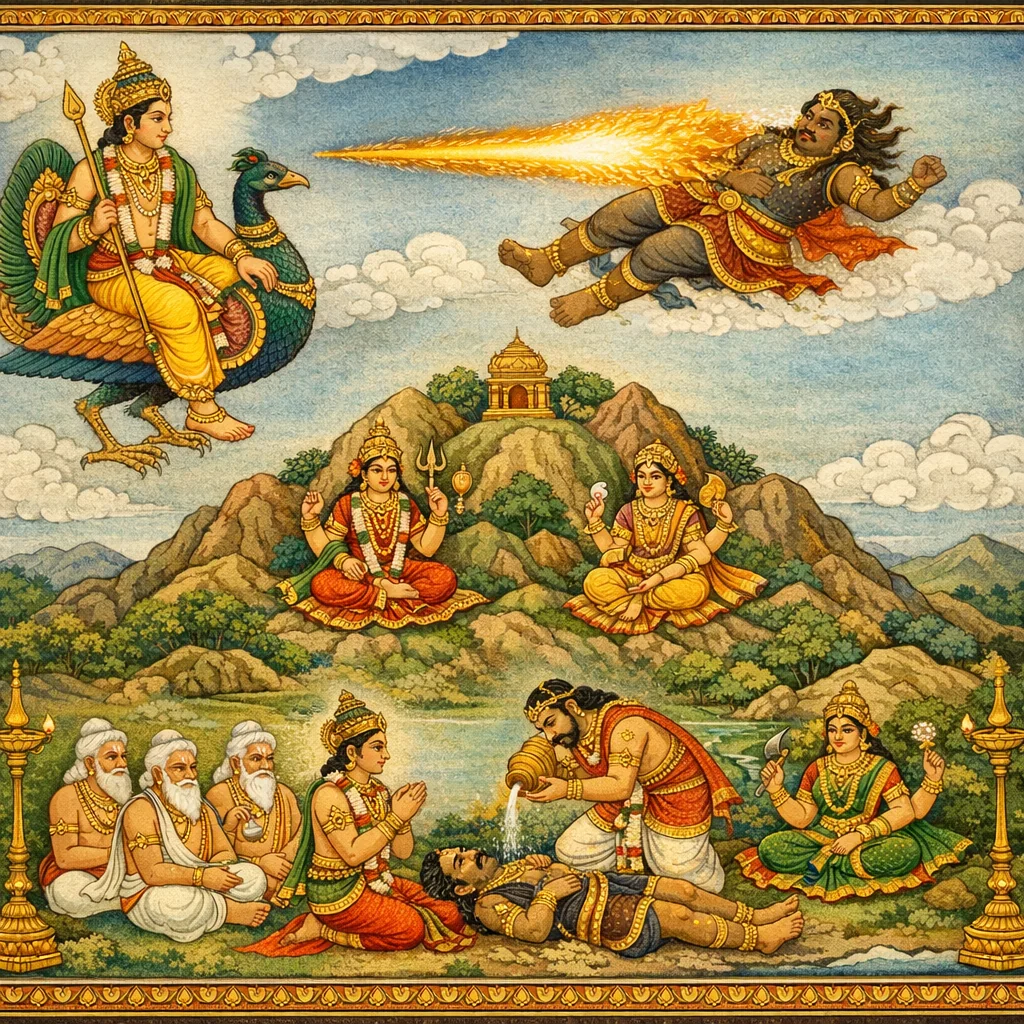
Sūta recounts a Kaumāra-centered theological episode set in a local sacred landscape. Skanda is born with extraordinary radiance; when the Kṛttikās arrive, his form expands into a multi-faced, multi-armed manifestation, relating to them through nursing and embrace. Brahmā, Viṣṇu, Śiva, Indra, and other devas assemble amid music and celestial performances. The devas name him “Skanda,” consecrate him by abhiṣeka, and Śiva appoints him commander (senāpati). Skanda receives an unfailing śakti for victory, a peacock mount, and divine weapons from many deities. Led by Skanda, the devas confront Tāraka in a great battle, ending when Skanda releases the śakti that pierces Tāraka’s heart. Afterward he installs the blood-marked śakti at the “best city” (purōttama), making Raktaśṛṅga firm and protected. A later earthquake episode explains the need for stabilization: the mountain’s movement damages Camatkārapura and harms brahmins, who protest and threaten a curse. Skanda answers with conciliatory ethical reasoning—his deed was for the welfare of all—promises restoration, revives the dead brahmins with amṛta, and immobilizes the mountain by placing the śakti on its summit, commissioning four goddesses (Āmbavṛddhā, Āmrā, Māhitthā, Camatkarī) to secure the four directions. In return, the brahmins grant a boon: the settlement will be famed as Skandapura (also called Camatkārapura), with ongoing worship of Skanda, the four goddesses, and special veneration of the śakti on the sixth lunar day of Caitra. The phala adds that devoted worship on Caitra-śukla-ṣaṣṭhī pleases Skanda, and that after proper pūjā, touching or rubbing one’s back against the śakti is associated with freedom from illness for a year.
Shlokas
Verse 1
। सूत उवाच । तास्तथेति प्रतिज्ञाय चक्रुस्तच्छक्रशासनम् । सूतिकागृहधर्मे यत्तच्चक्रुस्तस्य सर्वशः
Sūta said: “Saying ‘So be it,’ they pledged and carried out Indra’s command; and in every way they performed all that is prescribed for the duties of a lying-in chamber.”
Verse 2
अथान्यदिवसे बालो द्वादशार्कसमद्युतिः । संजज्ञे तेन वीर्येण द्विभुजैक मुखः शुभः
Then, on another day, a child was born, radiant like twelve suns; by that divine potency he appeared auspicious, with two arms and a single face.
Verse 3
यथासौ जातमात्रस्तु प्ररुरोद सुदुःखितः । तच्छ्रुत्वा रुदितं सर्वाः कृत्तिकास्तमुपागताः
As soon as he was born, he wept in great distress; hearing that crying, all the Kṛttikās came to him.
Verse 4
महासेनोऽपि संवीक्ष्य मातॄस्ताः समुपागताः । सोत्कण्ठः षण्मुखो जातो द्वादशाक्षभुजस्तथा
Mahāsena too, seeing those Mothers draw near, became filled with longing: he was born with six faces, and likewise with twelve arms.
Verse 5
एकैकस्याः पृथक्तेन प्रपपौ प्रयतः स्तनम् । द्वाभ्यामालिंगयामास भुजाभ्यां स्नेहपूर्वकम्
Separately, with reverent care, he drank from each Mother’s breast; and with two arms he embraced them lovingly, with tender affection.
Verse 6
एतस्मिन्नंतरे प्राप्ता ब्रह्मविष्णुशिवादयः । सर्वे देवाः सहेन्द्रेण गन्धर्वाप्सरसस्तथा
Just then, Brahmā, Viṣṇu, Śiva, and the others arrived there; and with Indra came all the gods, along with the Gandharvas and the Apsarases.
Verse 7
महोत्सवोऽथ संजज्ञे तस्मिन्स्थाने निरर्गलः । गीतवाद्यप्रणादेन येनविश्वं प्रपूरितम्
Then a great festival arose in that place, unrestrained and overflowing—so that the resonance of songs and instruments seemed to fill the whole world.
Verse 8
रंभाद्या ननृतुस्तस्य विलासिन्यो दिवौकसाम् । जगुश्च मुख्यगन्धर्वा श्चित्रांगदमुखाश्च ये
Rambhā and the other heavenly enchantresses danced there; and the foremost Gandharvas sang—those led by Citrāṅgada.
Verse 9
ततस्तु देवताः सर्वास्तस्य नाम प्रचक्रिरे । स्कन्दनाद्रेतसो भूमौ स्कन्द इत्येव सादरम्
Then all the deities solemnly bestowed his name. Since the seed had fallen upon the earth, they reverently called him “Skanda.”
Verse 10
अथ तस्य कुमा रस्य तदा तत्राभिषेचनम् । सेनापत्यं कृतं साक्षाद्देवानां शंभुना स्वयम्
Then, right there, the consecration (abhiṣeka) of that divine Prince was performed; and Śambhu (Śiva) himself directly appointed him commander of the gods.
Verse 11
तस्य शक्तिः स्वयं दत्ता विधिनाऽद्भुतदर्शना । अमोघा विजयार्थाय दैत्यपक्षक्षयाय च
Vidhī (Brahmā) himself, according to sacred rite, bestowed the wondrous, radiant Śakti (spear)—unfailing for victory and for the destruction of the Daitya host.
Verse 12
मयूरो वाहनार्थाय त्र्यंबकेण सुशीघ्रतः । दिव्यास्त्राणि महेन्द्रेण विष्णुनाथ महात्मना
Tryambaka (Śiva) swiftly provided a peacock to be his mount; and Mahendra (Indra) and the great-souled Lord Viṣṇu granted him divine weapons.
Verse 13
ततोऽभीष्टानि शस्त्राणि देवैः सर्वैः पृथक्पृथक् । तस्य दत्तानि संतुष्टैस्तथा मातृगणैरपि
Thereafter, all the gods—each in turn—gladly bestowed upon him the weapons they wished him to wield; and so too did the hosts of the Mothers (Mātṛgaṇas).
Verse 14
ततस्तमग्रतः कृत्वा सेनानाथं सुरेश्वराः । जग्मुः ससैनिकास्तत्र तारको यत्र संस्थितः
Then the lords of the gods, setting him in the vanguard as their commander, marched with their armies to the place where Tāraka was stationed.
Verse 15
तारकोऽपि समालोक्य देवान्स्वयमुपागतान् । युद्धार्थं हर्षसंयुक्तः सम्मुखः सत्वरं ययौ
Tāraka too, seeing the gods come in person, rejoiced for battle and swiftly advanced at once to meet them face to face.
Verse 16
ततोऽभूत्सुमहद्युद्धं देवानां दानवैः सह । कोपसंरक्तनेत्राणां मृत्युं कृत्वा निवर्तनम्
Then a mighty battle arose between the gods and the Dānavas; with eyes reddened by wrath, they turned back only after making death their very work.
Verse 17
अथ स्कन्देन संवीक्ष्य दूरस्थं तारकं रणे । समाहूय ततो मुक्ता सा शक्तिस्तस्य मृत्यवे
Then Skanda, seeing Tāraka standing far off in the battle, summoned him; and at once the spear Śakti was hurled, becoming the very cause of his death.
Verse 18
अथासौ हृदयं भित्त्वा तस्य दैत्यस्य दारुणा । चमत्कारपुरोपांते पतिता रुधिरोक्षिता
That dreadful spear, having pierced the demon’s heart, fell near the outskirts of Camatkārapura, spattered with blood.
Verse 19
तारकस्तु गतो नाशं मुक्तः प्राणैश्च तत्क्षणात् । ततो देवगणाः सर्वे संहृष्टास्तं महाबलम्
Tāraka met his end, and in that very instant was cut off from his life-breaths. Then all the hosts of the gods rejoiced and praised that mighty one.
Verse 20
स्तोत्रैर्बहुविधैः स्तुत्वा प्रोचुस्तस्मिन्हते सति । गताश्च त्रिदिवं तूर्णं सह शक्रेण निर्भयाः
Having praised him with many kinds of hymns, they spoke when that foe had been slain; then, fearless, they swiftly went to heaven together with Śakra (Indra).
Verse 21
स्कन्दोऽपि तां समादाय शक्तिं तत्र पुरोत्तमे । स्थापयामास येनैव रक्तशृंगोऽभवद्दृढः
Skanda too took up that spear and established it there in that excellent city; by that very act, Raktaśṛṅga became firm and unshakable.
Verse 22
ऋषय ऊचुः । रक्तशृंगः कथं तेन निश्चलोऽपि दृढीकृतः । कस्य वाक्येन नो ब्रूहि विस्तरेण महामते
The sages said: “How was Raktaśṛṅga made firm by him, even though it was already unmoving? Tell us in detail, O wise one—by whose word was this accomplished?”
Verse 23
सूत उवाच । यदा वै भूमिकम्पस्तु संप्रजातः सुदारुणः । रक्तशृङ्गः प्रचलितः स्वस्थानादतिवेगतः
Sūta said: “When a most dreadful earthquake arose, Raktaśṛṅga was shaken and, with great force, moved from its own place.”
Verse 24
तस्य दैत्यस्य पातेन यथान्ये पर्व तोत्तमाः । अथ हर्म्याणि सर्वाणि चमत्कारपुरे तदा
By the fall of that daitya, as other excellent mountains are shaken, then at that time all the mansions in Camatkārapura were stirred and affected.
Verse 25
शीर्णानि चलिते तस्मिन्पर्वते व्यथिता द्विजाः । प्रायशो निधनं प्राप्तास्तथाऽन्ये मूर्छयार्दिताः
When that mountain was shaken, structures crumbled; the twice-born were distressed—many met death, and others were struck down by fainting.
Verse 26
हतशेषास्ततो विप्रा गत्वा स्कन्दं क्रुधान्विताः । प्रोचुश्च किमिदं पाप त्वया कृतमबुद्धिना
Then the surviving brāhmaṇas, filled with anger, approached Skanda and said: “What is this sinful deed you have done in ignorance?”
Verse 27
नाशं नीता वयं सर्वे सपुत्रपशुबाधवाः । तस्माच्छापं प्रदास्यामो वयं दुःखेन दुःखिताः
“We have all been brought to ruin—together with our sons, our cattle, and our kinsmen. Therefore, afflicted by sorrow, we shall pronounce a curse.”
Verse 28
स्कन्द उवाच । हिताय सर्वलोकानां मयैतत्समनुष्ठितम् । यद्धतो दानवो रौद्रो नान्यथा द्विजसत्तमाः
Skanda said: “For the welfare of all worlds I carried out this act—the slaying of the fierce dānava. It could not be otherwise, O best of brāhmaṇas.”
Verse 29
प्रसादः क्रियतां तस्मान्मान्या मे ब्राह्मणाः सदा । मृतानपि द्विजान्सर्वानहं तानमृताश्रयात्
Therefore, be gracious. Brāhmaṇas are ever worthy of honor to me. Even if all those twice-born have died, I—by resorting to amṛta, the nectar—shall restore them.
Verse 30
पुनर्जीवितसंयुक्तान्करिष्यामि न संशयः । तथा सुनिश्चलं शैलं करिष्यामि स्वशक्तितः
Without doubt I shall restore them to life again; and by my own power I shall also make this mountain utterly immovable.
Verse 31
एवमुक्त्वा समादाय तां शक्तिं रुधिरोक्षिताम् । चक्रे स्थापनमस्यास्तु रक्तशृङ्गस्य मूर्धनि
Having spoken thus, he took up that spear, sprinkled with blood, and set it in place upon the summit of Raktaśṛṅga.
Verse 32
ततः प्रोवाच संहृष्टो देवतानां चतुष्टयम् । आंबवृद्धां तथैवाम्रां माहित्थां च चमत्करीम्
Then, delighted, he addressed a group of four deities—Āmbavṛddhā, likewise Āmrā, Māhitthā, and Camatkarī.
Verse 33
युष्माभिर्निश्चलः कार्यो भूयोऽयं नगसत्तमः । प्रलयेऽपि यथा स्थानाद्रक्तशृङ्गश्चलेन्नहि
By you this foremost mountain must be made firm again—so that even at the time of cosmic dissolution (pralaya) Raktaśṛṅga does not move from its place.
Verse 34
युष्माकं ब्राह्मणाः सर्वे पूजां दास्यंति सर्वदा
All brāhmaṇas will ever offer worship to you.
Verse 36
बाढमित्येव ताः प्रोच्य चतुर्दिक्षु ततश्च तम् । शूलाग्रैः सुदृढं चक्रुः स्कन्दवाक्येन हर्षिताः । ततश्चामृतमादाय मृतानपि द्विजोत्तमान् । स्कन्दो जीवापयामास द्विजभक्तिपरायणः
Saying, “So be it,” they replied; then, rejoicing in Skanda’s command, they fixed it firmly in the four directions with the points of their spears. Thereupon Skanda, taking nectar (amṛta), restored to life even the dead, most excellent brāhmaṇas—he who is wholly devoted to reverence for the twice-born.
Verse 37
ततस्ते ब्राह्मणास्तत्र संहृष्टा वरमुत्तमम् । ददुस्तस्य स च प्राह मन्नामैतत्पुरोत्तमम् । सदैव ख्यातिमायातु एतन्मे हृदि वांछितम्
Then the brāhmaṇas there, delighted, granted him an excellent boon. And he said, “Let this best of towns bear my name; may it attain fame forever—this is what my heart has long desired.”
Verse 38
ऋषय ऊचुः । एतत्स्कन्दपुरंनाम तव नाम्ना भविष्यति । चमत्कारपुरं तद्वत्सांप्रतं सुरसत्तम
The sages said: “This shall be called Skandapura, bearing your name. Likewise, it shall now be known as Camatkārapura as well, O best among the gods.”
Verse 39
पूजां तव करिष्यामः कृत्वा प्रासादमुत्त मम् । तथैव देवताः सर्वाश्चतस्रोऽपि त्वया धृताः
“We shall worship you after building an excellent temple. Likewise, we shall worship all the deities—those four as well—who are upheld by you.”
Verse 40
सर्वाः संपूजयिष्यामः सर्वकृत्येषु सादरम् । एतां चं तावकीं शक्तिं सदा सुरवरोत्तम । विशेषात्पूजयिष्यामः षष्ठ्यां श्रद्धासमन्विताः
“We shall duly worship them all, with reverence, in every rite. And this Śakti of yours (the spear‑power), O foremost of gods, we shall especially worship on the sixth day (Ṣaṣṭhī), endowed with faith.”
Verse 41
सूत उवाच । एवं स ब्राह्मणैः प्रोक्तो महासेनो महाबलः । स्थितस्तत्रैव तद्वा क्याज्ज्ञात्वा तत्क्षेत्रमुत्तमम्
Sūta said: Thus addressed by the brāhmaṇas, Mahāsena, the mighty one, remained right there; by their words he understood that this was an excellent sacred field (kṣetra).
Verse 42
यस्तं पूजयते भक्त्या चैत्रषष्ठ्यां सुभावतः । शुक्लायां तस्य संतुष्टिं कुरुते बर्हिवाहनः
Whoever worships him with devotion on the sixth day (Ṣaṣṭhī) of Caitra, in the bright fortnight, with a pure disposition—Barhivāhana (Skanda) becomes pleased with him.
Verse 43
तस्यां शक्तौ नरो यश्च कुर्यात्पृष्ठिनिघर्षणम् । पूजयित्वा तु पुष्पाद्यैः सम्यक्छ्रद्धासमन्वितः । स न स्याद्रोगसंयुक्तो यावत्संवत्सरं द्विजाः
O twice-born ones, any person who, having worshiped that Śakti with flowers and the like, properly endowed with faith, then rubs (touches) his back against it—does not become afflicted with disease for as long as a year.
Verse 44
एवं तत्र धृता शक्तिस्तेन स्कन्देन धीमता । रक्तशृंगस्य रक्षार्थं तत्पुरस्य विशेषतः
Thus that Śakti was established there by wise Skanda, for the protection of Raktaśṛṅga, and especially for the safeguarding of that city.