Adhyaya 68
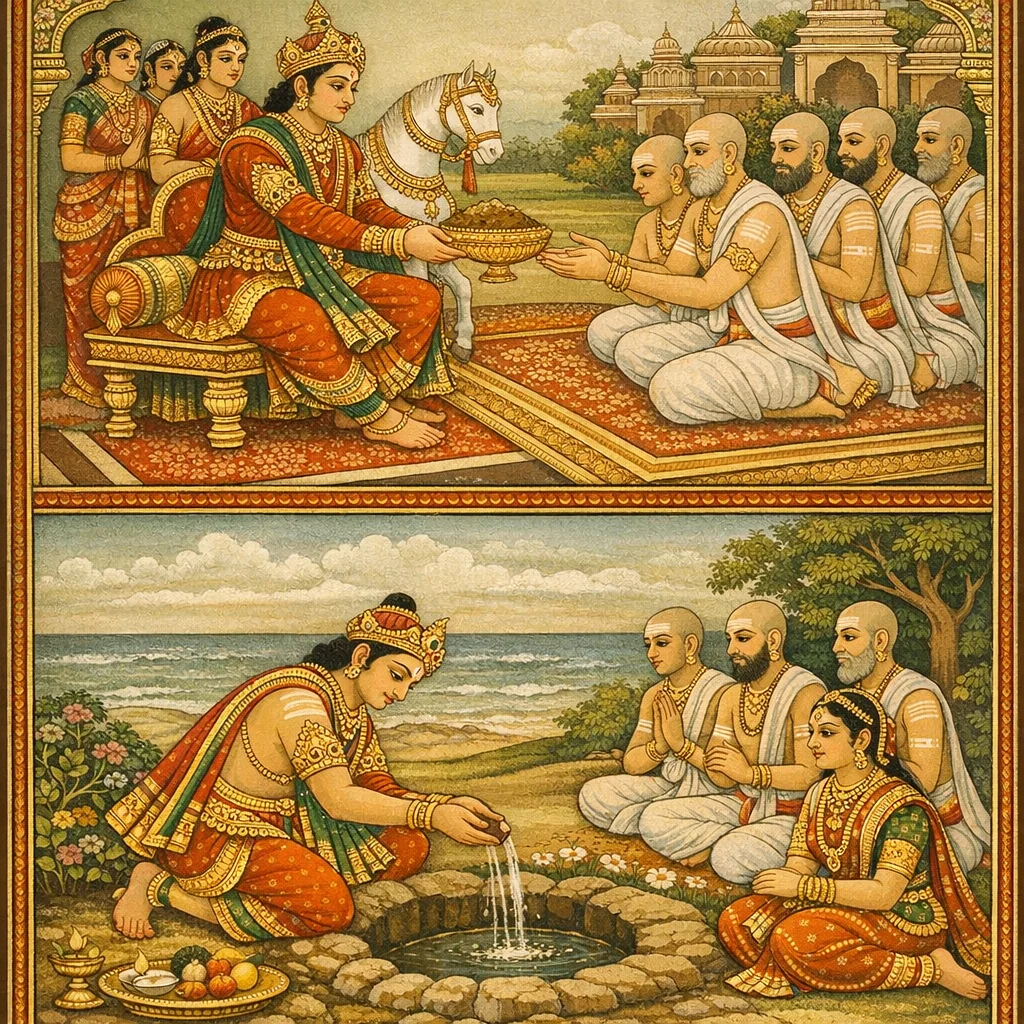
Chapter 68 continues the received discourse with Sūta narrating. After Bhārgava (Paraśurāma) establishes a kṣatriya-less order through fierce retribution, blood is gathered and carried to a pit (garta) linked with ancestral origin (paitṛkī/pitṛ-sambhavā). The account then turns from martial deed to ritual settlement: Bhārgava bathes in the blood, prepares abundant sesame (tila), and performs pitr̥-tarpaṇa in the apasavya orientation, before brahmins and ascetics as direct witnesses. Thus his pledge is fulfilled and he becomes viśoka, free from sorrow. In a world described as bereft of kṣatriyas, he performs an aśvamedha and gives the entire earth as dakṣiṇā to the brahmins. They reply with a principle of rule—“one ruler is remembered”—and instruct him not to remain on their land. The exchange culminates in a threat to dry the ocean with a fire-weapon; the ocean, fearful, withdraws as desired, binding ethical tension, ritual power, and sacred geography into a single charter of place and practice.
Shlokas
Verse 1
। सूत उवाच । अथ ते शबरा यत्नाद्रक्तं तद्धैहयोद्भवम् । तत्र निन्युः स्थिता यत्र गर्ता सा पितृसंभवा
Sūta said: Then those Śabaras, with care, carried that blood born of the Haihaya line to the place where the pit—connected with the Fathers (Pitṛs)—was situated.
Verse 2
भार्गवोऽपि च तं हत्वा रक्तमादाय कृत्स्नशः । ततः संप्रेषयामास यत्र गर्ताऽथ पैतृकी
Bhārgava (Paraśurāma) too, having slain him, gathered up all the blood in full; then he dispatched it to the place where the ancestral pit (for the Pitṛs) was situated.
Verse 3
न स बालं न वृद्धं च परित्यजति भार्गवः । यौवनस्थं विशेषेण गर्भस्थं वाथ क्षत्रियम्
Bhārgava spared neither child nor elder; most especially he did not spare the kṣatriya in youth, nor even one yet in the womb.
Verse 4
स्वयं जघान भूपान्स तेषां पार्श्वे तथा परान् । विध्वंसाययति क्रुद्धः सैनिकैश्च समन्ततः
He himself struck down the kings, and also others standing at their sides; wrathful, he brought about destruction, with troops all around.
Verse 5
तथैवासृक्प्रगृह्णाति गृह्णापयति चादरात् । तेषां पार्श्वैस्ततस्तूर्णं प्रेषयामास तत्र च
In the same way, he gathered the blood—and had it gathered with reverent care; then, swiftly, by those at his side, he had it conveyed there as well.
Verse 6
एवं निःक्षत्रियां कृत्वा कृत्स्नां पृथ्वीं भृगद्वहः । हाटकेश्वरजे क्षेत्रे जगाम तदनन्तरम्
Thus, having made the whole earth bereft of kṣatriyas, Bhṛgu’s descendant (Paraśurāma) went thereafter to the sacred kṣetra of Hāṭakeśvara.
Verse 7
ततस्तै रुधिरैः स्नात्वा समादाय तिलान्बहून् । अपसव्यं समाधाय प्रचक्रे पितृतर्पणम्
Then, bathing in that blood and taking many sesame seeds, he set the sacred thread (yajñopavīta) in the apasavya manner and performed tarpaṇa—libations to the Pitṛs, the ancestral spirits.
Verse 8
प्रत्यक्षं सर्वविप्राणां तथान्येषां तपस्विनाम् । प्रतिज्ञां पूरयित्वाऽथ विशोकः स बभूव ह
In the very presence of all the brāhmaṇas and other ascetics, having fulfilled his vow, he indeed became free from sorrow.
Verse 9
ततो निःक्षत्रिये लोके कृत्वा हयमखं च सः । प्रायच्छत्सकलामुर्वीं ब्राह्मणेभ्यश्च दक्षिणाम्
Then, when the world had become without kṣatriyas, he performed the Horse-sacrifice (Aśvamedha); and he bestowed the entire earth, along with dakṣiṇā—priestly gifts—upon the brāhmaṇas.
Verse 10
अथ लब्धवरा विप्रास्तमूचुर्भृगुसत्तमम् । नास्मद्भूमौ त्वया स्थेयमेको राजा यतः स्मृतः
Then the brāhmaṇas, having obtained their boons, spoke to that best of Bhṛgu’s line: “You should not remain upon our land, for it is remembered that there must be only one king.”
Verse 14
तस्मात्त्वं देहि मे स्थानं कृत्वाऽपसरणं स्वयम् । न हि दत्त्वा ग्रही ष्यामि विप्रेभ्यो मेदिनीं पुनः
Therefore, grant me a place and yourself withdraw; for having once given the earth to the brāhmaṇas, I shall not take the land back again.
Verse 15
न करोष्यथवा वाक्यं ममाद्य त्वं नदीपते । स्थलरूपं करिष्यामि वह्न्यस्त्रपरिशोषितम्
“If you will not carry out my command today, O lord of rivers, then I shall turn you into dry land—parched and drained by the fire-weapon.”
Verse 16
सूत उवाच । तस्य तद्वचनं श्रुत्वा समुद्रो भयसंकुलः । अपसारं ततश्चक्रे यावत्तस्याभिवांछितम्
Sūta said: Hearing those words, the ocean, shaken with fear, withdrew—receding as far as was desired by him.