Adhyaya 67
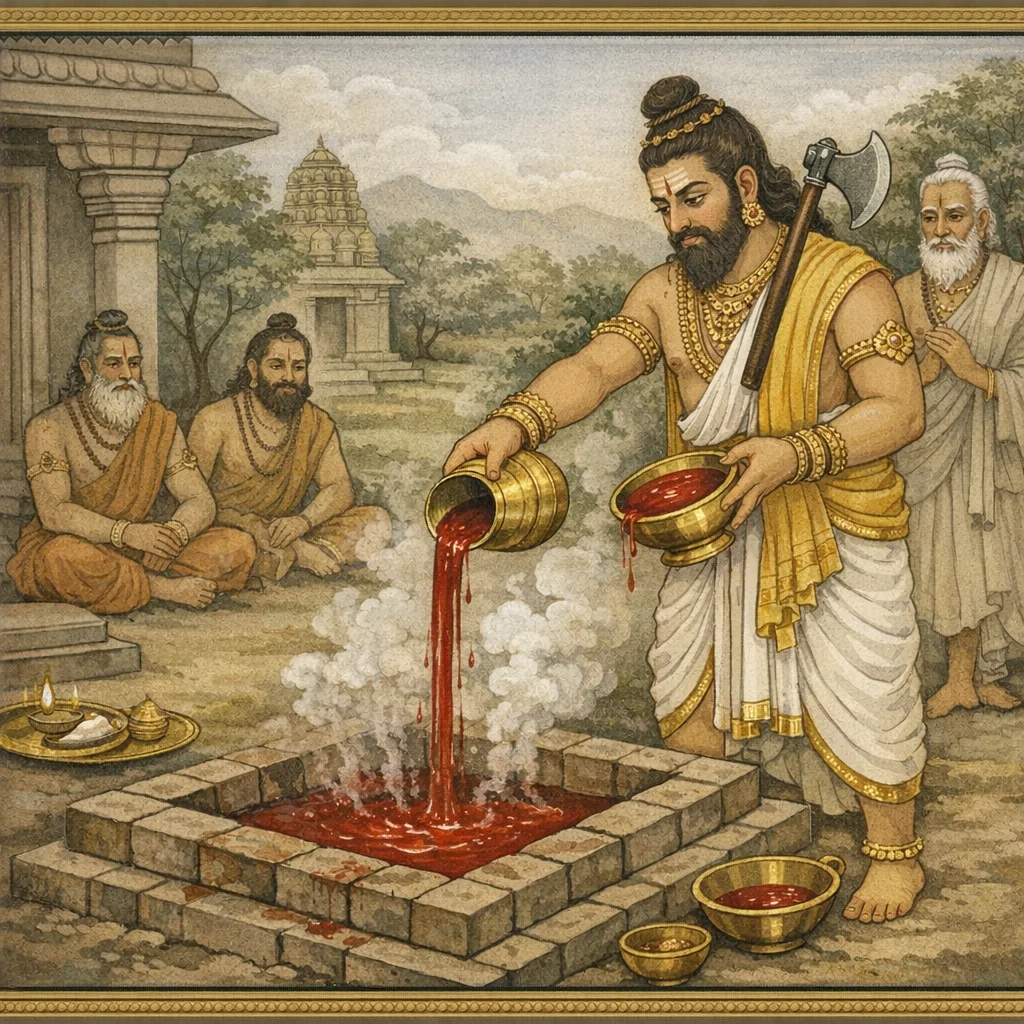
Sūta recounts that Rāma (Paraśurāma), arriving with his brothers, finds the hermitage ruined and the family cow wounded. From the ascetics he learns that his father has been slain and his mother grievously hurt with many weapon-wounds. He laments and then performs the funerary rites in accordance with Vedic rule. When urged to offer the customary tarpaṇa, the water-libation for the departed, Paraśurāma refuses and proclaims a vow rooted in retributive dharma: since his father was killed without offense and his mother bears countless wounds, it would be a fault if he did not render the earth “devoid of kṣatriyas” as complete requital. He declares he will satisfy his father not with water, but with the blood of the guilty. A great battle follows against the Haihaya forces and their forest allies. The Haihaya king becomes powerless, unable to wield bow, sword, or mace; even divine weapons and mantras fail by the decree of fate. Paraśurāma confronts him, severs his arms, beheads him, gathers the blood, and orders it poured into a pit prepared at Hāṭakeśvara-kṣetra for paternal satisfaction—thus joining the fierce narrative to a tīrtha-linked ritual rationale and to the ethic of action bound by vow.
Shlokas
Verse 1
। सूत उवाच । एतस्मिन्नंतरे प्राप्तो रामो भ्रातृभिरन्वितः । फलानि कन्दमूलानि गृहीत्वाऽश्रमसम्मुखः
Sūta said: Meanwhile, Rāma arrived accompanied by his brothers, carrying fruits and roots, and came toward the hermitage.
Verse 2
स दृष्ट्वा स्वाश्रमं ध्वस्तं पुलिन्दैर्बहुशो वृतम् । लकुटाश्मप्रहारैस्तु तां धेनुं जर्जरीकृताम्
Seeing his own hermitage ruined and surrounded on all sides by many Pulindas, he also saw that cow battered and broken by blows of clubs and stones.
Verse 3
पप्रच्छ किमिदं सर्वं व्याकुलत्वमुपागतम् । आश्रमास्पदमाभीरैः पुलिन्दैश्च समावृतम्
He asked, “What is all this turmoil that has arisen? Why is the hermitage precinct occupied and surrounded by Ābhīras and Pulindas?”}]}}
Verse 4
केनैषा मामिका धेनुः प्रहारैर्जर्जरीकृता । तापस्यस्तापसाः सर्वे कस्मादेते रुदन्ति च
“By whom has this cow of mine been battered with blows? And why are all these ascetics—women and men—weeping?”
Verse 5
क्व स मेऽद्य पिता वृद्धो माता च सुतवत्सला । न मामद्य यथापूर्वं स्नेहाच्चायाति सम्मुखी
“Where are my aged father today, and my mother so tender to her son? Why does she not come before me now, as she always did, out of affection?”
Verse 6
अथ तस्य समाचख्युर्वृत्तांतं सर्वतापसाः । यथादृष्टं सुदुःखार्ता सहस्रार्जुनचेष्टितम्
Then all the ascetics, stricken with deep sorrow, told him the entire account exactly as they had witnessed it—the deed done by Sahasrārjuna.
Verse 7
ततस्ते भ्रातरः सर्वे वज्रपातोपमं वचः । श्रुत्वा दृष्ट्वा च तं शस्त्रैः खंडितं जनकं निजम्
Thereupon all those brothers—having heard words like a thunderbolt, and having seen their own father cut down by weapons—were struck with overwhelming shock.
Verse 8
मातरं क्षतसर्वाङ्गीं प्राणशेषां व्यथान्विताम् । रुरुदुः शोकसन्तप्ता मुक्त्वा रामं महाबलम्
Seeing their mother wounded in every limb, barely clinging to life and racked with pain, they wept in burning sorrow, even leaving aside mighty Rāma.
Verse 9
रुदित्वाथ चिरं कालं विप्रलप्य मुहुर्मुहुः । अन्त्येष्टिं चक्रिरे तस्य वेदोक्तविधिना ततः
After weeping for a long time and lamenting again and again, they then performed his last rites, in accordance with the procedure prescribed in the Vedas.
Verse 10
अथ दाहावसाने ते कृत्वा गर्तां यथोचिताम् । मुक्त्वा रामं ददुस्तोयं पितुः पुत्रास्तिलान्वितम्
When the cremation was completed, they made a pit as was proper; and, setting aside Rāma, the sons offered their father water mixed with sesame seeds.
Verse 11
अथान्यैस्तापसैः प्रोक्तो रामः शस्त्रभृतां वरः । न प्रयच्छसि कस्मात्त्वं प्रेतपित्रे जलांजलिम्
Then other ascetics addressed Rāma, the best among weapon-bearers: “Why do you not offer the water-oblation to your departed father among the ancestors?”
Verse 12
अथासौ बहुधा प्रो क्तस्तापसैर्जमदग्निजः । प्रहारान्गणयन्मातुः शितशस्त्रविनिर्मितान्
Thus Jamadagni’s son, repeatedly questioned by the ascetics, began counting the blows inflicted upon his mother—wounds made by sharp weapons.
Verse 13
ततस्तानब्रवीद्रामो विनिःश्वस्य मुनीश्वरान् । निषेधस्तोयदानस्य श्रूयतां यन्मया कृतः
Then Rāma, sighing deeply, said to those lordly sages: “Hear the reason why I have refrained from giving the water-offering.”
Verse 14
अपराधं विना तातः क्षत्रियेण हतोमम । एकविंशतिः प्रहाराणां मातुरंगे स्थिता मम
“Though without any offense, my father was slain by a kṣatriya; and upon my mother’s body there remain for me twenty-one blows to be accounted for.”
Verse 15
तस्मान्निःक्षत्रियामुर्वीं यद्यहं न करोमि वै । प्रहारसंख्यया विप्रास्तन्मे स्यात्सर्वपातकम्
“Therefore, O brāhmaṇas, if I do not indeed make the earth devoid of kṣatriyas—according to the number of those blows—then for me it would become a total downfall into sin.”
Verse 16
पितृमातृवधाज्जातं यत्कृतं तेन पाप्मना । क्षत्रियापसदेनात्र तथान्यदपि कुत्सितम्
“Whatever was done here by that sinner—born of the crime of killing father and mother—by that vile outcaste among kṣatriyas, and whatever other disgraceful acts as well…”
Verse 17
ततस्तस्यैव चान्येषां क्षत्रियाणां दुरात्मनाम् । रुधिरैः पूरयित्वेमां गर्तां पितृजलोचिताम् । तर्पयिष्यामि रक्तेन पितरं नाहमंभसा
“Therefore, filling this pit—fit for the ancestors’ water-offering—with the blood of that very one and of other wicked kṣatriyas, I shall satisfy my father with blood, not with water.”
Verse 19
सूत उवाच । श्रुत्वा ते दारुणां तस्य प्रतिज्ञां तापसोत्तमाः । परं विस्मयमापन्ना नोचुः किंचित्ततः परम्
Sūta said: “Hearing his dreadful vow, those foremost ascetics were struck with the greatest astonishment and spoke nothing further.”
Verse 20
सर्वैस्तैः शबरैः सार्धं पुलिन्दैर्मेदकैस्तथा । बद्धगोधांगुलित्राणैर्वरबाणधनुर्धरैः
Along with all those Śabaras, and also the Pulindas and the Medakas—excellent archers bearing choice bows and arrows, with finger-guards bound of iguana-hide—
Verse 21
तथाऽर्जुनोऽपि तं श्रुत्वा समायातं भृगूत्तमम् । सैन्येन महता युक्तं प्रतिज्ञाधारिणं तथा
So too Arjuna, hearing that the foremost of Bhṛgu’s line had arrived—steadfast in his vow and accompanied by a great army—made ready as was fitting.
Verse 22
ततस्तु सम्मुखो दृष्टो युद्धार्थं स विनिर्ययौ । सार्धं नानाविधैर्योधैः सर्वैर्देवासुरोपमैः
Then, seeing the foe standing face to face, he marched out for battle, accompanied by warriors of many kinds—men whose might resembled that of gods and asuras.
Verse 23
अथाभवन्महायुद्धं पुलिन्दानां द्विजोत्तमाः । हैहयाधिपतेर्योधैः सार्धं देवासुरोपमैः
Then, O best of the twice-born, a great battle arose—between the Pulindas and the warriors of the Haihaya lord, fighters like gods and asuras in prowess.
Verse 24
ततस्ते हैहयाः सर्वे शरैराशीविषोपमैः । वध्यन्ते शबरैः संख्ये गर्जमानैर्मुहुर्मुहुः
Then all those Haihayas were struck down in the battle by the Śabaras, with arrows like venomous serpents, as they roared again and again.
Verse 25
ब्रह्महत्यासमुत्थेन पातकेन ततश्च ते । जाता निस्तेजसः सर्वे प्रपतंति धरातले
Then, through the sin arising from brahma-hatyā—the slaying of a Brāhmaṇa—they all became bereft of radiance and fell upon the earth.
Verse 26
न कश्चित्पौरुषं तत्र संप्रदर्शयितुं क्षमः । पलायनपरा सर्वे वध्यन्ते निशितैः शरैः
There, none was able to display valor. All, intent only on flight, were cut down by sharp arrows.
Verse 27
अथ भग्नं बलं दृष्ट्वा हैहयाधिपतिः क्रुधा । स्वचापं वाञ्छयामास सज्यं कर्तुं त्वरान्वितः । शक्नोति नारोपयितुं सुयत्नमपि चाश्रितः
Seeing his army shattered, the Haihaya lord—angered—hurried to string his own bow; yet, even after exerting himself with great effort, he was unable to set the arrow upon it.
Verse 28
ततश्चाकर्षयामास खङ्गं कोशात्सुनिर्मलम् । आक्रष्टुं न च शक्रोति वैलक्ष्यं परमं गतः
Then he tried to draw his spotless sword from its scabbard, but he could not pull it out and fell into extreme embarrassment.
Verse 29
गदया निर्जितो रौद्रो रावणो लोकरावणः । यया साप्यपतद्धस्तात्तत्क्षणात्पृथिवीतले
By that mace the fierce Rāvaṇa, the terror of the worlds, was conquered; and that very mace slipped from the hand and instantly fell upon the earth.
Verse 30
नर्मदायाः प्रवाहो यैः सहस्राख्यैः करैः शुभैः । विधृतस्तेन ते सर्वे बभूवुः कम्पविह्वलाः
Those by whose auspicious hands—reckoned as a “thousand”—the current of the Narmadā had been held back, all of them became trembling and shaken.
Verse 31
न शस्त्रं शेकुरुद्धर्तुं दैवयोगात्कथंचन । दिव्यास्त्राणां तथा सर्वे मन्त्रा विस्मृतिमागताः
By the turn of fate they could not, in any way, even raise their weapons; and likewise, the mantras for the divine missiles all slipped from their memory.
Verse 32
एतस्मिन्नंतरे रामः संप्राप्तः क्रोधमूर्छितः । तीक्ष्णं परशुमुद्यम्य ततस्तं प्राह निष्ठुरम्
Just then Rāma arrived, overcome and stupefied by wrath. Lifting his sharp axe, he addressed him with harsh words.
Verse 33
हैहयाधिपते पाप यैः करैर्जनको मम । त्वया विनिहतस्तान्मे शीघ्रं दर्शय सांप्रतम्
“O sinful lord of the Haihayas—show me at once those very hands by which my father Janaka was slain by you.”
Verse 34
ब्रह्मतेजोहतः सोऽपि प्रोक्तस्तेन सुनिष्ठुरम् । नोवाच चोत्तरं किंचिदालेख्ये लिखितो यथा
Though harshly addressed, he—struck down by the radiance of brahman—gave no reply at all, like a figure painted on a wall.
Verse 35
ततो भुजवनं तस्य रामः शस्त्रभृतां वरः । मुहुर्मुहुर्विनिर्भर्त्स्य प्रचकर्त शनैःशनैः
Then Rama, the foremost among weapon-bearers, repeatedly rebuked him and slowly began to cut down the ‘forest’ of his arms.
Verse 36
ततश्छित्त्वा शिरस्तस्य कुठारेण भृगूद्वहः । जग्राह रुधिरं यत्नात्प्रहारेभ्यः स्वयं द्विजाः
Then the foremost of the Bhṛgus cut off his head with the axe; that twice-born one himself carefully collected the blood from the wounds caused by the blows.
Verse 37
पूरयित्वा महाकुम्भाञ्छबरेभ्यो ददौ ततः । म्लेच्छेभ्यो लुब्धकेभ्यश्च ततः प्रोवाच सादरम्
Filling great jars, he then gave them to the Śabaras—and also to the Mlecchas and the hunters; thereafter he spoke to them respectfully.
Verse 38
हाटकेश्वरजे क्षेत्रे गर्ता मे भ्रातृभिः कृता । पितृसंतर्पणार्थाय सलिलेन परिप्लुता
“In the sacred field of Hāṭakeśvara there is a pit made for me by my brothers, filled with water for the purpose of satisfying the ancestors.”
Verse 39
प्रक्षिपध्वं द्रुतं गत्वा तस्यां रक्तमिदं महत् । पापस्यास्य सपत्नस्य ममादेशादसंशयम्
“Go quickly and cast this great quantity of blood into that pit—(the blood) of this sinful enemy—by my command, without doubt.”
Verse 40
येन तातं निजं भक्त्या तर्पयित्वा विधानतः । ऋणस्य मुक्तिर्भवति येन मे पैतृकस्यच
By this, having duly satisfied one’s own father with devotion and according to proper rule, one attains release from debt—and likewise release from my ancestral obligation.