Adhyaya 64
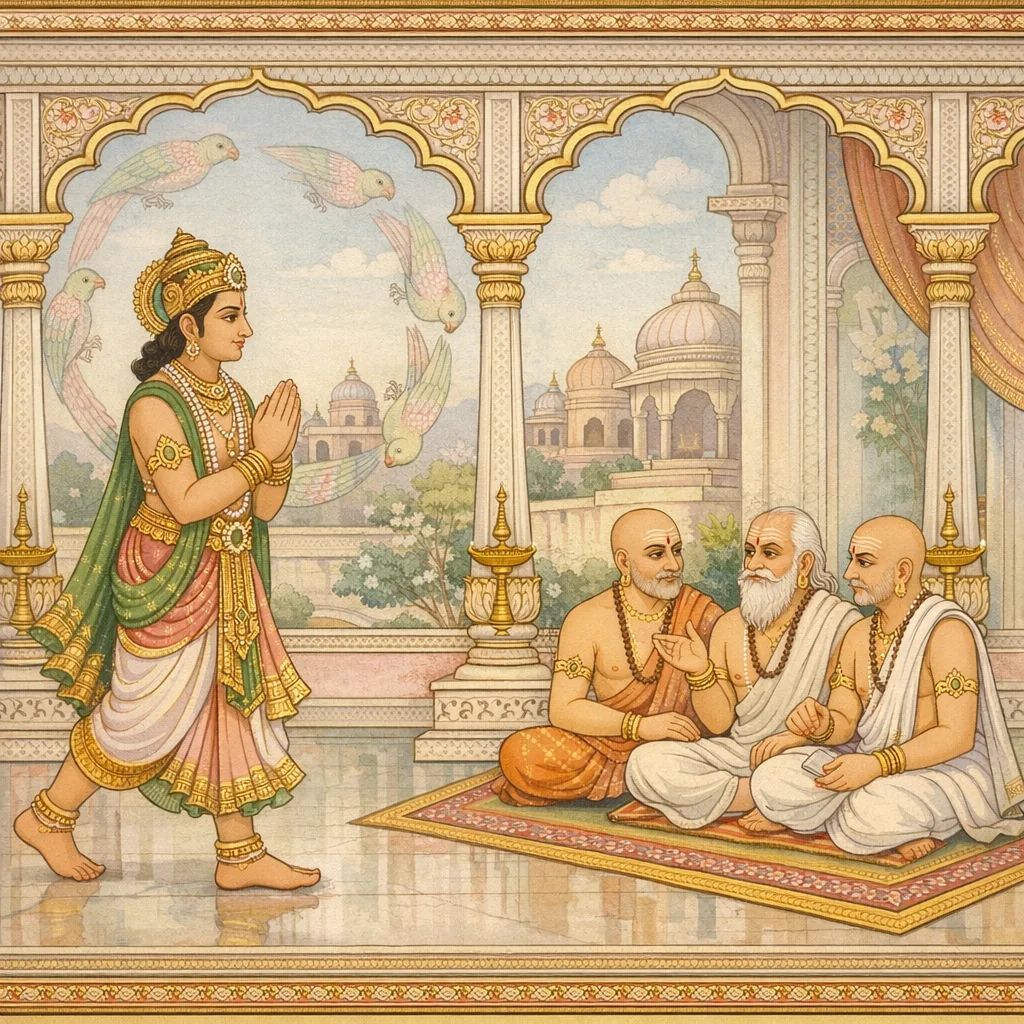
Chapter 64, narrated by Sūta, gives a tīrtha-centered theological account of the wonder-working goddess Chamatkārī Devī. A king known as the Chamatkāra-narendra installs her with faith to protect a newly founded city and its people, especially devoted brāhmaṇas. The chapter sets forth a ritual and ethical discipline: worship on Mahānavamī grants year-long fearlessness, safeguarding one from malevolent beings, enemies, disease, thieves, and other harms. On Śuklāṣṭamī, a pure devotee who worships with focused intention attains the desired goal, while the niṣkāma practitioner is promised happiness and liberation through the goddess’s grace. As an illustration, King Citraratha of Daśārṇa is shown performing extensive pradakṣiṇā on Śuklāṣṭamī. When brāhmaṇas question his unusual dedication, he reveals a former birth as a parrot near the shrine: by inadvertently circumambulating daily while entering and leaving its nest, it died there and was reborn as a jātismara king who remembers past lives. The example teaches that pradakṣiṇā is efficacious even when accidental, and all the more when done consciously with śraddhā. The chapter concludes by generalizing the teaching: devoted pradakṣiṇā removes sins, grants desired fruits, supports the aim of liberation, and—if maintained for a year—prevents rebirth in lower (tiryaṅ) wombs.
Shlokas
Verse 1
। सूत उवाच । चमत्कारी पुरा देवी तत्रैवास्ति द्विजोत्तमाः । चमत्कारनरेंद्रेण स्थापिता श्रद्धया पुरा
Sūta said: O best of the twice-born, in that very place there is the Goddess called Camatkārī. Long ago, the king named Camatkāra स्थापित—installed—her there with faithful devotion.
Verse 2
यया स महिषः पूर्वं निहतो दानवो रणे । कौमारव्रतधारिण्या मायाशतसहस्रधृक्
By her, in former times, that buffalo-formed demon was slain in battle—she who upholds the vow of maidenly purity and bears hundreds and thousands of powers of māyā.
Verse 3
यदा तन्निर्मितं तत्र पुरं तेन महात्मना । तस्य संरक्षणार्थाय तदा सा स्थापिता द्विजाः
When that city was built there by that great-souled one, then—O twice-born—she was installed for the protection of that city.
Verse 4
पुरस्य तस्य रक्षार्थं तथा तत्पुरवासिनाम् । सर्वेषां ब्राह्मणेंद्राणां भक्त्या भावितचेतसाम्
For the protection of that city and likewise of its residents—especially of all the foremost Brāhmaṇas whose minds are refined and shaped by devotion—she stands established there.
Verse 5
यस्तामभ्यर्चयेत्सम्यङ्महानवमिवासरे । कृत्स्नं संवत्सरं तस्य न भयं जायते क्वचित्
Whoever worships her properly on the day of Mahānavamī—throughout the entire year, no fear arises for that person anywhere.
Verse 6
भूतप्रेतपिशाचेभ्यः शत्रुतश्च विशेषतः । रोगेभ्यस्तस्करेभ्यश्च दुष्टेभ्योऽन्येभ्य एव च
One is protected from bhūtas, pretas, and piśācas, and especially from enemies; from diseases, from thieves, and from other wicked beings as well.
Verse 7
यंयं काममभिध्यायञ्छुक्लाष्टम्यां नरः शुचिः । तां पूजयति सद्भक्त्या स तमाप्नोत्यसंशयम्
Whatever desire a pure man contemplates, if on Śuklāṣṭamī—the eighth day of the bright fortnight—he worships her with true devotion, he attains that without doubt.
Verse 8
निष्कामः सुखमाप्नोति मोक्षं नास्त्यत्र संशयः । तस्या देव्याः प्रसादेन सत्यमेतन्मयोदितम्
The desireless devotee attains happiness; and as for liberation (mokṣa), there is no doubt here. By the grace of that Goddess, I have spoken this as truth.
Verse 9
तामाराध्य गताः पूर्वं सिद्धिं भूरिर्महीभुजः । ब्राह्मणाश्च तथान्येऽपि योगिनः परमेश्वरीम्
Having propitiated that Supreme Goddess, many kings in former times attained success; and so too Brāhmaṇas, and others as well—yogins—attained their spiritual accomplishments.
Verse 11
तस्या आयतने पूर्वमाश्चर्यमभवन्महत् । यत्तद्वः कीर्तयिष्यामि शृणुध्वं सुसमाहिताः
Formerly, a great marvel occurred in her sanctuary. I shall recount it to you—listen with minds steady and well-collected.
Verse 12
आसीच्चित्ररथोनाम पूर्वं पार्थिवसत्तमः । दशार्णाधिपतिः ख्यातः सर्वशत्रुनिबर्हणः
Formerly there was an excellent king named Citraratha, renowned as the ruler of Daśārṇa, a destroyer of all enemies.
Verse 13
शुक्लाष्टम्यां सदा भक्त्या स तस्याः श्रद्धयान्वितः । अष्टोत्तरशतं यावत्प्रचकार प्रदक्षिणाम्
On every bright-fortnight Aṣṭamī, with steadfast devotion and faith, he performed circumambulation of that Goddess—up to one hundred and eight rounds.
Verse 14
ततः प्रणम्य तां देवीं संप्रयाति पुनर्गृहम् । सैन्येन चतुरंगेण समंतात्परिवारितः
Then, having bowed to that Goddess, he would depart again for his home, surrounded on all sides by his fourfold army.
Verse 15
एवं तस्य नरेंद्रस्य प्रदक्षिणरतस्य च । जगाम सुमहान्कालो देव्या भक्तिरतस्य च
Thus, for that king—ever devoted to pradakṣiṇā and devoted in bhakti to the Goddess—great time passed by.
Verse 16
कस्यचित्त्वथ कालस्य स राजा तत्र संगतः । अपश्यद्ब्राह्मणश्रेष्ठान्देवीगृहसमाश्रितान्
Then, at a certain time, that king arrived there and saw eminent brāhmaṇas staying within the precincts of the Goddess’s temple.
Verse 17
अग्रस्थांस्तान्द्विजान्सर्वान्नमश्चक्रे समाहितः
With a collected mind, he offered homage to all those brāhmaṇas who stood in the foremost place.
Verse 18
ततस्तैः सहितैस्तत्र सहासीनः कथाः शुभाः । राजर्षीणां पुराणानां विप्रर्षीणां चकार ह
Then, sitting there together with them, he engaged in auspicious discussions—tales from the Purāṇas of royal seers of old and of brāhmaṇa sages.
Verse 19
ततः कस्मिन्कथांते स पृष्टस्तैर्द्विजसत्तमैः । कौतूहलसमोपेतैर्विनयावनतः स्थितः
Then, at the end of a certain discussion, he was questioned by those excellent brāhmaṇas—curious and eager—while he stood with humble deference.
Verse 20
राजन्पृच्छामहे सर्वे त्वां वयं कौतुकान्विताः । तस्मात्कीर्तय चेद्गुह्यं न तत्तव व्यवस्थितम्
“O King, we all ask you, filled with curiosity. Therefore tell it—if it is not a secret that must be kept reserved for you alone.”
Verse 21
मासिमासि सदाष्टम्यां त्वं शुक्लायां सुदूरतः । आगत्य देवतायाश्च प्रकरोषि प्रदक्षिणाम्
“Month after month, on the Aṣṭamī of the bright fortnight, you come from very far away and perform pradakṣiṇā, the reverent circumambulation of the Goddess.”
Verse 22
यत्नेनान्याः परित्यज्य सर्वाः पूजादिकाः क्रियाः । नूनं वेत्सि फलं कृत्स्नं यत्प्रदक्षिणसंभवम्
“With diligence you have set aside all other acts of worship and ritual service. Surely you know in full the merit and fruit that arise from pradakṣiṇā.”
Verse 23
राजोवाच सत्यमेतद्द्विजश्रेष्ठा यद्भवद्भिरुदाहृतम् । रहस्यमपि वक्तव्यं युष्माकं सांप्रतं मया
The King said: “O best of brāhmaṇas, what you have spoken is true. Now I must also disclose to you a secret that concerns you.”
Verse 24
अहमास शुकः पूर्वमस्मिन्नायतने शुभे । देव्याः पश्चिमदिग्भागे कुलायकृतसंश्रयः
“Formerly, in this auspicious shrine, I was a parrot, dwelling in a nest on the western side of the Goddess.”
Verse 25
तत्र निर्गच्छतो नित्यं कुर्वतश्चप्रवेशनम् । प्रदक्षिणाभवद्देव्या नित्यमेव द्विजोत्तमाः
There, as I went out and entered again each day, O best of brāhmaṇas, that very coming and going continually became a pradakṣiṇā—an ever-renewed circumambulation of the Goddess.
Verse 26
ततः कालेन मे मृत्युः संजातोऽत्रैव मंदिरे । तत्प्रभावेण संजातो राजा जातिस्मरोऽत्र हि
In time I died right here, within this very temple. By its sacred power I was born again as a king—indeed in this same place—endowed with memory of my former birth.
Verse 27
एतस्मात्कारणाद्दूरात्समभ्येत्य प्रदक्षिणाम् । करोम्यस्या द्विजश्रेष्ठा देवतायाः समाहितः
For this reason, even coming from far away, O best of brāhmaṇas, I perform the pradakṣiṇā of this Goddess with a mind made steady and intent.
Verse 28
पुरा भक्तिविहीनेन कुलाये वसता मया । कृता प्रदक्षिणा देव्यास्तेन जातोऽस्मि भूपतिः
Formerly, though I was without devotion and dwelt only in a nest, I still performed the Goddess’s pradakṣiṇā; by that very act I was born a king.
Verse 29
अधुना श्रद्धया युक्तो यत्करोमि प्रदक्षिणाम् । किं मे भविष्यति श्रेयस्तन्न वेद्मि द्विजोत्तमाः
Now, endowed with faith, when I perform the pradakṣiṇā, what greater blessing will come to me—I do not know, O best of brāhmaṇas.
Verse 30
सूत उवाच । तच्छ्रुत्वा तस्य ते विप्रा विस्मयोत्फुल्ललोचनाः । साधुवादं तथा चक्रुस्तस्य भूपस्य हर्षिताः
Sūta said: Hearing this from the king, those brāhmaṇas, their eyes widened in wonder, joyfully offered words of praise to that ruler.
Verse 31
ततः स पार्थिवः सर्वान्प्रणम्य द्विजसत्तमान् । अनुज्ञाप्य ययौ तूर्णं स्वगृहाय ससैनिकः
Then that king bowed to all those excellent brāhmaṇas, took leave with their permission, and swiftly departed for his own palace together with his troops.
Verse 32
अधुना श्रद्धया युक्तो यः करोति प्रदक्षिणाम् । सर्वपापविनिर्मुक्तो लभते वांछितं फलम्
Now, whoever performs circumambulation with faith is freed from all sins and attains the desired fruit.
Verse 33
ततः प्रभृति ते विप्राः सर्वे भक्तिपुरःसराः । तस्याः प्रदक्षिणां चक्रुस्तथान्ये मुक्तिहेतवे
From that time onward, those brāhmaṇas—led by devotion—performed her circumambulation; and others too did so, for the sake of liberation.
Verse 34
प्राप्ताश्च परमां सिद्धिं वांछितां तत्प्रभावतः । इह लोके परे चैव दुर्लभां त्रिदशैरपि
And by its power they attained the supreme accomplishment they desired—here in this world and also in the next—an attainment difficult even for the gods.
Verse 35
तस्मात्सर्वप्रयत्नेन तां देवीमिह संश्रयेत् । सर्वकामप्रदां नृणां तस्मिन्क्षेत्रे व्यवस्थिताम्
Therefore, with every effort, one should take refuge here in that Goddess—established in that sacred field, granting all desired aims to people.
Verse 6410
यस्तस्याः श्रद्धयोपेतः प्रकरोति प्रदक्षिणाम् । नित्यं संवत्सरं यावत्तिर्यग्योनौ न स व्रजेत्
Whoever, endowed with faith, performs her circumambulation daily for as long as a year—he does not go to an animal birth.