Adhyaya 5
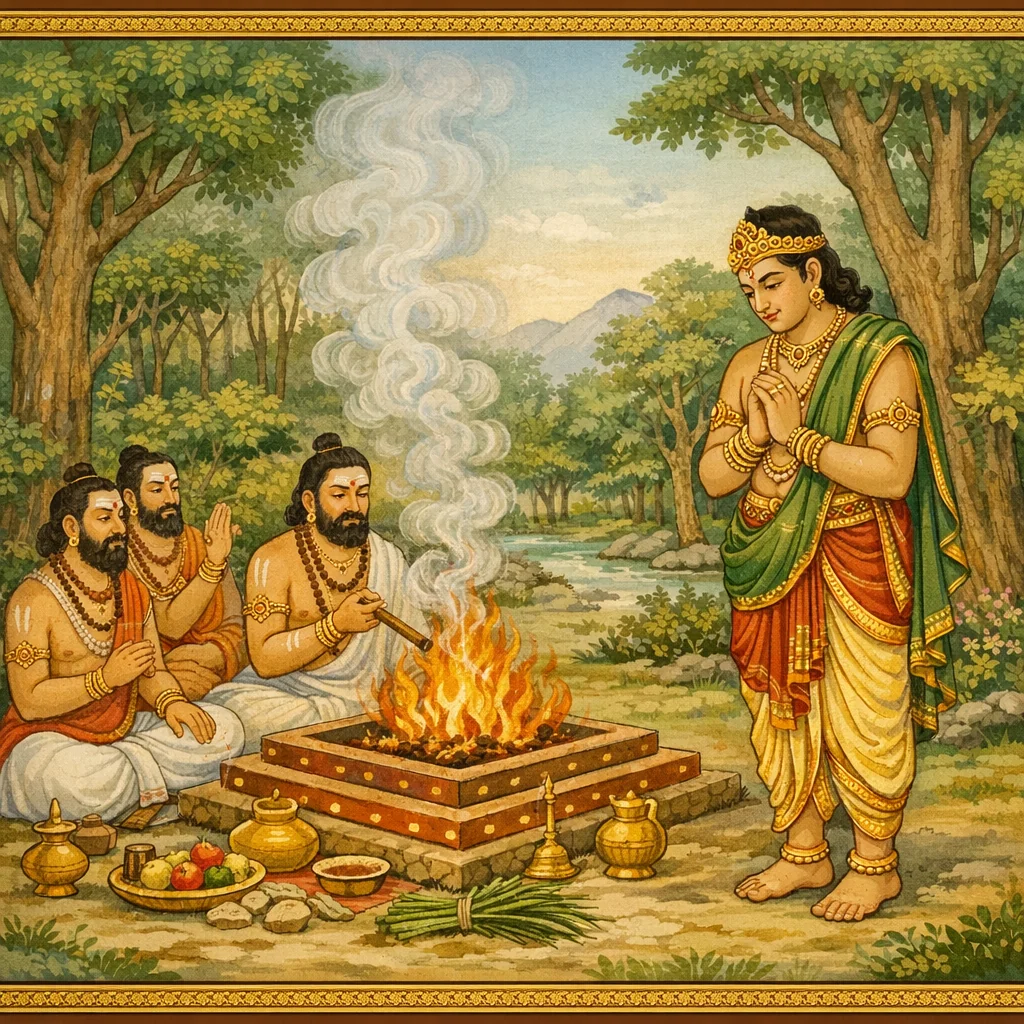
Sūta relates that Viśvāmitra, stirred by Brahmā’s words, proclaims the power of his tapas by vowing to consecrate and conduct a Vedic yajña for Triśaṅku with flawless ritual propriety and lavish dakṣiṇā. He swiftly prepares an auspicious forest arena and appoints a full complement of ṛtvijas and specialists—adhvaryu, hotṛ, brahmā, udgātṛ, and others—emphasizing complete ritual form. The yajña becomes a grand public spectacle of giving: learned brāhmaṇas, logicians, householders, along with the poor and entertainers, gather in crowds, while constant acclamations urge distribution and feasting, displaying the social visibility of yajña and dāna. The arena is portrayed in abundance—“mountains” of grain, gold, silver, and gems, and countless cows, horses, and elephants readied as gifts. Yet a theological tension remains: the devas do not personally accept the offerings; only Agni, the gods’ mouth, receives the oblations, and after twelve years Triśaṅku’s desired fruit is still unfulfilled. After the concluding bath (avabhṛtha) and proper payment to the priests, Triśaṅku—ashamed yet reverent—thanks Viśvāmitra for restoring his status (including removal of the caṇḍāla condition) but laments that his aim persists: ascent to Svarga with the same body. Fearing ridicule and the vindication of Vasiṣṭha’s claim that embodied ascent is not gained by yajña alone, he resolves to renounce kingship and withdraw to the forest for tapas, shifting the chapter’s lesson from ritualism toward ascetic striving.
Shlokas
Verse 1
। सूत उवाच । तच्छ्रुत्वा ब्रह्मणो वाक्यं विश्वामित्रो रुषान्वितः । पितामहमुवाचेदं पश्य मे तपसो बलम्
Sūta said: “Hearing Brahmā’s words, Viśvāmitra—filled with wrath—said to Pitāmaha: ‘Behold the power of my austerity (tapas)!’”},{
Verse 2
याजयित्वा त्रिशंकुं तं विधिवद्दक्षिणावता । यज्ञेनात्रा नयिष्यामि पश्यतस्ते पितामह
“Having caused that Triśaṅku to perform the sacrifice according to due rite, complete with the proper priestly gifts (dakṣiṇā), I shall lead him to heaven by this yajña, even as you watch, O Pitāmaha.”
Verse 3
एवमुक्त्वा द्रुतं गत्वा विश्वामित्रो धरातलम् । चकार याजने यत्नं त्रिशंकोः सुमहात्मनः
Thus having spoken, Viśvāmitra swiftly went upon the earth and strove earnestly to conduct the sacrifice for Triśaṅku, the great-souled.
Verse 4
ददौ दीक्षां समाहूय ब्राह्मणान्वेदपारगान् । यत्रकर्मोचिते काले तस्मिन्नेव वने शुभे
He bestowed dīkṣā (initiation), having summoned brāhmaṇas well-versed in the Vedas; and at the time proper to the rite, he performed it in that very auspicious forest.
Verse 5
बभूव स स्वयं धीमानध्वर्युर्यज्ञकर्मणि । तस्मिन्होता च शांडिल्यो ब्रह्मा गौतम एव च
He himself, being wise, served as the Adhvaryu in the sacrificial rite. In that very sacrifice, Śāṇḍilya became the Hotṛ, and Gautama indeed served as the Brahmā-priest.
Verse 6
आग्नीध्रश्च्यवनो नाम मैत्रावरुणः कार्मिकः । उद्गाता याज्ञवल्क्यश्च प्रतिहर्ता च जैमिनिः
Cyavana was appointed as the Āgnīdhra; Kārmika served as the Maitrāvaruṇa; Yājñavalkya became the Udgātṛ; and Jaimini served as the Pratihartṛ.
Verse 7
प्रस्तोता शंकुवर्णश्च तथोन्नेता च गालवः । पुलस्त्यो ब्राह्मणाच्छंसी होता गर्गो मुनीश्वरः
Śaṃkuvarṇa served as the Prastotṛ, and Gālava as the Unnetṛ. Pulastya became the Brāhmaṇācchaṃsī, and the sage-lord Garga served as the Hotṛ.
Verse 8
नेष्टा चैव तथात्रिस्तु अच्छावाको भृगुः स्वयम् । तान्सर्वानृत्विजश्चक्रे त्रिशंकुः श्रद्धयान्वितः
Atri served as the Neṣṭṛ, and Bhṛgu himself as the Acchāvāka. Triśaṃku, filled with faith, appointed them all as the officiating priests.
Verse 9
वासोभिर्मुकुटैश्चैव केयूरैः समलंकृतान् । कृत्वा केशपरित्यागं दधत्कृष्णाजिनं तथा
He adorned them with garments, crowns, and armlets; and, having them renounce their hair as a rite of consecration, he also had them wear black antelope-skins.
Verse 10
ऐणशृङ्गसमायुक्तः पयोव्रतपरायणः । दीर्घसत्राय तान्सर्वान्योजयामास वै ततः
Equipped with a horn of antelope and devoted to the milk-vow, he then duly engaged all of them for a long Soma-session (dīrgha-satra).
Verse 11
एवं तस्मिन्प्रवृत्ते च दीर्घसत्रे यथोचिते । आजग्मुर्ब्राह्मणा दिव्या वेदवेदांगपारगाः
When that long sacrificial session had thus begun in proper form, radiant brāhmaṇas—masters of the Vedas and the Vedāṅgas—arrived there.
Verse 12
तथान्ये तार्किकाश्चैव गृहस्थाः कौतुकान्विताः । दीनांधकृपणाश्चैव ये चान्ये नटनर्तकाः
Others too came—logicians and householders filled with curiosity; and also the poor, the blind, the destitute, and others such as actors and dancers.
Verse 13
दीयतां दीयतामाशु एतेषामेतदेव हि । भुज्यतांभुज्यतां लोकाः प्रसादः क्रियतामिति
“Give, give quickly—this indeed is what is due to them! Let the people eat, let them eat; show them favor, extend gracious gifts!”—so rang the call.
Verse 14
इत्येष निनदस्तत्र श्रूयते सततं महान् । यज्ञवाटे सदा तस्मिन्नान्यश्चैव कदाचन
Such was the great cry that was heard there continually in that sacrificial enclosure—and never, at any time, was there any other call.
Verse 15
तत्र सस्यमयाः शैला दृश्यंते परिकल्पिताः । सुवर्णस्य च रूप्यस्य रत्नानां च विशेषतः
There, mountains fashioned as if made of abundant crops were seen—conjured as it were—along with heaps of gold and silver, and especially of precious gems.
Verse 16
दानार्थं ब्राह्मणेंद्राणामसंख्याश्चापि धेनवः । तथैव वाजिनो दांता मदोन्मत्ता महागजाः
For the purpose of gifting to the foremost of brāhmaṇas, countless cows were present; likewise, well-trained horses and great elephants, intoxicated with rut, were there.
Verse 17
समंतात्कल्पितास्तत्र दृश्यंते पर्वतोपमाः । वर्तमाने महायज्ञे तस्मिन्नेव सुविस्तरे
All around, there were seen arrangements resembling mountains, constructed there, while that great sacrifice was proceeding in vast and splendid expanse.
Verse 18
आहूता यज्ञभागाय नाभिगच्छंति देवताः । केवलं वह्निवक्त्रेण तस्य गृह्णंति तद्धविः
Though invoked to receive their share of the sacrifice, the deities did not draw near; only through the mouth of sacred Fire (Agni) did they accept that oblation.
Verse 19
एवं द्वादशवर्षाणि यजतस्तस्य भूपतेः । व्यतीतानि न संप्राप्तमभीष्टं मनसः फलम्
Thus, though that king performed sacrifices for twelve years, when they had passed he still did not obtain the wished-for fruit of his heart’s resolve.
Verse 20
ततश्चावभृथस्नानं कृत्वा सत्रसमाप्तिजम् । ऋत्विजस्तर्पयित्वा तान्दक्षिणाभिर्यथार्हतः
Then, having performed the avabhṛtha bath that marks the completion of the sacrificial session, he satisfied the officiating priests (ṛtvij) with dakṣiṇā—fees and gifts—according to what was due to each.
Verse 21
विससर्ज समस्तांश्च तथान्यानपि संगतान् । संबंधिनो वयस्यांश्च त्रिशंकुर्मुनिसत्तमाः
And Triśaṅku dismissed them all, and also the other assembled people—his relatives and friends as well, O best of sages.
Verse 22
ततः प्रोवाच विनतो विश्वामित्रं मुनीश्वरम् । स भूपो व्रीडया युक्तः प्रणिपातपुरः सरम्
Then the king addressed Viśvāmitra, lord among sages; filled with shame, he first made reverent prostration (praṇipāta) and only then spoke.
Verse 23
त्वत्प्रसादान्मया प्राप्तं दीर्घसत्रसमुद्भवम् । परिपूर्णफलं ब्रह्मन्दुर्लभं सर्वमानवैः
By your grace I have obtained the fully ripened fruit born of a long sacrificial session—O Brahman—something difficult for all humans to attain.
Verse 24
तथा जातिः पुनर्लब्धा भूयो नष्टापि सन्मुने । त्वत्प्रसादेन विप्रर्षे चंडालत्वं प्रणाशितम्
So too, my social standing, though lost, has been regained again, O good sage; by your favor, O brāhmaṇa-seer, the state of being a caṇḍāla has been destroyed.
Verse 25
परं मे दुःखमेवैकं हृदि शल्यमिवार्पितम् । अनेनैव शरीरेण यन्न प्राप्तं त्रिविष्टपम्
One grief alone torments me, lodged in my heart like a thorn: that with this very body I have not attained Triviṣṭapa (the heavenly world).
Verse 26
उपहासं करिष्यंति वसिष्ठस्य सुता मुने । अद्य व्यर्थ श्रमं श्रुत्वा मामप्राप्तं त्रिविष्टपम्
“O sage, Vasiṣṭha’s sons will mock me today, hearing that my effort has been in vain—that I have not reached Triviṣṭapa.”
Verse 27
तथा तद्वचनं सत्यं वसिष्ठस्य व्यवस्थितम् । यत्तेनोक्तं न यज्ञेन सदेहैर्गम्यते दिवि
“So too, Vasiṣṭha’s statement stands as true and settled: as he declared, by sacrifice one does not reach heaven while still bearing the body.”
Verse 28
सोऽहं तपः करिष्यामि सांप्रतं वनमाश्रितः । न करिष्यामि भूयोऽपि राज्यं पुत्रनिवेदितम्
Therefore, I shall now undertake austerities, taking refuge in the forest. Never again will I accept the kingdom offered by my son.