Adhyaya 49
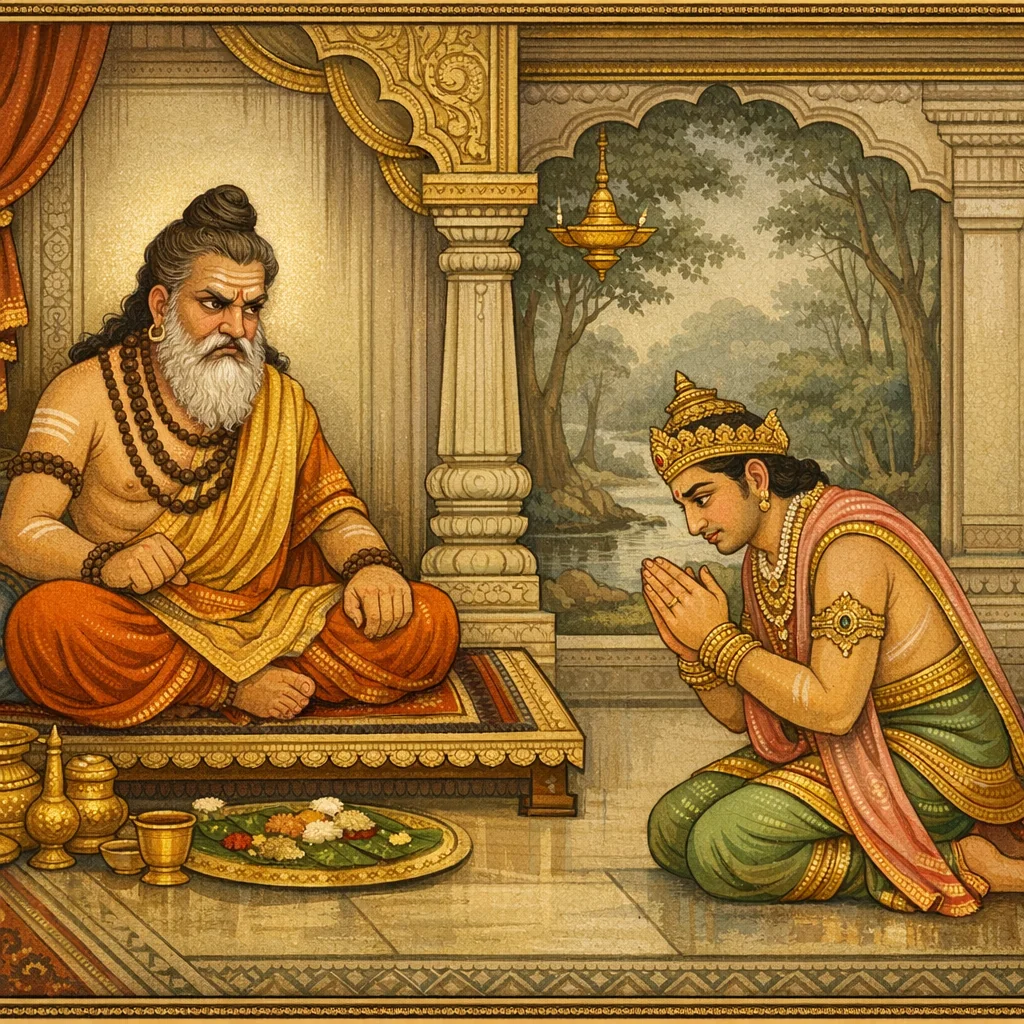
Sūta extols a highly meritorious pond-side shrine called Kalaśeśvara, praised as the “destroyer of all sins”; mere darśana of it is said to free one from pāpa. He then narrates an origin-legend that ties the tīrtha’s power to the exactness of hospitality and vow-dharma. King Kalaśa of the Yadu line—skilled in yajña, generous in gifts, and devoted to public welfare—receives the sage Durvāsas after the sage completes the Cāturmāsya vow. The king performs full guest-rites: welcome, prostration, foot-washing, and arghya, and asks what is desired. Durvāsas requests food for pāraṇa, the concluding meal of the fast; the king serves a lavish feast that includes meat. After eating, Durvāsas detects the presence/taste of meat, deems it a violation of his vow’s restraints, and in anger curses the king to become a fierce tiger. The king pleads that he acted in devotion and erred unintentionally, seeking mitigation. Durvāsas explains the rule: except in contexts such as śrāddha and yajña, a vow-observant brāhmaṇa should not eat meat—especially at the end of Cāturmāsya—for it makes the vow’s fruit void. Yet he grants a conditional release: when the king’s cow Nandinī reveals to him a previously arrow-worshiped liṅga (bāṇa-arcita liṅga), liberation will come swiftly. Durvāsas departs; the king becomes a tiger, loses ordinary memory, attacks creatures, and enters a great forest, while ministers protect the realm awaiting the curse’s end. Thus the chapter links Kalaśeśvara’s tīrtha-glory with ethical precision in receiving guests, the law of vows, and release through shrine-mediated revelation.
Shlokas
Verse 1
। सूत उवाच । तत्रैवास्ति महापुण्यो ह्रदतीरे व्यवस्थितः । कलशेश्वर इत्याख्यः सर्वपापप्रणाशनः
Sūta said: “Right there, upon the bank of the lake, stands a shrine of Śiva of great merit, known as Kalaśeśvara—the destroyer of all sins.”
Verse 2
दृष्ट्वा प्रमुच्यते पापान्मनुष्यः कलशेश्वरम्
By beholding Kalaśeśvara, a person is released from sins.
Verse 3
पुरासीत्कलशोनाम यदुवंशसमुद्भवः । यज्वा दानपतिर्दक्षः सर्वलोकहिते रतः
In ancient times there was a king named Kalaśa, born in the Yadu lineage—one who performed sacrifices (yajña), was foremost in charity, capable and skilled, and devoted to the welfare of all people.
Verse 4
कस्यचित्त्वथ कालस्य दुर्वासा मुनि सत्तमः । चातुर्मास्यव्रतं कृत्वा तद्गृहं समुपस्थितः
Then, at a certain time, the excellent sage Durvāsā—the best of ascetics—having observed the Cāturmāsya vow, arrived at the king’s house.
Verse 5
अथोत्थाय नृपस्तूर्णं सम्मुखः प्रययौ मुदा । स्वागतं स्वागतं तेस्तु ब्रुवाण इति सादरम्
Then the king rose at once and went forward in joy to meet him, respectfully saying, “Welcome, welcome!”
Verse 6
ततः प्रणम्य तं भक्त्या प्रक्षाल्य चरणौ स्वयम् । दत्त्वार्घमिति होवाच हर्षबाष्पाकुलेक्षणः
Then, bowing to him in devotion, he himself washed the sage’s feet and offered arghya; as he spoke, his eyes trembled, brimming with tears of joy.
Verse 7
इदं राज्यममी पुत्रा इमा नार्य इदं धनम् । ब्रूहि सर्वं मुने त्वं च तव कार्यं ददाम्यहम्
“Here is my kingdom; these are my sons; these are my wives; and here is my wealth. Speak, O sage—tell me everything. Whatever your need may be, I shall grant it.”
Verse 8
दुर्वासा उवाच । युक्तमेतन्महाराज वक्तुं ते कार्यमीदृशम् । गृहागताय विप्राय व्रतिनेऽस्मद्विधाय च
Durvāsā said: “It is fitting, O great king, that you speak of such a resolve—for a brāhmaṇa who has come to one’s house, for an ascetic observing a vow, and for one like me.”
Verse 9
न मे किञ्चिद्धनैः कार्यं न राज्येन नृपोत्तम । चातुर्मास्यव्रतोऽतोऽहं पारणं कर्तृमुत्सहे
“I have no need of wealth, nor of a kingdom, O best of kings. I am observing the Cāturmāsya vow; therefore I seek to perform my pāraṇa, the concluding meal.”
Verse 10
तस्माद्यत्किञ्चिदन्नं ते सिद्धमस्ति गृहे नृप । तद्देहि भोजनार्थं मे बुभुक्षातीव वर्धते
Therefore, O King, whatever cooked food is ready in your house—give it to me to eat, for my hunger is rising intensely.
Verse 11
सूत उवाच । ततः स पृथिवीपालो यथासिद्धं सुसंस्कृम् । अन्नं भोज्यकृते तस्मै प्रददौ स्वयमेव हि
Sūta said: Then the protector of the earth (the king) personally gave him well-prepared food, just as it was available, for the purpose of eating.
Verse 12
व्यञ्जनानि विचित्राणि पक्वान्नानि बहूनि च । पेयं चोष्यं च खाद्यं च लेह्यमन्नमनेकधा । तथा मांसं विचित्रं च लवणाद्यैः सुसंस्कृतम्
There were many kinds of varied dishes and numerous cooked foods—things to drink, to suck, to chew, and to lick, in many forms; and also various meats, well prepared with salt and other seasonings.
Verse 13
अथासौ बुभुजे विप्रः क्षुत्क्षामस्त्वरयान्वितः । अविन्दन्न रसास्वादं बृहद्ग्रासैर्मुदान्वितः
Then that brāhmaṇa ate—worn down by hunger and in haste. Taking large mouthfuls with satisfaction, he did not notice the taste distinctly.
Verse 14
अथ तृप्तेन मांसस्य ज्ञातस्तेन रसो द्विजाः । ततः कोपपरीतात्मा तं शशाप मुनीश्वरः
O brāhmaṇas, when he had become satisfied, he then recognized the taste of meat. Thereupon, the lordly sage—his mind overcome by wrath—cursed that king.
Verse 15
यस्मान्मांसं त्वया दत्त्वा व्रतभंगः कृतो मम । तस्मात्त्वमामिषाहारो रौद्रो व्याघ्रो भविष्यसि
“Because you gave me meat, my sacred vow (vrata) has been broken. Therefore you shall become a fierce tiger, living on flesh.”
Verse 16
ततः स भूपतिर्भीतः प्रणम्य च मुनीश्वरम् । प्रोवाच दीनवदनो वेपमानः सुदुःखितः
Then the king, terrified, bowed to the lordly sage and spoke—his face downcast, trembling, and deeply distressed.
Verse 17
तव क्षुत्क्षामकण्ठस्य मया भक्तिः कृता मुने । यथासिद्धेन भोज्येन तत्कस्माच्छप्तुमुद्यतः
O sage, seeing your throat parched with hunger, I served you with devotion and offered whatever food was available. Why, then, are you intent on cursing me?
Verse 18
तस्मात्कुरु प्रसादं मे भक्तस्य विनतस्य च । शापस्यानुग्रहेणैव शीघ्रं ब्राह्मणसत्तम
Therefore, O best of brāhmaṇas, show favor to me—your devoted and humbled supplicant—and quickly temper this curse through your grace.
Verse 19
दुर्वासा उवाच । मुक्त्वा श्राद्धं तथा यज्ञं न मांसं भक्षयेद्द्विजः । विशेषेण व्रतस्यांते चातुर्मास्योद्भवस्य च
Durvāsā said: Except in the context of śrāddha and sacrifice (yajña), a twice-born man (dvija) should not eat meat—especially at the conclusion of a vow (vrata), and particularly of one connected with the Cāturmāsya observance.
Verse 20
उपवासपरो भूत्वा मांसमश्नाति यो द्विजः । वृथामांसाद्वृथा तस्य तद्व्रतं जायते ध्रुवम्
If a twice-born man, professing fasting and austerity, eats meat, then by that futile meat-eating his vow (vrata) becomes futile—certainly.
Verse 21
तस्माद्व्रतं प्रणष्टं मे चातुर्मास्यसमुद्भवम् । तेन शप्तोऽसि राजेंद्र मया कोपेन सांप्रतम्
Therefore my Cāturmāsya-born vow has been ruined. For that reason, O best of kings, you are now cursed by me in anger.
Verse 22
राजोवाच । तथापि कुरु मे विप्र शापस्यांतं यथेप्सितम् । भक्तियुक्तस्य दीनस्य निर्दोषस्य विशेषतः
The king said: Even so, O brāhmaṇa, ordain the end of this curse as you deem fit—especially since I am devoted, distressed, and without fault.
Verse 23
दुर्वासा उवाच । यदा ते नंदिनी धेनुर्लिंगं बाणार्चितं पुरा । दर्शयिष्यति ते मुक्तिस्तदा तूर्णं भविष्यति
Durvāsā said: When your cow Nandinī shows you the liṅga once worshipped by Bāṇa, then your liberation (mukti) will swiftly come to pass.
Verse 24
एवमुक्त्वा स विप्रेन्द्रो जगाम निजमाश्रमम् । बभूव सोऽपि भूपालो व्याघ्रो रौद्रतमाकृतिः
Having spoken thus, that best of brāhmaṇas returned to his own hermitage (āśrama). And the king, too, became a tiger—of a most terrifying form.
Verse 25
नष्टस्मृतिस्ततस्तूर्णं दृष्ट्वा जंतून्पुरःस्थितान् । जघानोच्चाटितोन्यैश्च प्रविवेश महावनम्
Then, having lost his memory, he swiftly attacked the creatures standing before him; driven back by others, he entered the great forest.
Verse 26
अथ ते मंत्रिणस्तस्य शापस्यातं महीपतेः । वांछतस्तस्य तद्राज्यं चक्रुरेव सुरक्षितम्
Then his ministers, desiring the end of the king’s curse, kept that kingdom well protected.
Verse 49
इति श्रीस्कान्दे महापुराण एकाशीतिसाहस्र्यां संहितायां षष्ठे नागरखण्डे श्रीहाटकेश्वरक्षेत्रमाहात्म्ये कलशेश्वराख्याने कलशनृपतेर्दुर्वाससः शापेन व्याघ्रत्वप्राप्तिवर्णनंनामैकोनपञ्चाशत्तमोऽध्यायः
Thus, in the Śrī Skanda Mahāpurāṇa—within the eighty-one-thousand-verse compilation— in the sixth Nāgara Khaṇḍa, in the Māhātmya of the sacred Śrī Hāṭakeśvara region, in the account called “Kalaśeśvara,” ends the forty-ninth chapter, entitled “The narration of King Kalaśa attaining the state of a tiger due to the curse of Durvāsas.”