Adhyaya 269
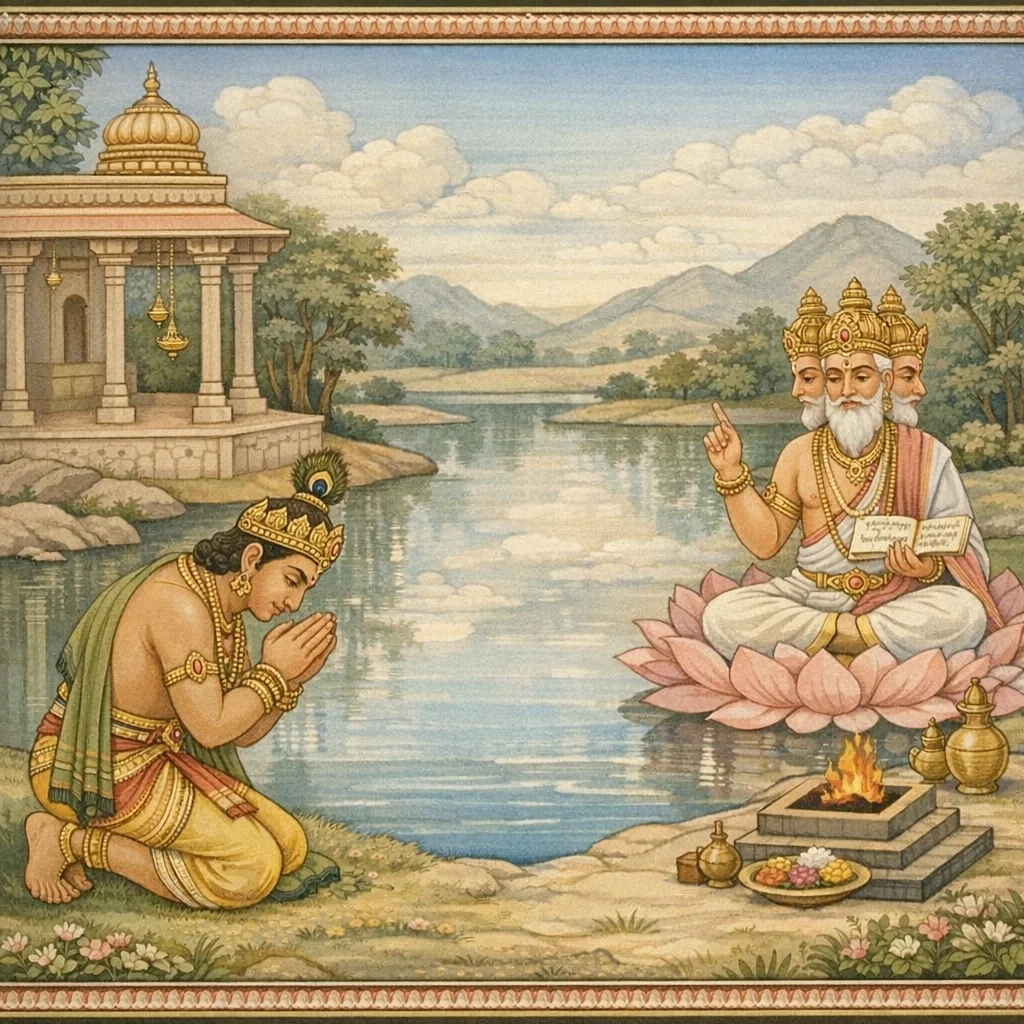
The chapter begins with Sūta proclaiming the māhātmya of Kapāleśvara (Kapālamocaneśvara), declaring that even hearing it is purifying. The ṛṣis ask who founded Kapāleśvara, what fruits arise from darśana and pūjā, and how Indra’s brahmahatyā arose and was removed—along with the proper rite for offering the “pāpa-puruṣa” (a symbolic embodiment of sin), including the required mantras and implements. Sūta states that Indra installed this deity to gain release from brahmahatyā. The narrative then traces the cause: Vṛtra, born of Tvaṣṭṛ, receives Brahmā’s boon of brāhmaṇa-like status and becomes devoted to brāhmaṇas. War breaks out between devas and dānavas; Bṛhaspati counsels Indra to employ strategic deception and later directs him to obtain Dadhīci’s bones to fashion the vajra. Indra slays Vṛtra (described as brahma-bhūta), and brahmahatyā manifests as loss of tejas and foul impurity. Brahmā instructs Indra to bathe in a circuit of tīrthas, to donate a golden body-form as the pāpa-puruṣa to a brāhmaṇa with mantra, and to establish and worship the kapāla in Hāṭakeśvara-kṣetra. Indra bathes at Viśvāmitra-hrada; the kapāla falls away, he worships with five mantras linked to Hara’s five faces, and his defilement departs. A brāhmaṇa named Vātaka accepts the golden sin-embodiment but is socially censured; dialogue reframes the ethics of acceptance and foretells enduring local ritual authority and the site’s fame as Kapālamocana. The chapter closes by affirming that hearing or reciting this account destroys sin and that the tīrtha is renowned for eradicating brahmahatyā.
Shlokas
Verse 1
सूत उवाच । कपालेशस्य माहात्म्यं श्रूयतामधुना द्विजाः । चतुर्थस्य महाभागास्तत्र क्षेत्रे स्थितस्य च
Sūta said: Now, O twice-born sages, hear the greatness of Kapāleśa—the fourth revered liṅga/deity established in that sacred region.
Verse 2
श्रुतमात्रेण येनात्र नरः पापात्प्रमुच्यते
By merely hearing it here, a person is released from sin.
Verse 3
ऋषय ऊचुः । त्रयाणां चैव लिंगानां पूर्वोक्तानां महामते । श्रुतास्माभिः समुत्पत्तिःकपालेश्वरवर्जिता । केनायं स्थापितो देवः कपालेश्वरसंज्ञितः
The sages said: O great-minded one, we have heard the origin of the three liṅgas mentioned earlier—except for Kapāleśvara. By whom was this deity, known as Kapāleśvara, established?
Verse 4
तस्मिन्दृष्टे फलं किं स्यात्पूजिते च वदस्व नः
Tell us: what fruit arises merely by beholding that (deity/tīrtha), and what fruit arises by worshipping it?
Verse 5
सूत उवाच । इंद्रेण स्थापितः पूर्वमेष देवो द्विजोत्तमाः । कपालेश्वसंज्ञस्तु ब्रह्महत्या विमुक्तये
Sūta said: O best of the twice-born, this deity was formerly established by Indra. He is known as Kapāleśvara, revered for liberation from the sin of brahmin-slaying (brahmahatyā).
Verse 7
तत्प्रभावत्सुरश्रेष्ठ स्तया मुक्ते द्विजोत्तमाः । पापं पूरुषदानेन इत्येषा वैदिकी श्रुतिः । अन्योऽपि यो नरस्तं च पूजयित्वा प्रभक्तितः । प्रयच्छेद्ब्राह्मणेन्द्राय शुद्धये पापपूरुषम् । स मुच्येत्पातकाद्घोराद्ब्रह्महत्यासमुद्भवात्
O best of brāhmaṇas, by the power of that Kapāleśvara the lord of the gods was freed by her (Brahmahatyā). “Sin is removed by the gift of a ‘sin-person’ (pāpa-pūruṣa)”—this is Vedic śruti. Any other man too, having worshipped that deity with deep devotion, should give to the foremost of brāhmaṇas, for purification, a pāpa-pūruṣa; and he is released from the dreadful sin born of brahmin-slaying (brahmahatyā).
Verse 8
दक्षिणामूर्तिमासाद्य प्रोवाचेदं बृहस्पतिः । हाटकेश्वरजे क्षेत्रे गत्वा तं वीक्ष्य शंकरम्
Approaching Dakṣiṇāmūrti, Bṛhaspati spoke these words: “Go to the sacred kṣetra of Hāṭakeśvara; having gone there, behold Śaṅkara.”
Verse 9
यो ददाति शरीरं च कृत्वा हेममयं ततः । मुच्यते नात्र संदेहः पातकैः पूर्वसंयुतैः
Whoever gives in charity a bodily form made of gold is freed—of this there is no doubt—from sins formerly accumulated.
Verse 10
ऋषय ऊचुः । ब्रह्महत्या कथं जाता सुरेन्द्रस्य हि सूतज । एतन्नः सर्वमाचक्ष्व परं कौतूहलं हि नः
The sages said: “O son of Sūta, how did brahmahatyā come upon Indra? Tell us all of this—our curiosity is great.”
Verse 11
कपालेश्वरसंज्ञस्तु कथं देवोऽत्र संस्थितः । ब्रह्महत्या कथं नष्टा तत्प्रभावाद्दिवस्पतेः
How is the deity established here under the name Kāpāleśvara? And how was Indra’s brahmahatyā destroyed by the power of that (shrine/deity)?
Verse 12
स पापपूरुषो देयो विधिना केन सूतज । कैर्मंत्रैः स हि देयः कैश्चैव ह्युपस्करैः
O son of Sūta, by what procedure should that ‘sin-person’ (pāpa-pūruṣa) be given? With which mantras should it be given, and with what implements and materials?
Verse 13
दर्शनात्पूजनाच्चापि किं फलं जायते नृणाम् । अदत्त्वा स्वशरीरं वा पूजया केवलं वद
What fruit arises for people from mere darśana and from worship as well? And if one does not offer one’s own body (symbolically as dāna), tell us what is gained by worship alone.
Verse 14
सूत उवाच । अहं वः कीर्तयिष्यामि कथामेतां पुरातनीम् । यां श्रुत्वापि महाभागा नरः पापात्प्रमुच्यते
Sūta said: I shall recount to you this ancient narrative; by hearing it alone, O fortunate ones, a man is released from sin.
Verse 15
अज्ञानाज्ज्ञानतो वापि विहितैरन्यजन्मजैः । दृष्टमात्रेण येनात्र पातकात्तद्दिनोद्भवात् । मुच्यते नात्र संदेहः सत्यमेतन्मयोदितम्
Whether one comes here in ignorance or with full knowledge—burdened with sins amassed by deeds from other births—by merely beholding this sacred place, one is freed from the sins that ripen on that very day. Of this there is no doubt; this is the truth declared by me.
Verse 16
पुरा त्वष्टुः सुतो जज्ञे वृत्रो हि द्विजसत्तमाः । पुलोमदुहितुः पार्श्वाद्विभावर्याः सुवीर्यवान्
In ancient times, O best of the twice-born, Vṛtra was born as the son of Tvaṣṭṛ—mighty in valor—from the side (womb) of Vibhāvarī, the daughter of Puloman.
Verse 17
स बाल एव धर्मात्मा आसीत्सर्वजनप्रियः । दानवं भावमुत्सृज्य द्विजभक्तिपरायणः
Even as a child he was righteous and dear to all people; casting aside the disposition of a Dānava, he became wholly devoted to reverence for the twice-born (Brāhmaṇas).
Verse 18
स गत्वा पुष्करारण्यं परमेण समाधिना । तोषयामास देवेशं पद्मजं तपसि स्थितः
He went to the forest of Puṣkara and, abiding in austerity with supreme samādhi, pleased the Lord of the gods—Brahmā, the Lotus-born—who was established in tapas.
Verse 19
तस्य तुष्टः स्वयं ब्रह्मा दृष्टिगोचरमागतः । प्रोवाच वरदोऽस्मीति किं ते कृत्यं करोम्यहम्
Pleased with him, Brahmā himself came within his sight and said, “I am the giver of boons. What task shall I accomplish for you?”
Verse 20
वृत्र उवाच । यदि तुष्टोसि मे देव ब्राह्मणत्वं प्रयच्छ मे । ब्राह्मणत्वं समासाद्य साधयामि परं पदम्
Vṛtra said, “If you are pleased with me, O Lord, grant me Brāhmaṇahood. Having attained Brāhmaṇahood, I shall accomplish the supreme state.”
Verse 21
तेन किंचिदसाध्यं न ब्राह्मण्येन भवेन्मम । ब्राह्मणेन समं चान्यन्न किंचित्प्रतिभाति मे
By that Brāhmaṇahood, nothing will be impossible for me; and to me, nothing else appears equal to a Brāhmaṇa.
Verse 22
परमं दैवतं किंचिन्न विप्राद्विद्यते परम् । तस्मान्मे हृत्स्थितं नान्यदपि राज्यं त्रिविष्टपे
No supreme divinity is known beyond the vipra, the Brāhmaṇa. Therefore nothing else dwells in my heart—not even kingship in heaven, in Triviṣṭapa.
Verse 23
सूत उवाच । तस्य तद्वचनं श्रुत्वा तुष्टस्तस्य पितामहः । ब्राह्मणत्वं स्वयं दत्त्वा ततः प्रोवाच सादरम्
Sūta said: Hearing his words, his Grandsire (Brahmā) was pleased; granting him Brāhmaṇahood with his own hand, he then spoke to him with reverence.
Verse 24
मया त्वं विहितो विप्र पुत्र प्रकुरु वांछितम् । प्रसादयस्व सततं ब्राह्मणान्ब्रह्मवित्तमान्
“By me you have been duly established as a Brāhmaṇa, O son. Now accomplish what you desire; and continually seek the favor of Brāhmaṇas who are knowers of Brahman.”
Verse 25
ब्राह्मणैः सुप्रसन्नैश्च प्रीयंते सर्वदेवताः । तस्मात्सर्वप्रयत्नेन पूजनीया द्विजोत्तमाः
When the brāhmaṇas are deeply pleased, all the gods are pleased. Therefore, with every effort, the best among the twice-born should be honored and worshipped.
Verse 26
सूत उवाच । एवमुक्तस्तदा तेन वृत्रोऽभूद्ब्राह्मणस्ततः । ब्राह्म्या लक्ष्म्या समोपेतो ब्रह्मचर्यपरायणः
Sūta said: Thus addressed by him at that time, Vṛtra then became a brāhmaṇa—endowed with brāhmaṇic splendor and devoted to the discipline of brahmacarya.
Verse 27
तस्मिंस्तपसि संस्थे तु हता इंद्रेण दानवाः । वंशोच्छेदे समापन्ने दानवानां महात्मनाम्
While he was established in that austerity, the Dānavas were slain by Indra, and the great-souled Dānava line came to the brink of extinction.
Verse 28
ततस्ते दानवाः सर्वे पराभूताः सुरैस्ततः । स्वं स्थानं संपरित्यज्य दुःखशोकसमन्विताः
Then all those Dānavas, defeated by the Devas, abandoned their own abode and were overwhelmed with sorrow and grief.
Verse 29
तन्मातरं पुरस्कृत्वा तत्सकाशमुपागताः । स च तां मातरं दृष्ट्वा वृतां तैश्च समन्वितः
Placing their mother at the front, they came into his presence. And he, seeing that mother surrounded and accompanied by them, took notice of their approach.
Verse 30
दानवैश्च पराभूतैस्तथाभूतां च मातरम् । किमागमनकृत्यं च दुःखितानां ममांतिके
Seeing the Dānavas defeated, and their mother in such a condition, he asked: “What is the purpose of your coming here— you who are distressed—into my presence?”
Verse 31
दानवा ऊचुः । वयं देवैः पराभूता भवंतं शरणागताः । क्व यामोऽन्यत्र चाऽस्माकं त्वां विना नास्ति संश्रयः
The Dānavas said: “Defeated by the Devas, we have come to you for refuge. Where else can we go? For us, apart from you, there is no shelter.”
Verse 32
तेषां तद्वचनं श्रुत्वा वृत्रः प्रोवाच सादरम् । देवानहं हनिष्यामि गम्यतां तत्र मा चिरम्
Hearing their words, Vṛtra replied respectfully: “I shall slay the Devas. Go there at once—do not delay.”
Verse 33
तवागमनकृत्यं च मातः कथय सांप्रतम्
And now, O Mother, tell me the purpose for which you have come.
Verse 34
मातोवाच । तथा कुरु महाभाग शीघ्रं दारपरिग्रहम् । वंशवृद्धौ प्रमाणं चेद्वाक्यं तव ममोद्भवम्
The mother said: “Do so, O fortunate one—take a wife without delay. If the increase of the lineage is to be the proof, then let this word of yours be fulfilled through what is born from me, from my line.”
Verse 35
एष एव परो धर्म एष एव परो नयः । पुत्रस्य जननीवाक्यं यत्करोति समाहितः
This alone is the highest dharma; this alone is the supreme right conduct: that a son, with a collected mind, carries out his mother’s word.
Verse 36
तथा स्त्रीणां पतिं मुक्त्वा नान्यास्ति भुवि देवता । जनन्यां जीवमानायां तथैव च सुतस्य च
Likewise, for women—apart from the husband—there is no other deity on earth. In the same way, so long as the mother lives, for a son as well, she is the highest authority.
Verse 37
अतिक्रम्य च या नारी पतिं धर्मपरा भवेत् । तत्सर्वं विफलं तस्या जायते नात्र संशयः
If a woman becomes ‘devoted to dharma’ while transgressing her husband, then all of that becomes fruitless for her—of this there is no doubt.
Verse 38
पुत्रः स्वजननीवाक्यं योऽतिक्रम्य यथारुचि । करोति धर्मकृत्यानि तानि सर्वाणि तस्य च
That son who, transgressing his own mother’s word, performs works of dharma according to his own liking—every one of those acts of his likewise becomes ineffective, bearing no fruit.
Verse 39
भवंति च तथा नूनं वृथा भस्महुतं यथा । अरण्ये रुदितानीव ऊषरे वापितानि च
They surely become futile—like an offering poured into ashes, like weeping in a forest, and like seeds sown in barren ground.
Verse 40
यथैव बधिरस्याग्रे गीतं नृत्यमचक्षुषः । तद्वन्मातृमतादन्यकृतं पुत्रस्य धर्मजम्
As song before the deaf and dance for one without sight, so are a son’s acts of dharma when done against his mother’s intention: they yield no true fruit.
Verse 41
सर्वं कर्म न संदेहस्तेनाहं त्वामुपागता । बंधूनां वचनात्पुत्र दुःखार्ता च विशेषतः
Therefore, with no doubt in this matter, I have come to you. At the words of our kinsmen, O son, and above all, afflicted and tormented by sorrow.
Verse 42
किं वा ते बहुनोक्तेन भूयो भूयश्च पुत्रक । आनृण्यं जायते यद्वत्पितॄणां तत्तथा शृणु
What need is there to tell you much, again and again, dear son? Listen, then, to how one becomes free from the debt owed to the ancestors (Pitṛs).
Verse 43
तव वत्स प्रमाणं चेत्कुरुष्व च वचो मम । तस्यास्तद्वचनं श्रुत्वा वृत्रः संचिंत्य चेतसि
“Beloved child, if you hold me as your authority, then do as I say.” Hearing her words, Vṛtra pondered within his heart.
Verse 44
श्रुतिस्मृत्युक्तमार्गेण न मातुर्विद्यते परम् । स तथेति प्रतिज्ञाय आनिनाय परिग्रहम्
By the path taught in Śruti and Smṛti, nothing is higher than the mother. Saying, “So be it,” he made his vow and accepted the duty.
Verse 45
त्वष्टा तस्मै ददौ प्रीतस्ततो रत्नान्यनेकशः । संख्याहीनानि तस्यैव कुप्याकुप्यमनंतकम्
Then Tvaṣṭṛ, pleased with him, bestowed many kinds of jewels—countless in number—together with inexhaustible stores of both precious and ordinary goods.
Verse 46
हस्त्यश्वयानकोशाढ्यं सोऽभिषिक्तः पदे निजे । दानवानां महावीर्यो ब्राह्मण्येन समन्वितः
Abundant in elephants, horses, vehicles, and treasury, he was consecrated by abhiṣeka to his own royal station—mighty among the Dānavas, and endowed with brahminical dignity (brāhmaṇya).
Verse 47
अभिषिक्तं तदा वृत्रं स्वराज्ये तेऽसुरादयः । श्रुत्वाभिषेकं संहृष्टास्तस्य वृत्रस्य बांधवाः
When Vṛtra was thus consecrated in his own sovereignty, the Asuras and others—his kinsmen—hearing of that consecration, rejoiced greatly.
Verse 48
दानवाश्च समाजग्मुर्ये तत्रासन्पुरोगताः । पातालाद्गिरिदुर्गाच्च स्थलदुर्गेभ्य एव च । कृतवैराः समं देवैः कोपेन महता वृताः
And the Dānavas assembled—those who stood foremost there—coming from Pātāla, from mountain-fortresses, and from strongholds upon the plains. Long having borne enmity toward the Devas, they were shrouded in mighty wrath.
Verse 49
ततः प्रोत्साहितः सर्वैर्दानवैः स महाबलः । प्रस्थितः शत्रुनाशाय महेन्द्रभवनं प्रति
Then, urged on by all the Dānavas, that mighty one set forth to destroy his foes, marching toward the abode of Mahendra (Indra).
Verse 50
शक्रोऽपि वृत्रमाकर्ण्य समायांतं युयुत्सया । सन्मुखः प्रययौ हृष्टः सर्वदेवसमन्वितः
Śakra (Indra) too, hearing that Vṛtra was drawing near with the will to fight, marched forth to meet him face to face—joyful, and attended by all the Devas.
Verse 51
ततः समभवद्युद्धं देवानां दानवैः सह । मेरुपृष्ठे सुविस्तीर्णे नित्यमेव दिवानिशम्
Then battle arose between the Devas and the Dānavas, spread far and wide upon the slopes of Meru, continuing unceasingly by day and by night.
Verse 52
नित्यं पराजयो जज्ञे देवानां दानवैः सह । तत्रोवाच गुरुः शक्र मा युद्धं कुरु देवप
Again and again, defeat befell the Devas in their struggle with the Dānavas. Thereupon the Guru said to Śakra: “O lord of the Devas, do not wage this war.”
Verse 53
वृत्रोऽयं दारुणो युद्धे बलद्वयसमन्वितः । चत्वारश्चाग्रतो वेदाः पृष्ठतः सशरं धनुः
This Vṛtra is formidable in battle, possessed of a twofold strength. Before him stand the four Vedas, and behind him is a bow with arrows.
Verse 54
तेन जेयतमो दैत्यस्तवैव च महाहवे । तस्मात्संधानमेतेन त्वं कुरुष्व शचीपते
Because of that, in the great battle this Daitya becomes exceedingly hard for you to conquer. Therefore, O lord of Śacī, you should make an alliance with him.
Verse 55
ततो विश्वासमाया तं जहि वज्रेण दानवम् । षडुपायै रिपुर्वध्य इति शास्त्रनिदर्शनम्
Therefore, by the stratagem of winning his trust, strike down that Dānava with the thunderbolt—such is the teaching shown in the scriptures: an enemy is to be subdued by the six means of policy.
Verse 56
भुंजानश्च शयानश्च दत्त्वा कन्यामपि स्वकाम् । विप्रदानेन संयोज्य कृत्वापि शपथं गुरुम् । मायाप्रपंचमासाद्य तस्मादेवं समाचर
Whether he is eating or resting, even if he offers his own desired maiden, and even if he binds the preceptor with an oath... having approached this web of illusion, therefore act in this very manner.
Verse 57
इन्द्र उवाच । यद्येवं च स्वयं गत्वा त्वं विश्वासे नियोजय । तव वाक्येन विश्वासं नूनं यास्यति दानवः
Indra said: If so, then go yourself and engage him in trust; by your words, surely that Dānava will come to place confidence.
Verse 58
सूत उवाच । शक्रस्य मतमाज्ञाय प्रतस्थे च बृहस्पतिः । यत्र वृत्रः स्थितो दैत्यो युद्धार्थं कृतनिश्चयः
Sūta said: Knowing Śakra’s intention, Bṛhaspati set forth to the place where Vṛtra, the Daitya, stood, firmly resolved for battle.
Verse 59
वृत्रोऽपि तं समालोक्य स्वयं प्राप्तं बृहस्पतिम् । सदैव द्विजभक्तः स हृष्टात्मा समपद्यत । विशेषात्प्रणिपत्योच्चैर्वाक्यमेतदभाषत
Vṛtra too, seeing Bṛhaspati arrive in person, rejoiced within; for he was ever devoted to the brāhmaṇas. With special reverence he bowed low and spoke these words aloud.
Verse 60
वृत्र उवाच । स्वागतं ते द्विजश्रेष्ठ किं करोमि प्रशाधि माम् । प्रिया मे ब्राह्मणा यस्मात्तस्मात्कीर्तय सांप्रतम्
Vṛtra said: “Welcome to you, best of the twice-born. What shall I do? Command me. Since the brāhmaṇas are dear to me, tell me now what is to be done.”
Verse 61
बृहस्पतिरुवाच संदिग्धो विजयो युद्धे यस्माद्दैवेन सत्तम । तस्मात्कुरु महेंद्रेण व्यवस्थां वचनान्मम
Bṛhaspati said: “O best one, victory in battle is uncertain, for it depends upon fate. Therefore, at my word, make an agreement with great Indra.”
Verse 62
त्वं भुंक्ष्व भूतलं कृत्स्नं शक्रश्चापि त्रिविष्टपम् । व्यवस्थयाऽनया नित्यं वर्तितव्यं परस्परम्
You should enjoy the whole earth, and Śakra likewise the Triviṣṭapa, the heaven of the Thirty gods. By this agreement, you both should always conduct yourselves toward one another accordingly.
Verse 63
वृत्र उवाच । अहं तव वचो ब्रह्मन्करिष्यामि सदैव हि । संगमं कुरु शक्रेण सांप्रतं मम सद्द्विज
Vṛtra said: “O Brahman, I shall indeed ever do according to your word. O good brāhmaṇa, arrange now a meeting for me with Śakra.”
Verse 64
सूत उवाच । अथ शक्रं समानीय बृहस्पतिरुदारधीः । वृत्रेण सह संधानं चक्रे चैव परस्परम्
Sūta said: “Then Bṛhaspati, noble in understanding, brought Śakra and forged a mutual pact between him and Vṛtra.”
Verse 65
एकारिमित्रतां गत्वा तावुभौ दैत्यदेवपौ । प्रहृष्टौ गतवन्तौ तौ ततश्चैव निजं गृहम्
Having entered into friendship on account of the same enemy, those two—chiefs among the Daityas and the Devas—departed joyfully and then returned to their own abode.
Verse 66
अथ शक्रच्छलान्वेषी सदा वृत्रस्य वर्तते । न च्छिद्रं लभते क्वापि वीक्षमाणोपि यत्नतः
Then Vṛtra, ever on the lookout for Indra’s stratagems, remained constantly vigilant; and though he watched with effort, he could find no flaw anywhere.
Verse 67
कथंचिदपि सोऽभ्येति तत्सकाशं पुरंदरः । किंचिच्छिद्रं समासाद्य तत्प्रतापेन दह्यते
Yet somehow Purandara (Indra) approached him; but upon finding even a slight opening, he was scorched by Vṛtra’s overpowering radiance.
Verse 68
इंद्र उवाच । न शक्नोमि च तं दैत्यं वीक्षितुं च कथंचन । तेजसा सर्वतो व्याप्तं तत्कथं सूदयाम्यहम्
Indra said: “I am not able to look upon that Daitya in any way at all. He is enveloped on every side by fiery splendour—how then can I slay him?”
Verse 69
तस्मात्कंचिदुपायं मे तद्वधार्थं प्रकीर्तय । यथा शक्नोमि तत्सोढुं तेजस्तस्य दुरात्मनः
“Therefore, declare to me some means for his destruction, so that I may be able to endure the blazing energy of that wicked-souled one.”
Verse 70
सूत उवाच । तस्य तद्वचनं श्रुत्वा चिरं ध्यात्वा बृहस्पतिः । ततः प्रोवाच तं शक्रं विनयावनतं स्थितम्
Sūta said: Having heard his words, Bṛhaspati reflected for a long time; then he addressed Śakra (Indra), who stood before him bowed down in humility.
Verse 71
बृहस्पतिरुवाच । तस्य ब्राह्म्यं स्थितं तेजः सम्यग्गात्रे पुरंदर । वीक्षितुं नैव शक्नोषि तेन त्वं त्रिदशाधिप
Bṛhaspati said: “O Purandara, within his body there abides Brahmic radiance in full measure; therefore, O lord of the thirty gods, you are not able even to behold him.”
Verse 72
तथा ते कीर्तयिष्यामि तस्योपायं वधोद्भवम् । वधयिष्यसि येनात्र तं त्वं दानवसत्तमम्
“Accordingly, I shall tell you the means that gives rise to his slaying—by which, here and now, you will kill that foremost of Dānavas.”
Verse 73
प्राचीसरस्वतीतीरे पुष्करारण्यमाश्रितः । दधीचिर्नाम विप्रर्षिः शतयोजनमुच्छ्रितः
On the eastern bank of the Sarasvatī, dwelling in the Puṣkara forest, there is a brahmin-seer named Dadhīci, lofty as though a hundred yojanas in stature.
Verse 74
तत्र नित्यं तपः कुर्वन्स्तौति नित्यं पितामहम् । स निर्विण्णो मुनिश्रेष्ठः प्राणानां धारणे हरे
There he performs austerities every day and daily praises Pitāmaha (Brahmā). That best of sages, wearied in the mere holding of life-breaths, has become detached, O Hari.
Verse 75
चिरंतनो मुनिः स स्याज्जरयातिसमावृतः । तं प्रार्थय द्रुतं गत्वा तस्यास्थीनि गुरूणि च
He is an ancient sage, wholly covered by the burden of old age. Go swiftly and beseech him; ask also for his mighty bones.
Verse 76
स ते दास्यस्त्यसंदिग्धं त्यक्त्वा प्राणानतिप्रियान् । तस्यास्थिभिः प्रहरणं वज्राख्यं ते भविष्यति
He will certainly give it to you without doubt—abandoning even his most beloved life-breath. From his bones a weapon, famed as the Vajra, will come to be yours.
Verse 77
अमोघं ते ततो नूनं त्वं वृत्रं सूदयिष्यसि । तस्य वज्रस्य तत्तेजो ब्रह्मतेजोऽभिबृंहितम् । तेन वृत्रोद्भवं तेजः प्रशमं संप्रयास्यति
Then your weapon will surely be unfailing, and you will slay Vṛtra. The splendor of that Vajra is strengthened by brahmanic radiance; by it, the fiery power born of Vṛtra will be brought to peace.
Verse 78
सूत उवाच । तच्छ्रुत्वा सत्वरं शक्रः सर्वैर्दैवगणैः सह । जगाम पुष्करारण्ये यत्र प्राची सरस्वती
Sūta said: Hearing this, Śakra hastened, together with all the hosts of the gods, to the Puṣkara forest—where the Sarasvatī flows eastward.
Verse 79
त्रयस्त्रिंशत्समोपेता तीर्थानां कोटिभिर्युता । दधीचेराश्रमं तत्र सोऽविशच्चित्रसंयुतम्
Accompanied by the Thirty-Three gods and encompassed by crores of sacred tīrthas, he entered there the hermitage of Dadhīci, adorned with wondrous beauty.
Verse 80
क्रीडंते नकुलैः सर्पा यत्र तुष्टिं गता मिथः । मृगाः पंचाननैः सार्धं वृषदंशास्तथाऽखुभिः
There, serpents sported with mongooses, mutually content; deer dwelt together with lions, and fierce biters with mice.
Verse 81
उलूक सहिताः काका मिथो द्वेषविवर्जिताः । प्रभावात्तस्य तपसो दधीचेः सुमहात्मनः
Crows, together with owls, were free from mutual hatred—through the power of the austerities (tapas) of the great-souled Dadhīci.
Verse 82
दधीचिरपि चालोक्य देवाञ्छक्रपुरोगमान् । समायातान्प्रहृष्टात्मा सत्वरं संमुखोभ्यगात्
Dadhīci too, seeing the gods arrive with Śakra at their head, rejoiced at heart and quickly went forth to meet them.
Verse 83
ततश्चार्घ्यं समादाय प्रणिपत्य मुहुर्मुहुः । शक्रमभ्यागतं प्राह किं ते कृत्यं करोम्यहम्
Then, taking the arghya—an offering of honor—and bowing again and again, he said to the newly arrived Śakra: “What task shall I do for you?”
Verse 84
गृहायातस्य देवेश तच्छीघ्रं मे निवेदय
O Lord of the gods, now that you have come to my dwelling, quickly tell me your purpose.
Verse 85
इंद्र उवाच । आतिथ्यं कुरु विप्रेंद्र गृहायातस्य सन्मुने । त्वदस्थीनि निजान्याशु मम देह्यविकल्पितम्
Indra said: “O foremost of Brahmins, O venerable sage—offer hospitality to me who have come to your dwelling. Then, without hesitation, quickly grant me your own bones.”
Verse 86
अतदर्थमहं प्राप्तस्त्वत्सकाशं मुनीश्वर । अस्थिभिस्ते परं कार्यं देवानां सिद्धिमेष्यति
“For that very purpose I have come near you, O lord of sages. Through your bones a supreme task will be accomplished, and the gods will attain success.”
Verse 87
सूत उवाच । इंद्रस्य तद्वचः श्रुत्वा दधीचिस्तोषसंयुतः । ततः प्राह सहस्राक्षं सर्वैर्देवैः समन्वितम्
Sūta said: Hearing those words of Indra, Dadhīci—filled with gladness—then spoke to the Thousand-Eyed one, who was accompanied by all the gods.
Verse 88
अहो नास्ति मया तुल्यः सांप्रतं भुवि कश्चन । पुण्यवान्यस्य देवेशः स्वयमर्थी गृहागतः
Ah! At this time on earth none is equal to me in fortune—so great is my merit, for the Lord of the gods himself has come to my house as a supplicant.
Verse 89
धन्यानि च ममास्थीनि यानि देवेश ते हितम् । करिष्यंति सदा कार्यं रक्षार्थं त्रिदिवौकसाम्
Blessed indeed are my bones, O Lord of the gods, for they will ever accomplish your beneficial work—done for the protection of the dwellers of heaven.
Verse 90
एषोऽहं संप्रदास्यामि प्रियान्प्राणान्कृते तव । गृहाण स्वेच्छयाऽस्थीनि स्वकार्यार्थं पुरंदर
Behold, for your sake I shall give up my beloved life-breath. Take, at your will, my bones for the fulfillment of your own righteous task, O Purandara.
Verse 91
एवमुक्त्वा महर्षिः स ध्यानमाश्रित्य सत्वरम् । ब्रह्मरंध्रेण निःसार्य प्राणमात्मानमत्यजत्
Having spoken thus, the great seer swiftly entered meditation; then, sending forth the life-breath through the brahma-opening, he relinquished his embodied life.
Verse 93
तस्मिन्नेव काले तु तस्यास्थीनि शतक्रतुः । प्रगृह्य विश्वकर्माणं ततः प्रोवाच सादरम्
At that very time, Śatakratu (Indra), taking up his bones, then respectfully addressed Viśvakarmā.
Verse 94
एतैरस्थिभिः शीघ्रं मे कुरु त्वं वज्रमायुधम् । येन व्यापादयाम्याशु वृत्रं दानवसत्तमम्
With these bones, quickly fashion for me the weapon called the Vajra, by which I may swiftly slay Vṛtra, the foremost among the Dānavas.
Verse 95
तस्य तद्वचनं श्रुत्वा विश्वकर्मा त्वरान्वितः । यथायुधं तथा चक्रे वज्राख्यं दारुणाकृति
Hearing his words, Viśvakarmā—moved to haste—fashioned the weapon accordingly: the Vajra, terrible in form.
Verse 96
षडस्रि शतपर्वाख्यं मध्ये क्षामं विभीषणम् । प्रददौ च ततस्तस्मै सहस्राक्षाय धीमते
Then he bestowed upon that wise Thousand-Eyed Lord (Indra) a terrifying weapon, six-edged and known as “Śataparvan,” lean in its middle.
Verse 97
अथ तं स समादाय द्वादशार्कसमप्रभम् । समाधिस्थं चरैर्ज्ञात्वा वृत्रं संध्यार्चने रतम्
Taking that radiant weapon, blazing like twelve suns, he learned through his scouts that Vṛtra was absorbed in samādhi, devoted to the worship of the twilight.
Verse 98
ततश्च पृष्ठभागं स समाश्रित्य त्रिलोकराट् । चिक्षेप वज्रमुद्दिश्य तद्वधार्थं समुत्सुकः
Then the sovereign of the three worlds (Indra), taking position behind him, hurled the thunderbolt—aimed to slay him—eager to accomplish that killing.
Verse 99
स हतस्तेन वज्रेण दानवो भस्मसाद्गतः । शक्रोपि हतमज्ञात्वा भयात्तस्याथ दुद्रुवे
Struck by that Vajra-thunderbolt, the Dānava was slain and reduced to ashes. Yet Śakra (Indra), not knowing he was dead, fled from him in fear.
Verse 100
मनुष्यरहिते देशे विषमे गुल्मसंवृते । लिल्ये शक्रस्तदा सर्वं मेने वृत्रमयं जगत्
In a rugged, peopleless land overgrown with thickets, Śakra lay hidden; and then he imagined the whole world to be filled with Vṛtra.
Verse 101
एतस्मिन्नंतरे देवाः पश्यंतः सर्वतो दिशम् । सिद्धचारणगन्धर्वा आजग्मुश्च शतक्रतुम्
Meanwhile, the gods—looking in every direction—together with Siddhas, Cāraṇas, and Gandharvas came to Śatakratu (Indra).
Verse 102
ततः कृच्छ्राच्च तैर्दृष्टः शक्रोऽसौ गहने वने । निलीनो भयसंत्रस्तो गुल्ममध्ये व्यवस्थितः
Then, with difficulty, they spotted Śakra in a dense forest—hidden away, trembling with fear, stationed in the midst of the thickets.
Verse 103
देवा ऊचुः । किं त्वं भीतः सहस्राक्ष वृत्रोऽयं घातितस्त्वया । परिवारेण सर्वेण वीक्षितोऽस्माभिरेव च
The gods said: “Why are you afraid, O Thousand-Eyed One? This Vṛtra has been slain by you—seen by us ourselves as well, together with all your retinue.”
Verse 104
अस्मादागच्छ गच्छामो गृहं प्रति पुरंदर । कुरु त्रैलोक्यराज्यं त्वं सांप्रतं हतकण्टकम्
“Come away from here; let us return home, O Purandara. Now take up the sovereignty of the three worlds—your thorn (enemy/obstruction) has been removed.”
Verse 105
तच्छ्रुत्वाऽथ विनिष्क्रांतो गुल्ममध्याच्छतक्रतुः । हृष्टरोमा हतं श्रुत्वा वृत्रं दानवसत्तमम्
Hearing that, Śatakratu (Indra) came out from the midst of the thickets; and, hearing that Vṛtra—the foremost among the Dānavas—had been slain, his hairs stood on end in joy.
Verse 106
अथ पश्यंति यावत्तं देवाः सर्वे शतक्रतुम् । तावत्तेजोविहीनं तद्गात्रं दुर्गंधितायुतम्
Then, as all the gods looked upon Śatakratu (Indra), they saw that his body had become bereft of radiance and was covered with a foul stench.
Verse 107
दृष्ट्वा लोकगुरुर्ब्रह्मा देवान्सर्वानुवाच ह । शक्रोऽयं सांप्रतं व्याप्तः पापया ब्रह्महत्यया
Seeing this, Brahmā, the preceptor of the worlds, addressed all the gods: “This Śakra (Indra) is now overtaken by the sinful taint of brahmahatyā.”
Verse 108
यदनेन हतो वृत्रो ब्रह्मभूतश्छलेन सः । तस्मात्त्याज्यः सुदूरेण नो चेत्पापमवाप्स्यथ
Because Vṛtra—who had become brahman-like (worthy of brahmin-status)—was slain by him through deceit, therefore he must be shunned from far away; otherwise you too will incur sin.
Verse 109
ब्रह्मघ्नेन समं स्पर्शः संभाषोऽथ विनिर्मितः । पापाय जायते पुंसां तस्मात्तं दूरतस्त्यजेत्
Contact with a slayer of a brāhmaṇa, and even conversation with him, becomes a cause of sin for people; therefore one should abandon him and keep far away.
Verse 110
आस्तां संस्पर्शनं तस्य संभाषो वा विशेषतः । दर्शनं वापि तस्याहुः सर्वपापप्रदं नृणाम्
Not to speak of touching him—or especially speaking with him—even merely seeing him, they say, brings every kind of sin upon people.
Verse 111
सूत उवाच । तच्छ्रुत्वा ब्रह्मणो वाक्यं शक्रो दृष्ट्वाऽत्मनस्तनुम् । तेजसा संपरित्यक्तां दुर्गन्धेन समावृताम्
Sūta said: Hearing Brahmā’s words, Śakra looked upon his own body—forsaken by splendor and enveloped in a foul stench.
Verse 112
ततः प्रोवाच लोकेशं दीनः प्रणतकन्धरः । तवाहं किंकरो देव त्वयेंद्रत्वे नियोजितः
Then, wretched and with head bowed low, he spoke to the Lord of the worlds: “O Deva, I am your servant, appointed by you to the office of Indra.”
Verse 113
तस्मात्कुरु प्रसादं मे ब्रह्महत्याविनाशनम् । प्रायश्चित्तं विभो ब्रूहि येन शुद्धिः प्रजायते
“Therefore, show me grace that destroys the sin of brahmahatyā. O Lord, tell me the expiation (prāyaścitta) by which purity may arise.”
Verse 114
ब्रह्मोवाच । अष्टषष्टिषु तीर्थेषु त्वं स्नात्वा बलसूदन । आत्मानं हेमजं देहि पापपूरुषसंज्ञितम्
Brahmā said: “O slayer of Bala, bathe in the sixty-eight sacred tīrthas. Then offer a golden effigy of your own self, called the ‘Pāpa-puruṣa’ (sin-person), as a ritual substitute.”
Verse 115
मंत्रवत्तं यथोक्तं च ब्राह्मणाय महात्मने । स्नात्वा पुण्यजले तीर्थे ब्रह्मघ्नोऽहमिति ब्रुवन्
“And, as prescribed and with mantras, give it to a great-souled brāhmaṇa. Having bathed in the tīrtha’s holy waters, confess, saying: ‘I am a slayer of a brāhmaṇa (brahma-ghna).’”
Verse 116
स्नातमात्रस्य ते हस्ताद्यत्र तत्पतति क्षितौ । तेजः संजायतेगात्रे दुर्गंधश्च प्रणश्यति
As soon as you have bathed, at the very spot where it falls from your hand onto the earth, radiance will arise in your body and your foul odor will be destroyed.
Verse 117
तस्मिंस्तीर्थे त्वया तच्च स्थाप्यं शक्र कपालकम् । महेश्वरस्य नाम्ना च पूजनीयं ततः परम्
In that very tīrtha, O Śakra, you should install that skull-bowl; and thereafter it should be worshipped in the name of Maheśvara.
Verse 118
पंचभिर्वक्त्रमंत्रैश्च ततो देयाऽत्मतस्तनूः । हेमोद्भवा द्विजेन्द्राय ततः शुद्धिमवाप्स्यसि
Then, with the five mantras sprung from the divine mouth, you should offer to the foremost of brāhmaṇas a golden effigy fashioned from your own self; thereafter you will attain purity.
Verse 119
शक्रस्तु तद्वचः श्रुत्वा ब्रह्मणोऽव्यक्तजन्मनः । कपालं वृत्रजं गृह्य तीर्थयात्रां ततो गतः
Having heard those words of Brahmā, whose birth is unmanifest, Śakra took up the skull that had arisen from Vṛtra and then set out on pilgrimage to the tīrthas.
Verse 120
अष्टषष्टिषु तीर्थेषु गच्छन्स च सुरेश्वरः । हाटकेश्वरजे क्षेत्रे समायातः क्रमेण च
As the Lord of the gods journeyed through sixty-eight tīrthas, he arrived in due course at the sacred region belonging to Hāṭakeśvara.
Verse 121
विश्वामित्रह्रदे स्नात्वा यावत्तस्माद्विनिर्गतः । कपालं पतितं तस्मात्स्वयमेव हतात्मनः
When he had bathed in Viśvāmitra’s lake and had just come out from it, the skull fell away from him of its own accord—he who had been tormented within.
Verse 122
ततस्तं पूजयामास मन्त्रैर्वक्त्रसमुद्भवैः । सर्वपापहरैः पुण्यैर्यथोक्तैर्ब्रह्मणा पुरा
Then he worshipped it with the mouth-born mantras—holy and meritorious, removing all sins—exactly as Brahmā had formerly prescribed.
Verse 123
एतस्मिन्नेव काले तु दुर्गन्धो नाशमाप्तवान् । तच्छरीराद्द्विजश्रेष्ठा महत्तेजो व्यजायत
At that very moment, the foul odor came to an end; and from his body, O best of the twice-born, a great radiance was born forth.
Verse 124
एतस्मिन्नन्तरे ब्रह्मा सह देवैः समागतः । ब्रह्महत्याविमुक्तं तं ज्ञात्वा सर्वसुराधिपम्
Just then Brahmā arrived together with the gods; and knowing that the lord of all the deities had been freed from the sin of brahmin-slaying, he approached him.
Verse 125
श्रीब्रह्मोवाच । ब्रह्महत्याकृतो दोषो गतस्ते सुरसत्तम । शेषपापविशुद्ध्यर्थं स्वर्णदानं प्रयच्छ भोः
Śrī Brahmā said: “O best among the gods, the fault incurred through brahmin-slaying has departed from you. For the purification of any remaining sin, offer a gift of gold.”
Verse 126
कपालमेतद्देशेऽत्र यत्त्वया परिपूजितम् । वृत्रस्य पंचभिर्मंत्रैर्हरवक्त्रसमुद्भवैः
“This skull here in this very land—since you have duly worshipped it with the five mantras, sprung from the mouth of Hara, for the expiation connected with Vṛtra—”
Verse 127
प्रदास्यसि ततो भक्त्या हेमजामात्मनस्तनुम् । विधिना मंत्रयुक्तेन तव पापं प्रयास्यति । यद्यत्पूर्वकृतं कृत्स्नं प्रदाय ब्राह्मणाय भोः
“Then, with devotion, you shall give in charity a golden replica of your own body. Performed according to rule and joined with mantra, your sin will depart. Whatever former wrongdoing in its entirety—having given it away to a brāhmaṇa, O (Indra)—”
Verse 128
एवमुक्तस्ततः शक्रो ब्रह्मणा सुरसंनिधौ । तथेत्युक्त्वा तु तत्कालं पापपिंडं निजं ददौ
Thus addressed by Brahmā in the presence of the gods, Śakra said, “So be it,” and at that very moment handed over his own lump of sin (pāpapiṇḍa).
Verse 129
कृत्वा हेममयं विप्रा ब्राह्मणाय महात्मने । गर्तातीर्थसमुत्थाय वाताख्यायाहिताग्नये
Having fashioned the gift of gold, it was given to a great-souled brāhmaṇa—associated with Gartā-tīrtha—named Vātaka, a householder established in the sacred fires (āhitāgni).
Verse 130
एतस्मिन्नंतरे विप्रो गर्हितः सोऽथ नागरैः । धिग्धिक्पाप वृथा वेदा ये त्वया पारिताः पुरा
Meanwhile, that brāhmaṇa was reviled by the townsmen: “Fie, fie! O sinner—vain indeed were the Vedas you once studied!”
Verse 131
नास्माभिः सह संपर्कं कदाचित्त्वं करिष्यसि । गृहीतं यत्त्वया दानं पापपिंडसमुद्भवम्
“You shall never again have association with us, since you accepted that ‘gift’ which arose from a lump of sin.”
Verse 132
ततः प्रोवाच विप्रः स उपमन्युकुलोद्भवः । विवर्णवदनो भूत्वा नाम्ना ख्यातः स वातकः
Then that brāhmaṇa—born in the lineage of Upamanyu—spoke. His face had grown pale, and he was renowned by the name Vātaka.
Verse 133
त्वया शक्र प्रदत्तो मे पापपिंडः स्वको यतः । मया प्रतिग्रहस्तेन दाक्षिण्येन कृतस्तव
“O Śakra, since that lump of sin—your own—was given to me by you, I accepted it only out of courtesy toward you.”
Verse 134
न लोभेन सुरश्रेष्ठ पश्यतस्ते विगर्हितः । अहं च ब्राह्मणैः सर्वैरेतैर्नगरवासिभिः
“O best of the gods, it was not from greed—yet even as you looked on, I have been reproached by all these brāhmaṇas and the city-dwellers.”
Verse 135
तस्मान्नाहं ग्रहीष्यामि एतं तव प्रतिग्रहम्
“Therefore, I will not accept this offering from you.”
Verse 136
भूयोऽपि तव दास्यामि न त्वं गृह्णासि चेत्पुनः ब्र । ह्मशापं प्रदास्यामि दारुणं च क्षयात्मकम्
“Again I will give it to you; but if you still do not accept it, O brāhmaṇa, I shall inflict upon you the curse of Brahmā—terrible, bringing ruin and wasting away.”
Verse 137
इंद्र उवाच । वेदागंपारगो विप्रो यदि कुर्यात्प्रतिग्रहम् । न स पापेन लिप्येत पद्मपत्रमिवांभसा
Indra said: “If a brāhmaṇa who has crossed to the far shore of the Vedas accepts a gift, he is not stained by sin—just as a lotus leaf is not wetted by water.”
Verse 138
तस्मात्ते पातकं नास्ति शृणुष्वात्र वचो मम । एतैस्त्वं गर्हिते यस्माद्ब्राह्मणैर्नगरोद्भवैः
“Therefore, you have no sin. Now hear my words here: for you have been reproached by these brāhmaṇas who are natives of the city.”
Verse 139
एतेषां सर्वकृत्येषु प्रधानस्त्वं भविष्यसि । एतेषां पुत्रपौत्रा ये भविष्यंति तथा तव
In all the affairs of these people, you shall be the chief. And the sons and grandsons that will arise for them—so too for you.
Verse 140
ते सर्वे चाज्ञया तेषां वर्तयिष्यंत्यसंशयम् । युष्मद्वाक्यविहीनं यत्कृत्यं स्वल्पमपि द्विज
All of them, without doubt, will act according to their command. Any act—though small, O twice-born—that is done without your word (approval)…
Verse 141
तेषां संपत्स्यते वन्ध्यं यथा भस्महुतं तथा । कपालमोचनं नाम ख्यातमेतद्भविष्यति
For them it will turn out fruitless—like an offering poured into ashes. And this (place) will become renowned by the name ‘Kapālamocana’.
Verse 142
ये तु संस्मृत्य मनुजाः कपालं मम सद्द्विज । तत्र श्राद्धं करिष्यंति ते नरा मुक्तिसंयुताः । श्राद्धपक्षे विशेषेण प्रयास्यंति परांगतिम्
But those men who, remembering my skull, O good brāhmaṇa, will perform śrāddha there—those people will be endowed with liberation. Especially in the śrāddha season (pitṛ-pakṣa), they will attain the supreme state.
Verse 143
स्थानबाह्यद्विजातीनां कुले दारपरिग्रहम् । कृत्वा त्वद्गोत्रसंभूता ब्राह्मणा मत्प्रसादतः
Having taken wives in the families of twice-born men from outside the region, brāhmaṇas—by my grace—will arise as born into your gotra (lineage).
Verse 144
व्यवहार्या भविष्यंति नगरे सर्वकर्मसु । एवमुक्त्वा सहस्राक्षस्ततश्चादर्शनं गतः
“They will be recognized and authoritative in the city in all affairs.” Having spoken thus, Sahasrākṣa (Indra) then vanished from sight.
Verse 145
वातोपि तेन वित्तेन प्रतिग्रहकृतेन च । चकार तत्र प्रासादं देवदेवस्य शूलिनः
And Vāta too, with that wealth gained through accepted gifts, built there a prāsāda, a temple-mansion, for the God of gods—the Trident-bearing Lord (Śiva).
Verse 146
ततः प्रोवाच शक्रस्तान्ब्राह्मणान्नगरोद्भवान् । कपालमोचने स्नात्वा यो देवं ह्यर्चयिष्यति
Then Śakra (Indra) spoke to those brāhmaṇas who had arisen in that city: “Whoever bathes at Kapālamocana and duly worships the Lord there…”
Verse 147
ब्रह्महत्योद्भवं पापं तस्य नश्यत्यसंशयम् । महापातकयुक्तो वा विपाप्मा संभविष्यति
…the sin born of brahmahatyā (the killing of a brāhmaṇa) is destroyed for him—without doubt. Even one burdened with great sins becomes freed from sin.
Verse 148
स तथेति प्रतिज्ञाय ब्राह्मणान्नगरोद्भवान् । तत्रैव स्वाश्रमं कृत्वा पूजयामास शंकरम्
They, the city-born brāhmaṇas, pledged, saying, “So be it.” Then, right there, they established their own hermitage (āśrama) and worshipped Śaṅkara (Śiva).
Verse 149
ततःप्रभृति यत्किंचित्तेषां कृत्यं प्रजायते । तद्वाक्येन प्रकुर्वंति तत्र ये नागरः स्थिताः
From that time onward, whatever duty or undertaking arose for them, the Nāgaras dwelling there carried it out according to their authoritative word.
Verse 150
एतस्मात्कारणाज्जातो मध्यगो द्वितीयस्त्विह
For this very reason, here arose the designation ‘Second Madhyaga’, a title born from this cause.
Verse 151
एतद्वः सर्वमाख्यातमाख्यानं पापनाशनम् । कपालेश्वरदेवस्य शृण्वतां पठतां नृणाम्
All this has been related to you—the sin-destroying sacred account of Lord Kapāleśvara—for those who listen to it and for those who recite it.
Verse 152
यथा देवेश्वरस्यात्र पापं नष्टं महात्मनः । ब्रह्महत्या यथा नष्टा तस्मिंस्तीर्थे द्विजोत्तमाः
O best of brāhmaṇas, just as at this place the sin of the great-souled Deveśvara was destroyed, so too, in that very tīrtha, the grave sin of brahmahatyā was destroyed.
Verse 269
इति श्रीस्कांदे महापुराण एकाशीतिसाहस्र्यां संहितायां षष्ठे नागरखण्डे हाटकेश्वरक्षेत्रमाहात्म्ये वातकेश्वरक्षेत्रकपालमोचनेश्वरोत्पत्तिमाहात्म्यवर्णनं नामैकोनसप्तत्युत्तरद्विशततमोऽध्यायः
Thus, in the holy Skanda Mahāpurāṇa, in the Saṃhitā of eighty-one thousand verses, in the sixth Nāgara-khaṇḍa, within the Māhātmya of Hāṭakeśvara-kṣetra, ends Chapter 269, entitled “The Description of the Greatness of the Origin of Kapālamocaneśvara in Vātakeśvara-kṣetra.”