Adhyaya 265
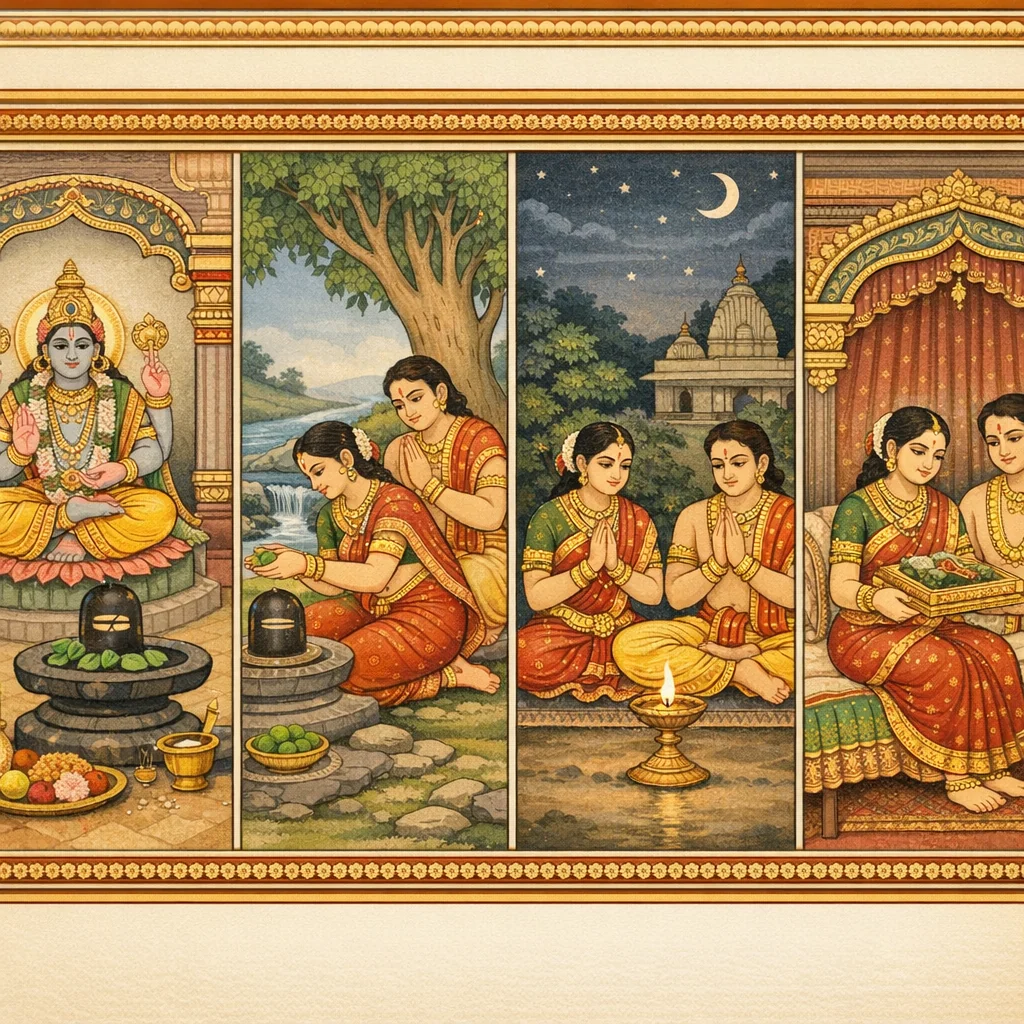
This chapter teaches two connected observances. First, when the ṛṣis ask how the weak or delicate can keep many rules and vows, Sūta recommends the Bhīṣma-pañcaka—an accessible five-day discipline in the bright fortnight of Kārttika beginning on Ekādaśī. It prescribes morning purification, Vāsudeva-centered niyamas, fasting (or substitute dāna when fasting is not possible), offering havis-food to a brāhmaṇa, worship of Hṛṣīkeśa as Jalāśāyī with incense, fragrance, and naivedya, and a night vigil; it concludes on the sixth day by honoring brāhmaṇas and then eating oneself after pañcagavya preliminaries. Day-specific flower/leaf offerings (e.g., jāti on Ekādaśī, bilva on Dvādaśī, and others up to Paurṇamāsī) and an arghya-mantra are also given. Second, the ṛṣis request the fuller Aśūnya-Śayana Vrata, said to have been performed by Indra to please Cakrapāṇi. Sūta sets its start after Śrāvaṇī has passed, on the second day under a Viṣṇu-linked nakṣatra, with ethical cautions to avoid conversation with “sinful/fallen/mleccha” persons (a social boundary in the text). After midday bathing and clean dress, one worships Jalāśāyī and prays that household prosperity, ancestors, sacred fires, deities, and marital continuity not be destroyed—affirming a dharmic household vision grounded in Lakṣmī–Viṣṇu unity and the ideal of an “unempty bed” across births. The vow continues through Bhādrapada, Āśvina, and Kārttika with dietary restraints (notably avoiding oil) and ends with gifting a bed with fruits/rice and cloth, plus gold as dakṣiṇā. The phalaśruti promises heightened merit for fasting, lasting divine satisfaction, removal of accumulated sin, and benefits for women (purification, mental steadiness, marriage prospects for a maiden), while the desireless practitioner gains the fruits of Cāturmāsya-like restraints.
Shlokas
Verse 1
ऋषय ऊचुः । प्रभूतानि त्वयोक्तानि व्रतानि नियमास्तथा । प्रसुप्ते पुंडरीकाक्षे येषां संख्या न विद्यते
The sages said: “You have spoken of many vows and disciplines—so many that their number cannot be counted—to be observed when the lotus-eyed Lord abides in His sacred sleep.”
Verse 2
अशक्त्या हि शरीरस्य नियमानां कथं चरेत् । व्रतं हि सुकुमारांगो दानैर्वापि वदस्व नः
“But if the body is weak, how can one practice strict disciplines? Tell us of a vow fit for the delicate-bodied—or else a path through gifts and charity.”
Verse 3
सूत उवाच । अशक्तो नियमं कर्तुं सुकुमारो भवेत्तु यः । तेन तत्र प्रकर्तव्यं विख्यातं भीष्मपंचकम्
Sūta said: Whoever is unable to undertake the full discipline, or is delicate in body, should there perform the renowned five-day observance known as the Bhīṣma-pañcaka.
Verse 4
कार्त्तिकस्य सिते पक्ष एकादश्यां समाहितः । प्रातरुत्थाय विप्रेंद्र कर्तव्यं दंतधावनम्
In the bright fortnight of Kārttika, on Ekādaśī, with the mind composed—rising early in the morning, O best of brāhmaṇas—one should perform the cleansing of the teeth.
Verse 5
ततस्तु नियमं कुर्याद्वासुदेवपरायणः । पूर्वोक्तानां च सर्वेषां नियमानां द्विजोत्तमाः
Then, devoted to Vāsudeva, one should undertake that discipline—O best of the twice-born—together with all the observances that have been stated earlier.
Verse 6
उपवासः प्रकर्तव्यस्तस्मिन्नहनि भक्तितः । अशक्त्या वा शरीरस्य हेमं दद्यात्स्वशक्तितः
On that day one should observe a fast with devotion. Or, if the body is unable, one should give gold according to one’s means.
Verse 7
ब्राह्मणाय हविष्यान्नं दातव्यं वैष्णवैर्नरैः । एवं पञ्चदिनं यावत्कर्तव्यं व्रतमुत्तमम्
Vaiṣṇava men should give haviṣya-food to a brāhmaṇa. In this manner, for five days, the excellent vow should be performed.
Verse 8
पूजनीयो हृषीकेशो जलशायिस्वरूपधृक् । गंधैर्धूपैश्च नैवेद्यै रात्रिजागरणैरपि
Hṛṣīkeśa, who bears the form of the Lord reclining upon the waters, should be worshipped—with fragrances, incense, food-offerings, and also with night-long vigil.
Verse 9
षष्ठेऽहनि ततो जाते पूजयेद्ब्राह्मणोत्तमान् । तांश्च वस्त्रैर्हिरण्येन मिष्टान्नेन प्रभक्तितः
Then, when the sixth day arrives, one should honor excellent brāhmaṇas, and devotefully present them with garments, gold, and sweet food.
Verse 10
ततः कृतांजलिर्भूत्वा याचयेद्ब्राह्मणोत्तमान् । सर्वे मे नियमाः प्राप्ता युष्माकं च प्रसादतः
Then, with hands joined in reverence, one should request the excellent brāhmaṇas: “All my observances have been fulfilled through your gracious favor.”
Verse 11
ततस्तैरपि वक्तव्यं चतुर्मासीसमुद्भवम् । व्रतानां नियमानां च व्रतं भूयात्तवाखिलम्
Then they too should say: “May your entire observance—born of the Cāturmāsya season, with its vows and disciplines—be fully accomplished.”
Verse 12
ततो विसर्ज्य तान्विप्रान्भोजनं स्वयमाचरेत् । सर्वाहारेण राजेंद्र पंचगव्यप्रपूर्वकम्
Then, after respectfully dismissing those brāhmaṇas, one should oneself take a meal—O lord of kings—breaking the restraint with all kinds of food, preceded by pañcagavya.
Verse 13
यः करोति व्रतं तस्य फलं स्याद्बहुपुण्यदम् । यः पुनर्व्रतमेतद्धि कुरुते दिनपंचकम् । उपवासपरस्तस्य फलं शतगुणं भवेत्
Whoever undertakes this vow obtains a fruit that bestows abundant merit. But whoever performs this very vow for five days—devoted to fasting—his reward becomes a hundredfold.
Verse 14
एकादश्यां हरेः पूजां जातिपुष्पैः समाचरेत् । द्वादश्यां बिल्वपत्रेण शतपत्र्या ततः परम् । त्रयोदश्यां चतुर्दश्यां सुरभ्या भक्तिपूर्वकम्
On Ekādaśī one should duly worship Hari with jasmine flowers. On Dvādaśī, with bilva leaves; thereafter with the hundred-petalled lotus. On Trayodaśī and Caturdaśī, with fragrant offerings—performed in devotion.
Verse 15
भृंगराजेन पुण्येन पौर्णमास्यां प्रपूजयेत् । प्रतिपद्दिवसे सर्वैः पूजनीयो जनार्दनः । गोमूत्रं गोमयं क्षीरं दधि सर्पिः कुशोदकम्
On the full-moon day, one should worship (the Lord) with the sacred bhṛṅgarāja offering. On the following Pratipadā day, Janārdana should be worshipped by all. (Prepare) cow-urine, cow-dung, milk, curd, ghee, and kuśa-infused water.
Verse 16
प्रतिपद्दिवसे सर्वान्प्राशयेत्कायशुद्धये । अगरं गुग्गुलं चैव कर्पूरं तगरं त्वचा
On the day of Pratipadā, for the purification of the body, one should have all partake of the purificatory preparation. Use agaru, guggulu, camphor, tagara, and fragrant bark (tvacā).
Verse 17
एकैकं निर्वपेद्धूपं प्रतिपद्दिवसेऽखिलम् । जलशायी जगद्योनिः शेषपर्यंकमाश्रितः
On the day of Pratipadā, one should offer the incense ingredients one by one, in full. Meditate on the Lord as the Water-Reclining One, the Womb of the world, resting upon the couch of Śeṣa.
Verse 18
अर्घं गृह्णातु मे देवो भीष्मपंचकसिद्धये । मंत्रेणानेन दातव्यो ह्यर्घो देवस्य भक्तितः
“May the Lord accept my arghya for the successful completion of the Bhīṣma-pañcaka.” With this mantra, the arghya is indeed to be offered to the Deity, out of devotion.
Verse 19
शंखतोयं समादाय सपुष्पफलचंदनैः । नैवेद्यं परमान्नं च स्वशक्त्या निर्वपेद्द्विजाः
O twice-born ones, taking water from a conch along with flowers, fruits, and sandal, one should offer naivedya—especially paramānna, sweet rice—according to one’s means.
Verse 20
एतद्वः सर्वमाख्यातं व्रतं वै भीष्मपंचकम् । संप्राप्यते फलं चैव व्रतानां नियमैः सह
Thus, everything has been explained to you regarding the vow called Bhīṣma-pañcaka. Its fruit is surely attained, together with the disciplines and restraints prescribed for vows.
Verse 21
ऋषय ऊचुः यदेतद्भवता प्रोक्तमशून्यशायिनीव्रतम् । इन्द्रेण यत्कृतं पूर्वं तुष्ट्यर्थं चक्रपाणिनः । प्रसुप्तस्य महाभाग फलं चैव प्रकीर्तितम्
The sages said: “This Aśūnyaśāyinī vow that you have described—once performed by Indra to please the discus-bearing Lord—together with the fruit of that observance while the Lord abides in yogic sleep, has been proclaimed, O greatly fortunate one.”
Verse 22
कस्मिन्काले प्रकर्तव्यं केनैव विधिना तथा । तस्मात्सूत महाभाग विधानं विस्तराद्वद
At what time should it be performed, and by what exact procedure? Therefore, O Sūta, greatly fortunate one, explain its ordinance in detail.
Verse 23
सूत उवाच । श्रावण्यां समतीतायां द्वितीयादिवसे स्थिते । प्रातरुत्थाय विप्रेन्द्रा नक्षत्रे विष्णुदैवते । पापिष्ठैः पतितैर्म्लेच्छैः संभाषं नैव कारयेत्
Sūta said: “When the month of Śrāvaṇa has passed and the second day has arrived, O best of brāhmaṇas, one should rise at dawn. On the day whose nakṣatra is presided over by Viṣṇu, one should not converse with the most sinful—fallen persons and mlecchas—so that the vow remains undefiled.”
Verse 24
ततो मध्याह्नसमये स्नात्वा धौतांबरः शुचिः । जलशायिनमासाद्य मंत्रेणानेन पूजयेत्
Then, at midday, having bathed and wearing clean-washed garments, being pure, one should approach the Lord who reclines upon the waters (Jalāśayī) and worship Him with the following mantra.
Verse 25
श्रीवत्सधारिञ्छ्रीकांत श्रीधामञ्छ्रीपतेऽव्यय । गार्हस्थ्यं मा प्रणाशं मे यातु धर्मार्थकामदम्
O bearer of Śrīvatsa, O beloved Lord of Śrī (Lakṣmī), O abode of auspiciousness, O imperishable master of Śrī—may my householder life not fall into ruin; may it remain a giver of dharma, prosperity (artha), and rightful desire (kāma).
Verse 26
पितरो मा प्रणश्यंतु मा प्रणश्यंतु चाग्नयः । देवता मा प्रणश्यंतु मत्तो दांपत्यभेदतः
May my ancestors not be cut off; may the sacred fires not be cut off; may the deities not be cut off from me—because of any rupture in my marital bond.
Verse 27
लक्ष्म्या वियुज्यसे कृष्ण न कदाचिद्यथा भवान् । तथा कलत्रसम्बन्धो देव मा मे प्रणश्यतु
O Kṛṣṇa, just as You are never separated from Lakṣmī, so too, O Lord, may my bond with my spouse never be destroyed.
Verse 28
लक्ष्म्या ह्यशून्यं शयनं यथा ते देव सर्वदा । शय्या ममाप्यशून्यास्तु तथा जन्मनि जन्मनि
O Lord, just as Your couch is never empty, for Lakṣmī is ever with You, so may my bed too never be empty—so it be, birth after birth.
Verse 29
एवमर्थं निवेद्याथ ततो विप्रं प्रपूजयेत् । यथाशक्त्या द्विजश्रेष्ठा वित्तशाठ्यं विवर्जयेत्
Having thus submitted one’s petition, then one should duly honor a brāhmaṇa. O best of twice-born, according to one’s capacity one must avoid deceit regarding wealth and give without miserliness.
Verse 30
एवं भाद्रपदे मासि आश्विने कार्तिके तथा । पूजयेच्च जगन्नाथं जलशायिनमच्युतम्
In the same manner, in the months of Bhādrapada, Āśvina, and likewise Kārtika, one should worship Jagannātha—Acyuta who reclines upon the waters.
Verse 31
अक्षारभोजनं कार्यं विशेषात्तैलवर्जितम् । समाप्तौ च ततो दद्याद्ब्राह्मणेंद्राय भक्तितः
One should partake of a simple meal (akṣāra-bhojana), especially abstaining from oil. And upon completion, one should then, with devotion, give a gift to an eminent brāhmaṇa.
Verse 32
फलव्रीहिसमोपेतां शय्यां वस्त्रसमन्विताम् । सुवर्णं दक्षिणायां च तथैव च फलं लभेत्
One should donate a bed furnished with fruits and rice, together with garments, and also give gold as dakṣiṇā. In that very manner one obtains the corresponding fruit—merit and benefit.
Verse 33
एवं यः कुरुते सम्यग्व्रतमेतत्समाहितः । तस्य तुष्टिपथं याति जलशायी जगद्गुरुः
Thus, whoever performs this vow properly, with steady and collected concentration—toward that person the Guru of the universe, Nārāyaṇa who reclines upon the waters, becomes fully pleased.
Verse 34
यथा शक्रस्य संतुष्टः पूर्वमेव द्विजोत्तमाः । अशून्यं शयनं तस्य भवेज्जन्मनि जन्मनि
O best of the twice-born, just as one pleases Śakra (Indra) from the very outset, so for that person the bed of life is never empty—birth after birth.
Verse 35
अष्टमासकृतं पापमज्ञानाज्ज्ञानतोऽपि वा । अशून्यशयनात्सर्वं व्रतान्नाशं नयेत्पुमान्
Whether committed in ignorance or even knowingly, all sin accumulated over eight months is destroyed for a man through the Aśūnyaśayana observance; by this vow it is brought to ruin.
Verse 36
पुत्रहीना च या नारी काकवन्ध्या च या भवेत् । विधवा या करोत्येतद्व्रतमेवं समाहिता । तस्यास्तुष्टो जगन्नाथः कायशुद्धिं प्रयच्छति
A woman without a son, or one who is called kāka-vandhyā (bereft of living offspring), or a widow—if she performs this vow with attentive resolve—then Jagannātha, the Lord of the world, pleased with her, bestows purity of body (and embodied life).
Verse 37
न तस्या जायते बुद्धिः कदाचित्पापसंभवा । न कामोपहता बुद्धिः कथंचिदपि जायते
For her, discernment born of sin never arises at any time; nor does a mind struck and clouded by desire arise for her in any way.
Verse 38
कुमारिकापि या सम्यग्व्रतमेतत्समाचरेत् । सा पतिं लभते विप्राः कुलीनं रूपसंयुतम्
Even a maiden who duly observes this vow obtains a husband, O brāhmaṇas—noble in lineage and endowed with comeliness.
Verse 39
निष्कामः कुरुते यस्तु व्रतमेतत्समाहितः । चातुर्मास्युद्भवानां च नियमानां फलं लभेत्
But whoever performs this vow with a focused mind and without desire for reward attains as well the fruit of the disciplines associated with Cāturmāsya.
Verse 265
इति श्रीस्कांदे महापुराण एकाशीतिसाहस्र्यां संहितायां षष्ठे नागरखण्डे हाटकेश्वरक्षेत्रमाहात्म्ये जलशाय्युपाख्याने अशून्यशयनव्रतमाहात्म्यवर्णनं नाम पञ्चषष्ट्युत्तरद्विशततमोऽध्यायः
Thus ends chapter 265, entitled “The Description of the Greatness of the Aśūnyaśayana Vow,” in the Jalaśāyī episode within the Hāṭakeśvara-kṣetra-māhātmya of the sixth Nāgara Khaṇḍa of the Śrī Skanda Mahāpurāṇa, in the Ekāśītisāhasrī Saṃhitā.