Adhyaya 258
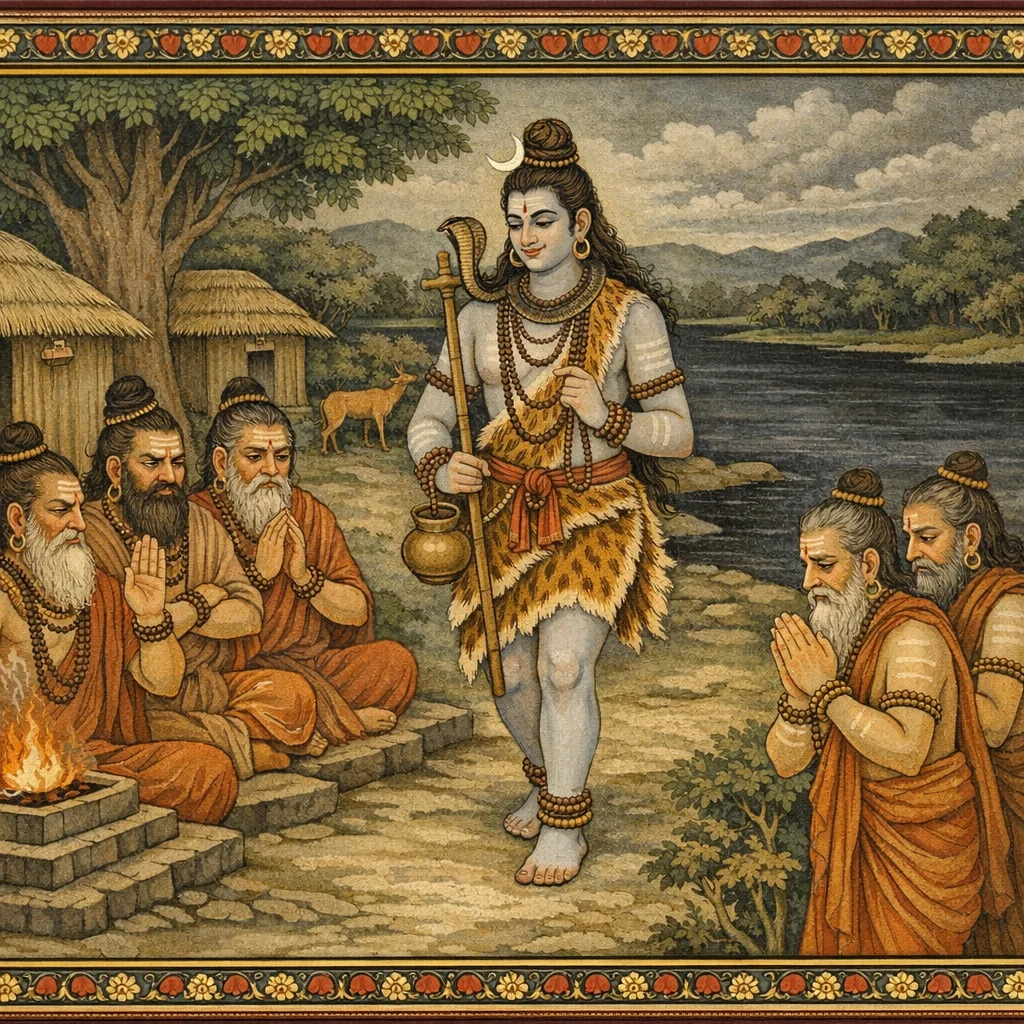
The chapter is framed as a dialogue among sages, set in motion by Gālava’s question. While Pārvatī (as Śailaputrī) performs severe austerities, Śiva is disturbed by desire and wanders seeking relief until he approaches the Yamunā. The heat of his ascetic power alters the river—its waters are described as darkened—and the spot is sanctified by a direct phalaśruti: bathing there destroys vast stores of sin, and the place becomes known as Haratīrtha. Śiva then assumes the guise of a captivating, playful ascetic and moves among the sages’ hermitages, causing social turmoil as the sages’ wives become mentally enthralled. The sages, failing to recognize the divine presence, react in anger and pronounce a curse meant to punish and humiliate. The curse manifests as a dreadful bodily affliction upon Śiva, shaking cosmic stability and filling beings and gods with fear. Realization follows: the sages lament their error of understanding and acknowledge Śiva’s transcendent nature. A hymnic passage praises the Devī as all-pervading and as the womb of the cosmos’ functions, and Śiva seeks restoration from the curse’s effects. The chapter thus weaves together the founding of a tīrtha, a warning against rash judgment, and reflection on divine immanence and transcendence.
Shlokas
Verse 1
गालव उवाच । प्रवृत्तायां शैलपुत्र्यां महत्तपसि दारुणे । कन्दर्पेण पराभूतो विचचार महीं हरः
Gālava said: When Śailaputrī (Pārvatī, the Mountain’s Daughter) had undertaken a great and severe austerity, Hara (Śiva), overcome by Kāma (desire), wandered over the earth.
Verse 2
वृक्षच्छायासु तीर्थेषु नदीषु च नदेषु च । जलेन सिंचत्स्ववपुः सर्वत्रापि महेश्वरः
In the shade of trees, at sacred tīrthas, in great rivers and in streams, Maheśvara everywhere kept sprinkling his own body with water.
Verse 3
तथापि कामाकुलितो न लेभे शर्म कर्हिचित् । एकदा यमुनां दृष्ट्वा जलकल्लोलमालिनीम्
Yet, tormented by desire, he found no peace at any time. Once, he beheld the Yamunā, garlanded with rippling waves.
Verse 4
विगाहितुं मनश्चक्रे तापार्तिं शमयन्निव । कृष्णं बभूव तन्नीरं हरकायाग्निवह्निना
He resolved to plunge in, as though to soothe the tormenting heat. By the fire of Hara’s bodily power, that water turned dark.
Verse 5
साऽपि दिव्यवपुः पूर्वं श्यामा भूत्वा हराद्यतः
She too—of divine form—first became dark-hued (śyāmā), and then, through Hara’s influence, was transformed beginning from him.
Verse 6
स्तुत्वा नत्वा महेशानमुवाच पुनरेव सा । प्रसादं कुरु देवेश वशगास्मि सदा तव
After praising and bowing to Maheśāna, she spoke again: “Grant me your grace, O Lord of gods; I am ever under your command.”
Verse 7
ईश्वर उवाच । अस्मिंस्तीर्थवरेपुण्ये यः स्नास्यति नरो भुवि । तस्य पापसहस्राणि यास्यंति विलयं ध्रुवम् १
Īśvara said: “In this supremely sacred tīrtha, whoever among men on earth bathes here—his thousands of sins will surely dissolve away.”
Verse 8
हरतीर्थमिति ख्यातं पुण्यं लोके भविष्यति । इत्युक्त्वा तां प्रणम्याथ तत्रैवांतरधीयत
“It will become famous in the world as Hara-tīrtha, a holy place of merit.” Having said this, he bowed to her and then vanished on that very spot.
Verse 9
तस्यास्तीरे महेशोऽपि कृत्वा रूपं मनोहरम् । कामालयं वाद्यहस्तं कृतपुंड्रं जटाधरम्
On her bank, Maheśa too assumed a captivating form—abiding in desire, holding a musical instrument in his hand, marked with a sectarian tilaka, and bearing matted jaṭā locks.
Verse 10
स्वेच्छया मुनिगेहेषु दर्शयत्यंगचापलम् । क्वचिद्गायति गीतानि क्वचिन्नृत्यति छन्दतः
At will, in the sages’ hermitages, he displayed playful bodily movements; at times he sang songs, and at times he danced in rhythm.
Verse 11
स च क्रुद्ध्यति हसति स्त्रीणां मध्यगतः क्वचित् । एवं विचरतस्तस्य ऋषिपत्न्यः समंततः
And at times, moving amid the women, he would grow angry and then laugh. As he roamed about in this manner, the wives of the sages surrounded him on every side.
Verse 12
पत्युः शुश्रूषणं गेहे त्यक्त्वा कार्याण्यपि क्षणात् । तमेव मनसा चक्रुः पतिरूपेण मोहिताः
In a moment they abandoned even their household duties and their service to their husbands; bewildered, seeing him in the very form of a husband, they fixed their minds on him alone.
Verse 13
भ्रमंत्यश्चैव हास्यानि चक्रुस्ता अपि योषितः । ततस्तु मुनयो दृष्ट्वा तासां दुःशीलभावनाम्
Wandering about, those women also indulged in laughter and playful acts. Then the sages, seeing their ignoble disposition and conduct, took notice.
Verse 14
चुक्रुधुर्मुनयः सर्वे रूपं तस्य मनोहरम् । गृह्यतां हन्यतामेष कोऽयं दुष्ट उपागतः
All the sages flared with anger—despite his captivating form—and cried, “Seize him! Strike him down! Who is this wicked one that has come here?”
Verse 15
इति ते गृह्य काष्ठानि यदोपस्थे ययुस्तदा । पलायितः स बहुधा भयात्तेषां महात्मनाम्
So saying, they seized sticks and advanced upon him. Then, out of fear of those great-souled sages, he fled away in many directions.
Verse 16
यो जीवकलया विश्वं व्याप्य तिष्ठति देहिनाम् । न ज्ञायते न च ग्राह्यो न भेद्यश्चापि जायते
He who, by a portion of his living power, pervades the universe and abides within embodied beings—he cannot be fully known; he cannot be seized; nor can he be pierced or harmed.
Verse 17
न शेकुस्ते यदा सर्वे ग्रहीतुं तं महेश्वरम् । तदा शिवं प्रकुपिता शेपुरित्थं द्विजातयः
When all of them were unable to seize that Maheśvara, then those twice-born sages—enraged—pronounced a curse upon Śiva in this manner.
Verse 18
यस्माल्लिंगार्थमागत्य ह्याश्रमांश्चोरवत्कृतम् । परदारापहरणं तल्लिङ्गं पततां भुवि
“Since, coming here for the sake of the liṅga, you have behaved like a thief in our hermitages—abducting others’ wives—therefore let that liṅga fall upon the earth!”
Verse 19
सद्य एव हि शापं त्वं दुष्टं प्राप्नुहि तापस । एवमुक्ते स शापाग्निर्वज्ररूपधरो महान्
“At once, O wicked ascetic, receive this curse!” When these words were spoken, the mighty fire of the curse surged forth, bearing the form of a thunderbolt (vajra).
Verse 20
तल्लिगं धूर्जटेश्छित्त्वा पातयामास भूतले । रुधिरौघपरिव्याप्तो मुमोह भगवान्विभुः
Cutting off the liṅga of Dhūrjaṭi (Śiva), he cast it down upon the earth. Pervaded by a flood of blood, the all-powerful Lord fell into bewilderment.
Verse 21
वेदनार्त्तोज्ज्वलवपुर्महाशापाभिभूतधीः । तं तथा पतितं दृष्ट्वा त आजग्मुर्महर्षयः
His body blazed with the torment of pain, and his mind was overpowered by a great curse. Seeing him fallen in that state, the great sages hurried to that place.
Verse 22
आकाशे सर्वभूतानि त्रेसुर्विश्वं चचाल ह । देवाश्च व्याकुला जाता महाभयमुपागताः
All beings in the sky trembled, and the whole universe shook. Even the gods grew distressed, seized by great fear.
Verse 23
ज्ञात्वा विप्रा महेशानं पीडिता हृदयेऽभवन् । शुशुचुर्भृशदुःखार्ता दैवं हि बलवत्तरम्
Recognizing him as Maheśāna, the brāhmaṇas felt their hearts oppressed. Overwhelmed by intense sorrow, they wept—indeed, destiny (daiva) proves the stronger force.
Verse 24
किं कृतं भगवानेष देवैरपि स सेव्यते । साक्षी सर्वस्य जगतोऽस्माभिर्नैवोपलक्षितः
What have we done? This Blessed Lord—served even by the gods—this Witness of the entire world, was not recognized by us at all.
Verse 25
वयं मूढधियः पापाः परमज्ञानदुर्बलाः । कथमस्माभिर्यस्यात्मा श्रुतश्च न निवेदितः
We are sinful, of deluded understanding, and weak in the highest knowledge. How is it that we did not make known the truth of Him—though we had heard of it?
Verse 26
मयेदृशो गृहस्थाय ह्यात्माऽयं न निवेदितः । निर्विकारो निर्विषयो निरीहो निरुपद्रवः
To a householder such as I, this Self was not made known—this Self that is changeless, beyond sense-objects, desireless, and free from disturbance.
Verse 27
निर्ममो निरहंकारो यः शंभुर्नोपलक्षितः । यस्य लोका इमे सर्वे देहे तिष्ठंति मध्यगाः
That Śambhu—without possessiveness and without ego—was not recognized. Within whose body all these worlds abide, established at the center.
Verse 28
स एष जगतां स्वामी हरोऽस्माभिर्न वीक्षितः । इत्युक्त्वा ते ह्युपविष्टा यावत्तत्र समागताः
‘He indeed is the Lord of the worlds—Hara—yet we did not behold Him.’ Saying this, they sat down there, waiting until others arrived.
Verse 29
तान्दृष्ट्वा सहसा त्रस्तः पुनरेव महेश्वरः । विप्रशापभयान्नष्टस्त्रिपुरारिर्दिवं ययौ
Seeing them, Maheśvara suddenly grew afraid once more. Fearing the brāhmaṇas’ curse, the foe of Tripura vanished and departed to heaven.
Verse 30
सृष्टिस्थिति विनाशानां कर्त्र्यै मात्रे नमोनमः
Obeisance, again and again, to the Mother—the Doer of creation, preservation, and dissolution.
Verse 32
सर्वै र्ज्ञाता रसाभिज्ञैर्मधुरास्वाददायिनी । त्वया विश्वमिदं सर्वं बलस्नेहसमन्वितम्
Known to all discerning connoisseurs of rasa as the giver of a sweet savor, by you this entire universe is pervaded and sustained—endowed with strength and binding affection.
Verse 33
त्वं माता सर्वरुद्राणां वसूनां दुहिता तथा । आदित्यानां स्वसा चैव तुष्टा वांच्छितसिद्धिदा
You are the mother of all the Rudras, and likewise the daughter of the Vasus; you are also the sister of the Ādityas. When pleased, you grant the fulfillment of all desired attainments.
Verse 34
त्वं धृतिस्त्वं तथा पुष्टिस्त्वं स्वाहा त्वं स्वधा तथा । ऋद्धिः सिद्धिस्तथा लक्ष्मीर्धृतिः कीर्ति स्तथा मतिः
You are steadfastness and nourishment; you are Svāhā and likewise Svadhā. You are prosperity and accomplishment; you are Lakṣmī—endurance, fame, and right understanding as well.
Verse 35
कांतिर्लज्जा महामाया श्रद्धा सर्वार्थसाधिनी । त्वया विरहितं किंचिन्नास्ति त्रिभुवनेष्वपि
You are radiance, modesty, Mahāmāyā, and the faith that fulfills every worthy aim. In the three worlds, nothing whatsoever exists apart from you.
Verse 36
वह्नेस्तृप्तिप्रदात्री च देवादीनाम् च तृप्तिदा । त्वया सर्वमिदं व्याप्तं जगत्स्थावरजंगमम्
You grant satisfaction to Agni, and you bestow satisfaction upon the gods and all beings. By you this entire world is pervaded—both the immovable and the moving.
Verse 37
पादास्ते वेदाश्चत्वारः समुद्राः स्तनतां ययुः । चंद्रार्कौ लोचने यस्या रोमाग्रेषु च देवताः
Your feet are the four Vedas; the oceans have become your breasts. The moon and the sun are her eyes, and the gods abide at the tips of her hairs.
Verse 38
शृङ्गयोः पर्वताः सर्वे कर्णयोर्वायवस्तथा । नाभौ चैवामृतं देवि पातालानि खुरास्तथा
All mountains are your horns; the winds are your ears. In your navel, O Goddess, is amṛta, the nectar of immortality, and the netherworlds are your hooves as well.
Verse 39
स्कन्धे च भगवान्ब्रह्मा मस्तकस्थः सदाशिवः । हृद्देशे च स्थितो विष्णुः पुच्छाग्रे पन्नगास्तथा
Upon your shoulder stands Lord Brahmā; upon your head abides Sadāśiva. In your heart-region dwells Viṣṇu, and at the tip of your tail are the serpent-beings, the Nāgas.
Verse 40
शकृत्स्था वसवः सर्वे साध्या मूत्रस्थितास्तव । सर्वे यज्ञा ह्यस्थिदेशे किन्नरा गुह्यसंस्थिताः
All the Vasus abide in your excrement, and the Sādhyas are situated in your urine. All sacrifices are present in your bones, and the Kinnaras are lodged in your hidden parts.
Verse 41
पितॄणां च गणाः सर्वे पुरःस्था भांति सर्वदा । सर्वे यक्षा भालदेशे किन्नराश्च कपोलयोः
All the hosts of the Ancestors shine ever before you. All the Yakṣas are in your forehead-region, and the Kinnaras are upon your cheeks.
Verse 42
सर्वदेवमयी त्वं हि सर्वभूतविवृद्धिदा । सर्वलोकहिता नित्यं मम देहहिता भव
You are truly the embodiment of all the gods, the increaser of all beings. Ever devoted to the welfare of all worlds, be now the benefactress of my own body as well.
Verse 43
प्रणतस्तव देवेशि पूजये त्वां सदाऽनघे । स्तौमि विश्वार्तिहन्त्रीं त्वां प्रसन्ना वरदा भव
Bowing before you, O Goddess of lords—O sinless one—I worship you always. I praise you as the remover of the world’s afflictions; be gracious, and become the giver of boons.
Verse 44
विप्रशापाग्निना दग्धं शरीरं मम शोभने । स्वतेजसा पुनः कर्त्तुमर्हस्यमृतसंभवे
My body has been burned by the fire of a brāhmaṇa’s curse, O radiant one. O source of immortality, you ought to restore it again by your own divine splendor.
Verse 45
इत्युक्त्वा ता परिक्रम्य तस्या देहे लयं गतः । साऽपि गर्भे दधाराथ सुरभिस्तदनन्तरम्
Thus having spoken, he circumambulated her in reverence and then entered into dissolution (laya) within her body. Thereafter Surabhi, in her turn, conceived him in her womb.
Verse 46
कालातिक्रमयोगेन सर्वव्याकुलतां ययौ । यस्मिन्प्रनष्टे देवेशे विप्रशापभयावृते
As time passed, all beings fell into utter distress, for the Lord had vanished—enveloped by fear of the brāhmaṇa’s curse.
Verse 47
देवा महार्तिं प्रययुश्चचाल पृथिवी तथा । चंद्रार्कौ निष्प्रभौ चैव वायुरुच्चण्ड एव च
The gods were seized by great anguish; the earth itself trembled. The moon and sun became lusterless, and the wind turned fiercely violent.
Verse 48
समुद्राः क्षोभमग मंस्तस्मिन्काले द्विजोत्तम
At that time, O best of the twice-born, the oceans rose into agitation and turmoil.
Verse 49
यस्मिञ्जगत्स्थावरजंगमादिकं काले लयं प्राप्य पुनः प्ररोहति । तस्मिन्प्रनष्टे द्विजशापपीडिते जयद्धतप्राय मवर्तत क्षणात्
He in whom the whole world—moving and unmoving—at the destined time dissolves and then arises again: when that Lord vanished, afflicted by a brāhmaṇa’s curse, the universe in an instant became as if already perishing.
Verse 258
इति श्रीस्कान्दे महापुराण एकाशीतिसाहस्र्यां संहितायां षष्ठे नागरखण्डे हाटकेश्वरक्षेत्रमाहात्म्ये शेषशाय्युपाख्याने ब्रह्मनारदसंवादे चातुर्मास्यमाहात्म्ये हरशापो नामाष्टपंचाशदुत्तरद्विशततमोऽध्यायः
Thus, in the Śrī Skanda Mahāpurāṇa—within the Saṃhitā of eighty-one thousand ślokas—this is the 258th chapter, called “Haraśāpa,” in the Sixth (Nāgara) Khaṇḍa, in the Māhātmya of the sacred region of Hāṭakeśvara, in the Śeṣaśāyy narrative, in the Brahmā–Nārada dialogue, within the praise of the Cāturmāsya observance.
Verse 311
या त्वं रसमयैर्भावैराप्यायसि भूतलम् । देवानां च तथासंघान्पितॄणामपि वै गणान्
You who, through essence-filled, life-sustaining qualities, nourish the earth—so too you sustain the hosts of the gods, and likewise the multitudes of the Pitṛs, the ancestors.