Adhyaya 257
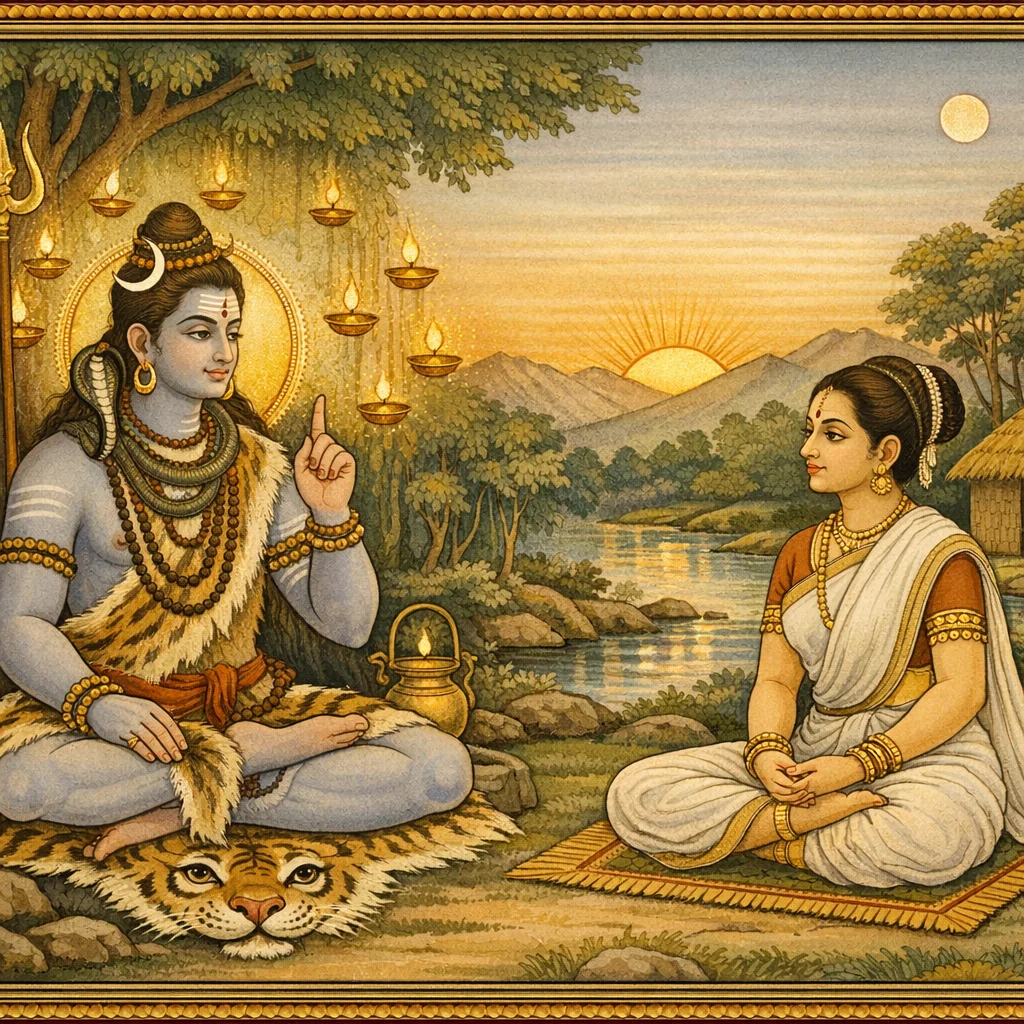
Chapter 257 unfolds as a theological dialogue on mantra-adhikāra (eligibility) and disciplined devotion. Pārvatī asks Mahādeva to explain the greatness of the twelve-syllable mantra—its correct form, fruits, and method. Śiva lays down a varṇa/āśrama-based rule: dvija practitioners recite it with the praṇava «oṃ», while women and Śūdras are taught it with a prefatory salutation, specifically «namo bhagavate vāsudevāya», and without praṇava, citing Purāṇa–Smṛti authority. He warns that violating the prescribed order (krama) is a fault bringing harmful consequences. Pārvatī raises a doctrinal tension: she worships through the three mātrās, yet is told she lacks praṇava-adhikāra. Śiva exalts praṇava as the primordial principle in which Brahmā, Viṣṇu, and Śiva are conceptually grounded, but says eligibility is attained through tapas—especially Cāturmāsya observance for Hari’s pleasure. The chapter weaves a tapas-bhakti synthesis: tapas yields aims and virtues but is difficult; true increase of tapas is marked by devotion to Hari, while tapas without bhakti is diminished. Remembrance of Viṣṇu purifies speech, and Hari-kathā dispels sin like a lamp removes darkness. The narrative culminates in Pārvatī performing Cāturmāsya austerity on Himācala with brahmacarya and simplicity, meditating on Hari–Śaṅkara at prescribed times; a closing praise (attributed to Gālava) hails her as the cosmic Mother and prakṛti beyond the guṇas, holding her tapas as exemplary within the section’s vow-and-place framework.
Shlokas
Verse 1
पार्वत्युवाच । द्वादशाक्षरमाहात्म्यं मम विस्तरतो वद । यथावर्णं यत्फलं च यथा च क्रियते मया
Pārvatī said: “Tell me in full the greatness of the twelve-syllabled mantra—its proper form according to the syllables, the fruit it bestows, and the way it should be practiced by me.”
Verse 2
श्रीमहादेव उवाच । द्विजातीनां सहोंकारसहितो द्वादशाक्षरः । स्त्रीशूद्राणां नमस्कारपूर्वकः समुदाहृतः
Śrī Mahādeva said: “For the twice-born, the twelve-syllabled mantra is taught together with the syllable Oṃ; for women and Śūdras, it is declared to be preceded by a salutation, ‘namo’.”
Verse 3
प्रकृतीनां रामनाम संमतो वा षडक्षरः । सोऽपि प्रणवहीनः स्यात्पुराणस्मृतिनिर्णयः
For ordinary people, the six-syllabled formula approved as “Rāma-nāma” is accepted; and that too should be without the praṇava (Oṃ)—such is the determination of the Purāṇas and Smṛtis.
Verse 4
क्रमोऽयं सर्ववर्णानां प्रकृतीनां सदैव हि । क्रमेण रहितो यस्तु करोति मनुजो जपम् । तस्य प्रकुप्यति विभुर्नरकादिप्रदायकः
Indeed, this is the established order for all social classes and for ordinary people. But whoever performs japa without that proper order—the Lord becomes wrathful toward him, becoming the giver of hell and other painful consequences.
Verse 5
पार्वत्युवाच । मया त्रिमात्रया स्वामिन्सेव्यते जगदीश्वरः । रूपमस्य कथं जाने वचसामप्यगोचरम्
Pārvatī said: “O Lord, I worship the Lord of the universe through the three mātrās; how can I know His form, which lies beyond even the reach of words?”
Verse 6
ईश्वर उवाच प्रणवस्याधिकारो न तवास्ति वरवर्णिनि । नमो भगवते वासुदेवायेति जपः सदा
Īśvara said: “O fair one, you have no authorization for the praṇava (Oṃ). Therefore the japa should always be: ‘Namo Bhagavate Vāsudevāya.’”
Verse 7
पार्वत्युवाच । यदि सप्रणवं दद्याद्द्वादशाक्षरचिंतनम । प्रणवे नाधिकारो मे कथं भवति धूर्जटे
Pārvatī said: “If contemplation of the twelve-syllabled mantra is to be given together with the praṇava, then since I have no eligibility for the praṇava, how can it apply to me, O Dhūrjaṭi?”
Verse 8
ईश्वर उवाच । प्रणवः सर्वदेवानामादिरेष प्रकीर्तितः । ब्रह्मा विष्णुः शिवश्चैव वसंति दयितायुताः
Īśvara said: “The Praṇava (Oṃ) is proclaimed as the primordial source of all the gods. In it dwell Brahmā, Viṣṇu, and Śiva as well—together with their beloved consorts.”
Verse 9
तत्र सर्वाणि भूतानि सर्व तीर्थानि भागशः । तिष्ठंति सर्वतीर्थानि कैवल्यं ब्रह्म एव यः
“Therein, all beings and all tīrthas abide, each in its own share. There too reside all tīrthas—indeed, that is Brahman itself, the very state of liberation (kaivalya).”
Verse 10
तस्य योग्या तदा देवि भविष्यसि यदा तपः । चातुर्मास्ये हरिप्रीत्यै करिष्यसि शुभानने
“O Goddess, fair-faced one, you will become fit for that when you undertake austerity. During Cāturmāsya, for the pleasure of Hari, you shall perform that tapas.”
Verse 11
तपसा प्राप्यते कामस्तपसा च महत्फलम् । तपसा जायते सर्वं तत्तपः सुलभं नरैः
By tapas (austerity), desires are attained; by tapas, great fruits arise. From tapas everything is born—yet such tapas is not easily accomplished by people.
Verse 12
यशः सौभाग्यमतुलं क्षमासत्यादयो गुणाः । सुलभं तपसा नित्यं तपश्चर्त्तुं न शक्यते
Fame, incomparable good fortune, and virtues such as forbearance and truthfulness are regularly gained through tapas; yet sustaining tapas is not something easily done.
Verse 13
यदा हि तपसो वृद्धिस्तदा भक्तिर्हरौ भवेत् । तदा हि तपसो हानिर्यदा भक्तिं विना कृतम्
When tapas increases, devotion to Hari should arise. But tapas declines—indeed it becomes diminished—when it is performed without devotion.
Verse 14
तावत्तपांसि गर्जंति देहेऽस्मिन्सततं नृणाम् । यदा विष्णुं स्मरेन्नित्यं जिह्वाग्रं पावनं भवेत्
So long do austerities “roar” within this human body continually; but when one remembers Viṣṇu always, the very tip of one’s tongue becomes purifying, fit for holy utterance.
Verse 15
यथा प्रदीपे ज्वलिते प्रणश्यति महत्तमः । तथा हरेः कथायां च याति पापमनेकधा
Just as great darkness perishes when a lamp is lit, so too, in the narration of Hari, sin departs in many ways.
Verse 16
तस्मात्पार्वति यत्नेन हरौ सुप्ते तपः कुरु । चातुर्मास्येऽथ संप्राप्ते प्रणवेन समन्वितम्
Therefore, O Pārvatī, with earnest effort practice tapas while Hari is “asleep” in the sacred season. And when Cāturmāsya arrives, perform it joined with the Praṇava (Oṃ).
Verse 17
विशुद्धहृदया भूत्वा मन्त्रराजमिमं जप स एव भगवांस्तुष्टो द्वादशाक्षरसंयुतम्
With a purified heart, chant this king of mantras. That very Blessed Lord, pleased thereby, grants attainment through the mantra endowed with twelve syllables.
Verse 18
प्रदास्यति परं ज्ञानं ब्रह्मरूपमखण्डितम् । ब्रह्मकल्पांतकोटीषु जप त्वं द्वादशाक्षरम्
It will grant the supreme knowledge—undivided, of the very nature of Brahman. Therefore, through crores of world-ages and their endings, you should chant the twelve-syllabled mantra.
Verse 19
मन्त्रराजं सप्रणवं ध्यायेत्सोऽपि न पश्यति । इत्युक्ता सा तपोनिष्ठा तपश्चरितुमागता
Even if one meditates upon the king of mantras together with the Praṇava (Oṃ), one does not behold the goal merely by that. Thus instructed, she—steadfast in austerity—set forth to practice tapas.
Verse 20
हिमाचलस्य शिखरे चातुर्मास्ये समागते । ब्रह्मचर्यव्रतपरा वसनत्रयसंयुता
When the sacred Cāturmāsya season arrived, upon the peak of Himālaya she remained—devoted to the vow of brahmacarya (celibacy), clothed in three garments.
Verse 21
प्रातर्मध्येऽपराह्ने च ध्यायन्ती हरिशंकरम् । वपुर्यथा पुरा कृष्टं पूजने शंकरस्य च
At morning, at midday, and in the afternoon she meditated on Hari–Śaṅkara; and through the worship of Śaṅkara her body grew lean, as it had once before.
Verse 22
सखीजन समायुक्ता पितुः शृंगे मनोहरे । अतपत्सा विशालाक्षी क्षमादिगुणसंयुता
Accompanied by her circle of companions, upon her father’s delightful peak, that wide-eyed one—endowed with virtues such as forbearance—performed austerities.
Verse 23
गालव उवाच । या हि योगीश्वरध्येया या वन्द्या विश्ववन्दिता । जननी या च विश्वस्य साऽपि कामात्तपोगता
Gālava said: She who is to be meditated upon by the lords of Yoga, she who is worthy of worship and worshipped by the world, she who is the Mother of the universe—she too, out of desire, went forth to austerity.
Verse 24
या हि प्रकृतिसद्रूपा तडित्कोटिसमप्रभा । विरजा या स्वयं वन्द्या गुणातीताचरत्तपः
She whose form is akin to primordial Prakṛti, whose splendor equals crores of lightning flashes—stainless, worthy of worship in her own right, and beyond the guṇas—practiced austerity.
Verse 25
पृथ्व्यंबु तेजो वायुश्च गगनं यन्मयं विदुः । मूलप्रकृतिरूपा या सा चकारोत्तम तपः
She of whom they know earth, water, fire, wind, and sky to be constituted—she whose form is the root Mūla-Prakṛti—performed the highest austerity.
Verse 26
या स्थावरं जंगममाशु विश्वं व्याप्य स्थिता या प्रकृतेः पुरापि । स्पृहादिरूपेण च तृप्तिदात्री देवे प्रसुप्ते तपसाऽप शुद्धिम्
She who swiftly pervades and abides throughout the whole world, the unmoving and the moving; she who existed even before manifested Prakṛti; and who, in forms such as longing, bestows satisfaction—when the Deva lay asleep, she removed impurity by austerity (tapas).
Verse 257
इति श्रीस्कांदे महापुराण एकाशीतिसाहस्र्यां संहितायां षष्ठे नागरखण्डे हाटकेश्वरक्षेत्रमाहात्म्ये शेषशाय्युपाख्याने ब्रह्मनारदसंवादे चातुर्मास्यमाहात्म्ये द्वादशाक्षरनाममहिमपूर्वकपार्वतीतपोवर्णनं नाम सप्तपंचाशदुत्तरशततमोऽध्यायः
Thus ends Chapter 257, entitled “The Description of Pārvatī’s Austerity, preceded by the Glory of the Twelve-syllabled Name,” in the Śrī Skanda Mahāpurāṇa, in the Saṃhitā of eighty-one thousand verses, in the sixth division—the Nāgara-khaṇḍa—within the Māhātmya of Hāṭakeśvara-kṣetra, in the Śeṣaśāyī episode, in the dialogue of Brahmā and Nārada, in the glorification of Cāturmāsya.