Adhyaya 253
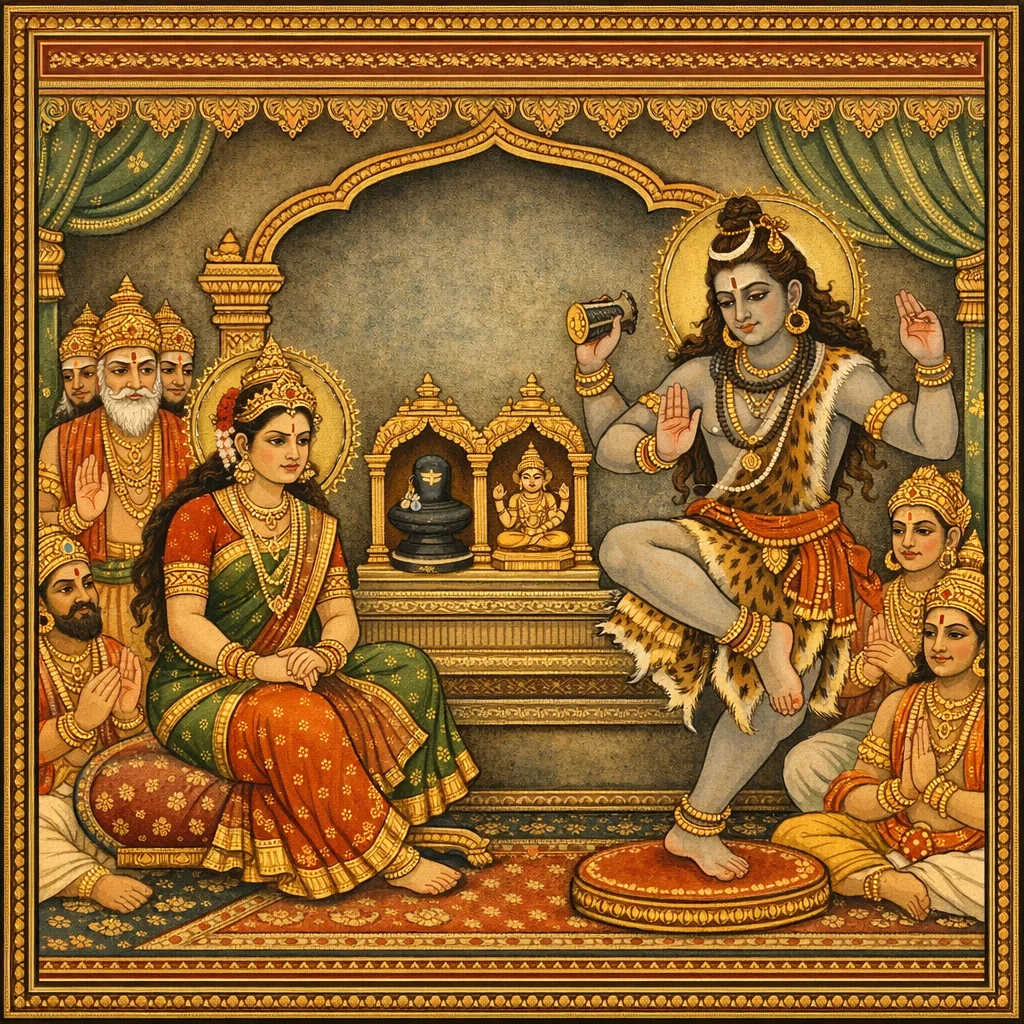
This chapter presents a dialogic theological and ethical episode: a question is raised about Pārvatī’s anger and imprecation, and about Rudra being shown in a distorted condition before returning to his divine form. Gālava explains that, fearing the Goddess, the gods make themselves “invisible” and become established in human-world representations (pratimā); thereafter the Goddess grants them favor. Viṣṇu is praised as the World-Mother and the remover of sin. The discourse then turns to normative ethics—warnings against transgression, and the duty of restraint and correction (nigraha) even across hierarchical bonds such as father and son, teacher and student, husband and wife—along with admonitions not to abandon kula-, jāti-, and deśa-dharma. Pārvatī’s grief and wrath are voiced directly, with accusations and a threat that Śiva will be harmed by brāhmaṇas; Śiva gradually reasons in conciliation, upholding compassion and non-harm. Resolution is tied to ritual discipline: Pārvatī stipulates cāturmāsya observance, brahmacarya, and a public divine tāṇḍava dance before the deities; Śiva assents, and the curse is transformed into a boon. A concluding phalaśruti declares that faithful listening brings firmness, success, and auspicious refuge.
Shlokas
Verse 1
शूद्र उवाच । पार्वतीकुपिता देवी कथं देवेन शूलिना । प्रसादं च गता शप्त्वा यत्कोपात्क्षुभ्यते जगत्
The Śūdra said: How did the goddess Pārvatī, angered, become reconciled with the trident-bearing Lord? And after uttering a curse, how did she return to grace—she by whose wrath the whole world is shaken?
Verse 2
कथं स भगवान्रुद्रो भार्याशापमवाप ह । वैकृतं रूपमासाद्य पुनर्दिव्यं वपुः श्रितः
How did that Blessed Rudra come under his wife’s curse? And after assuming a distorted form, how did he again take on a divine body?
Verse 3
गालव उवाच । देवा रूपाण्यदृश्यानि कृत्वा देव्या महाभयात् । मनुष्यलोके सकले प्रतिमासु च संस्थिताः
Gālava said: Out of great fear of the Goddess, the gods made their forms invisible, and throughout the human world they took their stations within sacred images (pratimās).
Verse 4
तेषामपि प्रसन्ना साऽनुग्रहं समुपाकरोत् । विष्णुस्तुता महाभागा विश्वमाताऽघनाशिनी
Pleased even with them, she bestowed her favor. Praised by Viṣṇu, that greatly fortunate One—the Mother of the universe—became the destroyer of sin.
Verse 5
तेषां बलाच्च पार्वत्याः शापभारेण यन्त्रितः । तां नित्यमेवानुनयन्नृचे सोवाच शंकरम्
And by their urgency, and constrained by the heavy burden of Pārvatī’s curse, he continually sought to appease her; then, through a sacred verse (ṛc), he addressed Śaṅkara.
Verse 6
एते देवा विश्व पूज्या विश्वस्य च वरप्रदाः । मत्प्रसादाद्भविष्यंति भक्तितस्तोषिता नरैः
These gods shall be worshipped by the whole world and shall grant boons to the world. By my grace they will become pleased through the devotion of human beings.
Verse 7
त्वामृते मम कर्मेदं कृतं साधुविनिन्दितम् । वेद्यां विवाह काले च प्रत्यक्षं सर्वसाक्षिकम्
Without you, this act of mine would be condemned even by the virtuous. At the sacrificial altar, and at the time of marriage, you were directly present as the witness of all.
Verse 8
यत्सप्तमंडलानां च गमनं च करार्पणम् । वह्निश्च वरुणः कृष्णो देवताश्च सवल्लभाः
That is: the circumambulation of the seven circles, and the giving of the hand (the handing-over in marriage). Agni, Varuṇa, Kṛṣṇa, and the other beloved deities present are witnesses and powers of the rite.
Verse 9
चतुर्दिक्ष्वंग संयुक्ता देवब्राह्मणसंयुताः । एतेषामग्रतो दिब्यं कृत्वा त्वं जनसंसदि
In the four directions, with the limbs of the rite properly arranged and attended by gods and brāhmaṇas—before them you performed the sacred act in the assembly of people.
Verse 10
प्रमादात्सत्त्वमापन्नो व्यभिचारं कथं कृथाः । गुरुवोऽपि न सन्मार्गे प्रवर्त्तंते जनौघवत्
Though you have attained a noble disposition, how can you commit transgression out of heedlessness? Even teachers, carried along like a flood of people, may fail to proceed on the true path—therefore be vigilant.
Verse 11
निग्राह्याः सर्वलोकेषु प्रबुद्धैः श्रूयते श्रुतौ । पुत्रेणापि पिता शास्यः शिष्येणापि गुरुः स्वयम्
The awakened declare—so it is heard in sacred revelation (Śruti)—that wrongdoers are to be restrained in every world. Even a father may be corrected by his son, and even a teacher by his own student.
Verse 12
क्षत्रियैर्ब्राह्मणः शास्यो भार्यया च पतिस्तथा । उन्मार्गगामिनं श्रेष्ठमपि वेदान्तपारगम्
A brāhmaṇa who has strayed should be corrected even by kṣatriyas; likewise, a husband by his wife—if he walks a wrong path, even though he be eminent and learned in Vedānta.
Verse 13
नीचैरपि प्रशास्येत श्रुतिराह सनातनी । सन्मार्ग एव सर्वत्र पूज्यते नापथः क्वचित्
The eternal Śruti declares that one may be corrected even by those of low standing. Everywhere it is the good path alone that is honored—never the way of error.
Verse 14
येन स्वकुलजो धर्मस्त्यक्तः स पतितो भवेत् । मृतश्च नरकं प्राप्य दुःखभारेण युज्यते
Whoever abandons the dharma of his own lineage becomes fallen; and after death, reaching hell, he is bound beneath the crushing weight of suffering.
Verse 15
धर्मं त्यजति नास्तिक्याज्ज्ञातिभेदमुपागतः । स निग्राह्यः सर्वलोकैर्मनुधर्मपरायणैः
He who, through unbelief, abandons dharma and falls into divisive factionalism among kin—such a person should be restrained by all people devoted to the dharma taught by Manu.
Verse 16
कुलधर्माञ्ज्ञातिधर्मान्देशधर्मान्महेश्वर । ये त्यजंति च तेऽवश्यं कुलाच्च पतिता जनाः
O Maheśvara, those who abandon the dharmas of lineage, kin, and region surely become fallen—fallen even from their own community.
Verse 17
अग्नित्यागो व्रतत्यागो वचनत्याग एव च । धर्मत्यागो नैव कार्यः कुर्वन्पतित एव हि
Abandoning the sacred fire, abandoning vows, and even abandoning one’s pledged word—none of these should lead to abandoning dharma. For one who gives up dharma becomes fallen indeed.
Verse 18
न पिता न च ते माता न भ्राता स्वजनोऽपि च । पश्यते तव वार्तां च अस्पृश्यस्त्वमदन्विषम्
Neither your father nor your mother, neither your brother nor even your own kin will look upon you or inquire after you; you become untouchable—like poison that none would take.
Verse 19
अस्थिमालाचिताभस्म जटाधारी कुचैलवान् । चपलो मुक्तमर्यादस्तस्थुं नार्हसि मेऽग्रतः
Wearing a garland of bones, smeared with cremation-ash, with matted locks and shabby garments—restless and casting off all propriety—you are not fit to stand before me.
Verse 20
अब्रह्मण्योऽव्रती भिक्षुर्दुष्टात्मा कपटी सदा । नार्हसि त्वं मम पुरः संभाषयितुमीश्वर
You are no friend of the Brahmins; you keep no vows; you are a mendicant in name, wicked at heart and ever deceitful. O Lord, you are not fit to speak before me.
Verse 21
एवं सा रुदती देवी बाष्पव्याकुललोचना । महादुःखयुतैवासीद्देवेशेऽनुनयत्यपि
Thus the Goddess wept, her eyes troubled with tears; even while she sought to appease the Lord of the gods, she remained overwhelmed by great sorrow.
Verse 22
पुनरेव प्रकुपिता हरं प्रोवाच भामिनी । तवार्जवं न हृदये काठिन्यं वेद्मि नित्यदा
Again, angered, the passionate Lady spoke to Hara: “I find no straightforwardness in your heart; I know only hardness in you, always.”
Verse 23
ब्राह्मणैस्त्वासुरैरुक्तं तन्मृषा प्रतिभाति मे । यस्मान्मयि महादुष्टभाव एव कृतस्त्वया
What those Brahmins—acting as if demonic—have said appears false to me, since you have fixed upon me alone a truly cruel suspicion.
Verse 24
ब्राह्मणा वंचिता यस्माद्ब्राह्मणैस्त्वं हनिष्यसे । एवमुक्त्वा भगवती पुनराह न किञ्चन
Since Brahmins have been deceived, you will be slain by Brahmins. Having spoken thus, the Blessed Goddess said nothing further again.
Verse 25
ईशः प्रसन्नवदनामुपचारैरथाकरोत् । शनैर्नीतिमयैर्वाक्यैर्हेतुमद्भिर्महेश्वरः
Then the Lord, Maheśvara, sought to bring her face to calm through gentle attentions, and slowly—by reasoned, dharma-filled words—he addressed her.
Verse 26
प्रसन्नलोचनां ज्ञात्वा किंचित्प्राह हरस्ततः । कोपेन कलुषं वक्त्रं पूर्णचन्द्र समप्रभम्
Seeing that her eyes had softened, Hara then spoke a little. Yet her face—bright as the full moon—was still clouded by anger.
Verse 27
कस्मात्त्वं कुरुषे भद्रे युक्तमेव वचो न ते । सर्वभूतदया कार्या प्राणिनां हि हितेच्छया
“Why do you speak so, O gentle one? Your words are not truly fitting. Compassion toward all beings must be practiced, for one should wish the welfare of every living creature.”
Verse 28
यद्यपीष्टो हि यस्यार्थो न कार्यं परपीडनम् । जगत्सर्वं सुतप्रायं तवास्ति वरवर्णिनि
Even if one’s desired aim is at stake, one should not injure another. O fair-limbed one, this whole world is as a child to you.
Verse 29
जगत्पूज्या त्वमेवैका सर्वरूपधरानघे । मया यदि कृतं कर्मावद्यं देव हिताय वै
You alone are worshipped by the whole world, O faultless one who assumes all forms. If I have done any blameworthy act, it was truly for the good of the gods.
Verse 30
तथाप्येवं तव सुतो भविष्यति न संशयः । अथवा मम सर्वेभ्यः प्राणेभ्योऽपि गरीयसी
Even so, a son will indeed be born to you—of this there is no doubt. Indeed, you are dearer to me than all my very life-breaths.
Verse 31
यदिच्छसि तथा कुर्यां तथा तव मनोरथान् । प्रसन्नवदना भूत्वा कथयस्व वरानने
Whatever you desire, so shall I do; so too shall your heart’s wishes be fulfilled. Become bright-faced with joy and tell me, O fair-faced one, the boons you seek.
Verse 32
इत्युक्ता सा भगवती पुनराह महेश्वरम् । चातुर्मास्ये च संप्राप्ते महाव्रत धरो यदि
Thus addressed, the Blessed Goddess again spoke to Maheśvara: “When the sacred Cāturmāsya season has arrived—if you, the bearer of the Great Vow, will…”
Verse 33
देवतानां च प्रत्यक्षं तांडवं नर्तसे यदि । पारयित्वा व्रतं सम्यग्ब्रह्मचर्यं महेश्वर
“If, in the very presence of the gods, you will dance the Tāṇḍava; and after duly completing the vow—together with perfect continence—O Maheśvara…”
Verse 34
मत्प्रीत्यै यदि देहार्थं वैष्णवं च प्रयच्छसि । शापस्यानुग्रहं कुर्यां प्रसववदना सती
“If, for my delight, you will grant a boon that is Vaiṣṇava in character and conducive to embodied welfare, then I—Sati, with the face of a mother about to give birth—shall turn the curse into a blessing.”
Verse 35
नान्यथा मम चित्तं त्वां विश्वासमनुगच्छति । तच्छ्रुत्वा भगवांस्तुष्टस्तथेति प्रत्युवाच ताम्
“In no other way does my heart proceed toward trusting you.” Hearing this, the Blessed Lord, pleased, replied to her, “So be it.”
Verse 36
सापि हृष्टा भगवती शापस्यानुग्रहे वृता
And that Blessed Goddess too, delighted, became resolved upon turning the curse into grace.
Verse 37
इदं पुराणं मनुजः शृणोति श्रद्धायुक्तो भेदबुद्ध्या दृढत्वम् । तस्या वश्यं जीवितं सर्वसिद्धं मर्त्याः सत्यात्तच्छ्रयत्वं प्रयांति
A person who listens to this Purāṇa with faith and firm discernment attains mastery over life and the fulfillment of all attainments; by the power of truth, mortals come to take refuge in that highest support.
Verse 253
इति श्रीस्कांदे महापुराण एकाशीतिसाहस्र्यां संहितायां षष्ठे नागरखण्डे हाटकेश्वरक्षेत्रमाहात्म्ये शेषशाय्युपाख्याने ब्रह्मनारदसंवादे चातुर्मास्यमाहात्म्ये शंकरकृतपार्वत्यनुनयो नाम त्रिपंचाशदुत्तरद्विशततमोऽध्यायः
Thus ends Chapter 253, titled “Śaṅkara’s Appeasement of Pārvatī,” in the Cāturmāsya Māhātmya, within the Brahmā–Nārada dialogue, in the Śeṣaśāyī episode, in the Hāṭakeśvara-kṣetra Māhātmya, of the sixth (Nāgara) Khaṇḍa of the Śrī Skanda Mahāpurāṇa (the eighty-one-thousand-verse recension).