Adhyaya 251
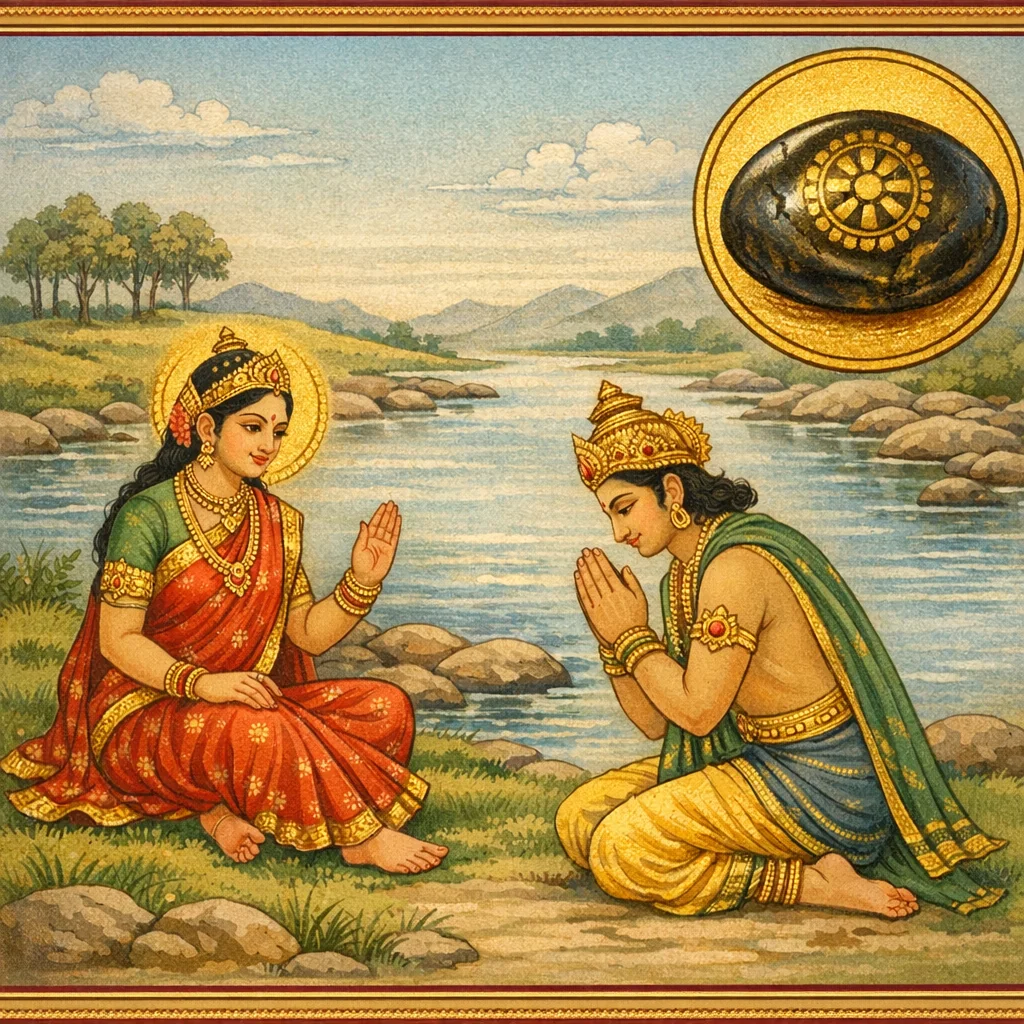
Adhyāya 251, framed as a dialogue attributed to Gālava, gives an etiological account of Śālagrāma in the Cāturmāsya setting. An auspicious akāśavāṇī is heard, and the devas perform ritual veneration of four trees; then Hari and Hara appear in a clearly unified (hariharātmaka) form and restore the devas’ respective jurisdictions. The focus shifts to Pārvatī: the devas, afflicted by her curse, propitiate her with bilva leaves and repeated praise. She declares the curse will not be revoked, yet recasts it as compassionate reallocation—deities will become accessible in the human realm through monthly icon-presences, granting boons to communities, especially for marriage rites and progeny. Pārvatī then addresses Viṣṇu and Maheśvara with the consequences: Viṣṇu is destined to become stone (pāṣāṇa), and Śiva will take a stone-form associated with the liṅga through brāhmaṇa-curse dynamics, bringing social contestation and suffering. Viṣṇu responds with a formal stuti praising the Devī’s cosmic roles—guṇa-traya, māyā, and her triadic goddess-forms. Finally, Pārvatī specifies the salvific geography: Viṣṇu will abide in the pure waters of the Gaṇḍakī as Śālagrāma, identifiable by purāṇa-knowers through features such as a golden hue and cakra-marks. Worship of Viṣṇu as śilā—especially with tulasī devotion—fulfills intentions and draws one toward liberation; even mere darśana is said to protect from Yama’s domain. The chapter closes by reaffirming the Śālagrāma origin and the post-curse settlement of divine residence.
Shlokas
Verse 1
गालव उवाच । इत्युक्त्वाऽकाशजावाणी विरराम शुभप्रदा । तेऽपि देवास्तदाश्चर्यं महद्दृष्ट्वा महाव्रताः
Gālava said: Having spoken thus, the celestial voice—bestowing auspiciousness—fell silent. And those gods too, great observers of vows, beheld that mighty wonder.
Verse 2
चतुष्टयं च वृक्षाणां चातुर्मास्ये समागते । अपूजयंश्च विधिवदैक्यभावेन शूद्रज
And when Cāturmāsya arrived, they duly worshipped the four trees, with a single-minded sense of unity—O son of a Śūdra.
Verse 3
चातुर्मास्येऽथ संपूर्णे देवो हरिहरात्मकः । प्रसन्नस्तानुवाचाथ भक्त्या प्रत्यक्षरूपधृक्
When Cāturmāsya was fully completed, the Lord—whose very nature is Hari and Hara as one—being pleased, then spoke to them, taking on a visible form through their devotion.
Verse 4
यूयं गच्छत देवेश महा व्रतपरायणाः । भुंक्त स्वान्स्वांश्चाधिकारान्मया ते दानवा हताः
“Go now, O lords, you who are devoted to great vows. Enjoy again your rightful stations and authorities; by me, your Dānava foes have been slain.”
Verse 5
इत्युक्त्वा देवदेवेशावैक्यरूपधरौ यदा । गणानां देवतानां च बुद्धिं निर्भेदतां तदा
Having spoken thus, when the two Lords of the gods assumed a form of oneness, then the understanding of the gaṇas and of the gods became undivided, free from difference.
Verse 6
नयन्तौ तौ तदा चेशा बभूवतुररिन्दमौ । तेऽपि देवा निराबाधा हृष्टचित्ता ह्यभेदतः
Then those two Lords became guides, subduers of foes. And those gods too, free from obstruction, were joyful in heart—indeed, because of that non-difference.
Verse 7
प्रययुः स्वांश्चाधिकारान्विमानगण कोटिभिः । गालव उवाच । तथा तत्रापि ते देवाः पार्वत्याः शापमोहिताः
They departed to their own respective stations, in crores of groups of aerial chariots. Gālava said: “Even there, those gods were deluded by Pārvatī’s curse.”
Verse 8
स्तुत्वा तां बिल्वपत्रैश्च पूजयित्वा महेश्वरीम् । प्रसन्नवदनां स्तुत्वा प्रणिपत्य पुनःपुनः
Praising her and worshipping Maheśvarī with bilva leaves, they extolled her—her face gracious and serene—and bowed again and again.
Verse 9
सा प्रोवाच ततो देवान्विश्वमाता तु संस्तुता । मम शापो वृथा नैव भविष्यति सुरोत्तमाः
Then the World-Mother, thus praised, spoke to the gods: ‘O best of the suras, my curse will not become futile.’
Verse 10
तथापि कृतपापानां करवाणि कृपां च वः । स्वर्गे दृषन्मया नैव भविष्यथ सुरोत्तमाः
‘Even so, I shall show you compassion, though you have incurred fault. Yet, O best of the gods, you will not be visible to me in heaven.’
Verse 11
मर्त्यलोकं च संप्राप्य प्रतिमासु च सर्वशः । सर्वे देवाश्च वरदा लोकानां प्रभविष्यथ
‘Having come to the mortal world, and dwelling everywhere in images (icons), all you gods will become givers of boons for the people.’
Verse 12
पाणिग्रहेण विहिता ये कुमाराः कुमारिकाः । तेषांतेषां प्रजाश्चैव भविष्यथ न संशयः
‘Those youths and maidens who are joined through the rite of taking the hand (marriage)—for each of them, offspring will indeed come to be; of this there is no doubt.’
Verse 13
इत्युक्त्वा सा भगवती देवतानां वरप्रदा । विष्णुं महेश्वरं चैव प्रोवाच कुपिता भृशम्
Having spoken thus, the Blessed Goddess—bestower of boons upon the deities—then addressed Viṣṇu and Maheśvara, inflamed with exceeding wrath.
Verse 14
देवास्तस्या भयान्नष्टा मर्त्येषु प्रतिमां गताः । भक्तानां मानसं भावं पूरयन्तः सुसंस्थिताः
Fearing her, the gods vanished and entered into images among mortals. Firmly abiding there, they fulfill the heartfelt intentions of devotees.
Verse 15
यस्माद्विष्णो महेशानस्त्वयाऽपि न निषेधितः । तस्मात्त्वमपि पाषाणो भविष्यसि न संशयः
“Since you did not restrain Viṣṇu, the Great Lord (Maheśāna), therefore you too shall become stone—of this there is no doubt.”
Verse 16
हरोऽप्यश्ममयं रूपं प्राप्य लोकविगर्हितम् । लिंगाकारं विप्रशापान्महद्दुःखमवाप्स्यति
“Even Hara (Śiva), attaining a stone-like form reviled by the world, will—through the curse of a brāhmaṇa—assume the form of a liṅga and undergo great suffering.”
Verse 17
तच्छ्रुत्वा भगवान्विष्णुः पार्वतीमनुकूलयन् । उवाच प्रणतो भूत्वा हरभार्यां महेश्वरीम्
Hearing those words, the blessed Viṣṇu—seeking to conciliate Pārvatī—bowed down and spoke to Maheśvarī, the consort of Hara (Śiva).
Verse 18
श्रीविष्णुरुवाच । महाव्रते महादेवि महादेवप्रिया सदा । त्वं हि सत्त्वरजःस्था च तामसी शक्तिरुत्तमा
Śrī Viṣṇu said: “O you of the great vow, O Great Goddess—ever beloved of Mahādeva—truly you abide in sattva and rajas, and you are also the supreme power of tamas.”
Verse 19
मात्रात्रयसमोपेता गुणत्रयविभाविनी । मायादीनां जनित्री त्वं विश्वव्यापकरूपिणी
“Endowed with the three mātrās, revealing the three guṇas, you are the Mother of Māyā and all that follows—your form pervades the entire universe.”
Verse 20
वेदत्रयस्तुता त्वं च साध्यारूपेण रागिणी । अरूपा सर्वरूपा त्वं जनसन्तानदायिनी
“You are praised by the three Vedas; and, taking the form of the Sādhyas, you appear with loving inclination. Formless, yet all-formed, you bestow the continuance of generations (progeny).”
Verse 21
फलवेला महाकाली महालक्ष्मीः सरस्वती । ओंकारश्च वषट्कारस्त्वमेव हि सुरेश्वरि
“You are Phalavelā; you are Mahākālī, Mahālakṣmī, and Sarasvatī. You alone are Oṃkāra and the Vaṣaṭ-call, O Lady of the gods.”
Verse 22
भूतधात्रि नमस्तेऽस्तु शिवायै च नमोऽस्तु ते । रागिण्यै च विरागिण्यै विकराले नमः शुभे
“O Sustainer of beings, salutations be to you; and salutations to you as Śivā. Salutations to you who are passionate and also dispassionate; O Fierce One, salutations—O Auspicious One.”
Verse 23
एवं स्तुता प्रसन्नाक्षी प्रसन्नेनांतरात्मना । उवाच परमोदारं मिथ्यारोषयुतं वचः
Thus praised, she—her eyes gracious and her inmost being appeased—spoke words of supreme generosity, though touched with a feigned anger.
Verse 24
मच्छापो नाऽन्यथा भावी जनार्दन तवाप्ययम् । तत्राऽपि संस्थितस्त्वं हि योगीश्वरविमुक्तिदः
“My curse shall not turn out otherwise, O Janārdana; it falls upon you as well. Yet even there, abiding in that very state, you will bestow liberation upon the lordly yogins.”
Verse 25
कामप्रदश्च भक्तानां चातुर्मास्ये विशेषतः । निम्नगा गंडकीनाम ब्रह्मणो दयिता सुता
Especially in the sacred season of Cāturmāsya, she grants devotees their cherished boons. That river, named Gaṇḍakī, is the beloved daughter of Brahmā.
Verse 26
पाषाणसारसंभूता पुण्यदात्री महाजला । तस्याः सुविमले नीरे तव वासो भविष्यति
Born from the very essence of stone, she bestows merit and is a mighty river. In her exceedingly pure waters, your dwelling shall come to be.
Verse 27
चतुर्विंशतिभेदेन पुराणज्ञैर्निरीक्षितः । मुखे जांबूनदं चैव शालग्रामः प्रकीर्तितः
The knowers of the Purāṇas have examined him as having twenty-four distinct varieties. And the Śālagrāma is proclaimed to bear ‘jāmbūnada’—golden—markings upon its face.
Verse 28
वर्त्तुलस्तेजसः पिंडः श्रिया युक्तो भविष्यसि । सर्वसामर्थ्यसंयुक्तो योगिनामपि मोक्षदः
You shall become a round, radiant sacred form, endowed with Śrī—prosperity and auspicious grace. United with every potency, you will grant mokṣa even to yogins.
Verse 29
ये त्वां शिलागतं विष्णुं पूजयिष्यंति मानवाः । तेषां सुचिन्तितां सिद्धिं भक्तानां संप्रयच्छसि
Those who worship you—Viṣṇu present within the stone—will receive from you the fulfilment of their noble intentions, for you bestow success upon devotees.
Verse 30
शिलागतं च देवेशं तुलस्या भक्ति तत्पराः । पूजयिष्यंति मनुजास्तेषां मुक्तिर्न दूरतः
Men and women devoted to bhakti, who worship the Lord of the gods manifested in stone together with Tulasī— for them liberation is not far away.
Verse 31
शिलास्थितं च यः पश्येत्त्वां विष्णुं प्रतिमागतम् । सुचक्रांकितसर्वांगं न स गच्छेद्यमालयम्
Whoever beholds you—Viṣṇu established in stone, appearing as a sacred icon, whose entire form bears the auspicious marks of the discus—does not go to Yama’s abode.
Verse 32
गालव उवाच । इति ते कथितं सर्वं शालग्रामस्य कारणम् । यथा स भगवान्विष्णुः पाषाणत्वमुपा गतः
Gālava said: Thus I have told you everything—the cause concerning Śālagrāma, and how that Blessed Lord Viṣṇu came to assume the state of stone.
Verse 33
गोविन्दोऽपि महाशापं लब्ध्वा स्वभवनं गतः । पार्वती च महेशानं कुपिता प्रणमय्य च
Govinda too, having received a great curse, went to his own abode. And Pārvatī, angered, bowed in reverence to Maheśāna (Śiva) as well.
Verse 34
एवं स एव भगवान्भवभूत भव्यभूतादिकृत्सकलसंस्थितिनाशनांकः । सोऽपि श्रिया सह भवोऽपि गिरीशपुत्र्या सार्द्धं चतुर्षु च द्रुमेषु निवासमाप
Thus that very Blessed Lord—maker of past, present, and future, bearing the mark that dissolves all compounded existence—took up residence there. And Bhava (Śiva) too, together with Śrī and with the daughter of Girīśa (Pārvatī), came to dwell among four trees.
Verse 251
इति श्रीस्कांदे महापुराण एकाशीति साहस्र्यां संहितायां षष्ठे नागरखण्डे हाटकेश्वरक्षेत्रमाहात्म्ये शेषशाय्युपाख्याने ब्रह्मनारदसंवादे चातुर्मास्यमाहात्म्ये पैज वनोपाख्याने विष्णुशापोनामैकपञ्चाशदुत्तरद्विशततमोऽध्यायः
Thus, in the holy Skanda Mahāpurāṇa—within the Ekāśīti-sāhasrī Saṃhitā, in the Sixth (Nāgara) Khaṇḍa—within the Māhātmya of the Hāṭakeśvara sacred region, in the Śeṣaśāyī episode, in the dialogue of Brahmā and Nārada, in the glorification of Cāturmāsya, in the Paija-forest narrative—ends the two-hundred-and-fifty-first chapter called “Viṣṇu’s Curse (Viṣṇuśāpa).”