Adhyaya 245
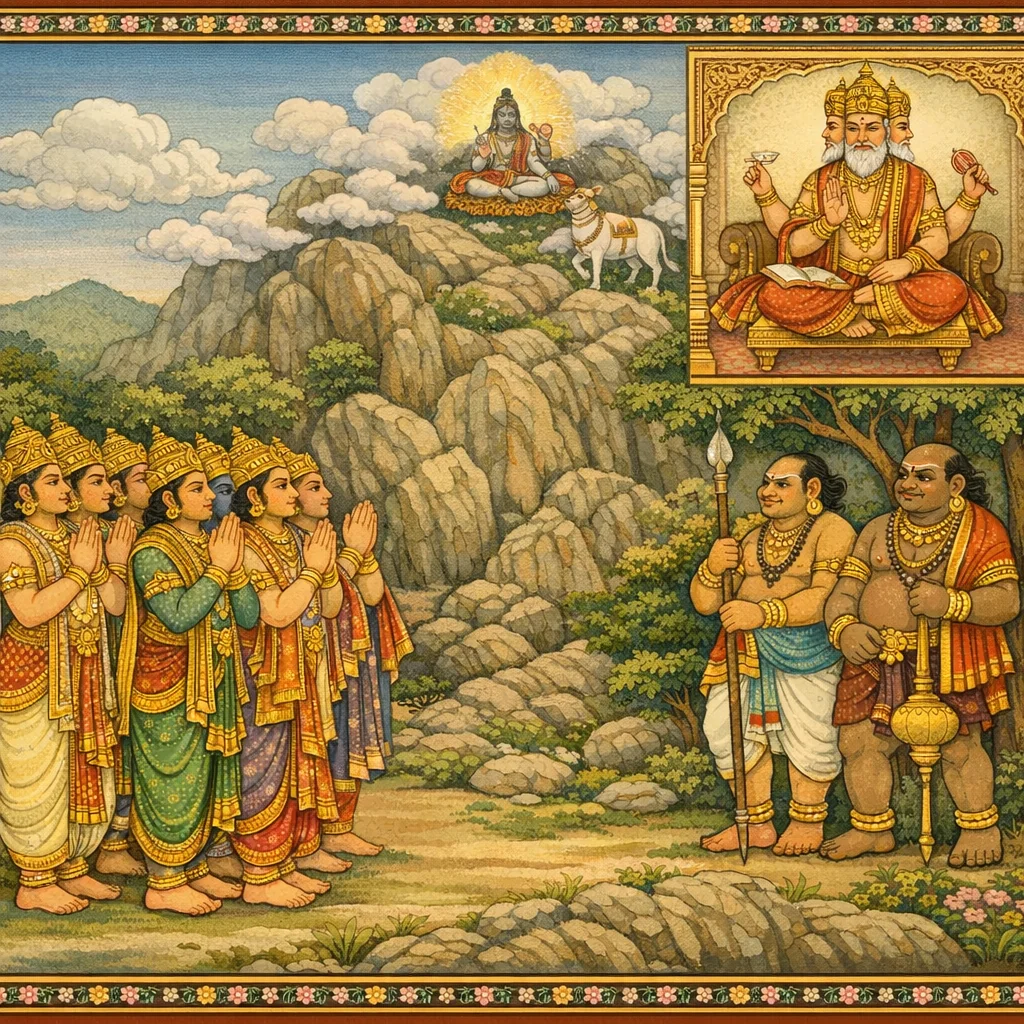
This chapter continues a dialogic sequence: Paijavana asks Galava about the theological origin of the śālagrāma and how the eternal Lord is to be understood as present in stone, seeking instruction that steadies devotion. Galava frames his reply as a Purāṇic itihāsa and begins a connected narrative. Dakṣa’s hostility toward Śiva culminates in Satī’s self-abandonment at the yajña; she is then reborn as Pārvatī and undertakes sustained tapas for Mahādeva. Śiva approaches in a testing guise, accepts her, and the marriage is solemnized by Vedic rite with divine attendance and ritual detail. Thereafter, by Śiva’s permission, Kāma gains re-embodiment. The devas, distressed by Tāraka’s dominance (secured by a boon), seek Brahmā, who declares the conditional remedy: Śiva’s son by Pārvatī will slay Tāraka after seven days. The chapter ends as the devas move toward Mandarācala, find Śiva’s attendants standing vigilant, and adopt a prolonged austerity (within a cāturmāsya framing) to obtain Śiva’s darśana and favor.
Shlokas
Verse 2
पैजवन उवाच । शालिग्रामशिलायां च जगदादिः सनातनः । कथं पाषाणतां प्राप्तो गण्डक्यां तच्च मे वद । त्वत्प्रसादेन विप्रर्षे हरौ भक्तिर्दृढा भवेत् । भवंतस्तीर्थरूपा हि दर्शनात्पापहारिणः
Paijavana said: “Within the Śāligrāma stone abides the primeval and eternal Lord of the universe. How did He attain the condition of stone in the Gaṇḍakī? Tell me that. By your grace, O best of brāhmaṇa-sages, may devotion to Hari become firm. For you are indeed living forms of tīrthas—by your very sight sins are destroyed.”
Verse 3
तीर्थामृतावगाहेन यथा पवित्रता नृणाम् । भवद्वाक्यामृताज्जाता तथा मम न संशयः
Just as people are purified by immersion in the nectar-like waters of a sacred tīrtha, so too has my purification arisen from the nectar of your words—of this I have no doubt.
Verse 4
गालव उवाच । इतिहासस्त्वयं पुण्यः पुराणेषु च पठ्यते । यथा स एव भगवाञ्छालिग्रामत्वमागतः
Gālava said: “This sacred history is recited in the Purāṇas—how that very Lord came to be manifested as Śāligrāma.”
Verse 5
महेश्वरश्च लिंगत्वं कथयेऽहं तवाऽनघ । पूर्वं प्रजापतिर्दक्षो ब्रह्मणोंऽगुष्ठ संभवः
O sinless one, I shall explain to you how Maheśvara is present as the Liṅga. Formerly, the Prajāpati Dakṣa was born from Brahmā’s thumb.
Verse 7
स चकार महायज्ञे हरद्वेषं विमूढधीः । तेन द्वेषेण महता सती प्रकुपिता भृशम्
In that great sacrifice, the deluded-minded one harbored hatred toward Hara (Śiva); and because of that immense hostility, Satī became fiercely enraged.
Verse 8
यज्ञवेद्यां समागम्य वह्निधारणया तदा । प्राणायामपरा भूत्वा देहोत्सर्गं चकार सा
Coming to the sacrificial altar, she then—by sustaining the inner fire—entered deep prāṇāyāma, and she relinquished her body.
Verse 9
पितृभागं परित्यज्य स्वभागेन युता सती । मनसा ध्यानमगमच्छीतलं च हिमालयम्
Abandoning her paternal share, Satī—united with her own rightful portion—went in meditation by mind alone to the cool Himālaya.
Verse 10
यत्रयत्र मनो याति स्वकर्मवशगं मृतौ । अवतारस्तत्रतत्र जायते नात्र संशयः
Wherever the mind goes at death—drawn by the force of one’s own deeds—there, there indeed an embodiment arises; of this there is no doubt.
Verse 11
दह्यमाना हि सा देवी हिमालयसुताऽभवत् । तत्र सा पार्वती भूत्वा तप उग्रं समाश्रिता
Indeed, even as she was burning, that Goddess became the daughter of Himālaya. There she became Pārvatī and undertook fierce austerity (tapas).
Verse 12
शिवभक्तिरता नित्यं हरव्रतपरायणा । शृंगे हिमवतः पुत्री मनो न्यस्य महेश्वरे
Ever absorbed in Śiva-bhakti, wholly devoted to Hara’s sacred vows, the daughter of Himavat upon the mountain peak placed her mind in Maheśvara.
Verse 13
ततो वर्षसहस्रांते भगवान्भूतभावनः । अथाजगाम तं देशं विप्ररूपो महेश्वरः
Then, at the end of a thousand years, the Blessed Lord—uplifter of all beings—came to that place, with Maheśvara appearing in the form of a brāhmaṇa.
Verse 14
तां ज्ञात्वा तपसा शुद्धां कर्मभावैः परीक्षितैः । ततो दिव्यवपुर्भूत्वा करे जग्राह पार्वतीम्
Knowing her to be purified by austerity and proven in her deeds and intentions, he then assumed a radiant, divine form and took Pārvatī by the hand.
Verse 15
तपसा निर्जितश्चास्मि करवाणि च किं प्रियम् । ततः प्राह महेशानं प्रमाणं मे पिता गुरुः
“I have been conquered by your austerity—what dear wish shall I fulfill?” Then she spoke to Maheśāna: “For me, my father—my guru—is the authority.”
Verse 16
सप्तर्षीन्स तथोक्तस्तु प्रेषयामास शंकरः । ते तत्र गत्वा समयं वक्तुं हिमवता सह
Thus addressed, Śaṅkara sent forth the Seven Ṛṣis. Going there, they were to convey, together with Himavān, the agreed proposal and its terms.
Verse 17
निवेद्य च महेशानं प्रेषिता मुनयो ययुः । ततो लग्नदिने देवा महेन्द्रादय ईश्वरम्
Having delivered the message to Maheśāna, the dispatched sages departed. Then, on the auspicious wedding day, the gods—Indra and the rest—came to honor the Lord.
Verse 18
ब्रह्मविष्णुपुरोगाश्च पुरोधायाग्निमाययुः । योगसिद्धा समायांतं वरवेषं वृषध्वजम्
With Brahmā and Viṣṇu at their head, they arrived, bringing the sacred fire and the officiating priest. The yogic adepts beheld Vṛṣadhvaja (Śiva) approaching in the attire of a bridegroom.
Verse 19
हिमवान्पूजयामास मधुपर्कादिकैः शुभैः । उपचारैर्मुदा युक्तो मानयन्कृतकृत्यताम्
Himavān honored them in worship, offering auspicious gifts such as madhuparka and other courtesies. Filled with joy, he showed due reverence, feeling his life’s purpose fulfilled.
Verse 20
वेदोक्तेन विधानेन तां कन्यां समयोजयत् । पाणिग्रहेण विधिना द्विजातिगणसंवृतः
According to the ordinance taught by the Vedas, he joined that maiden in marriage. Surrounded by multitudes of the twice-born, the rite was completed by the proper ceremony of pāṇigraha, the taking of the bride’s hand.
Verse 21
वह्निं प्रदक्षिणीकृत्य गिरीशस्तदनन्तरम् । दानकाले च गोत्रादि पृष्टो लज्जापरो हर
After circumambulating the sacred fire, Girīśa proceeded with the rite. And at the time of gifting, when asked about his lineage (gotra) and such, Hara became modest and bashful.
Verse 22
ब्रह्मणो वचनात्तेन विधिशेषोऽवशेषितः । चरुप्राशनकाले तु पंचवक्त्रप्रकाशकृत्
By Brahmā’s command, the remaining parts of the rite were duly completed. Yet, at the time of partaking of the caru, the consecrated oblation-food, he revealed the radiant splendor of his five faces.
Verse 23
सहितः सकलैर्देवैः कुतूहलपरायणः । गिरिजार्थं समायुक्तो वरः सोऽपि महेश्वरः
Accompanied by all the gods and filled with eager wonder, Maheśvara himself—though the Supreme Lord—stood ready as the bridegroom for Girijā’s sake.
Verse 24
नवकोटिमुखां दृष्ट्वा साट्टहासो जनोऽभवत् । वैदिकी श्रुतिरित्युक्ता शिव त्वं स्थिरतां व्रज
Seeing her as though she had “nine crores of faces,” the people burst into loud laughter. Then the Vedic revelation was proclaimed: “O Śiva, proceed into steadfastness; be firm and composed.”
Verse 25
लज्जिता सा परित्यागं नाकरोत्पंचजन्मसु । भर्त्तारमसितापांगी हरमेवाभ्यगच्छत
Ashamed, she did not resort to abandoning him, even through five lifetimes. The dark-eyed lady approached her husband—Hara (Śiva) alone.
Verse 26
देवानां पर्वतानां च प्रहृष्टं सकलं कुलम् । ततो विवाहे संपूर्णे हरोऽगात्कौतुकौकसि
The entire assembly—of the gods and the mountains alike—rejoiced. Then, when the marriage was fully concluded, Hara went to the festive pavilion, the hall of celebration.
Verse 27
गणानां चापि सान्निध्ये सा नामर्षयदंबिका । पारिबर्हं ततो दत्त्वा शैलेन स विसर्जितः
Even in the presence of the Gaṇas, Ambikā would not endure it and was displeased. Then, after giving the wedding gifts (pāribarha), he was dismissed by the Mountain (Śaila).
Verse 28
मानितः सत्कृतश्चापि मन्दराचलमभ्यगात् । विश्वकर्मा ततस्तस्य क्षणेन मणिमद्गृहम्
Honoured and duly received, he went to Mandarācala. Then Viśvakarmā, in a mere moment, fashioned for him a mansion filled with jewels.
Verse 29
निर्ममे देवदेवस्य स्वेच्छावर्द्धिष्णुमंदिरम् । सर्वर्द्धिमत्प्रशस्ताभं मणिविद्रुमभूषितम्
For the God of gods he built a temple that grew according to his will—radiant and most excellent, endowed with every prosperity, adorned with jewels and coral.
Verse 30
स्थूणासहस्रसंयुक्तं मणिवेदिमनोहरम् । गणा नंदिप्रभृतयो यस्य द्वारि समाश्रिताः
It was furnished with a thousand pillars and made enchanting by altars built of jewels. At its gate stood the Gaṇas—Nandin and others—stationed as guardians.
Verse 31
त्रिनेत्राः शूलहस्ताश्च बभुः शंकररूपिणः । वाटिका अस्य परितः पारिजाताः सहस्रशः
They were three-eyed and bore the śūla in their hands, appearing in the very form of Śaṅkara. Around it were gardens, and on every side stood thousands of pārijāta trees.
Verse 32
कामधेनुर्मणिर्दिव्यो यस्य द्वारि समाश्रितौ । तस्मिन्मनोहरतरे कामवृद्धिकरे गृहे
At his gate stood Kāmadhenu, the wish-fulfilling cow, and a divine jewel. In that most enchanting house, which increased all desired blessings,
Verse 33
पार्वत्या वसतः सार्द्धं कामो दृष्टिपथं ययौ । वायुरूपः शिवं दृष्ट्वा कामः प्रोवाच शंकरम्
While Śiva was dwelling together with Pārvatī, Kāma came within his range of sight. Taking the form of wind, Kāma, seeing Śiva, spoke to Śaṅkara:
Verse 34
नमस्ते सर्वरूपाय नमस्ते वृषभध्वज । नमस्ते गणनाथाय पाहि नाथ नमोऽस्तु ते
Salutations to You who are of every form; salutations to You whose banner bears the Bull. Salutations to the Lord of the Gaṇas—protect me, O Master; to You be my reverent homage.
Verse 35
त्वया विरहितं लोकं शववत्स्पृशते मही । न त्वया रहितं किञ्चि द्दृश्यते सचराचरे
Without You, the world is touched by the earth as if it were a corpse. In all that moves and does not move, nothing at all is seen to be devoid of You.
Verse 36
त्वं गोप्ता त्वं विधाता च लोकसंहारकारकः । कृपां कुरु महादेव देहदानं प्रयच्छ मे
You are the Protector; You are the Ordainer; and You are the agent of the world’s dissolution. Show compassion, O Mahādeva—grant me the gift of a body (restore my embodied form).
Verse 37
ईश्वर उवाच । यन्मया त्वं पुरा दग्धः पर्वते पुरतोऽनघ । तस्या एव समीपे त्वं पुनर्भव स्वदेहवान्
Īśvara said: “O sinless one, long ago I burned you before the Mountain; there, near that very place, become embodied once more in your own form.”
Verse 38
एवमुक्तस्ततः कामः स्वशरीरमुपागतः । ववंदे चरणौ शूद्र विनयावनतोऽभवत्
Thus addressed, Kāma regained his own body. He bowed at the feet, humbled and bent with reverence.
Verse 39
ततो ननाम चरणौ पार्वत्याः संप्रहृष्टवान् । लब्धप्रसादस्तु तयोः समीपाद्भुवनत्रये
Then, delighted, he bowed at Pārvatī’s feet. Having obtained the favor of the two, he remained near them, renowned throughout the three worlds.
Verse 40
चचार सुमहातेजा महामोहबलान्वितः । पुष्पधन्वा पुष्पबाणस्त्वाकुञ्चितशिरोरुहः
He moved about, radiant with great splendor, endowed with the power of mighty delusion—bearing a flower-bow and flower-arrows, with curling locks of hair.
Verse 41
सदा घूर्णितनेत्रश्च तयोर्देहमुपाविशत् । दिव्यासवैर्दिव्यगंधैर्वस्त्रमाल्यादिभिस्तथा
With ever-rolling, restless eyes, he entered into their bodies. And there were celestial wines, heavenly fragrances, and likewise garments, garlands, and such delights.
Verse 42
सख्यः संभोगसमये परिचक्रुः समंततः । एवं प्रक्रीडतस्तस्य वत्सराणां शतं ययौ
At the time of enjoyment, companions gathered all around. As he sported in this manner, a hundred years passed by for him.
Verse 43
साग्रमेका निशा यद्वन्मैथुने सक्तचेतसः । एतस्मिन्नंतरे देवास्तारकप्रद्रुता भयात् । ब्रह्माणं शरणं जग्मुः स्तुत्वा तं शरणं गताः
To a mind absorbed in union, a single night feels as though it were a hundred years. Meanwhile, the gods—driven into flight by fear of Tāraka—went for refuge to Brahmā; praising him, they sought his protection.
Verse 44
देवा उचुः । तारकोऽसौ महारौद्रस्त्वया दत्तवरः पुरा
The Devas said: “That Tāraka is exceedingly fierce; in former times he received a boon granted by you.”
Verse 45
विजित्य तरसा शक्रं भुंक्ते त्रैलोक्यपूजितः । वधोपायो यथा तस्य जायते त्वं कुरु स्वयम्
“Having swiftly conquered Śakra (Indra), he now enjoys power, honored across the three worlds. Therefore, devise yourself the means by which his slaying may come about.”
Verse 46
ब्रह्मोवाच । मया दत्तवरश्चासौ मयैवोच्छिद्यते नहि । स्वयं संवर्ध्य कटुकं छेत्तुं कोऽपि न चार्हति
Brahmā said: “Indeed, I granted him that boon; yet it is not fitting that I myself should destroy him. Having oneself nurtured a bitter growth, no one is right to cut it down.”
Verse 47
तस्मात्तस्य वधोपायं कथयामि महात्मनः । पार्वत्यां यो महेशानात्सूनुरुत्पत्स्यते हि सः
Therefore I shall declare the means of his death, O great souls: the son who will truly be born of Pārvatī from Maheśāna (Śiva)—he alone shall be the one.
Verse 48
दिनसप्तकवान्भूत्वा तारकं स हनिष्यति । इति वाक्यं तु ते श्रुत्वा मंदरं लोकसुंदरम्
When he becomes seven days old, he will slay Tāraka. Hearing these words, they turned toward Mandara, the beauty of the worlds.
Verse 49
ब्रह्मलोकात्समाजग्मुः पीडिता दैत्यदानवैः
Tormented by the Daityas and Dānavas, they came forth from Brahmaloka.
Verse 50
तत्र नंदिप्रभृतयो गणाः शूलभृतः पुरः । गृहद्वारे ह्युपा वृत्य तस्थुः संयतचेतसः
There, with the trident-bearer (Śiva) in front, the Gaṇas—beginning with Nandin—stood gathered at the doorway of the abode, their minds restrained and reverent.
Verse 51
देवा ऊचुः । देवाश्च दुःखातुरचेतसो भृशं हतप्रभास्त्यक्तगृहाश्रयाखिलाः । संप्राप्य मासांश्चतुरः स्तपः स्थिता देवे प्रसुप्ते हरतोषणं परम्
The Devas said: “The gods, their minds sorely distressed by sorrow, their splendor dimmed, abandoning every shelter of home, undertook austerity for four months—while the Lord lay in yogic sleep—seeking above all to please Hara (Śiva).”
Verse 245
इति श्रीस्कांदे महापुराण एकाशीतिसाहस्र्यां संहितायां षष्ठे नागरखण्डे हाटकेश्वरक्षेत्रमाहात्म्ये शेषशाय्युपाख्याने ब्रह्मनारदसंवादे चातुर्मास्यमाहात्म्ये पैजवनोपाख्याने तारकोपद्रुतानां देवानां शिवदर्शनार्थं मंदराचलंप्रतिगमनवर्णनंनाम पञ्चचत्वारिंशदुत्तरद्विशततमोऽध्यायः
Thus ends the 245th chapter—called “The Description of the Devas’ Journey to Mandarācala to Behold Śiva, when oppressed by Tāraka”—in the Śrī Skanda Mahāpurāṇa, in the Nāgara Khaṇḍa, within the Hāṭakeśvara-kṣetra-māhātmya, in the Śeṣaśāyī episode, in the dialogue of Brahmā and Nārada, within the Cāturmāsya-māhātmya, in the Paijavana account.