Adhyaya 232
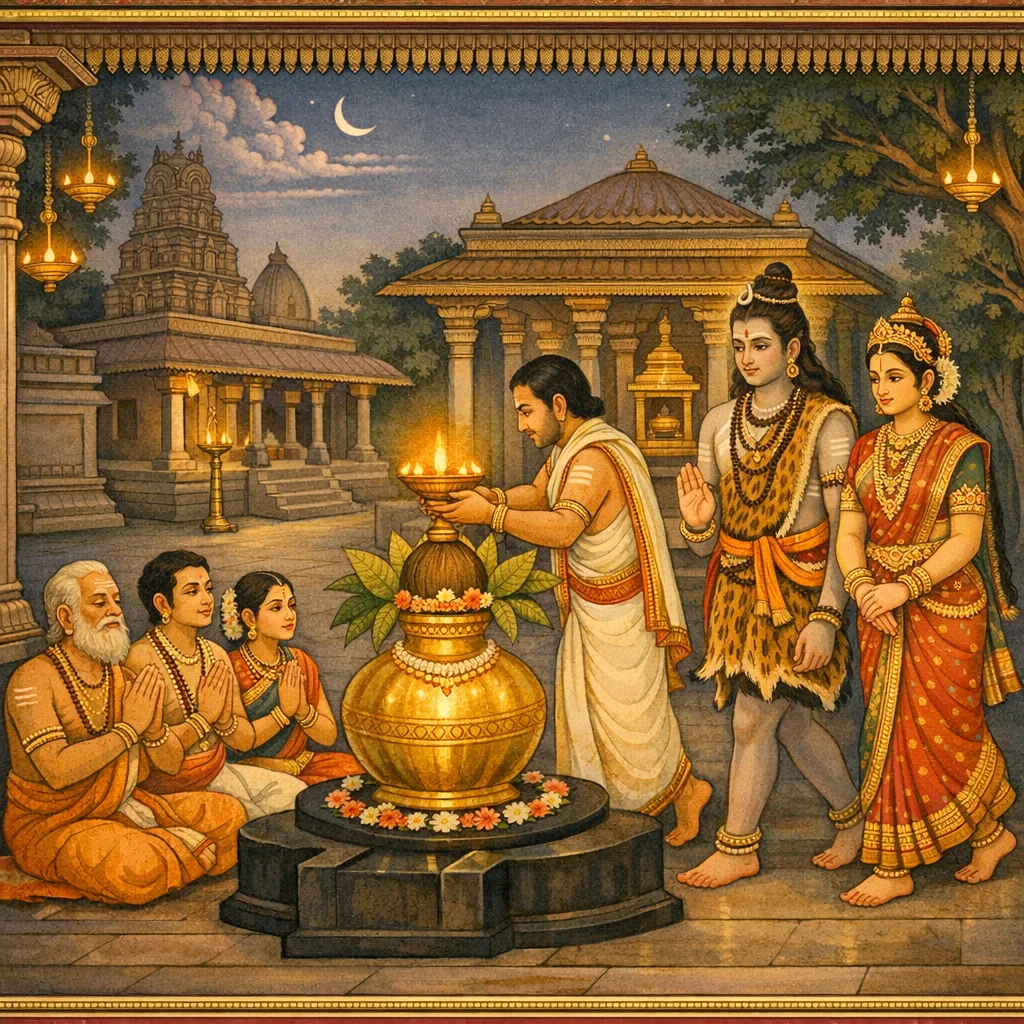
In response to Ṛṣis who ask what should be done when Lord Viṣṇu—bearing śaṅkha–cakra–gadā and the garuḍa-dhvaja—is said to be “asleep” (prasupta), the conventional sign of the cāturmāsya season, Sūta conveys an authoritative teaching ascribed to Pitāmaha (Brahmā): any niyama sincerely undertaken in that period becomes ananta-phala, yielding expansive and unbounded merit. The chapter lists graded disciplines across the four months: regulated eating (eka-bhakta, nakṣatra-based meals, alternating fasts, ṣaṣṭhāna-kāla meals, tri-rātra upavāsa), and purity/restraint practices (evening–morning discipline, ayācita living, abstaining from oil/ghee massage, brahmacarya, oil-free bathing, avoiding honey and meat). It also prescribes month-specific renunciations—śāka in Śrāvaṇa, dadhi in Bhādrapada, kṣīra in Āśvina, and meat in Kārtika—along with further restraints such as avoiding kāṃsya vessels and, in Kārtika, avoiding meat, razor-use, honey, and sexual activity. Positive devotional acts are enjoined: homa with tila-akṣata using Vaiṣṇava mantras, japa of the Pauruṣa Sūkta, silent pradakṣiṇā with measured steps/handfuls, feeding brāhmaṇas (especially in Kārtika), Vedic svādhyāya at Viṣṇu’s shrine, and temple arts (nṛtya-gīta) as offerings. A distinctive tīrtha-temple rite is highlighted—offering a lamp on the kalaśa atop the Jalāśayyī shrine—said to grant a composite share of earlier niyama-fruits. The conclusion stresses intention and capacity-based observance, recommends gifting to a brāhmaṇa upon completion, warns that passing the season without any niyama is spiritually futile, and ends with a phalaśruti promising release from cāturmāsya-related faults even for the listener or reciter.
Shlokas
Verse 1
ऋषय ऊचुः । प्रसुप्ते देवदेवेशे शंखचक्रगदाधरे । यच्चान्यदपि कर्तव्यं नियमो व्रतमेव वा
The sages said: When the Lord of lords—the bearer of conch, discus, and mace—lies in sacred slumber, what else is to be done? What discipline or vow, indeed, should be observed?
Verse 2
होमो वाथ जपो वाथ दानं वा तद्वदस्व नः । सूत उवाच । यः कश्चिन्नियमो विप्राः प्रसुप्ते गरुडध्वजे
Is it fire-offering, or mantra-recitation, or charity—tell us that. Sūta said: O brāhmaṇas, whatever discipline is undertaken while the Lord of Garuḍa’s banner lies in sacred sleep—
Verse 3
अनंतफलदः स स्यादित्युवाच पितामहः । तस्मात्सर्वप्रयत्नेन कश्चिद्बाह्यो विजानता
—becomes a giver of endless results, so said the Grandfather (Brahmā). Therefore, with every effort, the wise should undertake some outward discipline as a visible observance.
Verse 4
नियमो वा जपो होमः स्वाध्यायो व्रतमेव वा । कर्तव्यं ब्राह्मणश्रेष्ठास्तुष्ट्यर्थं चक्रपाणिनः
Whether it be discipline, japa, homa, Vedic study, or a vow—O best of brāhmaṇas—these should be practiced for the satisfaction of Cakrapāṇi, the Lord who bears the discus.
Verse 5
चतुरो वार्षिकान्मासानेकभक्तेन यो नयेत् । वासुदेवं समुद्दिश्य स धनी जायते नरः
Whoever passes the four months with the ‘one-meal-a-day’ discipline, dedicating it to Vāsudeva, that person is born—or becomes—wealthy.
Verse 6
नक्षत्रैर्भोंजनं कुर्याद्यः प्रसुप्ते जनार्दने । स धनी रूपसंपन्नः सुमतिश्च प्रजायते
Whoever times his meals according to the nakṣatras while Janārdana abides in sacred sleep becomes wealthy, graced with beauty, and endowed with good understanding.
Verse 7
एकांतरोपवासैश्च यो नयेद्द्विजसत्तमाः । चतुरो वार्षिकान्मासान्वैकुंठे स सदा वसेत्
O best of the twice-born, whoever passes the four months with alternate-day fasting shall dwell forever in Vaikuṇṭha.
Verse 8
षष्ठान्नकालभोजी स्याद्यः प्रसुप्ते जनार्दने । राजसूयाश्वमेधाभ्यां स कृत्स्नं फलमाप्नुयात्
When Janārdana (Viṣṇu) abides in yogic sleep, whoever keeps the discipline of taking food only at the sixth part of the day (a regulated midday meal) attains the full merit comparable to both the Rājasūya and the Aśvamedha sacrifices.
Verse 9
त्रिरात्रोपोषितो यस्तु चतुर्मासान्सदा नयेत् । न स भूयोऽपि जायेत संसारेऽत्र कथंचन
But one who undertakes a three-night fast and then duly observes the four-month vow is said not to be born again in this worldly cycle in any manner.
Verse 10
सायंप्रातः परो भूत्वा चतुर्मासान्सदा नयेत् । अग्निष्टोमस्य यज्ञस्य स फलं लभते नरः
Whoever lives with heightened purity at both evening and dawn, and steadily keeps the four-month vow, gains the fruit of the Agniṣṭoma sacrifice.
Verse 11
अयाचितं चरेद्यस्तु प्रसुप्ते मधुसूदने । न विच्छेदो भवेत्तस्य कदाचित्सह बंधुभिः
When Madhusūdana (Viṣṇu) abides in yogic sleep, whoever lives on what comes unasked will never, at any time, be separated from his kinsmen.
Verse 12
तैलाभ्यंगं च यो जह्याद्घृताभ्यंगं विशेषतः । चतुरो वार्षिकान्मासान्स स्वर्गे भोगभाग्भवेत्
Whoever gives up oil-massage—and especially the anointing with ghee—through the four months of the year (the Cāturmāsya period) becomes a sharer in heavenly enjoyments in Svarga.
Verse 13
ब्रह्मचर्येण यो मासांश्चतुरोऽपि नयेन्नरः । विमानवरमारूढः स स्वर्गे स्वेच्छया वसेत्
The person who passes even the four months in brahmacarya (chaste discipline) dwells in heaven at will, mounted upon an excellent celestial chariot (vimāna).
Verse 14
यः स्नानं चतुरो मासान्कुरुते तैलवर्जितम् । मधुमांसपरित्यागी स भवेन्मुक्तिभाक्सदा
Whoever bathes for the four months without using oil, and renounces honey and meat, becomes ever a recipient of liberation (mukti).
Verse 16
न स पापेन लिप्येत संवत्सरकृते पुनः । एतत्प्राह द्विजश्रेष्ठा मनुः स्वायंभुवो वचः
O best of the twice-born, he is not stained by sin again—even over the course of a year; for this is the teaching spoken by Svāyambhuva Manu.
Verse 17
शाके संक्रमते ब्रह्मा श्रावणे मासि संस्थिते । दध्नि भाद्रपदे विष्णुः क्षीरे चाश्वयुजे हरः
In the month of Śrāvaṇa, Brahmā is said to “enter” leafy greens; in Bhādrapada, Viṣṇu is present in curd; and in Āśvayuja, Hara (Śiva) abides in milk.
Verse 18
वर्जयेच्छ्रावणे शाकं दधि भाद्रपदे च यः । क्षीरमाश्वयुजे मासि कार्तिके च सदामिषम्
Therefore one should avoid leafy greens in Śrāvaṇa, curd in Bhādrapada, milk in Āśvayuja; and in Kārttika one should abstain from meat altogether.
Verse 19
यः कांस्यं वर्जयेन्मर्त्यः प्रसुप्ते गरुडध्वजे । स फलं प्राप्नुयात्कृत्स्नं वाजपेयातिरात्रयोः
When Lord Viṣṇu—whose banner bears Garuḍa—has entered His sacred sleep, any mortal who refrains from using kāṃsya (bell-metal) attains in full the merit of the Vājapeya and Atirātra sacrifices.
Verse 20
अक्षारलवणाशी च यो भवेद्ब्राह्मणोत्तमः । तस्यापि सकलाः पूर्ताः प्रभवंति सदा ततः
And that foremost Brāhmaṇa who lives without alkaline or salty foods likewise gains, from that discipline, all the merits of pious “pūrta” works, ever arising for him.
Verse 21
यो होमं चतुरो मासान्प्रकरोति तिलाक्षतैः । स्वाहांतैर्वैष्णवैर्मंत्रैर्न स रोगेण युज्यते
Whoever performs fire-offerings through the four months with sesame and unbroken rice (akṣata), using Vaiṣṇava mantras ending in “svāhā”, is not afflicted by disease.
Verse 22
यो जपेत्पौरुषं सूक्तं स्नात्वा विष्णोः स्थितोऽग्रतः । मतिस्तस्य विवर्धेत शुक्लपक्षे यथोडुराट्
Whoever, after bathing, stands before Lord Viṣṇu and recites the Pauruṣa Sūkta—his understanding steadily increases, like the moon waxing in the bright fortnight.
Verse 23
शतमष्टोत्तरं यावत्फलहस्तः प्रदक्षिणाम् । करोति विष्णोर्मौनेन न स पापेन लिप्यते
So long as one performs 108 circumambulations of Lord Viṣṇu, holding fruit in the hand and observing silence, one is not tainted by sin.
Verse 24
मिष्टान्नं ब्राह्मणेंद्राणां यो ददाति स्वशक्तितः । विशेषात्कार्तिके मासि सोऽग्निष्टोमफलं लभेत्
Whoever, according to one’s means, gives sweet food to eminent Brāhmaṇas—especially in the month of Kārtika—obtains the fruit of the Agniṣṭoma sacrifice.
Verse 25
यः स्वाध्यायं चतुर्वेदैर्विष्णोरायतने चरेत् । चतुरो वार्षिकान्मासान्स विद्वान्सर्वदा भवेत्
Whoever, for four months each year, practices scriptural self-study of the four Vedas in the sanctuary of Lord Viṣṇu becomes learned at all times.
Verse 26
नृत्यगीतादिकं यश्च कुर्याद्विष्णोः सदा गृहे । अप्सरसोऽस्य कुर्वंति पुरतः स्वर्गतस्य च
Whoever regularly performs dance, song, and the like in the house of Lord Viṣṇu—apsarases attend before him, even when he has gone to heaven.
Verse 27
यस्तु रात्रिदिनं विप्रो नृत्यगीतादिकं ददेत् । चतुरो वार्षिकान्मासान्स गन्धर्वत्वमाप्नुयात्
But that Brāhmaṇa who, day and night, offers dance, song, and the like for four months each year attains the state of a Gandharva.
Verse 28
एते च नियमाः सर्वे शक्यंते यदि भो द्विजाः । कर्तुं च चतुरो मासानेकस्मिन्वाऽपि कार्त्तिके
O twice-born ones, if all these observances can indeed be undertaken, they should be practiced for the four months—or at least even for the single month of Kārtika.
Verse 29
तथापि चैव कर्तव्यं लोकद्वयमभीप्सता । कार्तिक्यां ब्राह्मणश्रेष्ठा वैष्णवैः पुरुषैरिह
Even so, O best of Brāhmaṇas, those Vaiṣṇava men who desire success in both worlds should certainly undertake this observance here in the month of Kārtika.
Verse 30
कांस्यं मांसं क्षुरं क्षौद्रं पुनर्भोजनमैथुने । कार्तिके वर्जयेद्यस्तु य एतान्ब्राह्मणः सदा
That Brāhmaṇa who, throughout Kārtika, consistently avoids bronze vessels (kāṃsya), meat, shaving, honey, eating again after a meal, and sexual intercourse—he truly follows the prescribed discipline.
Verse 31
पूर्वोक्तानां तु सर्वेषां नियमानां फलं लभेत्
One obtains the fruit of all the disciplines that were stated earlier.
Verse 32
अथ यः कार्तिके मासि प्रासादस्योपरि द्विजाः । जलशाय्याख्यदेवस्य कलशे दीपकं ददेत् । पूर्वोक्तनियमानां च स षण्णां फलभाग्भवेत्
Now, O twice-born ones: whoever, in the month of Kārtika, places a lamp upon the kalaśa (finial-pot) atop the temple of the deity known as Jalaśāyī, becomes entitled to the fruit of the six disciplines previously described.
Verse 33
यद्यदिष्टतमं किंचि त्सुप्राप्यं चैव यद्भवेत् । नियमस्तस्य कर्तव्यश्चातुर्मास्ये शुभार्थिभिः
Whatever one most desires, and whatever is hard to obtain—those who seek auspicious good should undertake a corresponding discipline during Cāturmāsya to attain it.
Verse 34
नियमे च कृते दद्याद्ब्राह्मणाय तदेव हि । नियमस्तु कृतो यस्य स्वशक्त्या स्यात्फलं ततः
And when the observance is completed, one should indeed give that vowed offering to a Brāhmaṇa. The fruit arises in proportion to the discipline one has undertaken according to one’s own capacity.
Verse 35
यो विना नियमं मर्त्यो व्रतं वा जाप्यमेव वा । चतुर्मासान्नयेन्मूर्खो जीवन्नपि मृतो हि सः
The foolish mortal who passes the four sacred months without any discipline—without a vow or even recitation—though living, is truly as good as dead.
Verse 36
यथा काक यवाः प्रोक्ता यथारण्यास्तिलोद्भवाः । नाममात्रप्रसिद्धाश्च तथा ते मानवा भुवि
Just as ‘crow-barley’ is spoken of, and as wild sesame is said to arise in the forest—known only by name—so too are such people in this world: merely name-famous, without true substance.
Verse 37
तस्मात्सर्वप्रयत्नेन कार्यो यत्नेन कार्तिके । एकोऽपि नियमः कश्चित्सुसूक्ष्मोऽपि द्विजोत्तमाः
Therefore, O best of the twice-born, with every effort one should observe—especially in Kārtika—even a single discipline, even if it is exceedingly subtle.
Verse 38
एतद्वः सर्वमाख्यातं चातुर्मासीसमुद्भवम् । व्रतानां नियमानां च माहात्म्यं विस्तराद्द्विजाः
Thus, O twice-born ones, I have fully and in detail declared to you the greatness of the vows (vrata) and disciplines (niyama) that arise in connection with Cāturmāsya.
Verse 39
यश्चैतच्छृणुयान्नित्यं पठेद्वापि समाहितः । चातुर्मासी कृतात्पापात्सोऽपि मुक्तिमवाप्नुयात्
Whoever regularly hears this, or recites it with a collected mind, is freed even from sins committed during the Cāturmāsya season and attains liberation (mokṣa).
Verse 232
इति श्रीस्कांदे महापुराण एकाशीतिसाहस्र्यां संहितायां षष्ठे नागरखण्डे हाटकेश्वरक्षेत्रमाहात्म्ये जलशाय्युपाख्याने चातुर्मास्यव्रतनियमवर्णनंनाम द्वात्रिंशदुत्तरद्विशतमोऽध्यायः
Thus, in the Śrī Skanda Mahāpurāṇa—within the compilation of eighty-one thousand ślokas—this concludes chapter 232, titled “The Description of the Rules of the Cāturmāsya Vow,” in the Sixth Book, the Nāgara Khaṇḍa, in the Māhātmya of the sacred region of Hāṭakeśvara, in the narrative called Jalaśāyyu.