Adhyaya 209
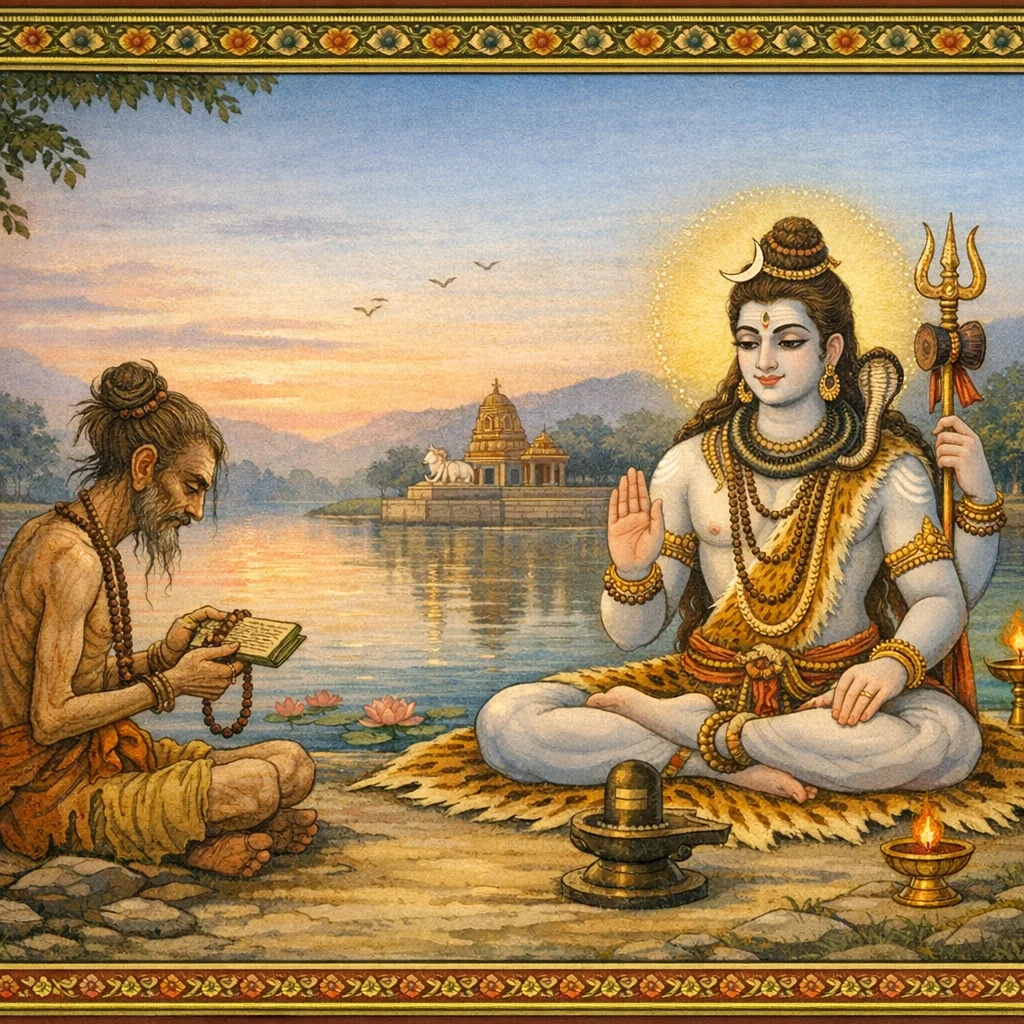
This adhyāya unfolds through layered dialogue. King Ānarta asks for a full account of the origin and greatness of Śaṅkhatīrtha. Viśvāmitra recounts an earlier case: a former king, stricken with leprosy amid political ruin and loss of wealth, seeks guidance and meets Nārada. Nārada calms his karmic fear, declaring there is no evil from a prior birth; rather, he once possessed merit as a righteous Somavaṃśa ruler, and the focus should be on sacred remedy, not blame. Nārada prescribes a precise tīrtha observance: bathe at Śaṅkhatīrtha in Hāṭakeśvara-kṣetra on the bright eighth day of the Mādhava/Vaiśākha month, on a Sunday at sunrise, and worship and take darśana of Śaṅkheśvara—promising release from leprosy and fulfillment of worthy aims. The chapter then gives the tīrtha’s origin legend. Two learned brothers, Likhita and Śaṅkha, dispute over taking fruit from an empty hermitage; Likhita condemns it as theft by dharmaśāstra reasoning, and Śaṅkha accepts penance so his tapas will not be diminished. In severe discipline Śaṅkha’s hands are cut off; he performs long austerities at Hāṭakeśvara, enduring the seasons, reciting Rudra materials, and worshiping the Sun. Mahādeva appears with Sūrya-associated splendor and grants boons: restoration of Śaṅkha’s hands, establishment of divine presence in the liṅga, the naming and fame of the waters as Śaṅkhatīrtha, and a formal phala for future pilgrims. It concludes that in the lineage of one who hears or reads this account, leprosy does not arise.
Shlokas
Verse 1
आनर्त उवाच । सांप्रतं मुनिशार्दूल शंखतीर्थ समुद्भवम् । माहात्म्यं वद मे कृत्स्नं श्रद्धा मे महती स्थिता
Ānarta said: O tiger among sages, now tell me in full the greatness and origin of Śaṃkhatīrtha; great faith is firmly established in me.
Verse 2
अहो तीर्थमहो तीर्थं हाटकेश्वरसंज्ञितम् । क्षेत्रं यच्च धरापृष्ठे सर्वाश्चर्यमयं शुभम्
Ah—what a holy ford, what a holy ford indeed, renowned as Hāṭakeśvara! That sacred kṣetra upon the surface of the earth is wholly filled with wonders and is auspicious.
Verse 3
नाहं तृप्तिं द्विजश्रेष्ठ प्रगच्छामि कथंचन । शृण्वानस्तु सुमाहात्म्यं क्षेत्रस्यास्य समुद्भवम्
O best of the twice-born, I do not attain satisfaction in any way—though I listen—regarding the excellent greatness and the origin of this sacred region.
Verse 4
विश्वामित्र उवाच । अत्र ते कीर्तयिष्यामि पूर्ववृत्तं कथांतरम् । शंखतीर्थस्य माहात्म्यं यथाजातं धरातले
Viśvāmitra said: Here I shall recount to you an earlier account, another sacred narrative—the greatness of Śaṅkhatīrtha, just as it came to be upon the earth.
Verse 5
आनर्ताधिपतिः पूर्वमासीदन्यो महीपतिः । यथा त्वं सांप्रतं भूमौ सर्वलोकप्रपालकः
Formerly there was another king, the lord of Ānarta—just as you are now upon the earth, the protector and guardian of all people.
Verse 6
सोऽकस्मात्कुष्ठभाग्जातो विकलांगो बभूव ह । अपुत्रः शत्रुभिर्व्याप्तस्त्रस्तश्च नृपसत्तमः
All at once he was stricken with leprosy, and his limbs became impaired. Childless, hemmed in by enemies, and seized by fear—so did that excellent king become.
Verse 7
स सर्वैर्भूमिपालैश्च सर्वतः परिपीडितः । राज्यभ्रंशसमोपेतः प्राप्तो रैवतकं गिरिम्
Oppressed on every side by other kings, and having fallen from his kingdom, he came to Mount Raivataka.
Verse 8
तत्रापि पीड्यते नित्यं सर्वतस्तु मलिम्लुचैः
Even there he was continually harassed from every side by the malimluca-s—lawless plunderers.
Verse 9
हस्त्यश्वरथहीनस्तु कोशहीनो यदाऽभवत् । स तदा चिंतयामास किं करोमि च सांप्रतम्
When he was bereft of elephants, horses, and chariots, and when his treasury too was exhausted, then he pondered: “What am I to do now?”
Verse 10
कलत्राण्यपि सर्वाणि ह्रियंते तस्करैर्बलात्
Even all his wives were carried off by thieves by force.
Verse 11
स एवं चिंतयानस्तु गतो वै नारदं विभुम् । द्रष्टुं पार्थिवशार्दूल वैष्णवे दिवसे स्थिते
While he was reflecting thus, that tiger among kings went to see the mighty Nārada, on a Vaiṣṇava holy day.
Verse 12
तत्रापश्यत्स संप्राप्तं नारदं मुनिसत्तमम् । तीर्थयात्राप्रसंगेन दामोदरदिदृक्षया
There he saw Nārada, the best of sages, who had arrived—having come on the occasion of a pilgrimage to sacred fords, and with the desire to behold Dāmodara.
Verse 13
तं प्रणम्याथ शिरसा कृतांजलिपुटः स्थितः । प्रोवाच वचनं दीन उपविश्य तदग्रतः
Bowing to him with his head, standing with hands joined in reverence, the distressed man sat down before him and spoke these words.
Verse 14
राजोवाच । शत्रुभिः परिभूतोऽहं समतान्मुनिसत्तम । ततो राज्यपरिभ्रंशात्संप्राप्तोऽत्र महागिरौ
The King said: “O best of sages, I have been oppressed on every side by enemies. Then, having fallen from my kingdom, I have come here to this great mountain.”
Verse 15
विपिने तस्करैः पापैः प्रपीड्येऽहं समंततः । यत्किंचिदश्वनागाद्यं मया सह समागतम्
In the forest I am harried on every side by sinful robbers; and whatever I had with me—horses, elephants, and the like—has also been assailed.
Verse 16
तत्सर्वं तस्करैर्नीतं कोशा दारास्तथा वसु । तस्माद्वद मुनिश्रेष्ठ वैराग्यं मे महत्स्थितम्
All of it has been carried off by robbers—my treasury, my wives, and my wealth. Therefore, O best of sages, speak to me; a great dispassion (vairāgya) has arisen within me.
Verse 17
अन्यजन्मोद्भवं किंचिन्मम पापं सुदारुणम् । येनेमां च दशां प्राप्तः सहसा मुनिसत्तम
Surely there exists some exceedingly dreadful sin of mine, born of another life; by it I have suddenly fallen into this condition, O best of sages.
Verse 18
तस्य तद्वचनं श्रुत्वा चिरं ध्यात्वा मुनीश्वरः । प्रोवाचाऽथ नृपं दीनं ज्ञात्वा दिव्येन चक्षुषा
Having heard his words, the lordly sage reflected for a long time; then, perceiving the afflicted king’s plight through divine sight, he spoke.
Verse 19
नारद उवाच । न त्वया कुत्सितं किंचित्पूर्व देहांतरे कृतम् । मया ज्ञातं महाराज सर्वं दिव्येन चक्षुषा
Nārada said: “You have done nothing blameworthy in a former embodiment. O great king, I have known everything through divine vision.”
Verse 20
त्वमासीः पार्थिवः पूर्वं सिद्धपन्नगसंज्ञिते । पत्तने सोमवंशीयः सर्व शत्रुनिबर्हणः
Formerly you were a king in the city called Siddhapannaga—born in the Lunar dynasty (Somavaṃśa), a destroyer of all enemies.
Verse 21
त्वया चेष्टं महायज्ञैः सदा संपूर्णदक्षिणैः । महादानानि दत्तानि पूजिता ब्राह्मणोत्तमाः
You performed great sacrifices (mahāyajñas), ever with the dakṣiṇā fully completed; you bestowed great gifts and honored the foremost of brāhmaṇas.
Verse 22
तेन कर्म विपाकेन भूयः पार्थिवतां गतः
By the ripening of that very karma, he once again attained the state of a king upon the earth.
Verse 23
आनर्त उवाच । इह जन्मनि नो कृत्यं संस्मरामि विभो कृतम् । तत्किं राज्यपरि भ्रंशः सहसा मे समुत्थितः
Ānarta said: “In this present birth, O Lord, I do not recall any wrongful act I have done. Why then has this sudden ruin and loss of my kingdom arisen for me?”
Verse 24
लक्ष्म्या हीनस्य लोकस्य लोकेऽस्मिन्व्यर्थतां व्रजेत् । जीवितं मुनिशार्दूल विज्ञातं हि मयाऽधुना
In this world, the life of one bereft of Lakṣmī (prosperity and auspicious fortune) slips into futility. O tiger among sages, I have now truly understood what life is.
Verse 25
मृतो नरो गतश्रीको मृतं राष्ट्रमराजकम् । मृतमश्रोत्रिये दानं मृतो यज्ञस्त्वदक्षिणः
A man bereft of prosperity is as one dead; a kingdom without a king is as one dead. A gift bestowed on the unworthy (not a true śrotriya) is a dead gift, and a sacrifice (yajña) performed without dakṣiṇā, the priestly fee, is dead as well.
Verse 26
लक्ष्म्या हीनस्य मर्त्यस्य बांधवोऽपि विजायते । प्रार्थयिष्यति मां नूनं दृष्ट्वा तं चान्यतो व्रजेत्
Even a kinsman turns hostile toward a mortal bereft of fortune. Surely he will come to beg from me; and people, seeing him, will go elsewhere.
Verse 27
यथा मां सांप्रतं दृष्ट्वा ये मयाऽपि प्रतर्पिताः । तेऽपि दूरतरं यांति एष मां प्रार्थयि ष्यति
Just as those whom I once satisfied and upheld—on seeing me now—go even farther away, so too this one will come to beg from me, not to help me.
Verse 28
धनहीनं नरं त्यक्त्वा कुलीनमपि चोत्तमम् । गच्छति स्वजनोऽन्यत्र शुष्कं वृक्षमिवांडजाः
Abandoning a man who lacks wealth—even if he is noble-born and excellent—his own people go elsewhere, like birds leaving a dried-up tree.
Verse 29
तत्कार्यकारणार्थाय दरिद्रोऽ भ्येति चेद्गृहम् । धनिनो भर्त्सयंत्येनं समागच्छंति नांतिकम्
If a poor man comes to a house seeking some work or assistance, the wealthy scold him and do not come near him.
Verse 30
कृपणोऽपि धनाढ्यश्चेदागच्छति हि याचितुम् । एष दास्यति मे किंचि दिति चित्ते नृणां भवेत्
But if even a wealthy miser comes to beg, people think in their hearts, “Surely he will give me something.”
Verse 31
मम त्वं पूर्ववंशीयः पिता ते च पितुर्मम । सदा स्नेहपरश्चासीत्त्वं च स्नेहविवर्जितः
You belong to my former lineage; your father and my father were kin. He was always full of affection—yet you are devoid of affection.
Verse 32
एवं ब्रुवंति लोकेऽत्र धनिनां पुरतः स्थिताः । कुलीना अपि पापानां दृश्यंते धनलिप्सया । दरिद्रस्य मनुष्यस्य क्षितौ राज्यं प्रकुर्वतः
Thus, in this world, people standing before the wealthy speak in this manner. Even those of noble birth are seen acting sinfully out of greed for money—especially when a poor man tries to establish sovereignty upon the earth.
Verse 33
प्रशोषः केवलं भावी हृदयस्य महामुने । द्वाविमौ कण्टकौ तीक्ष्णौ शरीरपरिशोषिणौ । यश्चाधनः कामयते यश्च कुप्यत्यनीश्वरः
O great sage, the heart is destined only for withering. Two sharp thorns drain the body: one is the penniless man who longs for possessions, and the other is the powerless man who burns with anger.
Verse 34
श्मशानमपि सेवंते धनलुब्धा निशागमे । जनेतारमपि त्यक्त्वा नित्यं यांति सुदूरतः
Those greedy for wealth will even frequent the cremation ground at night. Abandoning even their own benefactor, they constantly go far away in pursuit of gain.
Verse 35
सुमूर्खोपि भवेद्विद्वानकुलीनोऽपि सत्कुलः । यस्य वित्तं भवे द्धर्म्ये विपरीतमतोऽन्यथा
Even a great fool may be regarded as a scholar, and even one without lineage as of a noble family—when his wealth is gained by righteous, dharmic means. Otherwise, the opposite is seen.
Verse 36
निर्विण्णोऽहं मुनिश्रेष्ठ जीवितस्य च सांप्रतम् । तस्माद्ब्रूहि किमर्थं मे दारिद्र्यं समुपस्थितम्
O best of sages, at present I have grown weary even of life itself. Therefore tell me—why has poverty come upon me?
Verse 37
कुष्ठश्चापि ममोपेतः शत्रुभिश्च पराभवम् । अन्यजन्मांतरं दृष्टं त्वया दिव्येन चक्षुषा
Leprosy too has befallen me, and I have been defeated by enemies. With your divine sight, you have seen my other births as well.
Verse 38
कुकर्मणा न संस्पृष्टं स्वल्पेनापि ब्रवीषि माम् । एतज्जन्मातरं दृष्टं स्मरामि मुनिसत्तम
You say that I have not been touched even slightly by evil deeds. Yet, O best of sages, I remember that you have seen another birth of mine.
Verse 39
न मया कुकृतं किंचित्कदाचित्समनुष्ठितम् । तत्किं राज्यपरिभ्रंशो जातोऽयं मम सन्मुने
I have never performed any evil deed at any time. Then why has this downfall from my kingdom happened to me, O venerable sage?
Verse 40
अत्र मे कौतुकं जातं तस्माद्देहि विनिर्णयम् । भवेन्न वा भवेत्कर्म कृतं यच्च शुभाशुभम्
Here a doubt has arisen in me; therefore grant me a decisive judgment: does the karma one has done—auspicious or inauspicious—surely bear fruit, or might it not?
Verse 41
विश्वामित्र उवाच । तस्य तद्वचनं श्रुत्वा चिरं ध्यात्वा तु नारदः । कृपया परयाविष्टस्ततः प्रोवाच सादरम्
Viśvāmitra said: Having heard his words, Nārada reflected for a long time. Then, filled with great compassion, he spoke with respectful care.
Verse 42
शृणु राजन्प्रवक्ष्यामि यथा शुद्धिः प्रजायते । तव राज्यस्य संप्राप्तिर्यथा भूयोऽपि जायते
Listen, O King; I shall explain how purification arises, and how the attainment of your kingdom may come to you once again.
Verse 43
तव भूमौ महापुण्यमस्ति क्षेत्रं जगत्त्रये । हाटकेश्वरसंज्ञं तु तीर्थं तत्रास्ति शोभनम् । शंखतीर्थमिति ख्यातं सर्वपातकनाशनम्
In your land there is a supremely meritorious sacred region, renowned throughout the three worlds. There shines a beautiful holy ford called Hāṭakeśvara; it is famed as Śaṃkhatīrtha, the destroyer of all sins.
Verse 44
यस्तत्र कुरुते स्नानं श्रद्धया परया युतः । अष्टम्यां शुक्लपक्षस्य संप्राप्ते मासि माधवे
Whoever bathes there, endowed with the highest faith, on the eighth lunar day (Aṣṭamī) of the bright fortnight, when the month of Mādhava has arrived—
Verse 45
सूर्यवारे तु सम्प्राप्ते भास्करस्योदयं प्रति । सर्वकुष्ठविनिर्मुक्तो जायते सूर्यसंनिभः
When Sunday arrives, facing the sunrise of Bhāskara, one is freed from every kind of leprosy and comes to shine like the Sun himself.
Verse 46
यंयं काममभिध्यायेत्तंतं सर्वेषु दुर्लभम् । स तदाऽप्नोत्यसंदिग्धं दृष्ट्वा शंखेश्वरं शुभम्
Whatever desire one contemplates—even the rarest of all—one attains then without doubt, upon beholding the auspicious Lord Śaṃkheśvara.
Verse 47
किं त्वया न श्रुतं तत्र स्वदेशे वसता नृप । तस्य तीर्थस्य माहात्म्यं यत्त्वमत्र समागतः
O King, while dwelling in your own land, had you not heard of the greatness of that holy tīrtha, that you have now come here?
Verse 48
सिद्धसेन उवाच । कथं शंखेश्वरो देवः संजातो वद सन्मुने
Siddhasena said: “How did the god Śaṃkheśvara come into manifestation? Tell me, O holy sage.”
Verse 49
नारद उवाच । अहं ते कथयिष्यामि कथामेतां पुरातनीम् । यथा शंखेश्वरो जातः शंखतीर्थं तु पार्थिव
Nārada said: “I shall tell you this ancient account—how Śaṃkheśvara arose, and how Śaṃkhatīrtha came to be, O King.”
Verse 50
आसतुर्ब्राह्मणौ पूर्वं लिखितः शंख एव च । भ्रातरौ वेदविदुषौ तपस्युग्रे व्यवस्थितौ
Formerly there were two brāhmaṇa brothers—Likhita and Śaṅkha—learned in the Vedas and firmly established in intense austerity.
Verse 51
कस्यचित्त्वथ कालस्य लिखितस्याश्रमं प्रति । भ्रातुर्ज्येष्ठस्य संप्राप्तो नमस्कारकृते नृप
Then, after some time, Śaṅkha arrived at the hermitage of Likhita, his elder brother, O King, in order to offer his salutations.
Verse 52
सोऽपश्यदाश्रमं शून्यं लिखितेन विवर्जितम्
He saw the hermitage standing empty, deserted—Likhita was not there.
Verse 53
अथापश्यद्वने तस्मि न्परिपक्वफलानि सः । प्रणयात्प्रतिजग्राह मत्वा भ्रातुर्नृपाऽश्रमम्
Then, in that forest, he saw ripe fruits. Out of affectionate familiarity he took them, thinking, “This is my brother’s hermitage.”
Verse 54
एतस्मिन्नन्तरे प्राप्तो लिखितस्तत्र चाश्रमे । यावत्पश्यति शंखं स प्रगृही तबृहत्फलम्
Meanwhile, Likhita arrived there at the hermitage. As soon as he saw Śaṅkha, Śaṅkha was holding a large fruit.
Verse 55
किमिदं विहितं पाप पापं साधुविगर्हितम् । चौर्यकर्म त्वया निंद्यं यद्धृतानि फलानि च
“What is this you have done, O sinner—this evil deed condemned by the virtuous? This act of theft by you is blameworthy, for you have taken the fruits.”
Verse 56
अनेन कर्मणा तुभ्यं तपो यास्य ति संक्षयम् । चौर्यकर्मप्रवृत्तस्य ब्राह्मणैर्गर्हितस्य च
“By this action, your austerity will come to ruin—for one who has engaged in theft is censured by the brāhmaṇas.”
Verse 57
शंख उवाच । एकोदरसमुत्पन्नो ज्येष्ठभ्राता यथा पिता । भूयादिति श्रुतिर्लोके प्रसिद्धा सर्वतः स्थिता
Śaṅkha said: “Born from the same womb, the elder brother is like a father—such is the traditional teaching, well known everywhere in the world.”
Verse 58
तत्किं पुत्रस्य विप्रेन्द्र नाधिकारः पितुर्धने । यथैवं निष्ठुरैर्वाक्यैर्निर्भर्त्सयसि मां विभो
“Then, O best of brāhmaṇas, does a son have no right in his father’s wealth? Why do you rebuke me with such harsh words, O venerable one?”
Verse 59
लिखित उवाच । न दोषो जायते हर्तुः पुत्रस्यात्र कथंचन । एकत्र संस्थितस्यात्र पितुर्वित्तमसंशयम्
Likhita said: “In no way does a fault arise for a son who takes (property) here, when all are dwelling together—for it is certainly the father’s wealth in that undivided state.”
Verse 60
विभक्तस्तु यदा पुत्रो भ्राता वाऽपहरेद्धनम् । तदा दोषमवाप्नोति चौर्योत्थं मतमेव मे
But when a son—or a brother—having already been divided in estate, then takes wealth, he incurs fault: it is a sin born of theft. This is my settled view.
Verse 61
पुत्रस्य तु पुनर्वित्तं पिता हरति सर्वदा । न तस्य विद्यते दोषो विभक्त स्यापि कर्हिचित्
But a father may always take back a son’s wealth; for him there is no fault—at any time, even if the son is separated.
Verse 62
अत्र श्लोकः पुरा गीतो मनुना स्मृतिकारिणा । तं तेऽहं संप्रवक्ष्यामि धर्मशास्त्रोद्भवं वचः
Here is a verse once sung by Manu, the author of the Smṛti. I shall now declare to you that statement born of Dharmaśāstra.
Verse 63
त्रय एवाधप्रोक्ता भार्या दासस्तथा सुतः । यत्ते समधिगच्छंति यस्य ते तस्य तद्धनम्
Three are declared as dependent: the wife, the servant, and likewise the son. Whatever they acquire belongs to him to whom they belong—that indeed is his wealth.
Verse 64
शंख उवाच । यद्येवं चौर्यदोषोऽस्ति मम तात महत्तरः । निग्रहं कुरु मे शीघ्रं येन न स्यात्तपःक्षयः
Śaṃkha said: If such is the fault of theft in me, O father, and it is very great—restrain and punish me quickly, so that my austerity (tapas) may not be wasted away.
Verse 65
विश्वामित्र उवाच । तस्य तं निश्चयं ज्ञात्वा शस्त्रमादाय निर्मलम् । चकर्ताथ भुजौ तस्य भ्राता भ्रातुश्च निर्घृणः । सोपि च्छिन्नकरो विप्रो व्यथयापि समन्वितः
Viśvāmitra said: Knowing his firm resolve, his brother—pitiless even toward his own brother—took up a spotless weapon and cut off his arms. That brāhmaṇa too, with his hands severed, was filled with pain.
Verse 66
मन्यमानः प्रसादं तं भ्रातुर्ज्येष्ठस्य पार्थिव
O king, regarding that act as the favor of his elder brother,
Verse 67
ततस्तु कामदं क्षेत्रं हाटकेश्वरसंज्ञितम् । मत्वा प्राप्य तपस्तेपे कंचित्प्राप्य जलाशयम्
Then, considering the sacred region called Hāṭakeśvara to be a wish-fulfilling kṣetra, he reached it; and, having come to a certain water-reservoir there, he performed austerities.
Verse 68
वर्षास्वाकाशशायी च हेमन्ते सलिलाश्रयः । पञ्चाग्निसाधको ग्रीष्मे षष्ठकालकृताशनः
In the rainy season he lay exposed to the open sky; in winter he stayed in water; in summer he practiced the austerity of the five fires; and he ate only at the sixth time-period.
Verse 69
संस्नाप्य भास्करं स्थाणुं तत्पुरः शतरुद्रियम् । जपन्सामोक्तरुद्रांश्च भव रुद्रांस्तथा जपन् । प्राणरुद्रांस्तथा नीलान्स्कन्दसूक्तसमन्वितान्
After ritually bathing Bhāskara and Sthāṇu, he recited the Śatarudrīya in their presence; and he also chanted the Rudra-hymns taught in the Sāman, likewise chanting the Bhava-Rudras, the Prāṇa-Rudras, and the Nīla forms—together with the Skanda-sūkta.
Verse 70
ततो वर्षसहस्रांते तुष्टस्तस्य महेश्वरः । प्रोवाच दर्शनं गत्वा सह सूर्य वृषेश्वरैः
Then, at the end of a thousand years, Mahēśvara—pleased with him—appeared before his eyes and spoke, accompanied by Sūrya and Vṛṣeśvara.
Verse 71
महेश्वर उवाच । शंख तुष्टोऽस्मि ते वत्स तपसानेन सुव्रत । तस्मात्कथय मे क्षिप्रं यद्ददामि तवाऽधुना
Mahēśvara said: “Śaṃkha, dear child, O you of noble vows, I am pleased with you by this austerity. Therefore tell me quickly what I should grant you now.”
Verse 72
शंख उवाच । यदि तुष्टोऽसि मे देव यदि देयो वरो मम । जायेतां तादृशौ हस्तौ यादृशो मे पुरा स्थितौ
Śaṅkha said: “If you are pleased with me, O Lord, and if a boon is to be granted to me, then may my two hands become just as they were formerly.”
Verse 73
त्वयाऽत्रैव सदा वासः कार्यः सुरवरेश्वर । लिंगे कृत्वा दयां देव ममोपरि महत्तराम्
“And you, O Lord of the best of gods, should dwell here forever; establishing compassion in this liṅga, O Deva, show to me the greatest mercy.”
Verse 74
एतज्जलाशयं नाथ मम नाम्ना धरातले । प्रसिद्धिं यातु लोकस्य यावच्चन्द्रार्कतारकाः
“O Lord, may this water-reservoir on the earth become renowned among people by my name, for as long as the moon, sun, and stars endure.”
Verse 75
अत्र यः कुरुते स्नानं धृत्वा मनसि दुर्लभम् । किंचिद्वस्तु समग्रं तु तस्य संपत्स्यते विभो
Whoever bathes here, holding in the mind a hard-to-attain desire, will surely obtain that very thing in full, O Lord.
Verse 76
श्रीभगवानुवाच । अद्याहं दर्शनं प्राप्तस्तव चैवाष्टमीदिने । माधवस्य सिते पक्षे यस्माद्ब्राह्मणसत्तम
The Blessed Lord said: “Today I have granted you my darśana—on the Aṣṭamī day, in the bright fortnight of Mādhava (Vaiśākha), O best of brāhmaṇas.”
Verse 77
तस्मात्संक्रमणं लिंगे तावकेऽस्मिन्द्विजोत्तम । करिष्यामि न सन्देहो दिनमेकमसंशयम्
Therefore, O best of the twice-born, I will surely enter and abide within this liṅga of yours—without doubt—for one full day.
Verse 78
यश्चात्र दिवसे प्राप्ते तीर्थेऽत्रैव भवोद्भवे । स्नानं कृत्वा रवेर्वार उदयं समुपस्थिते
And whoever, when that day arrives, at this very tīrtha born of Bhava (Śiva), bathes here on Sunday at the time of sunrise…
Verse 79
पूजयिष्यति मे मूर्तिं त्वया संस्थापितां द्विज । कुष्ठव्याधिविनिर्मुक्तो मम लोकं स यास्यति
…and worships my form that you have established, O brāhmaṇa—freed from the disease of leprosy, he will go to my world.
Verse 80
शेषकालेऽपि विप्रेन्द्र अज्ञानविहितादघात् । मुक्तिं प्राप्स्यत्यसंदिग्धं मम वाक्याद्द्विजोत्तम
Even at the final time (death), O lord of brāhmaṇas—even if there is sin committed through ignorance—he will attain liberation without doubt, by my word, O best of the twice-born.
Verse 81
तथा तवापि यौ हस्तौ छिन्नावेतावुभावपि । तस्मिन्योगेऽभिषेकात्तौः स्यातां भूयोऽपि तादृशौ
So too, your two hands—though both have been severed—by the consecrating ablution at that auspicious juncture, they shall again become just as they were before.
Verse 82
एष मे प्रत्ययो विप्र भविष्यति तवाऽधुना । भूयः स्नानं विधाय त्वं ततो मूर्तिं ममार्चय
O brāhmaṇa, now I shall have full confidence in you. Perform the sacred bath once again, and then worship My image.
Verse 83
अन्येऽपि व्यंगतां प्राप्ताः संयोगेऽत्र तव स्थिते । स्नात्वा मां पूजयिष्यंति मुक्तिं यास्यंति ते द्विज
O brāhmaṇa, others too who have become afflicted will, when this auspicious conjunction is present here because of you, bathe and worship Me—and they will attain liberation.
Verse 84
एवमुक्त्वा सहस्रांशुस्ततश्चादर्शनं गतः । शंखोऽपि तत्क्षणात्स्नात्वा पूजयित्वा दिवाकरम्
Having spoken thus, Sahasrāṃśu (the Sun) then vanished from sight. And Śaṃkha, at that very moment, bathed and worshipped Divākara (the Sun).
Verse 85
यावत्पश्यति चात्मानं तावद्धस्तसमन्वितम् । आत्मानं पश्यमानस्तु विस्मयं परमं गतः
The moment he looked upon himself, he found his hand restored. Seeing himself thus, he was filled with the greatest wonder.
Verse 86
ततःप्रभृति तत्रैव कृत्वाऽश्रमपदं नृप । तपस्तेपे द्विज श्रेष्ठो गतश्च परमां गतिम्
From that time onward, O king, he established an āśrama right there; that best of brāhmaṇas performed austerities and attained the supreme state.
Verse 87
तस्मात्त्वमपि राजेंद्र संयोगं प्राप्य तत्त्वतः । तेनैव विधिना स्नात्वा त्वं पूजय दिवाकरम्
Therefore, O lord of kings, having truly obtained this auspicious opportunity, bathe according to that very same rite and worship Divākara (the Sun).
Verse 88
यश्चैतच्छृणुयान्नित्यं पठेद्वा पुरतो रवेः । तस्यान्वयेऽपि नो कुष्ठी कदाचित्सम्प्रजायते
Whoever daily hears this account, or recites it before Ravi (the Sun), in his lineage no leper will ever be born.
Verse 209
इति श्रीस्कांदे महापुराण एकाशीतिसाहस्र्यां संहिताया षष्ठे नागरखण्डे हाटकेश्वरक्षेत्रमाहात्म्ये शंखादित्यशंखतीर्थोत्पत्तिवृत्तांतवर्णनंनाम नवोत्तरद्विशततमोऽध्यायः
Thus ends the two-hundred-and-ninth chapter, called “The Account of the Origin of Śaṃkhāditya and Śaṃkha-tīrtha,” in the Hāṭakeśvara-kṣetra Māhātmya of the Nāgara Khaṇḍa of the Śrī Skanda Mahāpurāṇa (in the eighty-one-thousand-verse recension).