Adhyaya 208
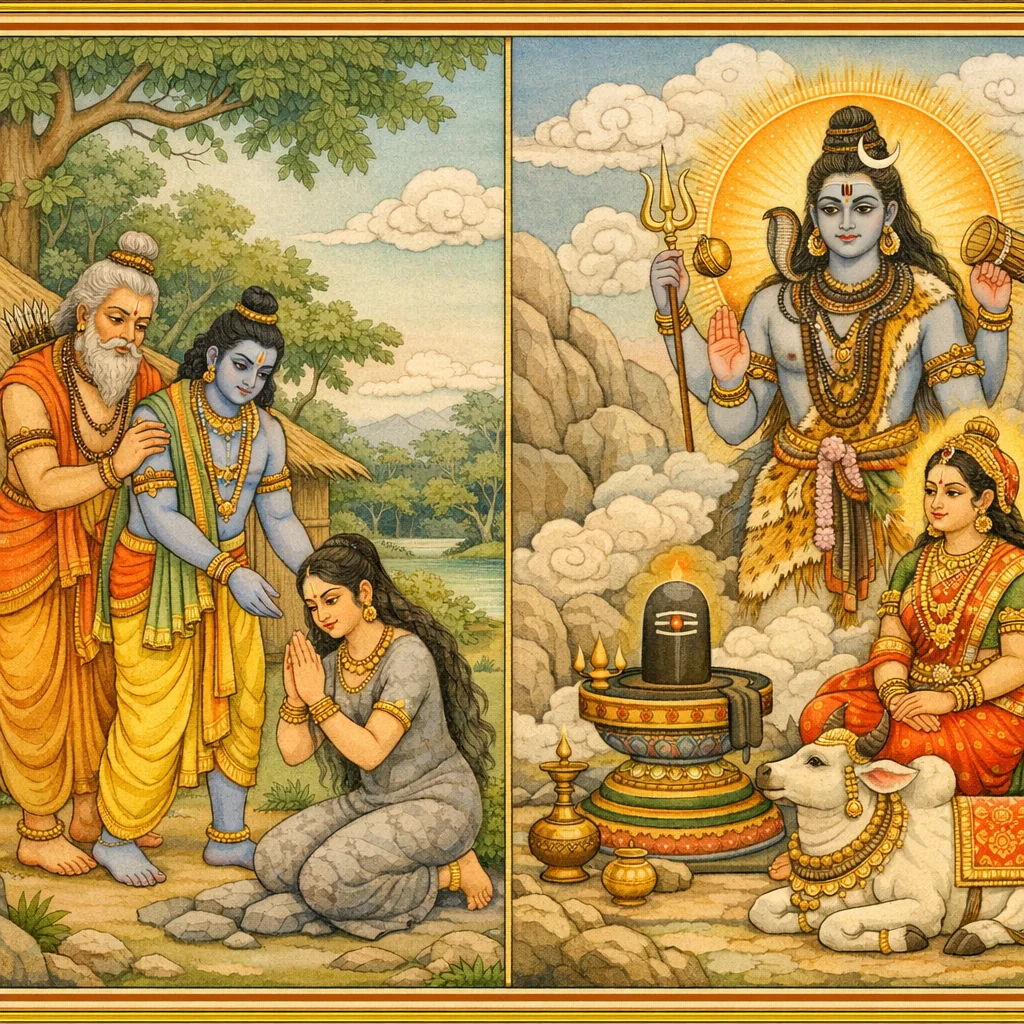
This chapter presents a layered māhātmya, framed as Viśvāmitra’s report to a king and embedding older dialogues and origin-stories. After Indra’s ascent and Gautama’s wrath, Śatānanda pleads about his mother Ahilyā’s condition and the difficulty of ritual purification. Gautama takes a severe stance on impurity, declaring Ahilyā’s state beyond ordinary expiation, which drives Śatānanda to vow extreme self-sacrifice. Gautama then discloses a future remedy: Rāma of the solar line, destined to defeat Rāvaṇa, will restore Ahilyā by mere touch. In the Rāmāvatāra setting, Viśvāmitra brings the youthful Rāma to protect a sacrifice; on the way Ahilyā, cursed into stone, is touched and regains human form, approaches Gautama, and seeks full prāyaścitta. Gautama prescribes extensive ascetic and pilgrimage observances—multiple cāndrāyaṇas, kṛcchras, prājāpatya disciplines, and visits to tīrthas. Ahilyā continues her pilgrimage to Hāṭakeśvara-kṣetra, where the deity is not easily seen. She performs fierce tapas and installs a nearby liṅga; Śatānanda later joins her, and finally Gautama arrives, resolves on still greater austerities, and after long practice the liṅga manifests and Śiva appears, affirming the place’s power and the family’s devotion. Gautama asks that darśana/pūjā here grant great merit, including an auspicious post-mortem destination for devotees on a specified lunar date. The chapter ends with a social-theological consequence: the kṣetra’s exceptional grace draws even morally compromised people toward merit, alarming the devas, who petition Indra to restore balance by reactivating broader dharmic practices—yajña, vrata, and dāna—so normative ritual life stands alongside the site’s special efficacy. A concluding phalaśruti promises relief from certain sins to faithful listeners.
Shlokas
Verse 1
विश्वामित्र उवाच । एवं शक्रे दिवं प्राप्ते देवेषु सकलेषु च । गौतमः स्वाश्रमं प्रापत्कोपेन महता ज्वलन्
Viśvāmitra said: Thus, when Śakra had gone to heaven, and all the gods as well had departed, Gautama returned to his hermitage, blazing with great anger.
Verse 2
ततः स कथयामास सर्वं देवविचेष्टितम् । वरदानं च शक्राय शता नन्दस्य चाग्रतः
Then he related everything about the gods’ actions, and also the boon granted to Śakra, in the presence of Śatānanda.
Verse 3
तच्छ्रुत्वा पितरं प्राह विनयावनतः स्थितः । तातांबाया न कस्मात्त्वं प्रसादं प्रकरोषि मे
Hearing that, he—standing bowed down in humility—said to his father: “Father, why do you not show favor to me regarding my mother?”
Verse 4
उत्थापने न ते किञ्चिदसाध्यं विद्यते विभो । तस्मात्कुरु प्रसादं मे यथा स्यान्मम चांबया
O mighty Lord, in restoring what has fallen there is nothing impossible for you. Therefore, show me your grace, that I may be reunited with my mother.
Verse 5
समागमो मुनिश्रेष्ठ दीनस्योत्कण्ठितस्य च । तस्मादुत्थाप्य तां तूर्णं प्रायश्चित्तविधिं ततः । तस्मादादिश मे क्षिप्रं येन शुद्धिः प्रजायते
O best of sages, for one who is miserable and longing, reunion alone is relief. Therefore restore her quickly, and then prescribe the rite of expiation (prāyaścitta). Hence instruct me at once by which purity may be attained.
Verse 6
गौतम उवाच । मद्यावलिप्तभांडस्य यदि शुद्धिः प्रजायते । तत्स्त्रीणां जायतेशुद्धिर्योनौ शुक्राभिषेचनात्
Gautama said: “If a vessel smeared with liquor can indeed become purified, then likewise a woman attains purification even when semen has been discharged into her womb.”
Verse 7
ब्राह्मणस्तु सुरां पीत्वा मौंजीहोमेन शुध्यति । तिंगिनीं साधयित्वा च न तु नारी विधर्मिता
“A brāhmaṇa, having drunk liquor, becomes purified by the Mauñjī-homa; but even by performing the Tiṃginī-sādhana, a woman who has fallen into adharma is not thereby purified.”
Verse 8
मद्यभांडमपि प्रायो यथावद्वह्निशोधितम् । विशुध्यति तथा नारी वह्निदग्धा विशुध्यति । यस्या रेतोऽथ संक्रांत मुदरांतेऽन्यसंभवम्
“Even a liquor-vessel, when properly purified by fire, becomes clean; so too a woman becomes purified when burned by fire—(a woman) in whom semen has passed and an offspring of another origin is conceived within the womb.”
Verse 9
एतस्मात्कारणान्माता मया ते पुत्र सा शिला । विहिता न हि तस्याश्च विशुद्धिस्तु कथञ्चन
For this very reason, O son, your mother has been ordained by me to become that stone; for in her case there is no purification at all, by any means.
Verse 10
शतानन्द उवाच । यद्येवं साधयिष्यामि तत्कृतेऽहं हुताशनम् । विषं वा भक्षयिष्यामि पतिष्यामि जलाशये
Śatānanda said: “If this is so, then for that purpose I will undertake the fire (ordeal); or I will eat poison; or I will cast myself into a lake—(anything) to accomplish it.”
Verse 11
मातुर्वियोगतस्तात सत्यमेतन्मयोदितम् । धर्मद्रोणाः स्थिताश्चान्ये मन्वाद्या मुनयस्तथा
“O dear one, because of separation from your mother, what I have said is true. Others too stand (as witnesses)—Dharma-droṇas, and likewise sages beginning with Manu.”
Verse 12
इतिहासपुराणानि वेदांतानि बहूनि च । संचिंत्य तात सर्वाणि देहि शुद्धिं ममापि ताम् । मम मातुः करिष्यामि नो चेत्प्राणपरिक्षयम्
“Reflecting on all the Itihāsas and Purāṇas, and on many Vedānta teachings too, O revered one—grant that purification to me as well. I will secure it for my mother; otherwise, I will give up my life.”
Verse 13
विश्वामित्र उवाच । तच्छ्रुत्वा सुचिरं ध्यात्वा गौतमः प्राह तं सुतम् । परिष्वज्य स्वबाहुभ्यां मूर्ध्न्याघ्राय ततः परम्
Viśvāmitra said: “Hearing that, and meditating for a long while, Gautama spoke to his son. Embracing him with his own arms, and smelling (kissing) his head, he then (said further).”
Verse 14
यद्येवं वत्स मा कार्षीः साहसं पापसंभवम् । आत्मदेहविघातेन श्रूयतां वचनं मम
If it is so, my child, do not commit a reckless deed that gives rise to sin by harming your own body. Listen to my words.
Verse 15
मेध्यत्वे तव मातुश्च शुद्धिर्ज्ञाता मया पुरा । यया सा मम हर्म्यार्हा भविष्यति न संशयः
Long ago I came to know the purification by which your mother will become pure again and fit for sanctity; by that means she will be worthy of my household—of this there is no doubt.
Verse 18
उत्पत्स्यते रवेर्वंशे रामरूपी जना र्दनः । रावणस्य वधार्थाय मानुषं रूपमास्थितः । तस्य पादस्य संस्पर्शाद्भूयः शुद्धा भविष्यति । तस्मात्प्रतीक्ष्य तावत्त्वमौत्सुक्यं व्रज पुत्रक । एतत्सम्यङ्मया ज्ञातं वत्स दिव्येन चक्षुषा
Janārdana, in the form of Rāma, will be born in the Solar lineage, taking a human body to slay Rāvaṇa. By the touch of His feet, this will be purified again. Therefore wait for that time; set aside your anxious haste, dear child. This I have truly known by divine sight, my son.
Verse 19
एतच्छ्रुत्वा तथेत्युक्त्वा शतानन्दः प्रहर्षितः । स्थितः प्रतीक्षमाणस्तु तं कालं मातृवत्सलः
Hearing this, Śatānanda joyfully replied, “So be it,” and remained there, waiting for that destined time—tender and devoted like one who cherishes a mother.
Verse 20
ततः कालेन महता रामरूपी जनार्दनः । रावणस्य वधार्थाय जातो दशरथालये
Then, after a long passage of time, Janārdana in the form of Rāma was born in Daśaratha’s house, for the purpose of destroying Rāvaṇa.
Verse 21
स मया भगवा विष्णुर्बालभावेन संस्थितः । निजयज्ञस्यरक्षार्थं समानीतः स्वमाश्रमम् । राक्षसानां विनाशाय यज्ञकर्मविनाशिनाम्
That Blessed Lord Viṣṇu, abiding in the guise of a youthful prince, was brought by me to my own hermitage to safeguard my yajña, for the destruction of the rākṣasas who ruin the sacrificial rites.
Verse 22
हतैस्तै राक्षसै रौद्रैर्मम पूर्णोऽभवन्मखः । अयोध्यायाः समानीतः स मया रघुनंदनः
When those fierce rākṣasas were slain, my yajña was brought to full completion. Then I escorted Rāma, the joy of the Raghu line, to Ayodhyā.
Verse 23
सीतायाश्च विवाहार्थं लक्ष्मणेन समन्वितः । श्रुत्वा स्वयंवरं तस्याः पार्थिवानां समागमम्
Accompanied by Lakṣmaṇa, and seeking Sītā’s hand in marriage, he heard of her svayaṃvara and of the gathering of kings who had assembled for it.
Verse 24
ततो मार्गे मया दृष्टा गौतमस्याश्रमे शुभे । अहिल्या सा शिला रूपा प्रमाणेन महत्तमा
Then, on the way, I beheld in the auspicious hermitage of Gautama Ahalyā, existing in the form of a stone, vast in size and measure.
Verse 25
ततः प्रोक्तो मया रामः स्पृशेमां वत्स पाणिना । मानुषत्वं लभेद्येन गौतमस्य प्रिया मुनेः । शापदोषेण संजाता शिलेयं तस्य सन्मुनेः
Then I said to Rāma, “Dear child, touch this with your hand; by that touch the beloved wife of the sage Gautama shall regain her human state. Through the fault of a curse she has become this stone—she who belongs to that noble seer.”
Verse 26
अविकल्पं ततो रामो मम वाक्येन तां शिलाम् । पस्पर्श पार्थिवश्रेष्ठ कौतू हलसमन्वितः
Then Rāma, best of kings, without hesitation and at my word, touched that stone, filled with solemn wonder.
Verse 27
अथ रामेण संस्पृष्टा सहसैवांगना मुनेः । शुशुभे मानुषी जाता दिव्यरूपवपुर्धरा
Then, when touched by Rāma, the sage’s wife at once became human again and shone forth, bearing a body of divine beauty and form.
Verse 28
ततः सा लज्जयाऽविष्टा प्रणिपत्य च गौतमम् । स्मरमाणाऽत्मनः कृत्यं यच्छक्रेण समन्वितम्
Then she, overcome with shame, bowed down before Gautama, remembering her own deed—an act bound up with Śakra (Indra).
Verse 29
प्रायश्चित्तं मम स्वामिन्देहि सर्वमशेषतः । यन्नरस्य समायोगे परस्याह प्रजापतिः
“O master, grant me the atonement (prāyaścitta) in full, without remainder—such as Prajāpati has declared for one who has entered into improper union with another’s spouse.”
Verse 30
अहं दुष्करमप्येतत्करिष्यामि न संशयः । येन शुद्धिर्भवेन्मह्यं पुरश्चरणसेवनात्
“Even if it is difficult, I will surely do it without doubt—by undertaking the prescribed disciplines (puraścaraṇa) so that purity may arise in me.”
Verse 31
ततः संचिंत्य सुचिरं प्रोवाच गौतमस्तदा । कुरु चान्द्रायणशतं कृच्छ्राणां च सहस्रकम्
Then Gautama, after long reflection, spoke: “Perform a hundred Cāndrāyaṇa observances and a thousand Kṛcchra penances.”
Verse 32
प्राजापत्यायुतं चापि तीर्थयात्रापरायणा । अष्टषष्टिषु तीर्थेषु यानि तीर्थानि भूतले । तेषां संदर्शनात्सम्यक्ततः शुद्धिमवाप्स्यसि
“And also perform ten thousand Prājāpatya penances, devoted to pilgrimage. On earth there are sixty-eight tīrthas; by properly beholding them, you will then attain purification.”
Verse 33
सा तथैति प्रतिज्ञाय नित्यं व्रतपरायणा । अष्टषष्टिसु तीर्थेषु वाराणस्यादिषु क्रमात्
She agreed, making that vow, ever devoted to observances; and, in due order, she went to the sixty-eight tīrthas—beginning with Vārāṇasī and the rest.
Verse 34
बभ्राम तानि लिंगानि पूजयन्ती प्रभक्तितः । क्रमेणैव तु संप्राप्ता हाटकेश्वरसंभवम्
She wandered to those liṅgas, worshipping with deep devotion; and in due course she reached the sacred presence of Hāṭakeśvara.
Verse 35
यावत्पश्यति सा साध्वी तावन्नागबिलो महान् । पूरितो नागरेणैव मार्गः पातालसंभवः
As soon as that virtuous woman looked on, a vast serpent-cavern appeared; the path—said to arise from Pātāla—was filled by the Nāga itself.
Verse 36
गच्छंति येन पूर्वं तु तीर्थयात्रापरायणाः । हाटकेश्वरदेवस्य दर्शनार्थं मुनीश्वराः
By that very path, in former times, the great sages—devoted to pilgrimage to the tīrthas—had gone, seeking the darśana of Lord Hāṭakeśvara.
Verse 37
अथ सा चिन्तयामास न दृष्टे तु सुरेश्वरे । हाटकेश्वरदेवे च न हि यात्राफलं लभेत्
Then she reflected: “If the Lord of the gods is not seen—if Lord Hāṭakeśvara is not beheld—one would not truly obtain the fruit of the pilgrimage.”
Verse 38
तस्मात्तपः करि ष्यामि स्थित्वा चैव सुदुष्करम् । येनाहं तत्प्रभावेन तं पश्यामि सुरेश्वरम्
“Therefore I shall undertake tapas—standing firm in a most difficult discipline—so that by the power of that penance I may behold that Lord of the gods.”
Verse 39
एवं सा निश्चयं कृत्वा तपस्तेपे सुदुष्करम् । दर्शनार्थं हि देवस्य पातालनिलयस्य च
Having thus formed her resolve, she practiced extremely difficult austerity, for the sake of beholding the Deity—He whose abode is in Pātāla.
Verse 40
पंचाग्निसाधका ग्रीष्मे हेमन्ते सलिलाश्रया । वर्षास्वाकाशशयना सा बभूव तपस्विनी
In summer she practiced the discipline of the five fires; in winter she resorted to water; and in the rainy season she slept under the open sky—thus she became a true ascetic.
Verse 41
हरलिंगं प्रतिष्ठाप्य स्वनाम्ना चांतिके तदा । त्रिकालं पूजयामास गन्धपुष्पानुलेपनैः
Then, having installed a Hara-liṅga nearby and naming it after herself, she worshipped it three times daily with fragrances, flowers, and sacred unguents.
Verse 42
एवं तपसि संस्थायास्तस्याः कालो महान्गतः । न च संदर्शनं जातं हाटकेश्वरसंभवम्
Though she remained absorbed in such austerity, a long time passed; yet no vision occurred—no manifestation of Hāṭakeśvara appeared to her.
Verse 43
कस्यचित्त्वथ कालस्य शतानन्दश्च तत्सुतः । स तामन्वेषमाणस्तु तस्मिन्क्षेत्रे समागतः । मातृस्नेह परीतात्मा तीर्थान्वेषणतत्परः
After some time, her son Śatānanda arrived in that sacred field while searching for her—his heart filled with affection for his mother, and intent on seeking out the holy tīrthas.
Verse 44
अथ तां तत्र संवीक्ष्य दारुणे तपसि स्थिताम् । प्रणिपत्य स्थितो दीनः सदुःखो वाक्यमब्रवीत्
Seeing her there, established in harsh austerity, he bowed down and, standing sorrowfully and in distress, spoke these words.
Verse 45
किमत्र क्लिश्यते कायस्तपः कृत्वा सुदारुणम् । सप्तषष्टिषु तीर्थेषु यानि लिंगानि तेषु च
Why is the body being tormented here by performing such dreadful austerity? In the sixty-seven tīrthas, the liṅgas that are there—
Verse 46
माहेश्वराणि लिंगानि तानि दृष्टानि च त्वया । एतत्पातालसंस्थं च हाटकेश्वरसंज्ञितम्
Those Māheśvara liṅgas you have indeed beheld. But this one, established in Pātāla and known as Hāṭakeśvara—
Verse 47
न पश्यति नरः कश्चिद्दृष्टं क्षेत्रे न केनचित् । तेन शुद्धिश्च संजाता स्वभर्त्रा विहिता तु या
No man beholds it; in this sacred field it has been seen by none. Yet through that very observance, the purification enjoined by your own husband has truly been accomplished.
Verse 48
तस्मादागच्छ गच्छामस्ताताश्रामपदे शुभे । त्वन्मार्गं वीक्षते तातः कर्षुको वर्षणं यथा
Therefore come—let us go to the auspicious hermitage. Your father watches the path for you, as a farmer watches for the coming of rain.
Verse 49
आहिल्योवाच । यावत्पश्यामि नो देवं हाटकेश्वरसंज्ञितम् । तावद्गच्छामि नो गेहं यदा पश्यामि तं हरम्
Āhilyā said: “Until I behold the Lord known as Hāṭakeśvara, I shall not go to my home. Only when I see that Hara (Śiva) will I return.”
Verse 50
तदा यास्ये गृहं पुत्र निश्चयोऽयं मया कृतः
“Then I shall go home, my son—this decision has been made by me.”
Verse 51
तच्छ्रुत्वा सोऽपि तां प्राह ह्येष चेन्निश्चयस्तव । मयाऽपि तातपार्श्वे तु प्रगंतव्यं त्वयाप
Hearing this, he too said to her: “If this indeed is your firm resolve, then I also must go with you, to the side of my father.”
Verse 52
एवमुक्त्वा ततः सोपि स्थापयामास शांभ वम् । लिंगं च पूजयामास त्रिकालं तपसि स्थितः
Having spoken thus, he then established a Śaiva (Śāmbhava) liṅga, and, abiding in austerity, worshipped the liṅga three times a day.
Verse 53
शतानन्दस्तु राजर्षिः गन्धपुष्पानुलेपनैः । नैवेद्यैर्विविधैः सूक्तैर्वेदोक्तैः पर्यतोषयत्
But the royal sage Śatānanda pleased the Lord with fragrances, flowers, and unguents, with diverse food-offerings (naivedya), and with Veda-enjoined hymns (sūkta).
Verse 54
षष्ठान्नकालभोज्यस्य व्रतचर्यारतस्य च । एवं तस्याऽपि संस्थस्य गतः कालो महान्मुने । न च तुष्यति देवेश स्ताभ्यां द्वाभ्यां कथञ्चन
Though he ate only at the sixth meal-time and delighted in the disciplines of vow and conduct—thus, O great sage, a long time passed while he remained in austerity; yet the Lord of gods was not in any way satisfied with those two alone.
Verse 55
ततः कालेन महता गौतमोऽपि महामुनिः । आजगाम स्वयं तत्र पुत्रदर्शनलालसः
After a long time, the great sage Gautama himself came there, eager to see his son.
Verse 56
स दृष्ट्वा भार्यया सार्धं पुत्रं तपसि संस्थितम् । तुतोष प्रथमं तावत्पश्चादुःखसमन्वितः
Seeing his son, together with his wife, steadfast in austerity, he was at first pleased; afterward he became filled with sorrow.
Verse 57
अहो बत महत्कष्टं पुत्रो मे कृशतां गतः । तपसः संप्रभावेन नयामि स्वगृहं कथम् । भार्येयं च तथा मह्यं विवर्णा तु कृशा स्थिता
“Alas—what great hardship! My son has become emaciated. By the overpowering effect of austerity, how shall I take him back to my home? And this wife of mine too stands here—pale and thin.”
Verse 58
एवं संचिंत्य मनसा तावुभौ प्रत्यभाषत । गम्यतां स्वगृहं कृत्वा तपसः संनिवर्तनम्
Having thus reflected in his mind, he addressed them both: “Return now to your own home, bringing this austerity to its proper conclusion.”
Verse 59
शतानन्द उवाच । तातांबा बहुधा प्रोक्ता तपसः संनिवर्तने । नो गच्छति तथा हर्म्यमदृष्टे हाटकेश्वरे
Śatānanda said: “O revered father and mother, though you have spoken many times about ending this austerity, still I will not go back to the house until Hāṭakeśvara has been seen.”
Verse 60
अहं तया विहीनस्तु नैव यास्यामि निश्चितम् । एवं ज्ञात्वा महाभाग यद्युक्तं तत्समाचर
“But I, separated from her, will certainly not depart. Knowing this, O noble one, do whatever is fitting.”
Verse 61
गौतम उवाच । यद्येवं निश्चयो वत्स तव मातुश्च संस्थितः । अहं ते दर्शयिष्यामि तपसा हाटकेश्वरम्
Gautama said: “If such a resolve is firmly established in you and in your mother, dear child, then by the power of my tapas (austerity) I shall cause you to behold Hāṭakeśvara.”
Verse 62
एवमुक्त्वा ततः सोऽपि तपश्चक्रे महामुनिः । एकांतरोपवासस्तु स्थितो वर्षशतं मुनिः । षष्ठान्नकालभोजी च तावत्काले ततोऽभवत्
Having spoken thus, that great sage then undertook austerity. For a hundred years the muni observed fasts on alternate days; thereafter, for an equal span, he subsisted by eating only at the interval of the sixth meal, after long regulated gaps.
Verse 63
त्रिरात्रभोजी पश्चाच्च स बभूव मुनीश्वरः । तावत्कालं फलैर्निन्ये तावत्कालं जलाशनः । वायुभक्षस्ततो भूयस्तावत्कालमभून्मुनिः
Later, that lordly sage became one who ate only every three nights. For an equal span he lived on fruits; for an equal span he lived only on water; and thereafter again, for an equal span, the sage lived as one who ‘fed on air’ alone.
Verse 64
ततो वर्षसहस्रांते परमे संव्यवस्थिते । प्रभिद्य मेदिनीपृष्ठं निष्क्रांतं लिंगमुत्तमम्
Then, at the end of a thousand years, when the austerity had reached its supreme completion, an excellent liṅga burst forth, piercing the surface of the earth and emerging into view.
Verse 65
द्वादशार्कप्रतीकाशं सर्वलक्षणलक्षितम । एतस्मिन्नंतरे देवः शंभुः प्रत्यक्षतां गतः
It shone like twelve suns and bore all auspicious marks. In that very moment, the god Śambhu became directly manifest.
Verse 66
एतस्मिन्नेव काले तु भगवाञ्छशिशेखरः । तस्य दृष्टिपथं गत्वा वाक्यमेतदुवाच ह
At that very time, the Blessed Lord—Śaśiśekhara—came within his line of sight and spoke these words.
Verse 67
गौतमाऽहं प्रतुष्टस्ते तपसाऽनेन सुव्रत
“O Gautama, I am fully pleased with you because of this austerity, O you of excellent vows.”
Verse 68
एतच्च मामकं लिंगं हाटकेश्वरसंज्ञितम् । पातालाच्च विनिष्क्रांतं तव भक्त्या महामुने
“This Liṅga of Mine, known by the name Hāṭakeśvara, has emerged from Pātāla because of your devotion, O great sage.”
Verse 69
एतदर्थं तपस्तप्तं सभार्येण त्वया हि तत् । सपुत्रेणाखिलं जातं फलं तस्य यथेप्सितम्
“Indeed, you performed austerity for this very purpose, together with your wife; and along with your son, the entire fruit of that penance has arisen—exactly as desired.”
Verse 70
एतत्पश्यतु ते भार्या अहिल्या दिव्यरूपिणी । अष्टषष्ट्युद्भवं येन यात्राफलमवाप्नुयात्
“Let your wife Ahalyā, of divine form, behold this as well—by which one may obtain the pilgrimage-fruit connected with the ‘Sixty-Eight’ sacred manifestations.”
Verse 71
त्वं चापि प्रार्थय वरं येन सर्वं ददामि ते
“And you too, ask for a boon—by which I shall grant everything to you.”
Verse 72
गौतम उवाच । हाटकेश्वरसंज्ञे तु सकृद्दृष्टे च यत्फलम् । पातालस्थे च यत्पुण्यं नराणां जायते फलम् । दृष्टेनानेन तत्पुण्यं पूजितेन विशेषतः
Gautama said: “Whatever fruit arises merely by seeing Hāṭakeśvara once—and whatever merit accrues to people from it while it abides in Pātāla—that very merit is obtained by beholding this manifested liṅga, and even more so by worshipping it.”
Verse 73
अन्येऽपि ये जनास्तच्च पूजयंति प्रभक्तितः । चैत्रशुक्लचतुर्दश्यां ते प्रयांतु त्रिविष्टपम्
“And other people too—who worship it with deep devotion on the fourteenth lunar day of the bright half of Caitra—may they depart to Triviṣṭapa (heaven).”
Verse 74
एतल्लिंगं न जानंति नराः सिद्ध्यभिकांक्षिणः । विशंति विवरं तेन हाटकेश्वरकांक्षया
“People who long for siddhi do not recognize this Liṅga; and, desiring Hāṭakeśvara, they enter a cleft/cavity because of that misapprehension.”
Verse 76
मुच्यंते मानवास्तद्वच्छतानंदेश्वरादपि । तस्मिन्दिने विहितया ताभ्यां चैव प्रपूजया
“In the same way, people are liberated also through Śatānandeśvara—by the duly enjoined worship of both performed on that day.”
Verse 77
विश्वामित्र उवाच । एतस्मिन्नेव काले तु व्याप्तः स्वर्गोऽखिलो नृप । मानुषैरपि पापाढ्यैः सर्वधर्मविवर्जितैः
Viśvāmitra said: “At this very time, O king, the whole of heaven has become filled even with humans laden with sin, bereft of every form of dharma.”
Verse 78
न कश्चित्कुरुते यज्ञं तीर्थ यात्रामथापरम् । न व्रतं नियमं चैव दानस्यापि कथामपि
“No one performs sacrifice; nor do they undertake pilgrimage to tīrthas. Neither vow nor discipline is observed—and there is not even talk of charity.”
Verse 79
अपि पापसमोपेता लिंगस्यास्य प्रभावतः । परदारोद्भवा त्पापादहिल्येश्वरदर्शनात्
Even one burdened with sin—by the power of this liṅga—becomes freed from the sin that arises from violating another’s marriage, simply by beholding Ahilyeśvara.
Verse 80
ततो भीताः सुराः सर्वे सस्पर्धैर्मानुषैर्वृताः । प्रोचुः पुरंदरं गत्वा व्यथया प्रया युताः
Then all the gods, frightened and hemmed in by humans filled with rivalry, went to Purandara (Indra) and reported their distress, overcome with anxiety.
Verse 81
मर्त्यलोके सहस्राक्ष सर्वे धर्माः क्षयं गताः । अपि पापसमाचारा अभ्येत्य पुरुषा इह
‘O Thousand-eyed one (Indra), in the mortal world all forms of dharma are dwindling; even men of sinful conduct are coming here (to this holy place).’
Verse 82
अस्माभिः सह गर्वाढ्याः स्पर्धां कुर्वंति सर्वदा । हाटकेश्वरजे क्षेत्रे लिंगत्रयमनुत्तमम्
Swollen with pride, they ever vie even with us. In the sacred kṣetra of Hāṭakeśvara there stands an unsurpassed triad of liṅgas.
Verse 83
यत्स्थितं स्थापितं तत्र गौतमेन महात्मना । सपुत्रेण सदारेण तस्य पूजाप्रभावतः
That (liṅga/holy establishment) which stands there was installed by the great-souled Gautama—together with his son and his wife; and by the power of his worship…
Verse 84
अपि पापसमाचारा इहागच्छंति तेऽखिलाः । यमस्य नरकाः सर्वे सांप्रतं शून्यतां गताः
Even those of sinful conduct all come here; therefore all Yama’s hells have, at present, become empty.
Verse 85
गौतमेन समानीतः पातालाद्धाटकेश्वरः । तपसा तोषयित्वा तु तत्र स्थाने सुरेश्वरः
Hāṭakeśvara was brought up from Pātāla by Gautama; and, pleased by austerity, the Lord of the gods abides in that very place.
Verse 86
तत्प्रभावादयं जातो व्यवहारो धरातले
By the power of that sacred presence, this state of affairs has arisen upon the earth.
Verse 87
एवं ज्ञात्वा प्रवर्तंते यथा यज्ञास्तथा कुरु । तैर्विना नैव तृप्तिः स्यादस्माकं च कथंचन
Knowing this, they proceed accordingly; therefore perform the yajñas as they ought to be performed. Without those yajñas, there can be no satisfaction for us in any way.
Verse 89
गत्वा धरातलं सर्वे ममादेशाद्द्रुतं ततः । स्वशक्त्या वारयध्वं भो गौतमेश्वरपूजकान्
Therefore, by my command, all of you go quickly to the earth, and by your own power restrain, O gods, the worshippers of Gautameśvara.
Verse 90
अहिल्येश्वरदेवस्य शतानंदेश्वरस्य च । शक्रादेशं तु संप्राप्य ते गता धरणीतले
Having received Śakra’s command, they went down to the earth, to the shrines of Lord Ahilyeśvara and Śatānandeśvara.
Verse 91
कामादिका नरान्भेजुर्गौतमेश्वरपूजकान् । तथाऽहिल्येश्वरस्यापि शतानंदेश्वरस्य च
Kāma and the other passions assailed the people—even the worshippers of Gautameśvara, and likewise the devotees of Ahilyeśvara and Śatānandeśvara.
Verse 92
ततो भूयो मखा जाताः समग्रे धरणीतले । संपूर्णदक्षिणाः सर्वे वतानि नियमास्तथा
Then, once again, sacrifices arose throughout the whole earth—each with complete dakṣiṇā (priestly gifts); and vows (vrata) and disciplines (niyama) were practiced as well.
Verse 93
तीर्थयात्रा जपो होमो याश्चान्याः सुकृतक्रियाः । एतत्सर्वं मया ख्यातं यत्पृष्टोऽस्मि धराधिप
Pilgrimage to the sacred tīrthas, japa, homa, and whatever other meritorious acts there are—all this I have declared, since I was questioned by you, O lord of the earth.
Verse 94
गयाकूप्यनुषंगेण शक्रगौतमचेष्टितम् । बालमण्डनमाहात्म्यं शक्रेश्वरसमन्वितम्
In connection with Gayākūpī, I have related the deeds of Śakra (Indra) and Gautama, and the greatness of Bālamaṇḍana, together with the account of Śakreśvara.
Verse 95
इन्द्रस्य स्थापनं मर्त्ये अहिल्याख्यानमेव च । गौतमेश्वरमाहात्म्यं तथाहिल्येश्वरस्य च
I have also told of Indra’s establishment among mortals, the narrative of Ahalyā, the greatness of Gautameśvara, and likewise that of Ahilyeśvara.
Verse 96
यश्चैतच्छृणुयान्नित्यं श्रद्धया परया युतः । स मुच्येत्पातकात्सद्यः परदारसमुद्भवात्
Whoever hears this daily, endowed with supreme faith, is immediately freed from the sin arising from another’s spouse.
Verse 98
तच्छ्रुत्वा वासवस्तत्र समाहूय च मन्मथम् । क्रोधं लोभं तथा दंभं मत्सरं द्वेषसंयुतम्
Having heard that, Vāsava (Indra) there summoned Manmatha (Kāma), along with anger, greed, hypocrisy, envy, and hatred.
Verse 208
इति श्रीस्कांदे महापुराण एकाशीतिसाहस्र्यां संहितायां षष्ठे नागरखण्डे हाटकेश्वरक्षेत्रमाहात्म्ये गौतमेश्वराहिल्येश्वर शतानन्देश्वरमाहात्म्यवर्णनंनामाष्टोत्तरद्विशततमोऽध्यायः
Thus ends the two-hundred-and-eighth chapter, called “The Description of the Greatness of Gautameśvara, Ahilyeśvara, and Śatānandeśvara,” in the Hāṭakeśvara-kṣetra Māhātmya, within the sixth Nāgara Khaṇḍa of the Śrī Skanda Mahāpurāṇa, in the Ekāśītisāhasrī Saṃhitā.