Adhyaya 196
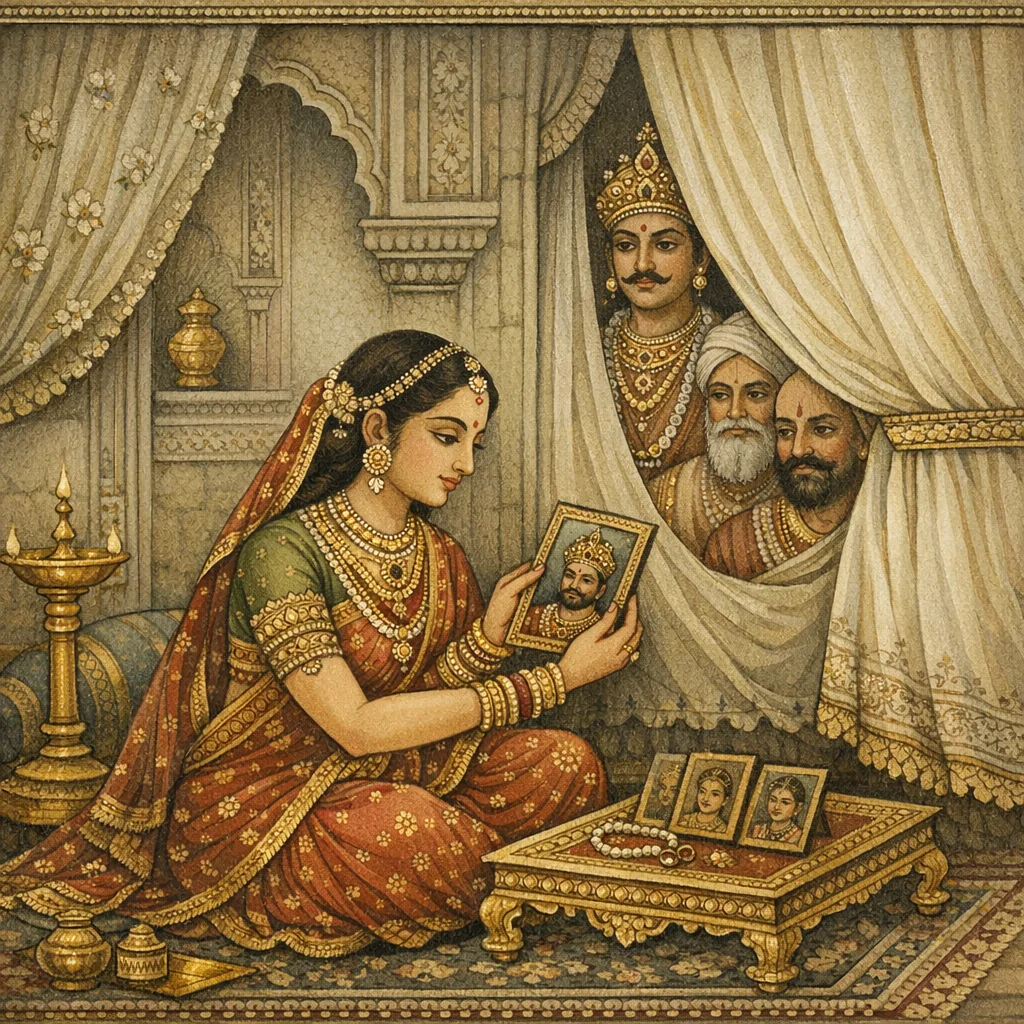
Sūta narrates a royal-ethical episode shaped by marriage diplomacy. The king of Anarta, seeing his daughter Ratnavatī reach maidenhood and shine with extraordinary beauty, reflects on the duty of giving a daughter in marriage. A dharmic warning is voiced: to give one’s daughter to an unworthy groom out of self-serving greed for ends and advantages (kārya-kāraṇa-lobha) is morally perilous and brings harmful consequences. Unable to find a fitting match, the king commissions famed painters to roam the earth and portray eligible kings—youthful, well-born, and endowed with virtues—and to present these portraits to Ratnavatī so her choice accords with propriety and lessens the father’s fault. From among them, Bṛhadbala, the Dāśārṇa ruler, is chosen as worthy. The Anarta king then sends a formal invitation for Bṛhadbala to come for the wedding, offering Ratnavatī, renowned and supremely beautiful. Pleased by the proposal, Bṛhadbala promptly sets out with a fourfold army toward Anarteśa’s city, beginning the alliance journey noted in the chapter’s colophon.
Shlokas
Verse 1
सूत उवाच । अथ तां यौवनोपेतां स्वसुतां प्रेक्ष्य पार्थिवः । अनौपम्येन रूपेण संयुक्तां वरवर्णिनीम् । आनर्तश्चिन्तयामास कन्यकां प्रददाम्यहम्
Sūta said: “Then the king of Ānarta, seeing his own daughter come of age—endowed with incomparable beauty and excellent complexion—began to reflect: ‘To whom shall I give this maiden in marriage?’”
Verse 2
अनर्हाय च यो दद्या द्वराय निजकन्यकाम् । कार्यकारणलोभेन नरकं स प्रगच्छति
“But whoever gives his own daughter to an unworthy bridegroom—out of greed for advantage or ulterior motives—he goes to hell.”
Verse 3
एवं चिंतयतस्तस्य महान्कालो व्यवस्थितः । न पश्यति च तद्योग्यं कंचिद्वरमनुत्तमम्
As he pondered thus, much time passed; yet he found no bridegroom of unsurpassed worth who was truly fit for her.
Verse 4
अथ संप्रेषयामास सर्वभूताश्रयेषु ये । चित्रकर्मणि विख्यातान्नरांश्चित्रकरांस्तदा
Then he dispatched men—painters famed for portraiture—who could move among all the abodes of living beings.
Verse 5
गच्छध्वं मम वाक्येन सर्वा न्भूमितले नृपान् । लिखित्वा पट्टमध्ये तु दर्शयध्वं ततः परम्
“Go forth at my command to all the kings upon the earth. Paint them upon cloth, and then bring those portraits to be shown.”
Verse 6
सुताया मम येनाऽसौ दृष्ट्वाऽभीष्टं नराधिपम् । पत्यर्थं वरयेत्साध्वी मम दोषो भवेन्न हि
So that my daughter—after beholding the king she desires—may choose him as her husband; then no blame shall fall upon me.
Verse 7
तस्य तद्वचनं श्रुत्वा सर्वे चित्रकरास्तदा । प्रस्थिता धरणीपृष्ठे पार्थिवानां गृहेषु च
Hearing his command, all the painters set out at once across the face of the earth, entering even the houses of kings.
Verse 8
ते लिखित्वा महीपाला न्यौवनस्थान्वयोऽन्वितान् । रूपौदार्यगुणोपेतान्दर्शयामासुरग्रतः । रत्नवत्याः क्रमेणैव तस्य भूपस्य शासनात्
Having painted the kings—youthful, in the prime of age, endowed with beauty, nobility, and virtues—they displayed them one by one before Ratnavatī, by that king’s command.
Verse 9
अथ तेषां तु सर्वेषां मध्ये राजा वृहद्बलः । दशार्णाधिपतिर्भव्यः पत्यर्थं च वृतस्तया
Then, among them all, the king Vṛhadbala—an auspicious lord of Daśārṇa—was chosen by her to be her husband.
Verse 10
तदाऽनर्ताधिपो हृष्टः प्रेषयामास तं प्रति । विवाहार्थं सुविज्ञाय वाक्य मेतदुवाच ह
Then the lord of Anarta, delighted, sent a messenger to him; and, clearly understanding that it concerned a marriage, he spoke these words.
Verse 11
गच्छध्वं मम वाक्येन दशार्णाधिपतिं प्रति । वाच्यः स विनयाद्गत्वा विवाहार्थं ममांतिकम्
“Go, bearing my message, to the lord of Daśārṇa. After going to him with due courtesy, tell him to come to my presence for the purpose of marriage.”
Verse 12
समागच्छ निजां कन्यां येन यच्छाम्यहं तव । नाम्ना रत्नवतीं ख्यातां त्रैलोक्यस्यापि सुन्दरीम्
“Come, so that I may give you my own daughter—renowned by the name Ratnavatī, a beauty celebrated even in the three worlds.”
Verse 13
गत्वा स सत्वरं तत्र यत्र राजा बृहद्बलः । प्रोवाच सकलं वाक्यमानर्ताधिपतेः स्फुटम्
Going swiftly to where King Bṛhadbala was, he clearly conveyed the entire message of the lord of Anarta.
Verse 14
सोऽपि तत्सहसा श्रुत्वा तेषां वाक्यमनुत्तमम् । परमां तुष्टिमासाद्य प्रस्थितस्तत्पुरं प्रति । सैन्येन महता युक्तश्चतुरंगेण पार्थिवः
He too, upon suddenly hearing their excellent message, attained great delight and set out toward that city—the king accompanied by a vast fourfold army.
Verse 196
इति श्रीस्कांदे महापुराण एकाशीतिसाहस्र्यां संहितायां षष्ठे नागरखण्डे हाटकेश्वरक्षेत्रमाहात्म्ये दशार्णाधिपतेर्बृहद्बलस्यानर्तेशपुरं प्रत्यागमनवर्णनंनाम षण्णवत्युत्तरशततमोऽध्यायः
Thus ends, in the holy Skanda Mahāpurāṇa—within the eighty-one-thousand-verse compilation— in the sixth, the Nāgara Khaṇḍa, in the Māhātmya of the Hāṭakeśvara sacred region, the one-hundred-and-ninety-sixth chapter, entitled “The description of the Daśārṇa king Bṛhadbala’s return (journey) to Anarteśapura.”