Adhyaya 192
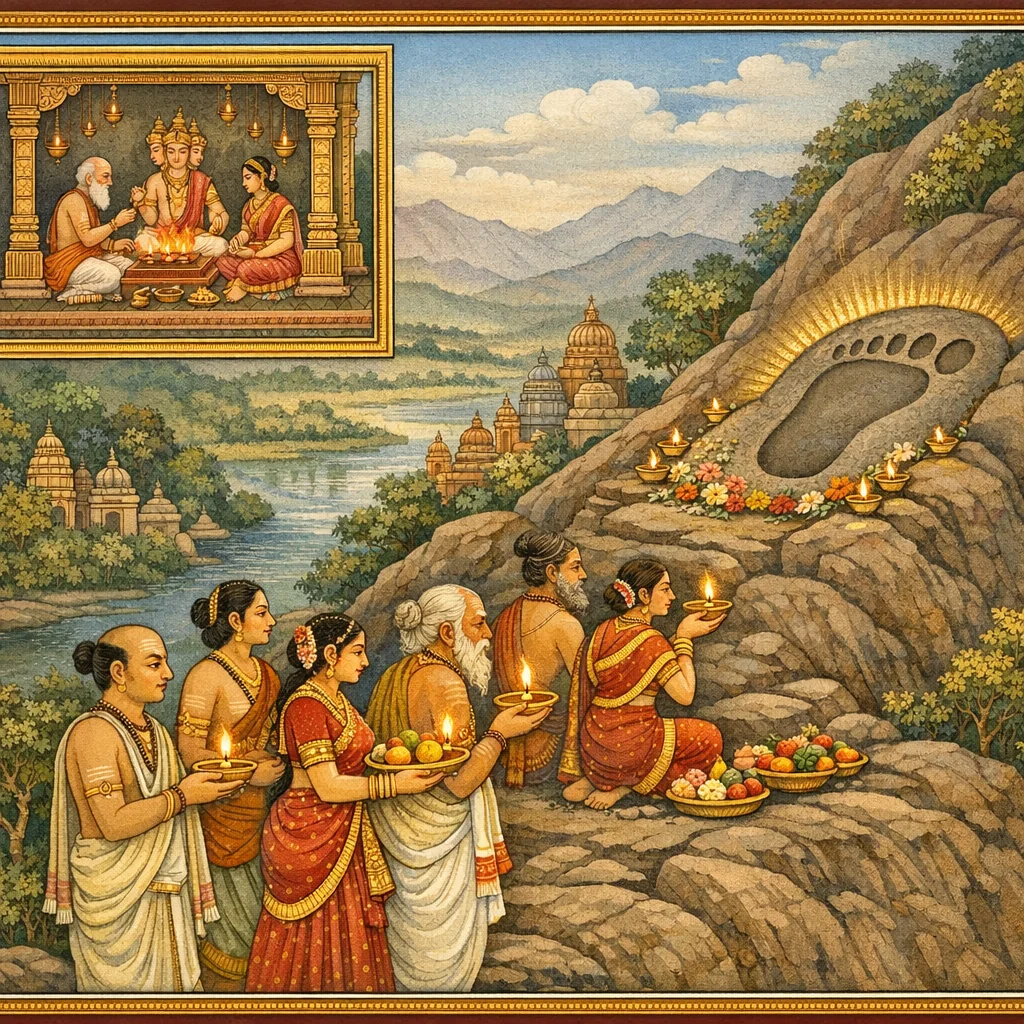
Chapter 192 relates a tightly ordered tīrtha-legend showing how a place is made sacred through conflict and its ritual consequences. Nārada arrives amid ceremonial sounds and, overcome with feeling, prostrates before his mother (Jananī). The narrative then explains why an alternate bride is introduced: a gopa-born maiden is named Gāyatrī and, by collective public declaration, is designated “Brāhmaṇī.” The dramatic turning point comes when Sāvitrī enters the yajña-maṇḍapa; devas and officiants fall silent in fear and shame. Sāvitrī delivers an extended ethical indictment of ritual impropriety and social-religious disorder, ending in a chain of curses upon Brahmā (Vidhī), Gāyatrī, and various deities and priests—each curse serving as a cause for later conditions such as loss of worship, misfortune, captivity, and diminished ritual fruits. The chapter then shifts from confrontation to place-making: Sāvitrī departs, leaving a sacred footprint on a mountain slope, revered as a pāpa-hara mark that removes sin. The conclusion prescribes merit-bearing observances—full-moon worship, women’s lamp-offerings with stated auspicious results, devotional song and dance as purification, gifts of fruit and food, śrāddha with minimal offerings equated to Gayā-śrāddha merit, and japa before Sāvitrī to erase accumulated sins—ending with an exhortation to visit Chamatkārapura and worship the Goddess, and a phalaśruti promising purity and well-being to readers and listeners.
Shlokas
Verse 1
सूत उवाच । अथ श्रुत्वा महानादं वाद्यानां समुपस्थितम् । नारदः सम्मुखः प्रायाज्ज्ञात्वा च जननीं निजाम्
Sūta said: Then, hearing the mighty roar of the instruments that had gathered there, Nārada went straight forward—recognizing his own mother.
Verse 2
प्रणिपत्य स दीनात्मा भूत्वा चाश्रुपरिप्लुतः । प्राह गद्गदया वाचा कण्ठे बाष्पसमावृतः
He bowed down; and, his heart cast down and flooded with tears, he spoke in a trembling voice, his throat choked with sobs.
Verse 3
आत्मनः शापरक्षार्थं तस्याः कोपविवृद्धये । कलिप्रियस्तदा विप्रो देवस्त्रीणां पुरः स्थितः
Then the Brahmin Kalipriya stood before the celestial women—seeking to shield himself from a curse, and to intensify her anger.
Verse 4
मेघगम्भीरया वाचा प्रस्खलंत्या पदेपदे । मया त्वं देवि चाहूता पुलस्त्येन ततः परम्
In a voice deep as thunderclouds, stumbling at every step of speech, he said: “O Goddess, I called upon you—and thereafter Pulastya also called upon you.”
Verse 5
स्त्रीस्वभावं समाश्रित्य दीक्षाकालेऽपि नागता
Taking refuge in the excuse of “a woman’s nature,” she did not come—even at the time of dīkṣā, the consecration.
Verse 6
ततो विधेः समादेशाच्छक्रेणान्या समाहृता । काचिद्गोपसमुद्भूता कुमारी देव रूपिणी
Then, by the command of Vidhātṛ (Brahmā), Śakra (Indra) brought another maiden—born among the cowherds, an unmarried girl of divine, godlike form.
Verse 7
गोवक्त्रेण प्रवेश्याथ गुह्यमार्गेण तत्क्षणात् । आकर्षिता महाभागे समानीताथ तत्क्षणात्
O greatly fortunate one, entering at once through the cow’s mouth by a secret passage, she was drawn forth and immediately brought to the rite.
Verse 8
सा विष्णुना विवाहार्थं ततश्चैवानुमोदिता । ईश्वरेण कृतं नाम गायत्री च तवानुगम्
Then Viṣṇu approved her for the purpose of marriage; and by Īśvara, the Lord, she was given the name “Gāyatrī”, to accompany you.
Verse 9
ब्राह्मणैः सकलैः प्रोक्तं ब्राह्मणीति भवत्वियम् । अस्माकं वचनाद्ब्रह्मन्कुरु हस्तग्रहं विभो
All the brāhmaṇas proclaimed, “Let her be known as Brāhmaṇī.” Therefore, O Brahman—O Lord—at our word, perform the rite of taking her hand (the marriage).
Verse 10
देवैः सर्वैः स सम्प्रोक्तस्ततस्तां च वराननाम् । ततः पत्न्युत्थधर्मेण योजयामास सत्वरम्
Thus addressed by all the gods, he accepted that fair-faced maiden; and promptly he joined her to himself according to the dharma-duties that arise from taking a wife.
Verse 11
किं वा ते बहुनोक्तेन पत्नीशालां समागता । रशना योजिता तस्या गोप्याः कट्यां सुरेश्वरि
But why speak at length? She was brought into the women’s quarters; and a girdle was fastened at her waist—the cowherd-girl’s sash—O Lady of the gods.
Verse 12
तद्दृष्ट्वा गर्हितं कर्म निष्क्रांतो यज्ञमण्डपात् । अमर्ष वशमापन्नो न शक्तो वीक्षितुं च ताम्
Seeing that censurable act, he departed from the sacrificial pavilion; overcome by indignation, he was not able even to look upon her.
Verse 13
एतज्ज्ञात्वा महाभागे यत्क्षमं तत्समाचर । गच्छ वा तिष्ठ वा तत्र मण्डपे धर्मवर्जिते
Knowing this, O greatly fortunate one, do what is fitting. Either go, or remain there—in that pavilion forsaken of dharma.
Verse 14
तच्छ्रुत्वा सा तदा देवी सावित्री द्विजसत्तमाः । प्रम्लानवदना जाता पद्मिनीव हिमागमे
Hearing that, the goddess Sāvitrī then grew downcast in countenance, O best of the twice-born—like a lotus-plant languishing when winter draws near.
Verse 15
लतेव च्छिन्नमूला सा चक्रीव प्रियविच्युता । शुचिशुक्लागमे काले सरसीव गतोदका
She became like a creeper whose roots are cut, like a female cakravāka parted from her beloved; like a lake whose waters have departed when the bright season arrives.
Verse 16
प्रक्षीणचन्द्रलेखेव मृगीव मृगवर्जिता । सेनेव हतभूपाला सतीव गतभर्तृका
She appeared like a waning crescent of the moon; like a doe bereft of her stag; like an army whose king has been slain; like a faithful wife deprived of her husband.
Verse 17
संशुष्का पुष्पमालेव मृतवत्सैव सौरभी । वैमनस्यं परं गत्वा निश्चलत्वमुपस्थिताम् । तां दृष्ट्वा देवपत्न्यस्ता जगदुर्नारदं तदा
She was withered like a garland of flowers, like Surabhī the cow whose calf has died. Having fallen into extreme dejection, she had become motionless. Seeing her thus, the wives of the gods then spoke to Nārada.
Verse 18
धिग्धिक्कलिप्रिय त्वां च रागे वैराग्यकारकम् । त्वया कृतं सर्वमेतद्विधेस्तस्य तथान्तरम्
Shame on you—O “beloved of Kali”—you who bring forth dispassion where love and attachment should abide. All this has been done by you, and likewise the disruption of that ordinance of the Creator (Vidhātṛ).
Verse 19
गौर्युवाच । अयं कलिप्रियो देवि ब्रूते सत्यानृतं वचः । अनेन कर्मणा प्राणान्बिभर्त्येष सदा मुनिः
Gaurī said: “O goddess, this one—called ‘kali-priya’—utters words mingled of truth and untruth. By this very practice the sage ever sustains his life.”
Verse 20
अहं त्र्यक्षेण सावित्रि पुरा प्रोक्ता मुहुर्मुहुः । नारदस्य मुनेर्वाक्यं न श्रद्धेयं त्वया प्रिये । यदि वांछसि सौख्यानि मम जातानि पार्वति
“O Sāvitri, long ago the Three-eyed Lord warned me again and again: ‘Beloved, you should not trust the words of the sage Nārada, if you desire the happiness that arises from me, O Pārvatī.’”
Verse 21
ततःप्रभृति नैवाहं श्रद्दधेऽस्य वचः क्वचित् । तस्माद्गच्छामहे तत्र यत्र तिष्ठति ते पतिः
“From that time onward, I never trusted his words at any point. Therefore, let us go there—where your husband is staying.”
Verse 22
स्वयं दृष्ट्वैव वृत्तांतं कर्तव्यं यत्क्षमं ततः । नात्रास्य वचनादद्य स्थातव्यं तत्र गम्यताम्
“After seeing the full matter with our own eyes, we shall do what is fitting. Today we should not remain here on the strength of his words—let us go there.”
Verse 23
सूत उवाच । गौर्या स्तद्वचनं श्रुत्वा सावित्री हर्षवर्जिता । मखमण्डपमुद्दिश्य प्रस्खलन्ती पदेपदे
Sūta said: Hearing Gaurī’s words, Sāvitrī—bereft of joy—set out toward the sacrificial pavilion, stumbling at every step.
Verse 24
प्रजगाम द्विजश्रेष्ठाः शून्येन मनसा तदा । प्रतिभाति तदा गीतं तस्या मधुरमप्यहो
O best of the twice-born, then she went on with her mind emptied. Even her song—though sweet—seemed at that time strangely altered.
Verse 25
कर्णशूलं यथाऽयातमसकृद्द्विजसत्तमाः । वन्ध्यवाद्यं यथा वाद्यं मृदंगानकपूर्वकम्
O best of the twice-born, it struck her ears again and again like a piercing pain—like music barren and joyless, though accompanied by drums and kettle-drums.
Verse 26
प्रेतसंदर्शनं यद्वन्मर्त्यं तत्सा महासती । वीक्षितुं न च शक्रोति गच्छमाना तदा मखे
As the sight of a ghost is unbearable to a mortal, so Sāvitrī, that great and chaste lady, while going toward the sacrifice, could not bring herself to look upon what was happening there.
Verse 27
शृंगारं च तथांगारं मन्यते सा तनुस्थितम् । वाष्पपूर्णेक्षणा दीना प्रजगाम महासती
She deemed adornment itself to be like burning embers upon her body. With eyes filled with tears, that great virtuous lady went on, wretched with grief.
Verse 28
ततः कृच्छ्रात्समासाद्य सैवं तं यज्ञमंडपम् । कृच्छ्रात्कारागृहं तद्वद्दुष्प्रेक्ष्यं दृक्पथं गतम्
Then, with great difficulty, she reached that very sacrificial pavilion. Like a prison-house hard to behold, it came into her field of vision—painful to look upon.
Verse 29
अथ दृष्ट्वा तु संप्राप्तां सावित्रीं यज्ञमण्डपम् । तत्क्षणाच्च चतुर्वक्त्रः संस्थितोऽधोमुखो ह्रिया
When he saw Sāvitrī arrive at the sacrificial pavilion, at that very moment the Four-faced One (Brahmā) stood with his face lowered, overcome by shame.
Verse 30
तथा शम्भुश्च शक्रश्च वासुदेवस्तथैव च । ये चान्ये विबुधास्तत्र संस्थिता यज्ञमंडपे
So too were Śambhu (Śiva), Śakra (Indra), and Vāsudeva present—along with other divine beings—standing there in the sacrificial pavilion.
Verse 31
ते च ब्राह्मणशार्दूलास्त्यक्त्वा वेदध्वनिं ततः । मूकीभावं गताः सर्वे भयसंत्रस्तमानसाः
Those tiger-like brāhmaṇas, abandoning the sound of Vedic recitation, all fell into silence—their minds shaken with fear.
Verse 32
अथ संवीक्ष्य सावित्री सपत्न्या सहितं पतिम् । कोपसंरक्तनयना परुषं वाक्यमब्रवीत्
Then Sāvitrī, seeing her husband accompanied by a co-wife, her eyes reddened with anger, spoke harsh words.
Verse 33
सावित्र्युवाच । किमेतद्युज्यते कर्तुं तव वृद्ध तमाकृते । ऊढवानसि यत्पत्नीमेतां गोपसमुद्भवाम्
Sāvitrī said: “How is this fitting for you to do, you who are aged and of such a form—that you have taken as wife this woman born of the cowherd community?”}]}}```json مطابق للنسق المطلوب فقط.```
Verse 34
उभयोः पक्षयोर्यस्याः स्त्रीणां कांता यथेप्सिताः । शौचाचारपरित्यक्ता धर्मकृत्यपराङ्मुखाः
On both sides of her lineage, the women’s beloved men live as they please—having forsaken purity and right conduct, and turned away from the duties of dharma.
Verse 35
यदन्वये जनाः सर्वे पशुधर्मरतोत्सवाः । सोदर्यां भगिनीं त्यक्त्वा जननीं च तथा पराम्
In such a lineage, all people revel in the “law of beasts”—abandoning even a true sister, and likewise their mother and others besides.
Verse 36
तस्याः कुले प्रसेवंते सर्वां नारीं जनाः पराम् । यथा हि पशवोऽश्नंति तृणानि जलपानगाः
In her lineage, people resort to every woman without restraint or discernment—just as cattle, going to drink water, graze upon grasses along the way.
Verse 37
तद्वदस्याः कुलं सर्वं तक्रमश्राति केवलम्
Likewise, all of her family lives only on buttermilk.
Verse 38
कृत्वा मूत्रपुरीषं च जन्मभोगविवर्जितम् । नान्यज्जानाति कर्तव्यं धर्मं स्वोदरसं श्रयात्
Having reduced life to urine and excrement—devoid of the true purpose of birth and higher joy—one knows no duty apart from a “dharma” that merely serves one’s own belly.
Verse 39
अन्त्यजा अपि नो कर्म यत्कुर्वन्ति विगर्हितम् । आभीरास्तच्च कुर्वंति तत्किमेतत्त्वया कृतम्
Even those of the lowest station do not commit such a censured deed; yet the Ābhīras do it. Why, then, have you done this?
Verse 40
अवश्यं यदि ते कार्यं भार्यया परया मखे । त्वया वा ब्राह्मणी कापि प्रख्याता भुवनत्रये
If it is truly necessary for you to have a wife for the sacrifice (mākha), then let it be some brāhmaṇa woman—one renowned across the three worlds.
Verse 41
नोढा विधे वृथा मुण्ड नूनं धूर्तोऽसि मे मतः । यत्त्वया शौचसंत्यक्ता कन्याभावप्रदूषिता
O one ordained by fate—vain, shaven-headed man—surely, in my view, you are a deceiver; for by you she has been made to abandon purity, and her maiden state has been defiled.
Verse 42
प्रभुक्ता बहुभिः पूर्वं तथा गोपकुमारिका । एषा प्राप्ता सुपापाढ्या वेश्याजनशताधिका
This cowherd girl has previously been enjoyed by many; she has come here laden with great sin—surpassing even hundreds of prostitutes.
Verse 43
अन्त्यजाता तथा कन्या क्षतयोनिः प्रजायते । तथा गोपकुमारी च काचित्तादृक्प्रजायते
So too, a girl of the lowest birth may be born with a wounded/violated womb; likewise, among cowherd girls also, some are born in such a condition.
Verse 44
मातृकं पैतृकं वंशं श्वाशुरं च प्रपातयेत् । तस्मादेतेन कृत्येन गर्हितेन धरातले
By this blameworthy act, one casts down the maternal line, the paternal lineage, and even the family of one’s father-in-law; therefore, upon this earth, such a deed is condemned.
Verse 46
पूजां ये च करिष्यंति भविष्यंति च निर्धनाः । कथं न लज्जितोसि त्वमेतत्कुर्वन्विगर्हितम्
Those who perform worship in this manner will also become poor. How are you not ashamed, doing this censured act?
Verse 47
पुत्राणामथ पौत्राणामन्येषां च दिवौकसाम् । अयोग्यं चैव विप्राणां यदेतत्कृतवानसि
What you have done is unworthy—before sons and grandsons, before other heavenly beings, and indeed improper in the presence of the brāhmaṇas.
Verse 48
अथ वा नैष दोषस्ते न कामवशगा नराः । लज्जंति च विजानंति कृत्याकृत्यं शुभाशुभम्
Or perhaps this is not your fault: people who are not ruled by desire feel shame, and they understand what should be done and what should not—what is auspicious and what is inauspicious.
Verse 49
अकृत्यं मन्यते कृत्यं मित्रं शत्रुं च मन्यते । शत्रुं च मन्यते मित्रं जनः कामवशं गतः
A person who has fallen under the sway of desire mistakes what should not be done for what should be done; he takes a friend for an enemy, and an enemy for a friend.
Verse 50
द्यूतकारे यथा सत्यं यथा चौरं च सौहृदम् । यथा नृपस्य नो मित्रं तथा लज्जा न कामिनाम्
As truth is absent in a gambler, as friendship is absent in a thief, and as a king has no true friend—so shame is absent in those driven by lust.
Verse 51
अपि स्याच्छीतलो वह्निश्चंद्रमा दहनात्मकः । क्षाराब्दिरपि मिष्टः स्यान्न कामी लज्जते ध्रुवम्
Fire might even become cool, the moon might become burning, and the salt-ocean might turn sweet—yet a lust-driven person, surely, does not feel shame.
Verse 52
न मे स्याद्दुखमेतद्धि यत्सापत्न्यमुपस्थितम् । सहस्रमपि नारीणां पुरुषाणां यथा भवेत्
This would not be my sorrow—that a co-wife has appeared—for men may have even a thousand women, as is known.
Verse 53
कुलीनानां च शुद्धानां स्वजात्यानां विशेषतः । त्वं कुरुष्व पराणां च यदि कामवशं गतः
Especially in the case of noble and pure women of your own community—do not do this to others as well, if you have fallen under the sway of desire.
Verse 54
एतत्पुनर्महद्दुःखं यदाभीरी विगर्हिता । वेश्येव नष्टचारित्रा त्वयोढा बहुभर्तृका
But this is a far greater sorrow—that an Ābhīrī woman is now disgraced: like a courtesan, her conduct is ruined—married by you, she is spoken of as having many husbands.
Verse 55
तस्मादहं प्रयास्यामि यत्र नाम न ते विधे । श्रूयते कामलुब्धस्य ह्रिया परिहृतस्य च
Therefore I shall depart—to a place where even your name is not heard, O Vidhī; for it is said that one who is greedy for desire is forsaken by Hriyā, sacred modesty.
Verse 56
अहं विडंबिता यस्मादत्रानीय त्वया विधे । पुरतो देवपत्नीनां देवानां च द्विजन्मनाम् । तस्मात्पूजां न ते कश्चित्सांप्रतं प्रकरिष्यति
I have been mocked because you brought me here, O Vidhī—before the wives of the gods, before the gods themselves, and before the twice-born. Therefore, from this moment, none shall perform worship in your honor.
Verse 57
अद्य प्रभृति यः पूजां मंत्रपूजां करिष्यति । तव मर्त्यो धरापृष्ठे यथान्येषां दिवौकसाम्
From this very day onward, whoever performs worship—worship accompanied by mantra—shall, though a mortal upon the earth, attain a state comparable to that of the other celestial dwellers.
Verse 58
भविष्यति च तद्वंशो दरिद्रो दुःखसंयुतः । ब्राह्मणः क्षत्रियो वापि वैश्यः शूद्रोपि चालये
And that person’s lineage will become impoverished and afflicted with suffering—whether in this world it be a brāhmaṇa, a kṣatriya, a vaiśya, or even a śūdra—such is the result in this sacred context.
Verse 59
एषाऽभीरसुता यस्मान्मम स्थाने विगर्हिता । भविष्यति न संतानस्तस्माद्वाक्यान्ममैव हि
Since this daughter of the Ābhīra has been reproached in my own place, therefore—by my very words—there shall be no progeny for those responsible.
Verse 60
न पूजां लप्स्यते लोके यथान्या देवयोषितः
In this world she shall not obtain honor and worship, as other celestial women do.
Verse 61
करिष्यति च या नारी पूजा यस्या अपि क्वचित् । सा भविष्यति दुःखाढ्या वंध्या दौर्भाग्यसंयुता
Any woman who performs worship at any time (in a manner forbidden or improper in this sacred context) is said to become one abounding in sorrow—childless and afflicted with misfortune.
Verse 62
पापिष्ठा नष्टचारित्रा यथैषा पंचभर्तृका । विख्यातिं यास्यते लोके यथा चासौ तथैव सा
Just as this most sinful woman—of ruined conduct, known as the ‘wife of five husbands’—will become infamous in the world, so too will that other woman become known in the very same way.
Verse 63
एतस्या अन्वयः पापो भविष्यति निशाचर । सत्यशौचपरित्यक्ताः शिष्टसंगविवर्जिताः
O night-roaming one, whoever remains in association with her lineage will become sinful—having abandoned truth and purity, and being deprived of the company of the virtuous.
Verse 64
अनिकेता भविष्यंति वंशेऽस्या गोप्रजीविनः । एवं शप्त्वा विधिं साध्वी गायत्रीं च ततः परम्
“In her lineage, they will become homeless, living by tending cattle.” Having thus pronounced the curse, the virtuous woman thereafter also cursed Vidhī (Brahmā) and then Gāyatrī as well.
Verse 65
ततो देवगणान्सर्वाञ्छशाप च तदा सती । भोभोः शक्र त्वयानीता यदेषा पंचभर्तृका
Then, in that very moment, Satī pronounced a curse upon all the hosts of gods: “Hear me, O Śakra (Indra)! It is by you that this woman—destined to have five husbands—has been brought here.”
Verse 66
तदाप्नुहि फलं सम्यक्छुभं कृत्वा गुरोरिदम् । त्वं शत्रुभिर्जितो युद्धे बंधनं समवाप्स्यसि
Having duly performed this auspicious act as instructed by the guru, you shall indeed obtain its proper result: in battle you will be overcome by enemies, and you will come to suffer captivity.
Verse 67
कारागारे चिरं कालं संगमिष्यत्यसंशयम् । वासुदेव त्वया यस्मादेषा वै पंचभर्तृका
Since, O Vāsudeva, this woman—known as ‘the five-husbanded one’—has been consorted with by you, she will, without doubt, be made to dwell for a long time in a prison.
Verse 68
अनुमोदिता विधेः पूर्वं तस्माच्छप्स्याम्यसंशयम् । त्वं चापि परभृत्यत्वं संप्राप्स्यसि सुदुर्मते
Having been approved earlier by the Ordainer (Vidhātṛ), therefore I shall certainly curse you. And you too, O evil-minded one, will attain the state of servitude under others.
Verse 69
समीपस्थोऽपि रुद्र त्वं कर्मैतद्यदुपेक्षसे । निषेधयसि नो मूढ तस्माच्शृणु वचो मम
Though present nearby, O Rudra, you disregard this deed; you do not restrain them, O deluded one. Therefore, listen to my words.
Verse 70
जीवमानस्य कांतस्य मया तद्विरहोद्भवम् । संसेवितं मृतायां ते दयितायां भविष्यति
While your beloved yet lives, I have yielded to the sorrow born of separation from him; but when your dear one dies, that very yielding shall fall upon you as your destined lot.
Verse 71
यत्र यज्ञे प्रविष्टेयं गर्हिता पंचभर्तृका । भवानपि हविर्वह्ने यत्त्वं गृह्णासि लौल्यतः
In the sacrifice that this censured woman of “five husbands” entered, you too—O Agni, Carrier of the oblations—accepted the offering out of greed.
Verse 72
तथान्येषु च यज्ञेषु सम्यक्छंकाविवर्जितः । तस्माद्दुष्टसमाचार सर्वभक्षो भविष्यसि
Likewise, in other sacrifices too, being wholly devoid of proper scruple, therefore—of depraved conduct—you will become an eater of everything, without discernment.
Verse 73
स्वधया स्वाहया सार्धं सदा दुःखसमन्वितः । नैवाप्स्यसि परं सौख्यं सर्वकालं यथा पुरा
Along with Svadhā and Svāhā, you will ever be beset with sorrow; never again, at any time, will you attain the supreme happiness as you once did.
Verse 74
एते च ब्राह्मणाः सर्वे लोभोपहतचेतसः । होमं प्रकुर्वते ये च मखे चापि विगर्हिते
And all these brāhmaṇas, their minds struck down by greed—those who perform the homa, the fire-oblation, even in a blameworthy sacrifice—
Verse 75
वित्तलोभेन यत्रैषा निविष्टा पञ्चभर्तृका । तथा च वचनं प्रोक्तं ब्राह्मणीयं भविष्यति
Where, out of greed for wealth, this “five-husbanded” woman was installed, there too words were spoken; thus it shall become a matter implicating the brāhmaṇas.
Verse 76
दरिद्रोपहतास्तस्माद्वृषलीपतयस्तथा । वेदविक्रयकर्तारो भविष्यथ न संशयः
Therefore, struck down by poverty, you shall become husbands of śūdra women; and you shall become sellers of the Veda—of this there is no doubt.
Verse 77
भोभो वित्तपते वित्तं ददासि मखविप्लवे । तस्माद्यत्तेऽखिलं वित्तमभोग्यं संभविष्यति
O lord of wealth! You are giving riches in a sacrifice that has fallen into disorder. Therefore all your wealth shall become unusable, incapable of being enjoyed.
Verse 78
तथा देवगणाः सर्वे साहाय्यं ये समाश्रिताः । अत्र कुर्वंति दोषाढ्ये यज्ञे वै पांचभर्तृके
Likewise, all the hosts of gods who have come here seeking assistance—taking part in this sacrifice—are acting within a rite laden with faults, in this “five-husbanded” sacrifice.
Verse 79
संतानेन परित्यक्तास्ते भविष्यंति सांप्रतम् । दानवैश्च पराभूता दुःखं प्राप्स्यति केवलम्
They shall now be abandoned by their own progeny; and, defeated by the Dānavas, they will obtain nothing but suffering.
Verse 80
एतस्याः पार्श्वतश्चान्याश्चतस्रो या व्यवस्थिताः । आभीरीति सप त्नीति प्रोक्ता ध्यानप्रहर्षिताः
And at her sides stood four other women—called “Ābhīrī” and “rival-wives”—exulting in the rapture born of their own contemplative resolve.
Verse 81
मम द्वेषपरा नित्यं शिवदूतीपुरस्सराः । तासां परस्परं संगः कदाचिच्च भविष्यति
Ever bent on hatred toward me, led on by Śiva’s messenger-woman, their mutual fellowship with one another will arise only at some time—rare indeed.
Verse 82
नान्येनात्र नरेणापि दृष्टिमात्रमपि क्षितौ । पर्वताग्रेषु दुर्गेषु चागम्येषु च देहिनाम् । वासः संपत्स्यते नित्यं सर्वभोगविवर्जितः
Here, not even the bare sight of any other man upon the earth shall come to them. Their dwelling shall ever be upon mountain-peaks, in harsh and inaccessible places for embodied beings—bereft of every comfort and enjoyment.
Verse 83
सूत उवाच । एवमुक्त्वाऽथ सावित्रीकोपोपहतचेतसा । विसृज्य देवपत्नीस्ताः सर्वा याः पार्श्वतः स्थिताः
Sūta said: Having spoken thus, Sāvitrī—her mind overpowered by wrath—dismissed all those wives of the gods who stood at her side.
Verse 84
उदङ्मुखी प्रतस्थे च वार्यमाणापि सर्वतः । सर्वाभिर्देवपत्नीभिर्लक्ष्मीपूर्वाभिरेवच
Facing north, she set forth, though restrained from every side—by all the wives of the gods, with Lakṣmī at their head.
Verse 85
तत्र यास्यामि नो यत्र नामापि किल वै यतः । श्रूयते कामुकस्यास्य तत्र यास्याम्यहं द्रुतम्
I shall go to a place where, indeed, not even the name of this lust-driven one is heard. To that place I will go—quickly.
Verse 86
एकश्चरणयोर्न्यस्तो वामः पर्वतरोधसि । द्वितीयेन समारूढा तस्यागस्य तथोपरि
Placing her left foot upon the mountain-slope, and with the other she climbed up—ascending over that ridge as well.
Verse 87
अद्यापि तत्पदं वामं तस्यास्तत्र प्रदृश्यते । सर्वपापहरं पुण्यं स्थितं पर्वतरोधसि
Even today, her left footprint is seen there. That sacred mark—set upon the mountain-slope—is holy and destroys all sins.
Verse 88
अपि पापसमाचारो यस्तं पूजयते नरः । सर्वपातकनिर्मुक्तः स याति परमं पदम्
Even a man of sinful conduct—if he worships that sacred presence—is freed from all grave sins and attains the supreme state.
Verse 89
यो यं काममभि ध्याय तमर्चयति मानवः । अवश्यं समवाप्नोति यद्यपि स्यात्सुदुर्लभम्
Whatever desire a person contemplates and, with that intent, worships this sacred power, he surely attains it—even if it is exceedingly hard to obtain.
Verse 90
सूत उवाच । एवं तत्र स्थिता देवी सावित्री पर्वता श्रया । अपमानं महत्प्राप्य सकाशात्स्वपतेस्तदा
Sūta said: Thus the goddess Sāvitrī, taking refuge upon the mountain, remained there—having then endured great dishonor at the side of her own lord.
Verse 91
यस्तामर्चयते सम्यक्पौर्णमास्यां विशेषतः । सर्वान्कामानवाप्नोति स मनोवांछितां स्तदा
Whoever worships her properly—especially on the full-moon day—obtains all desires, even those long cherished within the mind.
Verse 92
या नारी कुरुते भक्त्या दीपदानं तदग्रतः । रक्ततंतुभिराज्येन श्रूयतां तस्य यत्फलम्
Whatever woman, with devotion, offers a lamp before her—made with red wicks and ghee—listen to the fruit that arises from it.
Verse 93
यावन्तस्तंतवस्तस्य दह्यंते दीप संभवाः । मुहूर्तानि च यावंति घृतदीपश्च तिष्ठति । तावज्जन्मसहस्राणि सा स्यात्सौभाग्यभांगिनी
For as many threads (wicks) as are consumed by that lamp, and for as many muhūrtas as the ghee-lamp continues to burn—so many thousands of births she becomes one who shares in good fortune.
Verse 94
पुत्रपौत्रसमोपेता धनिनी शील मंडना न दुर्भगा न वन्ध्या च न च काणा विरूपिका
She becomes endowed with sons and grandsons, prosperous, and adorned with good character—neither unfortunate, nor barren, nor one-eyed, nor of disfigured form.
Verse 95
या नृत्यं कुरुते नारी विधवापि तदग्रतः । गीतं वा कुरुते तत्र तस्याः शृणुत यत्फलम्
Whatever woman—even a widow—dances there before the Goddess, or sings there, hear the fruit of merit that comes to her from it.
Verse 96
यथायथा नृत्यमाना स्वगात्रं विधुनोति च । तथातथा धुनोत्येव यत्पापं प्रकृतं पुरा
In whatever way she dances and shakes her limbs, in that very measure she shakes off the sins committed in the past.
Verse 97
यावन्तो जन्तवो गीतं तस्याः शृण्वंति तत्र च । तावंति दिवि वर्षाणि सहस्राणि वसेच्च सा
As many living beings as hear her sacred song there, for that many thousands of years she dwells in heaven.
Verse 98
सावित्रीं या समुद्दिश्य फलदानं करोति सा । फलसंख्याप्रमाणानि युगानि दिवि मोदते
She who offers fruits as a gift, dedicating the offering to Sāvitrī, rejoices in heaven for yugas equal to the number of fruits given.
Verse 99
मिष्टान्नं यच्छते यश्च नारीणां च विशेषतः । तस्या दक्षिणमूर्तौ च भर्त्राढ्यानां द्विजोत्तमाः । स च सिक्थप्रमाणानि युगा नि दिवि मोदते
And he who gives sweet food—especially to women—at her southern aspect, O best of the twice-born, he too rejoices in heaven for yugas measured by the offering’s ‘siktha’ measure.
Verse 100
यः श्राद्धं कुरुते तत्र सम्यक्छ्रद्धासमन्वितः । रसेनैकेन सस्येन तथैकेन द्विजोत्तमाः । तस्यापि जायते पुण्यं गयाश्राद्धेन यद्भवेत्
Whoever performs śrāddha there with proper faith—even with only one savory offering and a single grain, O best of the twice-born—gains merit equal to that which arises from performing śrāddha at Gayā.
Verse 101
यः करोति द्विजस्तस्या दक्षिणां दिशमाश्रितः । सन्ध्योपासनमेकं तु स्वपत्न्या क्षिपितैर्जलैः
If a twice-born man, taking his place on her southern side, performs even a single sandhyā worship using water sprinkled by his own wife,
Verse 102
सायंतने च संप्राप्ते काले ब्राह्मणसत्तमाः । तेन स्याद्वंदिता संध्या सम्यग्द्वादशवार्षिकी
When the evening time arrives, O best of brāhmaṇas, by that act the sandhyā is properly revered, as though it carried the merit of twelve years’ observance.
Verse 103
यो जपेद्ब्राह्मणस्तस्याः सावित्रीं पुरतः स्थितः । तस्य यत्स्यात्फलं विप्राः श्रूयतां तद्वदामि वः
If a brāhmaṇa, standing before her, recites the Sāvitrī mantra, then listen, O brāhmaṇas: I shall tell you the fruit that arises from it.
Verse 104
दशभिर्ज्जन्मजनितं शतेन च पुरा कृतम् । त्रियुगे तु सहस्रेण तस्य नश्यति पातकम्
By ten recitations, the sin born of this life is destroyed; by a hundred, that done formerly; and by a thousand—within three yugas—his sin perishes.
Verse 105
तस्मात्सर्वप्रयत्नेन चमत्कारपुरं प्रति । गत्वा तां पूजयेद्देवीं स्तोतव्या च विशेषतः
Therefore, with every effort, one should go to Chamatkārapura, worship that Goddess, and especially praise her with hymns (stotras).
Verse 106
सावित्र्या इदमाख्यानं यः पठेच्छृणुयाच्च वा । सर्वपापविनिर्मुक्तः सुखभागत्र जायते
Whoever reads this account of Sāvitrī—or even hears it—becomes freed from all sins and becomes a sharer of happiness in this very world.
Verse 107
एतद्वः सर्वमाख्यातं यत्पृष्टोऽहं द्विजोत्तमाः । सावित्र्याः कृत्स्नं माहात्म्यं किं भूयः प्रवदाम्यहम्
O best of the twice-born, I have told you everything you asked. The entire greatness of Sāvitrī has been set forth—what more, indeed, should I say?
Verse 192
इति श्रीस्कांदे महापुराण एकाशीतिसाहस्र्यां संहितायां षष्ठे नागरखण्डे हाटकेश्वरक्षेत्रमाहात्म्ये सावित्रीमाहात्म्यवर्णनंनाम द्विनवत्युत्तरशततमोऽध्यायः
Thus, in the revered Skanda Mahāpurāṇa—within the Saṃhitā of eighty-one thousand verses, in the sixth division called the Nāgara Khaṇḍa, in the Māhātmya of the sacred Hāṭakeśvara region—ends the chapter entitled “The Description of the Greatness of Sāvitrī,” being Chapter 192.