Adhyaya 19
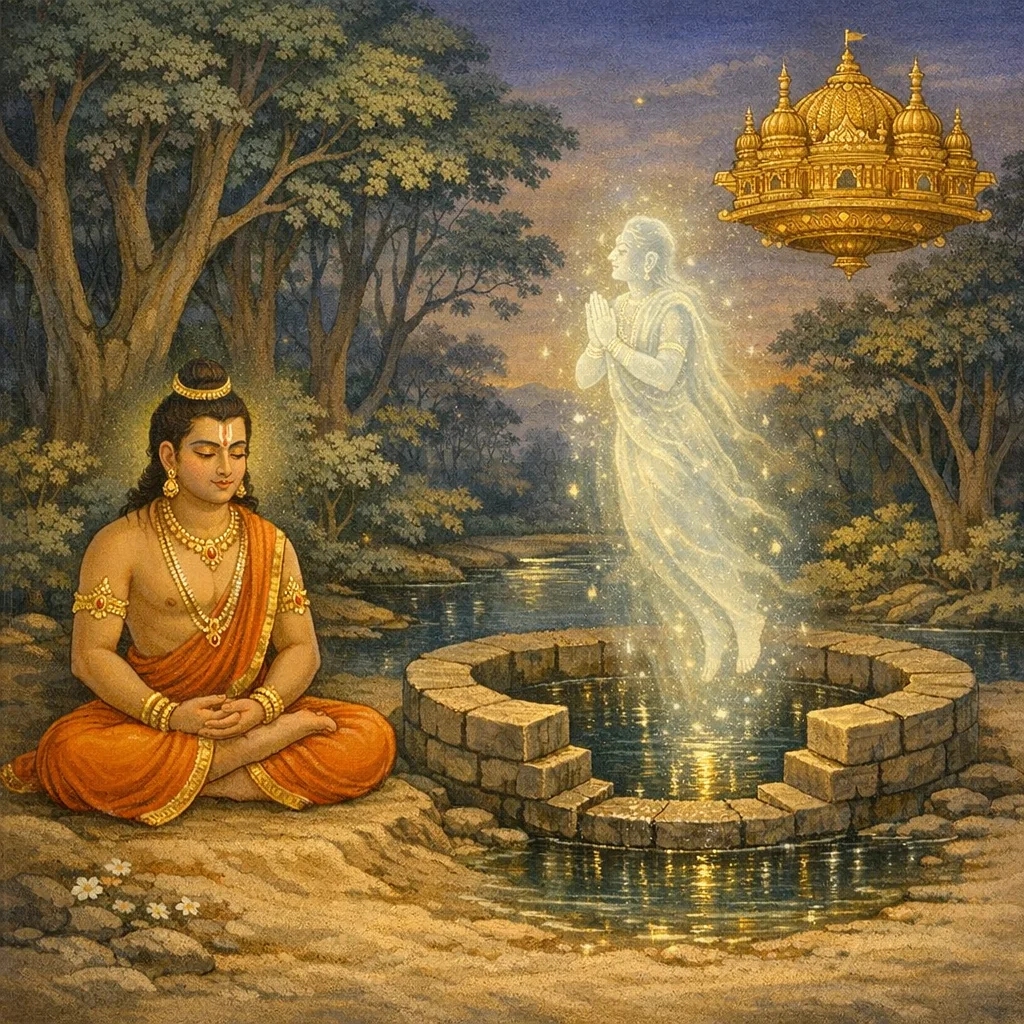
Sūta relates that King Vidūratha, after reuniting with his distressed attendants and resting in a forest among ascetics, returns toward Māhiṣmatī and then sets out on pilgrimage to Gayāśiras. There he performs śrāddha with faith. In dream-visions a being named Māṃsāda appears in divine form and declares that, through the king’s rite, he has been freed from the preta state. Later another preta appears—identified as Kṛtaghna (the ungrateful, also linked with the sin of stealing pond-wealth)—still afflicted, saying that sin obstructs his release. He teaches the king that liberation depends upon satya (truthfulness), praising satya as the supreme brahman, as tapas and knowledge, and as the principle that upholds cosmic order; without satya, tīrtha-service, dāna, svādhyāya, and service to the guru become fruitless. The preta then gives precise directions for place and ritual: at Cāmatkārapura in the kṣetra of Hāṭakeśvara lies Gayāśiras, hidden beneath sands; under a plakṣa tree, using darbha, wild greens, and forest-born sesame, the king should quickly perform śrāddha. Vidūratha obeys, digs a small well for water, and completes the rite; immediately the preta attains a divine form and departs in a celestial vehicle. The chapter closes by establishing the well’s fame as a perennial source of benefit to ancestors: performing śrāddha there on the new-moon of the preta fortnight with kālaśāka (a specific wild green), forest sesame, and cut darbha yields the full fruit of the Kṛtaghna-preta-tīrtha. Various classes of pitṛ are said to be ever-present, and śrāddha there is recommended at proper times—or even beyond the usual calendrical occasions—for continual ancestral satisfaction.
Shlokas
Verse 1
। सूत उवाच । एतस्मिन्नंतरे प्राप्तास्तस्य भूपस्य सेवकाः । केचिच्च दैवयो गेन श्वापदैरर्धभक्षिताः
Sūta said: Meanwhile, the king’s servants arrived. Some of them, by a turn of fate, had been half-devoured by wild beasts.
Verse 2
क्षुत्पिपासातुरा दीना दुःखेन महताऽन्विताः । पदपद्धतिमार्गेण येन यातः स भूपतिः
Afflicted by hunger and thirst, wretched and weighed down by great misery, they came by the very footpath along which that king had travelled.
Verse 3
ते दृष्ट्वा पार्थिवं तत्र दिष्ट्यादिष्ट्येति सादरम् । ब्रुवंतः पादयोस्तस्य पतिता हर्षसंयुताः
Seeing the king there, they respectfully cried, “Fortunate! Fortunate!” and, filled with joy, fell down at his feet.
Verse 4
ततस्तस्य नरेन्द्रस्य व्यसनं सैन्यसंभवम् । प्रोचुश्चैव यथादृष्टम नुभूतं यथाश्रुतम्
Then they reported to that lord of men the calamity that had befallen the army, recounting exactly what they had seen, what they had endured, and what they had heard.
Verse 5
अथ ते तापसाः सर्वे स च राजा ससेवकः । प्रसुप्ताः पादपस्याधः पर्णान्यास्तीर्यभूतले
Then all those ascetics, and the king with his attendants, slept beneath a tree, spreading leaves upon the ground.
Verse 6
ततस्तेषां प्रसुप्तानां सर्वेषां तत्र कानने । अतिक्रांता सुखेनैव रजनी सा महात्मनाम्
Then, while all those noble men slept in that forest-grove, the night passed away easily and peacefully for them.
Verse 7
ततः स प्रातरुत्थाय कृतपूर्वाह्णिकक्रियः । तं मुनिं प्रणिपत्योच्चैरनुज्ञाप्य मुहु र्मुहुः
Then, rising at dawn and completing the morning observances, he bowed to that sage and repeatedly sought his permission to depart, with due reverence.
Verse 8
निजैस्तैः सेवकैः सार्धं प्रस्थितः स्वपुरीं प्रति । माहिष्मतीं समुद्दिश्य दृष्ट्वा मार्गे शनैःशनैः
Accompanied by his own attendants, he set out toward his city; and, making for Māhiṣmatī, he proceeded along the road slowly, step by step.
Verse 9
ततो निजगृहं प्राप्य कञ्चि त्कालं महीपतिः । विश्रम्य प्रययौ पश्चात्तूर्णं पुण्यं गयाशिरः
Thereafter the king reached his own home and rested for a time; then, without delay, he swiftly set out for the holy Gayāśiras.
Verse 10
तच्च कालेन संप्राप्य स्नात्वा धौतांबरः शुचिः । मांसादाय ददौ श्राद्धं श्रद्धापूतेन चेतसा
Reaching that place in due course, he bathed, donned washed garments, and became pure; then, taking the offering for Māṁsāda, he performed a śrāddha with a mind sanctified by faith.
Verse 11
अथाऽसौ पृथिवीपालः स्वप्नांते च ददर्श तम् । दिव्यमाल्यांबरधरं दिव्यगंधानुलेपनम् । विमानवरमारूढं स्तूयमानं च किंनरैः
Then that ruler of the earth, at the end of a dream, beheld him—adorned with celestial garlands and garments, anointed with divine fragrances—mounted upon an excellent aerial chariot, and praised by the Kiṁnaras.
Verse 12
मांसाद उवाच । प्रसादात्तव भूपाल मुक्तोऽहं प्रेतयोनितः । स्वस्ति तेऽस्तु गमिष्यामि सांप्रतं त्रिदिवा लयम्
Māṁsāda said: “By your grace, O king, I have been freed from the state of a preta. May well-being be yours. I shall now depart to the heavenly abode, Tridiva.”
Verse 13
ततः स प्रातरुत्थाय हर्षाविष्टो महीपतिः । विदैवतं समुद्दिश्य चक्रे श्राद्धं यथोचितम्
Then, rising in the morning, the king—filled with joy—performed the śrāddha duly, dedicating it to the deity and the divine order as prescribed.
Verse 14
सोऽपि तेनैव रूपेण तस्य संदर्शनं गतः । स्वप्नांऽते भूमिपालस्य तद्वच्चोक्त्वा दिवं गतः
He too appeared before the king in that very same form at the end of the dream; and, speaking the same words as before, he went to heaven.
Verse 15
ततः प्रातस्तृतीयेऽह्नि कृतघ्नस्य महीपतिः । चक्रे श्राद्धं यथापूर्वं श्रद्धापूतेन चेतसा
Then, on the morning of the third day, the king performed the śrāddha again as before for Kṛtaghna, with a mind purified by faith.
Verse 16
ततः सोऽपि समायातस्तस्य स्वप्ने महीपतेः । तेनैव प्रेतरूपेण दुःखेन महता वृतः
Then he too came to that king in a dream—appearing in the very form of a preta, enveloped in intense suffering.
Verse 17
कृतघ्न उवाच । न मे गतिर्महाराज संजाता पापकर्मिणः । तडागवित्तचौरस्य कृतघ्नस्य तथैव च
Kṛtaghna said: “O great king, no good destination has arisen for me, a doer of sinful deeds—one who stole the wealth set apart for a pond, and who was likewise ungrateful.”
Verse 18
तस्मात्संजायते मुक्तिर्यथा मे पार्थिवोत्तम । तथैव त्वं कुरुष्याऽद्य सत्यवाक्यपरो भव
“Therefore, O best of kings, act today in such a way that liberation may arise for me; become devoted to truthful speech and do accordingly.”
Verse 19
सत्यमेव परं ब्रह्म सत्यमेव परं तपः । सत्यमेव परं ज्ञानं सत्यमेव परं श्रुतम्
Truth alone is the supreme Brahman; truth alone is the highest austerity. Truth alone is the highest knowledge; truth alone is the highest sacred teaching heard in revelation.
Verse 20
सत्येन वायु र्वहति सत्येन तपते रविः । सागरः सत्यवाक्येन मर्यादां न विलंघयेत्
By truth the wind blows; by truth the sun gives heat. By the power of truthful speech the ocean does not overstep its boundary-line.
Verse 21
तीर्थसेवा तपो दानं स्वाध्यायो गुरुसेवनम् । सर्वं सत्यविहीनस्य व्यर्थं संजायते यतः
Service to sacred places, austerity, charity, self-study, and service to the guru—everything becomes fruitless for one who is devoid of truth.
Verse 22
सर्वे धर्मा धृताः पूर्वमेकत्राऽन्यत्र चाप्यृतम् । तुलायां कौतुकाद्देवैर्जातं तत्र ऋतं गुरु
Formerly, all the dharmas were placed together, and elsewhere ṛta as well. Out of curiosity the gods set them upon a balance, and there ṛta proved weightier.
Verse 23
तस्मात्सत्यं पुरस्कृत्य मां तारय महामते । एतत्ते परमं श्रेयस्तपसोऽपि भविष्यति
Therefore, placing truth in the forefront, save me, O great-minded one. This will become your highest good—even beyond austerities.
Verse 24
विदूरथ उवाच । कथं ते जायते मुक्तिर्वद मे प्रेत सत्वरम् । करोमि येन तत्कर्म यद्यपि स्यात्सुदुष्करम् ः
Vidūratha said: “Tell me quickly, O preta, how liberation may come to you. I will do that deed by which it is attained, even if it be exceedingly difficult.”
Verse 25
प्रेत उवाच । चमत्कारपुरे भूप श्रीक्षेत्रे हाटकेश्वरे । आस्ते पांसुभिराच्छन्नं कलेर्भीतं गयाशिरः
The preta said: “O king, in Camatkārapura—within the holy kṣetra of Hāṭakeśvara—lies Gāyāśiras, covered with dust and fearful of the Kali age.”
Verse 26
अधस्तात्प्लक्षवृक्षस्य दर्भस्थानैः समंततः । कालशाकैस्तथानेकैस्तिलैश्चारण्यसंभवैः
Beneath the plakṣa tree, all around, are patches of darbha grass; there are also many kālaśāka plants, and wild sesame seeds that spring up in the forest.
Verse 27
तत्र गत्वा तिलैस्तैस्त्वं तैः शाकैस्तैः कुशैस्तथा । श्राद्धं देहि द्रुतं येन मुक्तिः संजायते मम
Going there, you should quickly perform the śrāddha with those sesame seeds, with those greens, and with those kuśa grasses—so that liberation may arise for me.
Verse 28
तस्य तद्वचनं श्रुत्वा स दीनस्य दयान्वितः । जगाम तत्र यत्राऽस्ते स वृक्षः प्लक्षसंज्ञकः
Hearing his words, he—moved by compassion for the distressed one—went to the place where that tree known as the plakṣa stood.
Verse 29
दृष्ट्वा शाकांस्तिलांस्तांस्तु दर्भांस्तेन यथोदितान् । अखनत्तत्र देशे च जलार्थे लघु कूपिकाम्
Seeing the greens, the sesame, and the darbha grass exactly as had been described, he dug in that very spot a small well for the sake of water.
Verse 31
कृतमात्रे ततः श्राद्धे दिव्य रूपधरः पुमान् । विमानवरमारूढो विदूरथमथाऽब्रवीत्
As soon as the śrāddha was completed, a man assuming a divine form mounted an excellent aerial chariot and then spoke to Vidūratha.
Verse 32
मुक्तोऽहं त्वत्प्रसादाच्च प्रेतत्वाद्दारुणाद्विभो । स्वस्ति तेऽस्तु गमिष्यामि सांप्रतं त्रिदशालयम्
“By your grace, O mighty one, I am freed from the dreadful state of being a preta. May well-being be yours; I now depart to the abode of the gods.”
Verse 33
सूत उवाच । ततः प्रभृति सा तत्र कूपिका ख्यातिमागता । पितॄणां पुष्टिदा नित्यं गयाशीर्षसमुद्भवा
Sūta said: From that time onward, the little well in that place became renowned, ever granting nourishment to the Pitṛs (Fathers), and is said to have arisen from Gayāśīrṣa.
Verse 34
प्रेतपक्षस्य दर्शायां यस्तस्यां श्राद्धमाचरेत् । कालशाकेन विप्रेंद्रास्तथारण्योद्भवैस्तिलैः
O best of brahmins, whoever performs śrāddha there on the darśā (new-moon day) of the pretapakṣa, using kālaśāka and forest-grown sesame—
Verse 35
कृंतितैश्च तथा दर्भैः सम्यक्छ्रद्धासमन्वितः । स प्राप्नोति फलं कृत्स्नं कृतघ्नप्रेततीर्थतः
—and with darbha grass properly cut, performed with true faith, he attains the complete fruit (of the rite) from this tīrtha known as “Kṛtaghna-preta-tīrtha”.
Verse 36
अग्निष्वात्ताः पितृगणास्तथा बर्हिषदश्च ये । तत्र संनिहिता नित्यमाज्यपाः सोमपास्तथा
The hosts of Pitṛs known as the Agniṣvāttas, and those called the Barhiṣads—together with the Ājyapas and the Somapas—are ever present there.
Verse 37
तस्मात्सर्वप्रयत्नेन श्राद्धं तत्र समाचरेत् । काले वा । यदि वाऽकाले पितॄणां तुष्टये सदा
Therefore, with every possible effort, one should perform the śrāddha rite at that sacred place—whether at the proper prescribed time or even at an unseasonable time—for the ancestors are always satisfied thereby.