Adhyaya 172
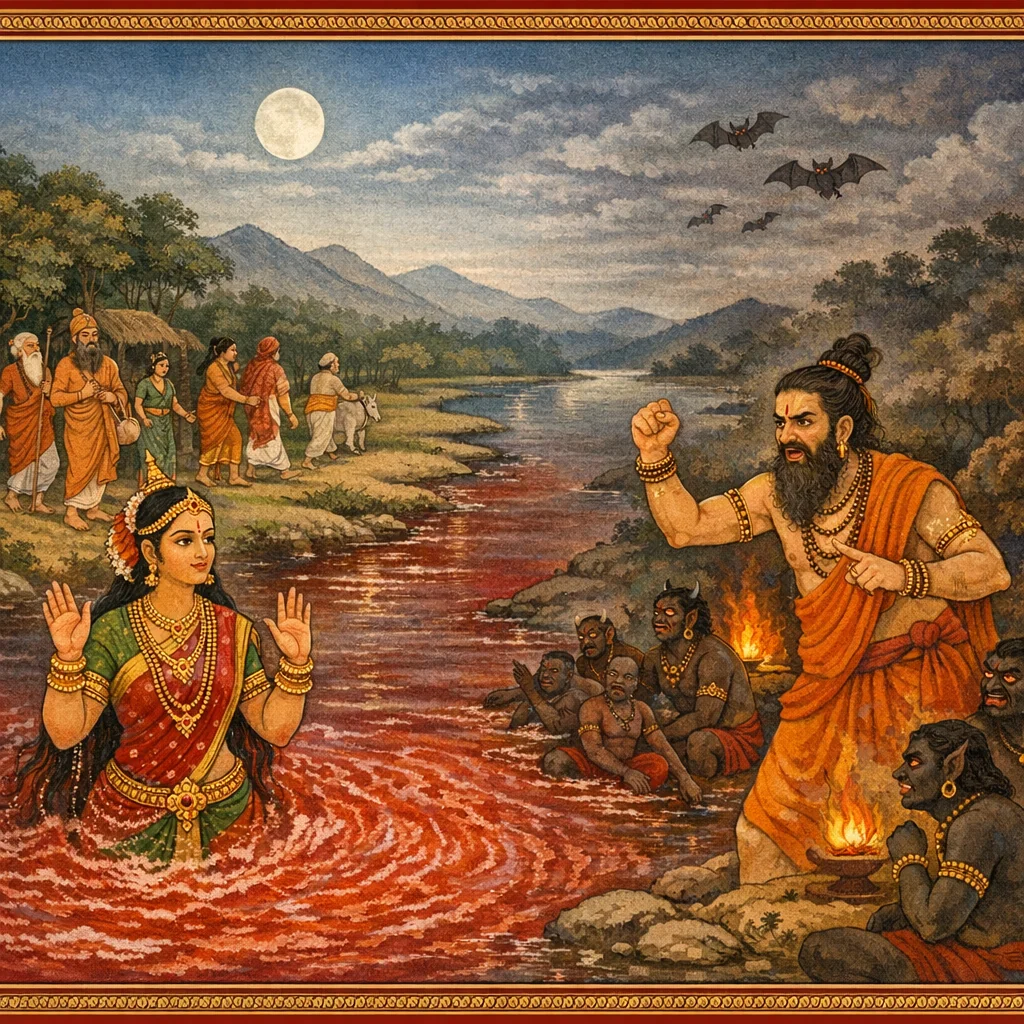
Sūta relates that Viśvāmitra, seeking a “chidra” (vulnerability) to harm Vasiṣṭha, summons a great river that appears in the form of a woman and asks for instruction. Viśvāmitra commands her to surge when Vasiṣṭha immerses for bathing, so that he may be drawn near and slain. The river refuses, declaring she will not betray the great-souled Vasiṣṭha and that brahmin-slaying is against dharma. She cites the warnings of sacred norm: even the mental intent to kill a brahmin demands severe expiation, and verbal advocacy of such killing requires ritual purification. Enraged, Viśvāmitra curses her: since she did not obey, her waters shall become a flow of blood. He consecrates water seven times and casts it into the river; instantly the Sarasvata water—otherwise praised as supremely meritorious and conch-white—turns to blood. Bhūtas, pretas, and niśācaras gather to drink and revel, while ascetics and local residents withdraw to distant places. Vasiṣṭha departs for Mount Arbuda; Viśvāmitra goes to Cāmatkārapura and performs fierce tapas in the kṣetra associated with Hāṭakeśvara, gaining creative power that can rival Brahmā. The chapter closes by reaffirming the cause: the Sarasvata became blood through Viśvāmitra’s curse, and brahmins such as Caṇḍaśarman relocated.
Shlokas
Verse 1
। सूत उवाच । ततःप्रभृति च्छिद्राणि विश्वामित्रो निरीक्षयन् । वसिष्ठस्य वधार्थाय संस्थितो द्विजसत्तमाः
Sūta said: “From that time onward, Viśvāmitra—best among the twice-born—kept watching for vulnerabilities, intent on killing Vasiṣṭha.”
Verse 2
आत्मशक्तिप्रभावेन मशकस्य यथा गजः । अन्यस्मिन्नहनि प्राप्ते विश्वामित्रेण सा नदी
“By the force of his own power, like a mosquito becoming an elephant, on another day when Viśvāmitra arrived, that river…”
Verse 3
समाहूता समायाता द्रुतं सा स्त्रीस्वरूपिणी । अब्रवीत्प्रांजलिर्भूत्वा आदेशो दीयतां मम । ब्रह्मर्षे येन कार्येण समाहूतास्मि सांप्रतम्
Summoned, she came quickly in the form of a woman. With folded hands she said, “O Brahmarṣi, give me your command—by what task have I been called at this time?”
Verse 4
विश्वामित्र उवाच । यदा निमज्जनं कुर्यात्तव तोये महानदि । परमं वेगमास्थाय तदाऽनय ममांतिकम्
Viśvāmitra said: “O great river, when Vasiṣṭha performs immersion in your waters, then—taking up the utmost speed—bring him to me.”
Verse 5
पूर्णश्रोत्रं जले नैव व्याकुलांगं व्यवस्थितम् । निहन्मि येन शीघ्रं च नान्यच्छिद्रं प्रलक्षये
“He stands in the water with his ears filled, his limbs unsteady and agitated. ‘By what means may I strike down swiftly? I perceive no other opening.’”
Verse 6
एवमुक्ता तदा तेन विश्वामित्रेण सा नदी । वित्रस्ता भयसंयुक्ता शापाद्वाक्यमुवाच सा
Thus addressed by Viśvāmitra, the river—trembling and overcome with fear—spoke words in response, mindful of the power of a curse.
Verse 7
नाहं द्रोहं करिष्यामि वसिष्ठस्य महात्मनः । ब्रह्मर्षे न च ते युक्तं कर्तुं वै ब्रह्मणो वधम्
“I will not commit treachery against the great-souled Vasiṣṭha. O brahmarṣi, it is not proper for you to undertake the slaying of a brāhmaṇa.”
Verse 8
यदि त्वं ब्रह्मणा प्रोक्तो ब्रह्मर्षिः स्वयमेव तु । कामान्नायं वसिष्ठस्तु तस्मात्कोपं परित्यज
“If indeed Brahmā himself has proclaimed you a brahmarṣi, then do not be driven by desire. This Vasiṣṭha is not to be opposed thus; therefore abandon your anger.”
Verse 9
मनसापि वधं यस्तु ब्राह्मणस्य विचिंतयेत् । तप्तकृच्छ्रेण मुच्येत मनुः स्वायंभुवोऽब्रवीत्
“Even one who merely thinks, in his mind, of killing a brāhmaṇa—Manu Svāyambhuva has declared—can be released from that sin only by the severe penance called taptakṛcchra.”
Verse 10
वाचया प्रवदेद्यस्तु ब्राह्मणस्य वधं नरः । चांद्रायणेन शुद्धिः स्यात्तस्य देवोऽब्रवीदिदम्
“But if a man speaks of the killing of a brāhmaṇa with his words, then his purification is by the Cāndrāyaṇa vow—so has the divine authority declared.”
Verse 11
तस्मान्नाहं करिष्यामि तव वाक्यं कथंचन । वसिष्ठार्थं तु यत्प्रोक्तं कुरु यत्तव रोचते
“Therefore I will not carry out your command in any way. If something is to be done concerning Vasiṣṭha, then do as you yourself see fit.”
Verse 12
तच्छ्रुत्वा कुपितस्तस्या विश्वामित्रो द्विजोत्तमाः । शशाप तां नदीं श्रेष्ठां यत्तद्वक्ष्यामि श्रूयताम्
Hearing that, Viśvāmitra—best among the twice-born—became enraged and cursed that excellent river. “Listen to what I shall now declare.”
Verse 13
यस्मात्पापे वचो मह्यं न कृतं कुनदि त्वया । तस्माद्रक्तप्रवाहस्ते जलजोऽयं भविष्यति
“Because, O sinful river, you did not carry out my command, therefore this water-born stream of yours shall become a flow of blood.”
Verse 14
एवमुक्त्वा करात्तोयं सप्तवाराभिमंत्रितम् । चिक्षेपाथ जले तस्याः क्रोधसंरक्तलोचनः
Having spoken thus, with eyes reddened by wrath, he took water in his hand, consecrated it with mantra seven times, and then cast it into her waters.
Verse 15
ततश्च तत्क्षणाज्जातं तत्तोयं रुधिरं द्विजाः । सारस्वतं सुपुण्यं च यदासीच्छंखसंनिभम्
Then, in that very instant, O brāhmaṇas, that water turned into blood—though it was the exceedingly meritorious Sārasvata water, which had been shining like a conch-shell.
Verse 16
एतस्मिन्नंतरे प्राप्ता भूतप्रेतनिशाचराः । पीत्वापीत्वा प्रनृत्यंति गायंति च हसंति च
In the meantime, bhūtas, pretas, and night-roaming beings arrived there; drinking again and again, they began to dance, to sing, and to laugh.
Verse 17
ये तत्र तापसाः केचित्तटे तस्या व्यवस्थिताः । ते सर्वेऽपि च तां त्यक्ता दूरदेशं समाश्रिताः
Those ascetics who were dwelling there on her bank—all of them, abandoning that place, took refuge in a far-off region.
Verse 18
बहिर्वासाश्च ये तत्र नागराः समवस्थिताः । चण्डशर्म प्रभृतयस्तेऽपि याताः सुदूरतः
And the Nāgara residents dwelling on the outskirts, settled there—beginning with Caṇḍaśarman—those too departed to a very distant place.
Verse 19
वसिष्ठोऽपि मुनिश्रेष्ठो जगामार्बुदपर्वतम् । विश्वामित्रस्तु विप्रर्षिश्चमत्कारपुरं गतः
Vasiṣṭha too, best of sages, went to Mount Arbuda; and Viśvāmitra, the brahmarṣi, went to Camatkārapura.
Verse 20
हाटकेश्वरजे क्षेत्रे यत्स्थितं विप्रसंकुलम् । तत्राश्रमपदं कृत्वा तपस्तेपे सुदारुणम्
In the sacred region of Hāṭakeśvara, thronged with brāhmaṇas, he established an āśrama there and performed very severe austerities.
Verse 21
येन सृष्टिक्षमो जातः स्पर्धते ब्रह्मणा सह । एतद्वः सर्वमाख्यातं यथा सारस्वतं जलम्
By this he became capable of creation and even contended with Brahmā; thus I have told you everything—how the Sārasvata water came to be as it is.
Verse 22
रुधिरत्वमनुप्राप्तं विश्वामित्रस्य शापतः । चंडशर्मादयो विप्रा यथा देशांतरं गताः
It attained the state of being blood due to Viśvāmitra’s curse; and how Caṇḍaśarman and the other brāhmaṇas went to another land—all this has been related.