Adhyaya 156
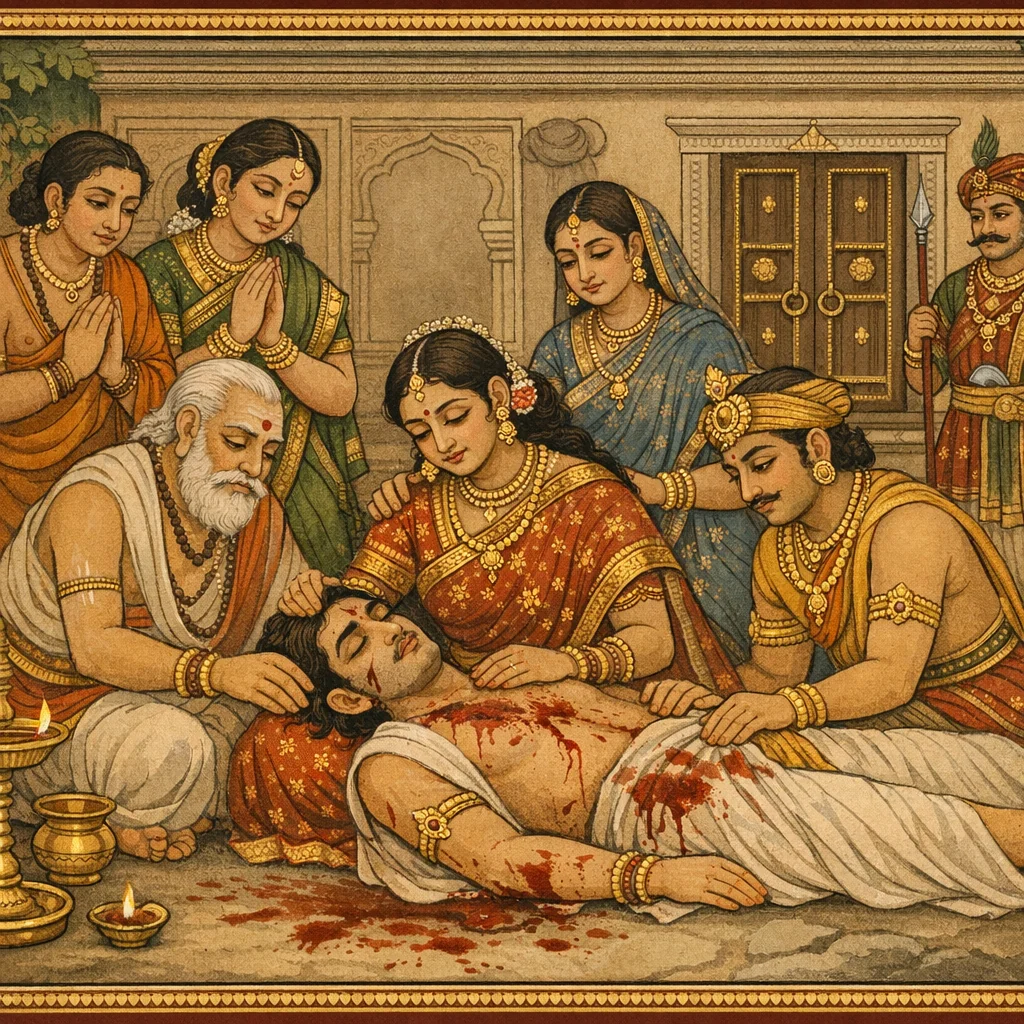
Sūta recounts how Maṇibhadra, driven by desire and the weight of social power, presses a kṣatriya household into an inauspicious marriage despite astrological and calendrical objections—since the wedding falls in the period when Madhusūdana is said to be “asleep” and under a particular nakṣatra-deity. Tempted by promised wealth, the father gives his distressed daughter in marriage. Once she is brought to Maṇibhadra’s home, he coerces her into conjugal duty, abuses her with harsh words, and isolates the household by dismissing the servants and appointing a eunuch gatekeeper who enforces strict rules of entry. Though he conducts public dealings with great riches, he withholds support from his wife’s family and maintains a tightly controlled domestic order. He invites brāhmaṇas for meals but imposes a degrading condition: they must eat with faces lowered and must not look upon his wife, on pain of mockery and harm. A brāhmaṇa named Puṣpa, a pilgrim and student of the Vedas, arrives exhausted; Maṇibhadra invites him with promises of food and honor. During the meal, Puṣpa—out of curiosity—raises his eyes and sees the wife’s lotus-like feet and then her face. Enraged, Maṇibhadra orders the gatekeeper to humiliate him: Puṣpa is struck, dragged bleeding to a public crossroads, and the town is thrown into alarm. Compassionate citizens revive him with water and air; Puṣpa publicly declares his innocence and laments the absence of royal intervention. The people, recalling Maṇibhadra’s earlier abuses, acknowledge how his royal favor casts a chilling fear over the city.
Shlokas
Verse 1
सूत उवाच । एवं सम्बोधिता तेन सा भार्या विजने गता । कन्याप्रदानस्य रुचिः संजाता तदनन्तरम्
Sūta said: Thus instructed by him, the wife went to a secluded place; and soon thereafter, the desire to give the maiden in marriage arose in her.
Verse 2
ततः स पादौ प्रक्षाल्य मणिभद्रस्य सत्वरम् । उदकं साक्षतं हस्ते कन्यादानकृते ददौ
Then he swiftly washed Maṇibhadra’s feet and placed into his hand water together with unbroken rice, for the purpose of giving the maiden in marriage.
Verse 3
सोऽपि हस्तकृते तोये तं क्षत्रियमुवाच ह । अद्यैव कुरु मे शीघ्रं विवाहं कन्यया सह
Then Maṇibhadra, with the water placed in his hand, spoke to that Kṣatriya: “Perform my marriage with the maiden—today itself, quickly.”
Verse 4
यस्मादिच्छामि संस्थातुं तेन ते गृहमागतः । क्षत्रिय उवाच । नात्र नक्षत्रमर्हं तु न किंचिद्भगदैवतम्
“Because I wish to settle in marriage, I have come to your house for that very reason.” The Kṣatriya replied: “But here there is no suitable nakṣatra, nor any proper auspicious divine indication.”
Verse 5
विवाहस्य न वारस्तु प्रसुप्ते मधुसूदने । अस्मिन्काले तु संप्राप्ते या कन्या परिणीयते
When Madhusūdana (Viṣṇu) is in His “sleep” during the inauspicious period, there is no proper occasion for marriage. If, at such a time, a maiden is nevertheless given in marriage,
Verse 6
सा च संवत्सरान्मध्ये ध्रुवं वैधव्यमाप्नुयात् । एवं दैवज्ञमुख्यानां श्रुतं प्रवदतां मया
she would surely become a widow within a year. Thus have I heard it declared by the foremost astrologer-priests, and so I state it.
Verse 7
तस्माच्छुभे तु संप्राप्ते नक्षत्रे भगदैवते । त्वं विवाहय मे कन्यां प्रोत्थिते मधुसूदने । येन क्षेमंकरी ते स्यात्तथा पुत्रप्रपौत्रिणी
Therefore, when the auspicious nakṣatra presided over by Bhaga has arrived, and when Madhusūdana (Viṣṇu) has awakened, you should conduct my daughter’s marriage—so that she may bring welfare and be blessed with sons and grandsons.
Verse 8
मणिभद्र उवाच । नक्षत्रं वह्निदैवत्यं प्रसुप्तो मधुसूदनः
Maṇibhadra said: “This nakṣatra is presided over by Agni, and Madhusūdana (Viṣṇu) is in His sacred period of sleep.”
Verse 9
सांप्रतं वत्सरांतोऽयं विवाहे विहिते सति । कामाग्निरुत्थितः काये सांप्रतं मां प्रबाधते
Now the year’s end draws near, and the marriage has been arranged. The fire of desire has risen within my body and torments me even now.
Verse 10
तस्मात्कुरु प्रसादं मे कन्याविवहितेन तु । तव वित्तं प्रदास्यामि सुखी येन भविष्यसि
Therefore, show me favor by marrying off the maiden at my request. I shall give you wealth, by which you will become happy.
Verse 11
सूत उवाच । तस्माच्च वित्तलोभेन क्षत्रियो द्विजसत्तमाः । विवाहं कारयामास तत्क्षणादेव स द्विजाः
Sūta said: “Thus, O best of the twice-born, that Kṣatriya—out of greed for wealth—had the marriage performed at once, in that very moment.”
Verse 12
ददौ कन्यां सुदुःखार्तामश्रुपूर्णेक्षणां स्थिताम् । सन्निधौ वह्निविप्राणां तदा तेन विवाहिता
He gave the maiden—stricken with great sorrow, standing with tear-filled eyes. In the presence of the sacred fire and the brāhmaṇas, she was then married by him.
Verse 13
नीत्वा निजगृहं पश्चात्कामधर्मे नियोजिता । अनिच्छंतीमपि सतीं तामतीव निरर्गलः
After taking her to his own house, he pressed her into the ways of sensual pleasure. Though she was virtuous and unwilling, he acted without restraint toward her.
Verse 14
सोऽपि निष्कामतां प्राप्य निर्भर्त्स्य च मुहुर्मुहुः । भाषिकाभिरनेकाभिस्तापयित्वा च भामिनीम्
And he too, having fallen into desirelessness, repeatedly reviled her; and by many harsh words he caused the passionate woman to suffer.
Verse 15
शांतिं नीता ततस्तेन प्रत्यूषे समुपस्थिते । भृत्यवर्गः समस्तोऽपि ततो निःसारितो गृहात्
Then, by him she was made to submit in silence; and when dawn arrived, the entire retinue of servants was driven out of the house.
Verse 16
इर्ष्याधर्मं समास्थाय परमं द्विजसत्तमाः । एक एव कृतस्तेन द्वारपालो नपुंसकः
Resorting to the adharma born of jealousy, O best of the twice-born, he appointed only a single gatekeeper—an eunuch.
Verse 17
प्रोक्तं न च त्वया देयः प्रवेशोऽत्र गृहे मम । भृत्यस्य भिक्षुकस्यैव वृद्धस्य व्रतिनस्तथा
He instructed: ‘You must not grant entry into my house here—whether to a servant, or even to a mendicant, an old man, or a vowed ascetic.’
Verse 18
एवं कृत्वा विधानं तु ततश्चक्रे जनैः समम् । व्यवहारक्रियाः सर्वा द्रव्यलक्षैः सहस्रशः
Thus, having arranged the prescribed measures, he then, together with the people, carried out every kind of worldly transaction, dealing in wealth by the hundreds and thousands of lakhs.
Verse 19
श्वशुरस्यापि नो दत्तं किंचित्तेन दुरात्मना । भार्यायाः श्वेतवस्त्राणि मुक्त्वाऽन्यन्नैव किंचन
That wicked man gave nothing at all—not even to his father-in-law; and for his wife, aside from white garments, he gave nothing whatsoever.
Verse 20
यामद्वयेऽपि संप्राप्ते दिनस्य गृहमागतः । मितमन्नं तत स्तस्या भोजनार्थं प्रयच्छति
Even when two watches of the day had passed, he returned home and then gave her only a measured portion of food to eat.
Verse 21
यावन्मात्रं च सा भुंक्त एकविप्रान्वितः स्वयम् । भुक्त्वा चैव ततो याति व्यवहारकृते बहिः
As much as she ate, he himself ate as well, accompanied by a single Brahmin; and after eating he went out again for the sake of his business affairs.
Verse 22
आगच्छति पुनर्हर्म्यं संध्याकाल उपस्थिते । साऽपि तिष्ठति हर्म्यस्था पत्नी तस्य दुरात्मनः
He returned again to the mansion when evening had come; and his wife too remained there, staying within the house of that wicked man.
Verse 23
वैराग्यं परमं प्राप्ता दुःखशोकसमन्विता । मत्सीव पतिता तोयादन्यस्मिंस्तु स्थलांतिके
Overcome with sorrow and grief, she attained intense dispassion—like a fish fallen out of water, cast down upon some other patch of ground nearby.
Verse 24
चक्रवाकी विमुक्तेव संप्राप्ते दिवसक्षये । हंसी हंसवियुक्तेव मृगीव मृगवर्जिता
When the day’s end arrived, she was like a cakravāka-bird separated from its mate; like a female swan parted from the swan; like a doe bereft of the stag.
Verse 25
सोऽपि नित्यं ददौ भोज्यं विप्रस्यैकस्य च द्विजाः । प्रोच्य तं ब्राह्मणं पूर्वं सामपूर्वमिदं वचः
Then he too, O twice-born ones, used to give food every day to one brāhmaṇa. First, however, he addressed that brāhmaṇa with conciliatory words and said this.
Verse 26
अधोवक्त्रेण भोक्तव्यं सदा विप्र गृहे मम । यदि पश्यसि मे भार्यां संप्राप्स्यसि विडंबनाम्
“O brāhmaṇa, in my house you must always eat with your face turned downward. If you look upon my wife, you will incur humiliation.”
Verse 27
एवं विडंबितास्तेन ह्यूर्ध्ववक्त्रावलोकिनः । ये चान्ये भयसंत्रस्ता न यांति च तदालयम्
Thus those who looked upward (lifting their faces) were ridiculed by him; and others too, frightened, would not even go to that dwelling.
Verse 28
कस्यचित्त्वथ कालस्य पुष्पोनाम द्विजोत्तमः । तीर्थयात्राप्रसंगेन संप्राप्तस्तत्पुरं प्रति
After some time, a foremost brāhmaṇa named Puṣpa arrived at that city, while journeying on pilgrimage to the sacred tīrthas.
Verse 29
पूर्वे वयसि संस्थश्च दर्शनीयतमाकृतिः । क्षुत्क्षामः सुपरिश्रांतो मध्याह्ने समुपस्थिते
He was still in the prime of youth and most pleasing to behold; yet, when midday arrived, he was wasted by hunger and greatly worn with fatigue.
Verse 31
ततस्तं प्रार्थयामास गत्वा भोज्यं च स द्विजाः । तेनापि स द्विजः प्रोक्तस्तदासौ द्विजसत्तमाः
Then that brāhmaṇa went up to him and begged for food. At that time the host addressed the brāhmaṇa—O best among the twice-born—with these words.
Verse 32
अधोवक्त्रेण भोक्तव्यं त्वया वीक्ष्या न मे प्रिया । नो चेद्विडंबनां विप्र संप्राप्स्यसि न संशयः
“You must eat with your face turned downward, and you must not look upon my beloved wife. Otherwise, O brāhmaṇa, you will surely meet with humiliation.”
Verse 33
एवं ज्ञात्वा महाभाग यत्क्षेमं तत्समाचर
“Knowing this, O fortunate one, act in the way that is safe and conducive to your well-being.”
Verse 34
पुष्प उवाच । क्षुत्क्षामस्य न मे कार्यं परदारविलोकनैः । वेदाध्ययनयुक्तस्य तीर्थयात्रारतस्य च
Puṣpa said: “I am weakened by hunger; I have no business looking upon another man’s wife—especially since I am devoted to Vedic study and intent upon pilgrimage to the tīrthas.”
Verse 35
मणिभद्र उवाच । तदागच्छ मया सार्धं सांप्रतं मम मंदिरम् । विशेषात्तव दास्यामि भोजनं दक्षिणान्वितम्
Maṇibhadra said: “Then come with me now to my house. I shall give you a special meal, together with a proper dakṣiṇā, an honorarium of respect.”},{
Verse 36
एवं तौ संविदं कृत्वा ययतुर्ब्राह्मणोत्तमाः । हट्टमार्गे गतौ तत्र यत्र षंढो व्यव स्थितः
Thus, having come to an understanding, those excellent brāhmaṇas set out. They went along the market-street to the place where the eunuch was stationed.
Verse 37
तत्पार्श्वे ब्राह्मणं धृत्वा प्रविष्टो गृहमध्यतः । भार्यया श्रपयामास धान्यं मानमितं तदा
Placing the brāhmaṇa at his side, he entered the interior of the house. Then he had his wife cook a measured quantity of grain.
Verse 38
ततो देवार्चनं कृत्वा वैश्वदेवांत आगतम् । पुष्पमाहूय तत्पादौ प्रक्षाल्य च निवेश्य च
Then, having worshiped the gods and returned after the vaiśvadeva rite, he summoned Puṣpa; and washing his feet, he duly seated him.
Verse 39
कृत्वार्चनविधिं तस्य दत्त्वान्नं च सुसंस्कृतम् । उपविश्य ततः पश्चाद्भोजनार्थं ततो द्विजाः । पुष्पोऽपि वीक्षते तस्याः पादौ पंकजसंनिभौ
Having completed the proper honors for him and having offered well-prepared food, the brāhmaṇas then sat down to eat. Puṣpa too kept looking at the woman’s lotus-like feet.
Verse 40
यथायथा स कौतुक्याद्वीक्षते यौवनाश्रितः । कौतुक्यात्तेन च ततस्तस्या वक्त्रं निरीक्षितम्
And as he—impelled by youthful passion under the guise of curiosity—kept gazing more and more, out of that same ‘curiosity’ he then looked upon her face.
Verse 41
ततश्चाकारयामास मणिभद्रः प्रकोपतः । तं षण्ढमुक्तवाञ्जारं त्वमेनं च विडंबय
Then Maṇibhadra, enraged, caused (his servant) to act, saying: “You eunuch—(you) adulterer—go and disgrace this man!”
Verse 42
ततस्तेन द्विजश्रेष्ठाः स पुष्पो मूर्ध्नि ताडितः
Then, O best of brāhmaṇas, Puṣpa was struck on the head by him.
Verse 43
अधो निपतितं भूमौ रुधिरेण परिप्लुतम् । चरणाभ्यां समाकृष्य दूतो मार्गं समाश्रितः
Fallen face-down upon the ground and drenched in blood, he was dragged by the feet, as the messenger took to the road.
Verse 44
यावच्चतुष्पथं नीतो यत्र संचरते जनः । हाहाकारो महानासीत्तस्मिन्पुरवरे तदा
When he was taken as far as the four-way crossing where people move about, a great outcry arose then in that excellent city.
Verse 45
सर्वेषामेव पौराणां तदवस्थं विलोक्य तम् । ततोऽन्यैः शीततोयेन सोभिषिक्तो दयान्वितैः
When all the townspeople saw him in that condition, others—moved by compassion—then sprinkled him with cool water.
Verse 46
कृत्वा वायुप्रदानं च गमितश्चेतनां प्रति । स प्राप्य चेतनां कृच्छ्रात्तत्तोयात्तानथाब्रवीत्
Having performed the offering of life-breath, he was brought back toward consciousness. Regaining awareness with great difficulty, he then spoke to those people from within that water.
Verse 47
न मया विहितं चौर्यं परदारा न सेविताः । पश्यध्वं मणिभद्रेण यथाहं क्लेशितो जनाः
“I have never committed theft, nor have I consorted with another’s wife. Look, people—how I have been made to suffer by Maṇibhadra!”
Verse 48
तीर्थयात्रापरो विप्रो ब्रह्मचर्यपरायणः । भोजनार्थं समामन्त्र्य नीतोऽवस्थामिमां ततः
“I am a brāhmaṇa devoted to pilgrimage to the tīrthas and steadfast in brahmacarya. Invited on the pretext of a meal, I was then brought into this wretched condition.”
Verse 49
किं नास्ति वात्र भूपालो येनैतदसमंजसम् । ब्राह्मणस्य विशेषेण निर्दोषस्य महाजनाः
“Is there no king here, that such injustice is permitted—especially against a blameless brāhmaṇa, O eminent people?”
Verse 50
जना ऊचुः । बहवस्तेन पापेन विप्राः पूर्वं विडंबिताः । राजप्रसादयुक्तेन चेर्ष्यां प्राप्य शरीरिणा
The people said: “By that sinful man, many brāhmaṇas were formerly mocked and humiliated—he, supported by royal favor and driven by jealousy while dwelling in a human body.”
Verse 51
कोऽपि राजप्रसादान्न किंचिद्ब्रूतेऽस्य सम्मुखम् । तस्मादुत्तिष्ठ गच्छामो दास्यामस्तेऽशनं वयम्
“Because of his royal patronage, no one says anything to his face. Therefore, rise—let us go; we will give you food.”
Verse 156
इति श्रीस्कांदे महापुराण एकाशीतिसाहस्र्यां संहितायां षष्ठे नागर खण्डे हाटकेश्वरक्षेत्रमाहात्म्ये पुष्पादित्यमाहात्म्ये मणिभद्रकृतपुष्पब्राह्मणविडंबनवर्णनंनाम षट्पञ्चाशदुत्तरशततमोऽध्यायः
Thus ends, in the Śrī Skanda Mahāpurāṇa—within the eighty-one-thousand-verse saṃhitā, in the sixth Nāgara-khaṇḍa—within the Māhātmya of Hāṭakeśvara-kṣetra, in the Puṣpāditya Māhātmya—the chapter titled “Description of the humiliation of the brāhmaṇa Puṣpa by Maṇibhadra,” being Chapter 156.