Adhyaya 155
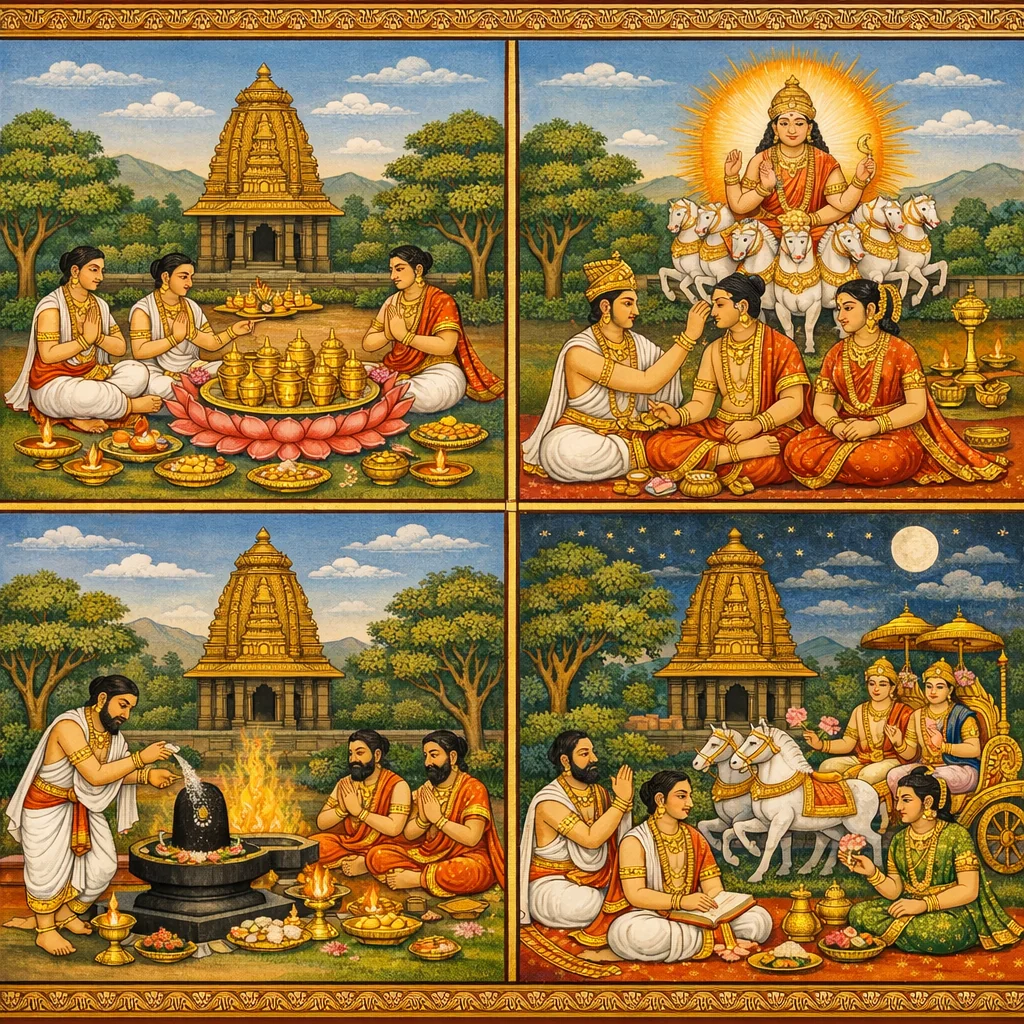
This adhyāya sets forth the ritual and sacred topography of Hāṭakeśvara kṣetra, naming the deity-collectives abiding there—eight Vasus, eleven Rudras, twelve Ādityas, and the twin Aśvins. It then prescribes worship according to calendrical occasions, stressing purity and preparation (bathing, clean garments), proper sequence (tarpana to the dvijas first, then pūjā), and mantra-linked offerings such as naivedya, dhūpa, and ārārtika. Distinct observances are detailed: Vasu worship on the bright-half aṣṭamī in Madhu-māsa; Āditya worship on saptamī, especially Sunday, with flowers, fragrances, and unguents; Rudra worship on Caitra bright caturdaśī with recitation of the Śatarudrīya; and Aśvin worship on the full moon of Āśvina with the Aśvinī-sūkta. Puṣpāditya is then introduced, said to have been installed by Yājñavalkya, and praised as granting desired aims through worship and darśana—removing sins and even opening the way to liberation. The chapter finally turns to a social-ethical tale in a prosperous city, portraying Maṇibhadra’s great wealth, miserliness, bodily decline, and marriage ambitions, and concluding with a didactic reflection on how wealth shapes relationships and human action.
Shlokas
Verse 1
सूत उवाच । तथाऽन्ये तत्र तिष्ठंति वसवोऽष्टौ द्विजोत्तमाः । स्थानमेकं समाश्रित्य सर्वदैव प्रपूजिताः
Sūta said: Likewise, other divine beings dwell there—the eight Vasus, O best of twice-born. Abiding in one sacred station, they are worshipped at all times.
Verse 2
एकादश तथा रुद्रा आदित्या द्वादशैव तु । देववैद्यौ तथा चान्यावश्विनौ तत्र संस्थितौ
There too are stationed the eleven Rudras, and indeed the twelve Ādityas; and also the two divine physicians—the Aśvin twins—dwelling there.
Verse 3
देवतास्तत्र तिष्ठंति कोटिकोटिप्रनायकाः । एकैका ब्राह्मणश्रेष्ठाः कलिकालभयाकुलाः
In that sacred place abide the gods—leaders in countless crores. Yet, O best of brāhmaṇas, each of them is shaken with fear of the terrors of the Kali age.
Verse 4
हाटकेश्वरजे क्षेत्रे यज्ञभागाप्तये सदा । अष्टम्यां शुक्लपक्षे तु मधुमासे व्यवस्थिते
In the sacred field of Hāṭakeśvara, for the attainment of one’s due share in sacrificial merit, one should duly observe this rite on the eighth lunar day, during the bright fortnight, when the month of Madhu (springtime) has arrived.
Verse 5
यस्तान्वसूञ्छुचिर्भूत्वा स्नात्वा धौतांबरो नरः । तर्पयित्वा द्विजश्रेष्ठान्पश्चात्संपूजयेन्नरः
That man who, becoming pure, bathes and dons clean garments, then satisfies the foremost brāhmaṇas with offerings of tarpaṇa, and thereafter worships those Vasus in full—such is the proper observance.
Verse 6
वसवस्त्वा कृण्वन्निति मन्त्रेणानेन भक्तितः । नैवेद्यं च ततो दद्याद्वसवश्छंदसाविति
With devotion, using this mantra that begins “Vasavas tvā kṛṇvan…”, he should then offer naivedya, the food-oblation; and again, with the formula beginning “Vasavaś chandasāv…”, he should proceed in worship.
Verse 7
ततो धूपं सुगन्धं च यो यच्छति समाहितः । वसवस्त्वां जेतु तथा मन्त्रमेतमुदीरयेत्
Then, composed in mind, whoever offers fragrant incense should also recite this mantra, beginning “Vasavas tvāṃ jetu…”.
Verse 8
आरार्तिकं ततो भूयो यः करोति द्विजोत्तमाः । वसवस्त्वां जेतु तथा श्रूयतां यत्फलं हि तत्
Then again, O best of the twice-born, whoever performs the ārārtika (waving of the lamp) while likewise reciting “Vasavas tvāṃ jetu…”—hear now what fruit indeed arises from that act.
Verse 9
कन्याभिः कोटिभिर्यच्च पूजिताभिर्भवेत्फलम् । वसूनां चैव तत्सर्वमष्टभिस्तैः प्रपूजितैः
Whatever merit might arise from worship performed by crores of maidens—every bit of that is obtained by duly worshipping the Vasus, those eight divinities.
Verse 10
तथा ये द्वादशादित्यास्तस्मिन्क्षेत्रे व्यवस्थिताः । तान्स्थाप्य पूजयित्वा च सप्तम्यामर्कवासरे । सम्यक्छ्रद्धासमोपेतः पुष्पगन्धानुलेपनैः
Likewise, the Twelve Ādityas established in that sacred field—having installed them and worshipped them on saptamī, the seventh lunar day, on a Sunday, with proper faith, using flowers, fragrances, and unguents—one performs the rite correctly.
Verse 11
पश्चात्तत्पुरतस्तेषां समस्तान्येकविंशतिः । आदित्यव्रत संज्ञानि तस्य पुण्यफलं शृणु
After that, in their very presence, there are in all twenty-one observances known as the Āditya-vratas. Hear the holy merit that arises from them.
Verse 12
कोटिद्वादशकं यस्तु सूर्याणां पूजयेन्नरः । तत्फलं प्राप्नुयात्कृत्स्नं पूजयन्नात्र संशयः
But the man who worships twelve crores of Sūryas (the Sun’s forms) attains that entire fruit in full by worship here—of this there is no doubt.
Verse 13
तथैकादशरुद्रा ये तत्र क्षेत्रे द्विजोत्तमाः । एकस्थाने स्थितास्तेषां पूजया श्रूयतां फलम्
Likewise, O best of the twice-born, the Eleven Rudras who abide in that sacred field, stationed together in one place—listen now to the fruit that arises from worshipping them.
Verse 14
यस्तान्पूजयते भक्त्या स्थापयित्वा सुरेश्वरान् । चैत्रशुक्लचतुर्दश्यां जपेच्च शतरुद्रियम्
Whoever, having duly installed those lords of the gods, worships them with devotion, and on the bright fortnight’s fourteenth day of Caitra recites the Śatarudrīya—
Verse 15
एकादशप्रमाणेन कोटयस्तेन पूजिताः । भवंति नात्र संदेहः सत्यमेतन्मयोदितम्
By that measure of eleven, crores of merits are won through his worship—of this there is no doubt; this is a truth spoken by me.
Verse 16
यथा तावश्विनौ तत्र देववैद्यौ व्यवस्थितौ । आश्विने मासि चाश्विन्यां पूर्णिमायां तथा तिथौ
In the same manner, the two Aśvins—the divine physicians—are established there; and in the month of Āśvina, on the full-moon tithi that falls under the Aśvinī nakṣatra—
Verse 17
यस्तौ संपूजयित्वा तु ह्यश्विनीसूक्तमुच्चरेत् । द्विकोटि गुणितं पुण्यं सम्यक्तेन समाप्यते
But whoever duly worships those two and recites the Aśvinī Sūkta completes the rite in proper order and gains merit multiplied two krores-fold.
Verse 19
सूत उवाच । तथाऽन्योऽपि च तत्रास्ति याज्ञवल्क्यप्रतिष्ठितः । पुष्पादित्य इति ख्यातः सर्वकामप्रदो नृणाम्
Sūta said: Likewise, there is another deity there, established by Yājñavalkya, renowned as Puṣpāditya, the bestower of all desired aims for people.
Verse 20
यो यं काममभिध्याय तं पूजयति मानवः । स तं कृत्स्नमवाप्नोति यद्यपि स्यात्सुदुर्लभम्
Whatever desire a person contemplates and then worships him there, that person obtains it in full—even if it is exceedingly difficult to attain.
Verse 21
अपुत्रो लभते पुत्रान्धनार्थी धनमाप्नुयात् । बहुवैरोऽरिनाशं च विद्यार्थी शास्त्रविद्भवेत्
The childless gains sons; the seeker of wealth obtains wealth; one beset by many enmities attains the destruction of foes; and the student becomes learned in the śāstras.
Verse 22
सप्तम्यामर्कवारेण यस्तं पश्यति मानवः । मुच्येद्दिनोद्भवात्पापान्महतोऽपिद्विजोत्तमाः
On Saptamī, when it falls on a Sunday, whoever beholds Him is freed from sins arising from inauspicious days—even great ones, O best of the twice-born.
Verse 23
पूजया हि प्रणश्येत पापं वर्षसमुद्भवम् । नाशं याति न संदेहस्तमः सूर्योदये यथा
Indeed, by worship, sin accumulated over a year is destroyed—there is no doubt—just as darkness perishes at sunrise.
Verse 24
अष्टोत्तरशतं चैव यः करोति प्रदक्षिणाम् । फलहस्तः स मुच्येत ह्याजन्ममरणादघात्
Whoever performs one hundred and eight circumambulations, holding offerings of fruit in the hand, indeed becomes freed from the sin that clings through repeated births and deaths.
Verse 25
प्रदक्षिणां प्रकुवाणो यो यं काममभीप्सति । स तमाप्नोत्यसंदिग्धं निष्कामो मोक्षमाप्नुयात्
Whoever performs circumambulation desiring a particular wish attains that wish without doubt; but one who is desireless attains liberation (mokṣa).
Verse 26
संक्रांतौ सूर्यवारेण यः कुर्यात्स्नापनक्रियाम् । अभीष्टं सिध्यते तस्य मेषे वा यदि वा तुले
At the time of Saṅkrānti, if one performs the bathing-rite (snāpana) on a Sunday, his cherished aim is fulfilled—whether the Saṅkrānti is into Meṣa (Aries) or into Tulā (Libra).
Verse 27
तस्मिन्सर्वप्रयत्नेन वांछद्भिरीप्सितं फलम् । स देवो वीक्षणीयश्च पूजनीयो विशेषतः
Therefore, by every effort, those who seek their desired fruit should behold that Deity—and, above all, worship Him with special reverence.
Verse 28
यद्देवैः सकलैर्दृष्टैश्चमत्कारपुरोद्भवैः । फलमाप्नोति तद्दृष्टौ तेन तत्फलमाप्नुयात्
Whatever fruit was obtained by all the gods who beheld Him in that wondrous city of marvels, that very fruit is likewise obtained by seeing Him there.
Verse 29
।ऋषय ऊचुः । याज्ञवल्क्येन देवोऽसौ यदि तावत्प्रतिष्ठितः । पुष्पादित्यः कथं प्रोक्त एतन्नो वक्तुमर्हसि
The sages said: “If that Deity was indeed installed by Yājñavalkya, then why is He spoken of as Puṣpāditya? Please explain this to us.”
Verse 31
अस्त्यत्र मेदिनीपृष्ठे सुपुरं वैदिशं महत् । नानासौध समाकीर्णं वरप्राकारशोभितम्
Here, upon the surface of the earth, there is a splendid and great city called Vaidiśa, filled with many mansions and beautified by excellent ramparts and walls.
Verse 32
उद्यानशतसंकीर्णं तडागैरुपशोभितम् । तत्रासीत्पार्थिवश्रेष्ठश्चित्रवर्मेति विश्रुतः
It abounded in hundreds of gardens and was further adorned with ponds and lakes. There ruled a foremost king, renowned as Citravarman.
Verse 33
न दुर्भिक्षं न च व्याधिर्न च चौरकृतं भयम् । तस्मिञ्छासति धर्मज्ञे सततं धर्मवत्सले
While that knower of dharma ruled—ever affectionate toward righteousness—there was neither famine nor disease, nor any fear caused by thieves.
Verse 34
तत्पुरे क्षत्रियो जात्या मणिभद्र इति स्मृतः । स वै धनेन संयुक्तः पितृपैतामहेन च
In that city there was a man, a Kṣatriya by birth, remembered as Maṇibhadra. He was endowed with wealth inherited from his father and forefathers.
Verse 35
तत्पुरं सकलं चैव स राजा मंत्रिभिः सह । कुसीदाहृतवित्तेन वर्तते कार्य उत्थिते
That entire city, and that king along with his ministers, carried on the affairs that arose using wealth obtained through usury.
Verse 36
स च कायेन कुब्जः स्याज्जराव्याप्तस्तथैव च । वलीपलितगात्रश्च ह्यत्यंतं च विरूपधृक्
And in his body he became hunchbacked, overcome by old age; his limbs were marked by wrinkles and grey hair—utterly disfigured in form.
Verse 37
तथा चैव कुकीनाशः प्रभूतेऽपि धने सति । न ददाति स पापात्मा कस्यचित्किञ्चिदेव हि । न भक्षयति तृष्णार्तः स्वयमेव कथंचन
Thus, though he possessed abundant wealth, he became utterly ruined; that sinful-minded man gave nothing at all to anyone. Tormented by craving, he would not even enjoy food himself in any way.
Verse 38
एवंविधोऽपि सोऽतीवविरूपोऽपि सुदुर्मतिः । प्रार्थयामास वै कन्यां स्वजात्यां वीक्ष्य सुंदरीम्
Though he was such a man—indeed exceedingly ugly and of wicked intent—yet, having seen her beauty, he sought a maiden of his own community.
Verse 39
बिंबोष्ठीं चारुदेहां च मुष्टिग्राह्यकृशोदरीम् । पद्मपत्रविशालाक्षीं गूढगुल्फां सुकेशिकाम्
Her lips were like the bimba fruit; her body was graceful, and her waist so slender it could be encircled by a fist. Her large eyes were like lotus petals, her ankles well-formed, and her hair beautiful.
Verse 40
रक्तां सप्तसु गात्रेषु त्रिगंभीरां तथा पुनः । सर्वलक्षणसंपूर्णां जातीयां सुमनोरमाम्
She was rosy in seven parts of her body, possessed the three graceful depths, and was complete in every auspicious mark—of the same community, and exceedingly charming.
Verse 41
क्षत्रियाद्द्विजशार्दूला दरिद्रेण च पीडितात् । तेन तत्सकलं वृत्तं भार्यायै संनिवेदितम्
O tigers among Brāhmaṇas, that Kṣatriya, afflicted by poverty, then related the entire occurrence to his wife.
Verse 42
तच्छ्रुत्वा सा च दुःखेन मूर्च्छिता संबभूव ह । संबोधिता ततस्तेन वाक्यैर्दृष्टांतसंभवैः
Hearing that, she fainted from grief. Then he roused her with words supported by illustrative examples.
Verse 43
क्षत्रिय उवाच । न सा विद्या न तच्छिल्पं न तत्कार्यं न सा कला । अर्थार्थिभिर्न तज्ज्ञानं धनिनां यन्न दीयते
The Kṣatriya said: There is no learning, no craft, no undertaking, no art—nor any knowledge sought by those who desire wealth—that is not bestowed by the rich.
Verse 44
इह लोके च धनिनां परोऽपि स्वजनायते । स्वजनोऽपि दरिद्राणां कार्यार्थे दुर्जनायते
In this world, for the wealthy even a stranger becomes like one’s own. But for the poor, even their own people turn hostile when some task must be done.
Verse 45
अर्थेभ्यो हि विवृद्धेभ्यः संभृतेभ्यस्ततस्ततः । प्रवर्तंते क्रियाः सर्वाः पर्वतेभ्यो यथापगाः
For from wealth—when it is increased and amassed from various sources—all undertakings come into motion, just as rivers flow forth from mountains.
Verse 46
पूज्यते यदपूज्योऽपि यदगम्योऽपि गम्यते । वंद्यते यदवन्द्योऽपि ह्यनुबंधो धनस्य सः
Even one who is not worthy is worshipped; even what should not be approached is approached; even the unworthy is saluted—such is the binding influence that wealth exerts.
Verse 47
अशनादिंद्रिया णीव स्युः कार्याण्यखिलानिह । सर्वस्मात्कारणाद्वित्तं सर्वसाधनमुच्यते
Just as the senses are driven by eating and the like, so too all works in this world are driven by means; therefore, wealth is called the instrument for accomplishing everything.
Verse 48
अर्थार्थी जीवलोकोऽयं श्मशानमपि सेवते । जनितारमपि त्यक्त्वा निःस्वः संयाति दूरतः
This living world, craving wealth, will even resort to the cremation-ground; and when a man becomes penniless, he goes far away, abandoning even his own begetter.
Verse 155
इति श्रीस्कांदे महापुराण एकाशीतिसाहस्र्यां संहितायां षष्ठे नागरखण्डे हाटकेश्वरक्षेत्रमाहात्म्ये पुष्पादि त्यमाहालये मणिभद्रवृत्तांते मणिभद्राय कन्याप्रदानार्थं क्षत्रियकृतनिजभार्यासंबोधनवर्णनंनाम पञ्चपञ्चाशदुत्तरशततमोऽध्यायः
Thus ends the 155th chapter—titled “The description of the Kṣatriya’s address to his own wife, for the purpose of giving a maiden to Maṇibhadra”—in the Nāgara Khaṇḍa, within the Hāṭakeśvara Sacred-Region Māhātmya, in the account concerning Maṇibhadra, of the revered Skanda Mahāpurāṇa (the Saṃhitā of eighty-one thousand verses).
Verse 198
एतद्वः सर्वमाख्यातं माहात्म्यं वसुसंभवम् । आदित्यानां च रुद्राणामश्विनोर्द्विजसत्तमाः
This entire greatness—born of the Vasus—has now been told to you, O best of the twice-born; and it is connected with the Ādityas, the Rudras, and the Aśvins as well.